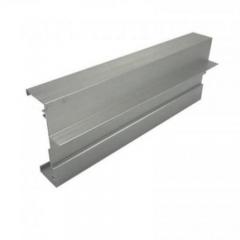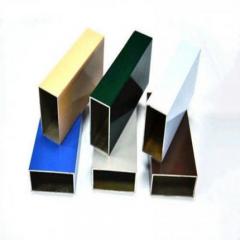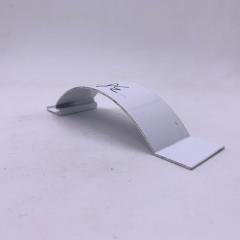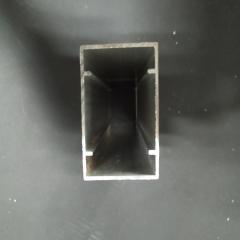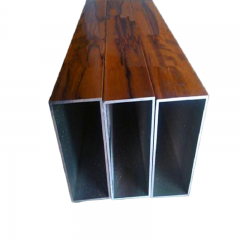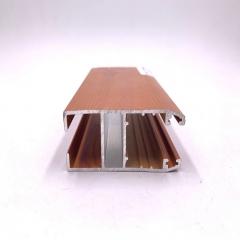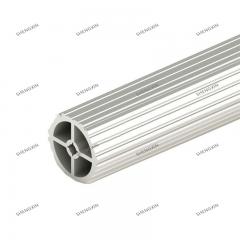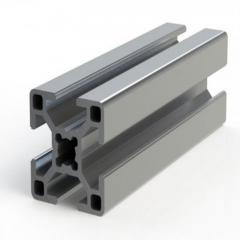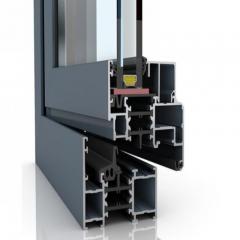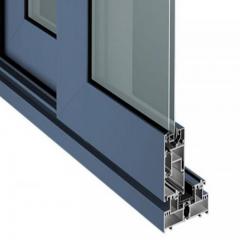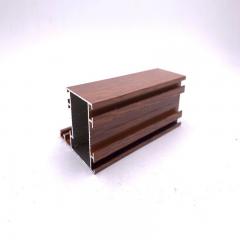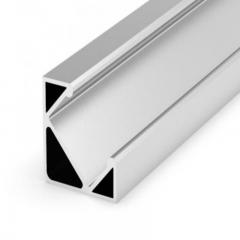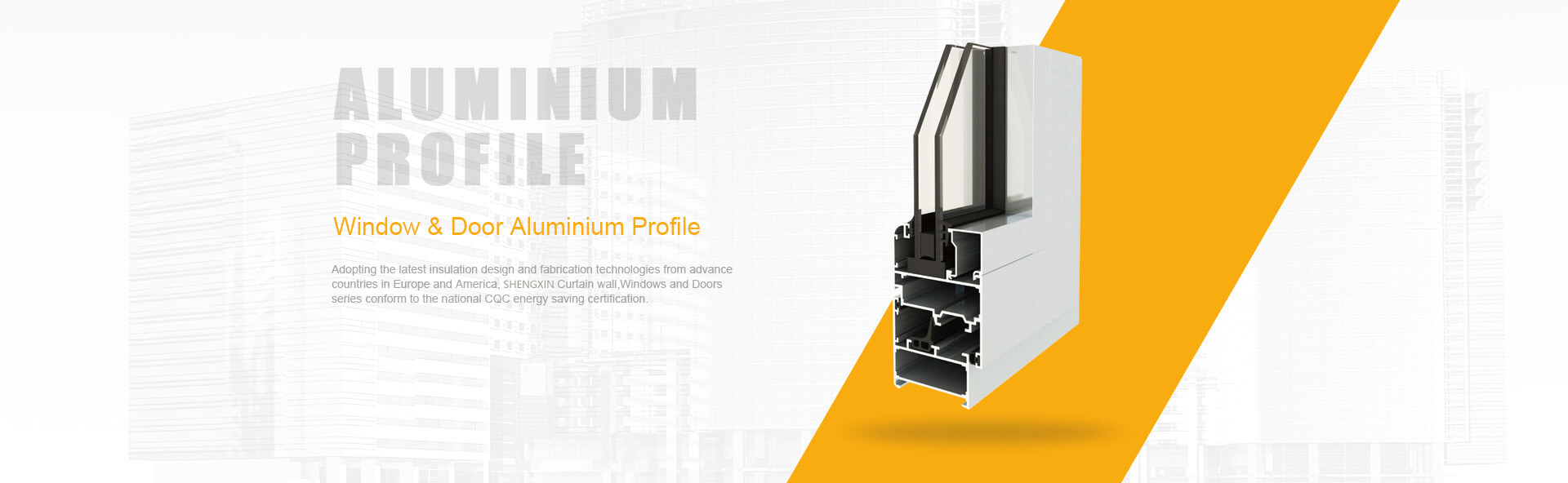
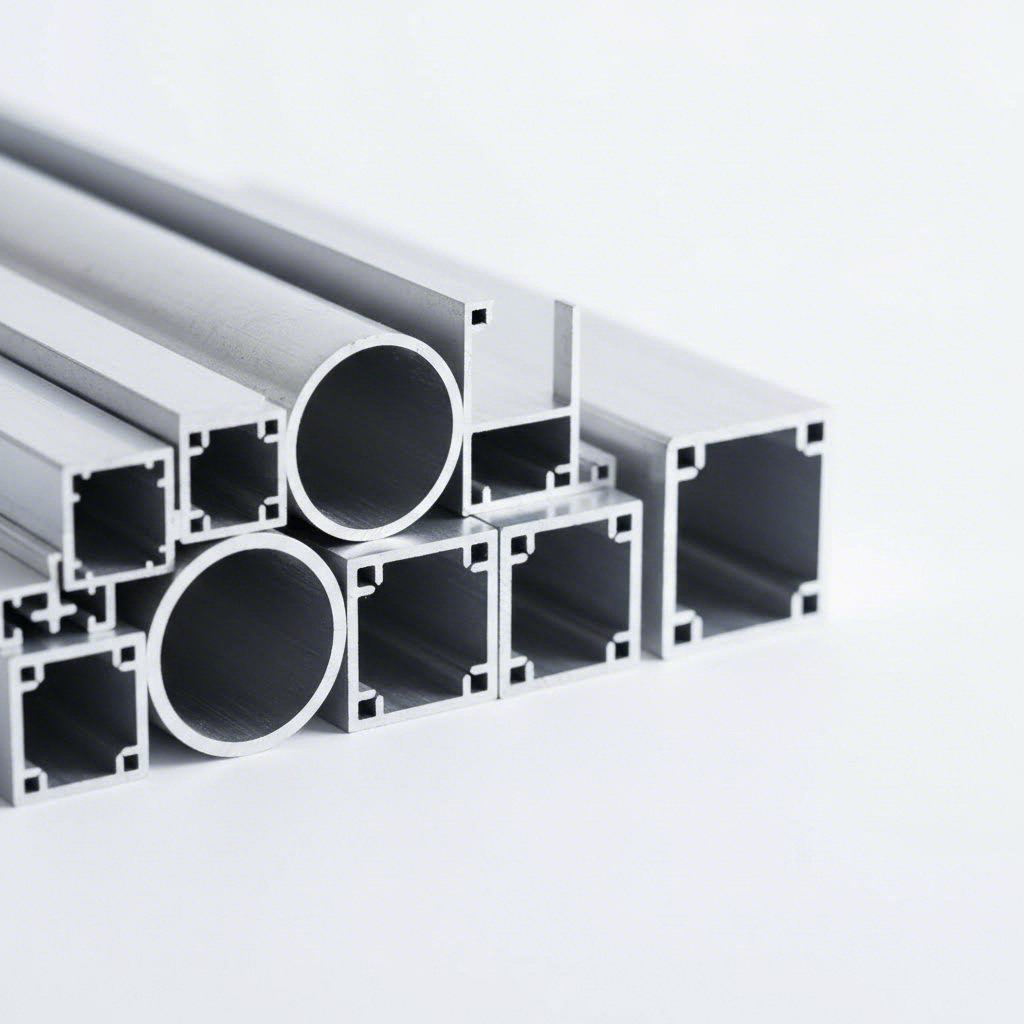
Ever wondered why those sleek window frames, modern railings, and polished display fixtures all share a similar clean, refined appearance? The answer lies in 6063 aluminum extrusion—a material so widely trusted that engineers often call it the "architectural alloy." But what exactly makes this particular alloy stand out from dozens of other aluminum options?
6063 aluminum is a medium-strength alloy belonging to the 6xxx series, specifically engineered for the extrusion process. Unlike alloys designed primarily for casting or rolling, this material flows through extrusion dies with remarkable ease, emerging with smooth surfaces that require minimal finishing. According to Aalco's technical specifications, it offers high corrosion resistance, excellent weldability, and readily accepts anodizing—a combination that explains its dominance in architectural applications.
When you need extruded aluminum profiles with intricate cross-sections and thin walls, 6063 delivers where other alloys struggle. Its popularity isn't accidental; it stems from a carefully balanced chemical composition that manufacturers have refined over decades.
So what's happening at the molecular level? The secret lies in how silicon and magnesium work together within the aluminum matrix. When heated during the extrusion process, these elements combine to form magnesium silicide (Mg₂Si)—a compound that gives the alloy its strength after heat treatment while maintaining excellent formability during processing.
Here's what each key alloying element contributes:
This precise balance creates an alloy optimized specifically for the aluminum extrusion process. The relatively low alloy content means less resistance when pushing heated billets through dies, resulting in faster production speeds and reduced die wear. Meanwhile, the Mg₂Si precipitates that form during heat treatment provide sufficient strength for most structural and decorative applications.
Unlike higher-strength alloys such as 6061 or 7075, 6063 prioritizes surface finish and extrudability over maximum tensile strength. This trade-off makes perfect sense for aluminium extrusions destined for visible architectural applications where appearance matters as much as performance. The result? Complex profiles with consistently smooth surfaces that accept coatings beautifully—exactly what engineers need when specifying materials for building facades, interior trim, and consumer products.
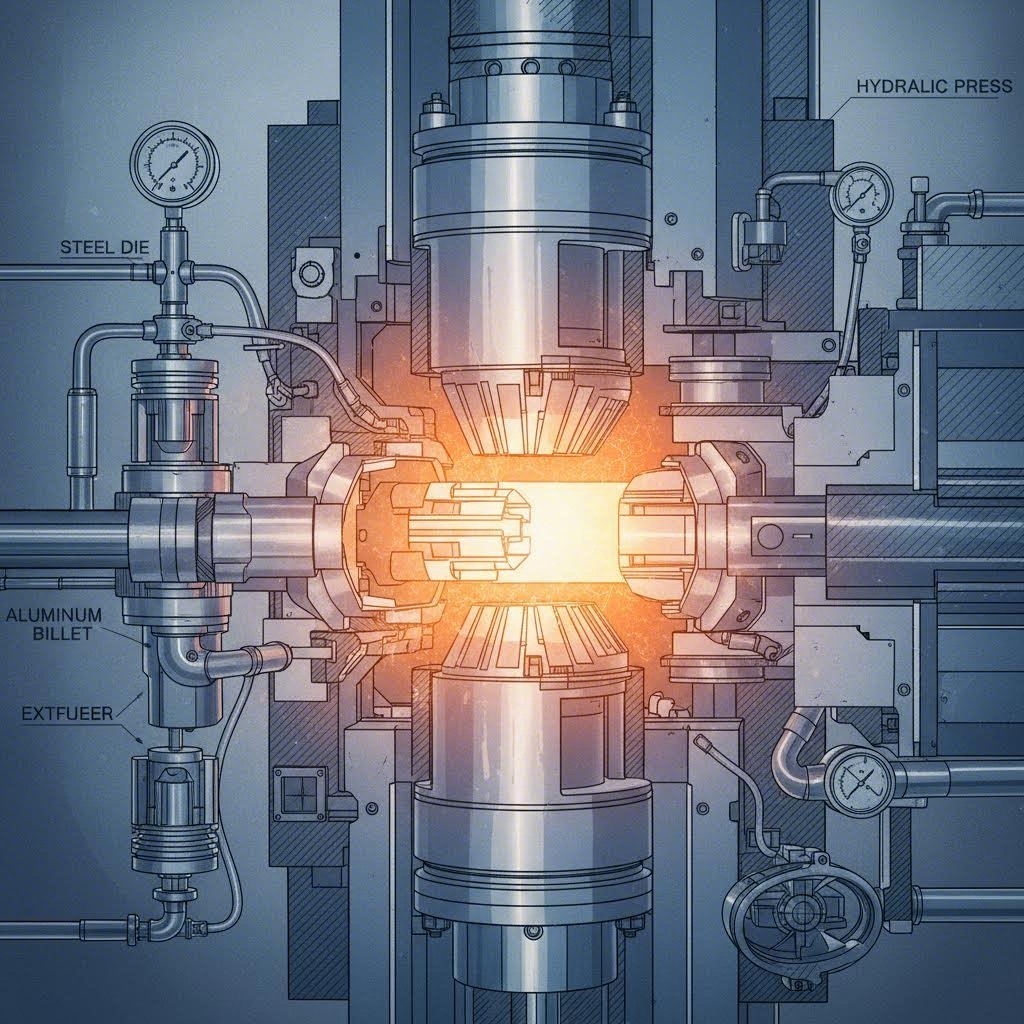
Understanding material properties is one thing—but what actually happens when a heated aluminum billet meets the extrusion die? This is where 6063 truly shines, and where many engineers develop their preference for this alloy over alternatives. The behavior of this material during extrusion directly determines what shapes you can achieve, how fast you can produce them, and what surface quality you'll get on the other side.
Imagine pushing warm clay through a shaped opening. The softer and more uniform the clay, the more detailed the final shape can be. The same principle applies to aluminum extrusion profiles, and 6063's composition makes it exceptionally "cooperative" during this process.
When the extruder's ram pushes against a preheated 6063 billet, the material's low alloy content creates less internal resistance compared to stronger alloys. This means the aluminum flows more uniformly through complex die geometries—including tight corners, thin walls, and intricate hollow sections. According to industry specifications, 6063 can achieve wall thicknesses below 1.2 mm in certain configurations, a capability that depends heavily on profile geometry, die design, and precise extrusion conditions.
The friction generated as material contacts the die surfaces converts into heat—and this is where things get interesting. Unlike alloys with higher magnesium or copper content, 6063 maintains consistent flow characteristics even as temperatures fluctuate during a production run. This stability translates directly into better dimensional consistency and fewer surface defects across thousands of extruded aluminum profiles.
Temperature control isn't just important for 6063 extrusion—it's everything. Get it wrong, and you'll face tearing, surface scratches, or profiles that fail mechanical testing. Get it right, and you'll produce aluminum extrusion shapes with mirror-smooth surfaces ready for anodizing.
Here's how the critical parameters work together:
The relationship between extrusion speed and temperature creates a delicate balancing act. Faster speeds generate more friction heat, which can push exit temperatures dangerously high. Too slow, and you lose productivity while potentially failing to achieve proper solutionizing. Experienced operators adjust these parameters continuously based on profile complexity, wall thickness, and the specific die being used.
"6063's excellent flow characteristics during extrusion support thin-wall sections and complex geometries that would cause defects in stronger alloys—making it irreplaceable for architectural and decorative applications where both precision and surface quality matter."
This explains why manufacturers producing aluminum extrusion tube products and detailed architectural sections consistently choose 6063. An extruded aluminum tube with uniform wall thickness and smooth interior surfaces requires an alloy that flows predictably—and 6063 delivers exactly that behavior.
After extrusion, rapid quenching "freezes" the dissolved magnesium atoms in place, preventing them from settling and losing their strengthening potential. The choice between air cooling, water mist, or full water quench depends on profile thickness and the final mechanical properties required. Thicker sections and higher strength requirements typically demand more aggressive cooling—but too fast can introduce distortion in complex aluminum extrusion shapes.
With the extrusion process fundamentals covered, the next logical question becomes: how does 6063 actually compare to other popular alloys when you're making material selection decisions?
Choosing between 6000-series aluminum alloys feels overwhelming when you're staring at specification sheets filled with numbers. Each alloy offers something different—but which trade-offs actually matter for your project? Let's cut through the confusion with a direct comparison that gives you actionable guidance, not just property listings.
Here's the fundamental truth about 6000-series aluminum extrusions: you can't maximize strength and extrudability simultaneously. The same alloying elements that increase strength—particularly higher magnesium, silicon, and manganese content—also create more resistance during the extrusion process. Understanding this trade-off is essential for making smart material decisions.
According to industry data, here's how these four alloys compare across critical performance criteria:
| Property | 6063-T6 | 6061-T6 | 6005-T6 | 6082-T6 |
|---|---|---|---|---|
| Tensile Strength (MPa) | ~270 | ~310 | ~310 | ~350 |
| Yield Strength (MPa) | ~240 | ~276 | ~260 | ~340 |
| Elongation (%) | 8-12 | 12-17 | 10-12 | 8-10 |
| Extrudability | Excellent | Moderate | Good | Difficult |
| Surface Finish Quality | Excellent | Good | Very Good | Fair |
| Weldability | Excellent | Excellent | Excellent | Good* |
| Corrosion Resistance | Excellent | Good | Good | Excellent |
| Machinability | Moderate | Excellent | Fair | Moderate |
*Note: 6082 welds well, but strength in heat-affected zones decreases noticeably.
Notice the pattern? 6063 sits at one end of the spectrum with the best extrudability and surface finish but lower strength. 6082 occupies the opposite extreme—strongest in the family but challenging to extrude into thin-walled, complex shapes. The 6061 and 6005 alloys fall somewhere in between, each with its own strengths.
What causes these differences? The chemical composition tells the story. According to Taber Extrusions, 6082 contains significantly more manganese (0.4-1.0%) compared to 6063's trace amounts (≤0.1%). This manganese controls grain structure, creating a stronger alloy—but one that resists flowing through extrusion dies. Meanwhile, 6061's copper content (~0.28%) enhances strength and machinability but slightly reduces corrosion resistance compared to copper-free 6063.
Sounds complex? It doesn't have to be. Here's how to match each alloy to specific project requirements:
Choose 6063 when:
Choose 6061 when:
Choose 6005/6005A when:
Choose 6082 when:
Here's a practical example: imagine you're specifying aluminum for window frames on a commercial building. The profiles need sharp corners, thin walls, and flawless anodized finishes. Strength requirements are modest since the building's structure carries the loads. 6063 is the obvious choice—its excellent extrudability produces the complex profiles you need, and its superior surface finish ensures uniform anodizing.
Now imagine you're designing structural framing for a marine vessel. Corrosion resistance remains critical, but strength becomes paramount. The profiles are thick and relatively simple. Here, 6082's higher strength and excellent marine corrosion resistance make it the better option—even though extruding those shapes costs more.
The key insight? Don't chase maximum strength when your application doesn't demand it. Specifying 6082 for architectural aluminium extrusion applications wastes money on extrusion costs and sacrifices surface quality you actually need. Conversely, using 6063 for highly stressed structural members creates unnecessary risk.
With the alloy selection framework established, the next decision involves choosing the right temper—a choice that significantly impacts both mechanical properties and project costs.
You've selected 6063 as your alloy—now comes the question that trips up even experienced engineers: which temper should you specify? The difference between 6063 T5 aluminum and T6 isn't just a number on a specification sheet. It determines how strong your profiles will be, how much you'll pay, and whether the material meets your application's demands.
The temper designation tells you exactly how the alloy was heat-treated after extrusion. This matters because the same 6063 aluminum can have dramatically different mechanical properties depending on the cooling and aging process it undergoes.
Here's the fundamental difference:
That extra solution heat treatment step in T6 processing produces significantly higher strength—but at a cost. According to Metal Exchange, T6 is stronger due to heat treatment, while T5 is more formable and ideal for decorative work.
Using data from Alliance Organization's temper comparison specifications, here's how the mechanical properties stack up:
| Property | 6063-T5 | 6063-T6 | 6063-T832 |
|---|---|---|---|
| Tensile Strength, Ultimate (psi) | ~27,000 | 35,000 | 42,000 |
| Tensile Strength, Yield (psi) | ~21,000 | 31,000 | 39,000 |
| Elongation at Break (%) | 8-10 | 12 | 12 |
| Hardness, Brinell | ~60 | 73 | 95 |
| Shear Strength (psi) | ~17,000 | 22,000 | 27,000 |
Notice something interesting? The T6 temper delivers roughly 30% higher tensile strength than T5, while T832 pushes even further—offering 20% more strength than T6. Yet all three tempers share identical physical properties like density (0.0975 lb/in³), thermal conductivity, and coefficient of thermal expansion.
So when does the strength difference actually matter? Consider these decision criteria:
Most engineers know about T5 and T6—but T832 remains surprisingly underutilized despite offering the highest strength available in 6063 aluminum. This temper involves solution heat treatment, cold working, and artificial aging, producing mechanical properties that approach some structural alloys.
With a Brinell hardness of 95 compared to T6's 73, 6063 t5 aluminium and T832 represent opposite ends of the property spectrum for this alloy. The T832 designation indicates the material has been cold-worked after quenching, creating additional strengthening through strain hardening before the final aging step.
Consider T832 when:
However, T832 isn't always the right choice. The cold-working step limits which profile geometries can achieve this temper, and the additional processing adds cost. For most architectural applications, T5 or T6 provides more than adequate strength at lower cost.
Cost implications worth considering: T5 represents the most economical option since it requires no additional heat treatment beyond controlled cooling after extrusion. T6 adds cost through the solution treatment and quenching steps—typically 10-20% more depending on the supplier and order volume. T832's cold-working requirement pushes costs higher still, making it practical only when its superior properties genuinely justify the premium.
The practical takeaway? Start with T5 for decorative work and upgrade to T6 only when structural requirements demand it. Reserve T832 for specialized applications where maximum strength from 6063 is non-negotiable but switching alloys isn't desirable.
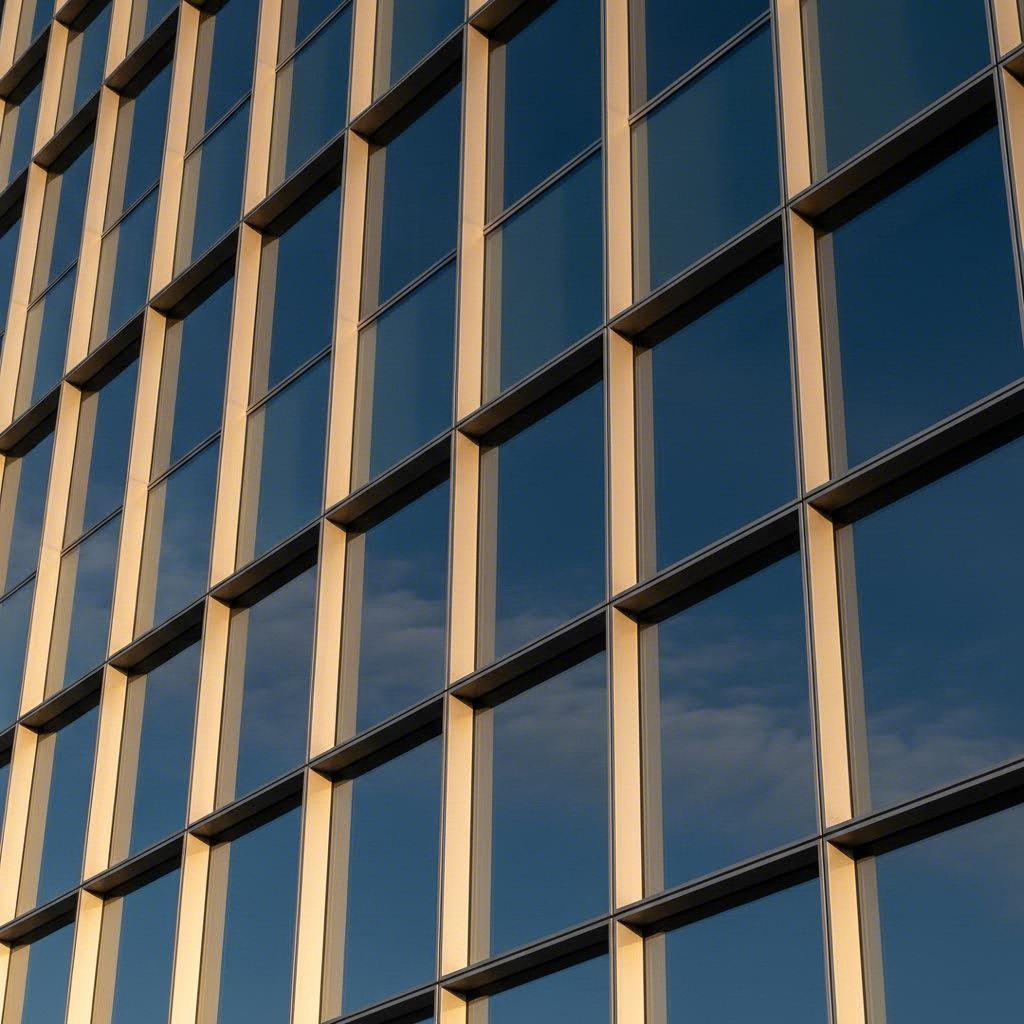
Now that you understand how temper selection affects mechanical properties, a practical question emerges: where do engineers actually use this material? The answer spans an impressive range of industries—from the window frames in your office building to the solar panels generating clean energy on rooftops worldwide. What connects these diverse applications is a shared need for 6063's unique combination of extrudability, surface finish, and corrosion resistance.
Walk through any modern commercial building, and you're surrounded by 6063 aluminum extrusion applications. This alloy dominates architectural work for one compelling reason: it produces the smooth, uniform surfaces that anodizing and powder coating require for flawless finishes.
According to HTS-ALU's technical specifications, 6063 is the go-to alloy for curtain wall frames due to its excellent extrudability and surface finish. This preference isn't arbitrary—it stems from how the alloy's low silicon and magnesium content creates fewer surface defects during extrusion.
Key architectural applications include:
Why does surface finish matter so much in these applications? Anodizing creates a protective oxide layer by converting the aluminum surface itself—any defects in the base material become magnified in the final finish. 6063's excellent response to anodizing means architects can specify custom colors like champagne, bronze, or black with confidence that the finish will remain consistent across all visible surfaces.
Beyond the visible world of architecture, 6063 aluminum extrusion serves critical industrial functions where thermal management, electrical properties, and structural integrity intersect.
Electronics and thermal management:
Structural framing systems:
Two rapidly growing sectors are driving significant demand for 6063 aluminum extrusions: renewable energy and electric vehicles.
Solar panel framing: According to Orin PV's technical documentation, aluminum alloys such as 6063-T5 and 6061-T6 are commonly used for solar frames because of their high tensile strength and rigidity. For photovoltaic modules, 6063 offers several critical advantages:
Electric vehicle battery enclosures: As automakers race to improve EV range and safety, aluminum extrusion frame designs are replacing stamped steel in battery pack housings. 6063's weldability allows for sealed enclosure construction, while its thermal properties help manage battery temperatures during charging and operation. The alloy's recyclability also aligns with automotive sustainability goals—aluminum retains its properties through infinite recycling cycles.
The common thread across all these applications? Each leverages specific 6063 properties that other alloys can't match as effectively. Architectural projects prioritize surface finish and anodizing response. Industrial applications value the balance between extrudability and adequate strength. Emerging technologies appreciate the combination of thermal management, corrosion resistance, and sustainability credentials.
Understanding where 6063 excels helps you recognize when it's the right choice—and equally important, when a different alloy might serve your project better. With applications covered, let's examine the practical considerations for machining and fabricating these profiles after extrusion.
You've got your 6063 aluminum extruded profiles delivered—now what? The extrusion process only gets you halfway to a finished product. Cutting, drilling, welding, and assembly transform raw profiles into functional components. But here's the challenge: 6063's properties that make it excellent for extrusion create unique machining behaviors you need to understand.
With lower hardness and higher ductility than alloys like 6061, this material offers reduced cutting resistance. Sounds like good news, right? It is—but that same softness makes 6063 prone to built-up edge formation and tool adhesion. According to industry machining guidelines, achieving consistent results requires careful optimization of tool selection and cutting parameters.
Whether you're working with extruded aluminum tubing or complex architectural profiles, clean cuts start with the right approach. The goal is producing burr-free edges that require minimal secondary finishing—especially important for visible architectural components or profiles that will receive anodizing.
Recommended cutting practices:
Drilling 6063 presents its own considerations. The alloy's ductility means chips tend to form long, stringy ribbons rather than breaking cleanly—creating chip evacuation challenges that can damage hole quality or even break drill bits.
Key drilling guidelines:
One critical tip: regularly sharpen or replace cutting tools. Dull edges generate more heat and pressure, exactly the conditions that cause aluminum to stick to tooling. The modest cost of fresh tooling pays dividends in surface quality and dimensional accuracy.
6063 offers better weldability than many aluminum alloys, with less distortion in the heat-affected zone (HAZ). However, strength loss in the weld and HAZ typically reaches 20-50%—according to technical specifications, around 30% reduction is common depending on base-material temper, welding method, and heat input.
The filler alloy question comes up constantly: should you use 4043 or 5356? According to The Fabricator's welding guidance, approximately 80% of aluminum filler wire sold worldwide is one of these two alloys—so understanding when to use each matters.
Filler alloy selection criteria:
For tubing extrusion applications where welded joints must handle pressure or cyclic loading, the higher shear strength of 5356 often justifies its slightly more challenging welding characteristics. For decorative extruded aluminum frame assemblies where appearance matters most, 4043's superior bead aesthetics make it the logical choice.
Not every joint needs welding. Mechanical fastening offers advantages including easy disassembly, no heat-affected zones, and simpler quality control. For modular extruded aluminum hardware systems, fasteners are often the primary joining method.
Common fastening approaches:
When should you choose welding versus mechanical fastening? Welded joints offer continuous load transfer and sealed connections—essential for fluid-handling applications or weatherproof enclosures. Mechanical joints excel when you need serviceability, adjustability, or want to avoid the strength reduction that welding creates in the HAZ.
With fabrication fundamentals covered, the next consideration is how surface finishing transforms functional profiles into finished products ready for their intended environment.
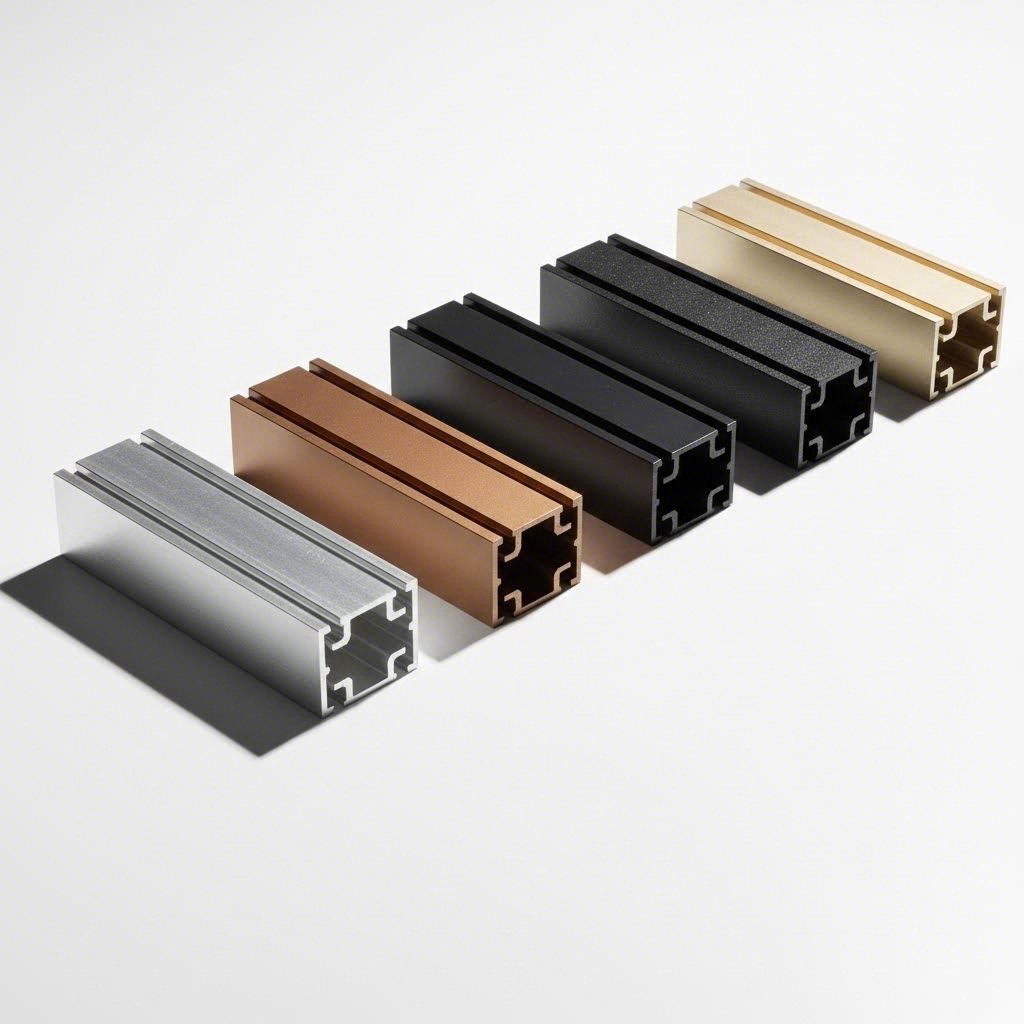
Your 6063 aluminum profile just came off the extrusion line with that characteristic silver-gray appearance. It's functional—but is it finished? For most applications, the answer is no. Surface treatments transform raw aluminium extrusion profiles into products ready for decades of service, whether facing coastal salt spray, intense UV exposure, or simply the scrutiny of discerning architects.
Here's what makes 6063 special in this context: its low copper content and balanced magnesium-silicon composition create an exceptionally uniform oxide layer during anodizing. This means consistent color absorption, fewer surface defects, and the kind of finish quality that aluminum profile extrusion applications demand.
Anodizing doesn't coat 6063—it transforms the surface itself into a hard, porous aluminum oxide layer that becomes integral to the metal. This electrochemical process explains why anodized aluminum extrusions outperform painted alternatives in durability and color stability.
According to the Aluminum Anodizers Council, several distinct anodizing methods exist, each producing different aesthetic and performance characteristics:
Clear anodize (Type II): These transparent coatings showcase the aluminum's natural metallic appearance. The anodic layer is sealed to enhance protection, creating a subtle sheen that resists fingerprints and minor abrasion. Ideal for industrial equipment, black aluminum extrusion frameworks, and applications where the material's inherent beauty matters.
Integral coloring: Produced using mixed electrolytes containing organic or inorganic acids alongside sulfuric acid, these finishes range from champagne through dark bronze, gray, and black. According to industry specifications, integral color coatings are extremely hard—making them suitable for high-wear applications. However, higher production costs have reduced their market share compared to electrolytic methods.
Electrolytically deposited coloring: The most common method for architectural finishes today. After clear anodizing, metal salts (typically tin, cobalt, or nickel) are deposited into the porous oxide layer. Colors range from light bronze through dark bronze and black, with excellent lightfastness and weather resistance. This process creates the consistent earth-tone finishes you see on commercial building facades worldwide.
Impregnated (dyed) coloring: Clear anodized profiles are immersed in organic or inorganic dyes that absorb into the porous coating. This method offers virtually unlimited color options—reds, blues, greens, and custom shades. However, organic dyes vary significantly in fade resistance, making dye selection critical for outdoor applications.
When color options beyond anodizing's range are required, or when specific performance characteristics matter, organic coatings enter the picture.
Powder coating applies dry powder electrostatically to the aluminium extruded profile surface, then cures under heat to form a durable finish. Benefits include:
PVDF (polyvinylidene fluoride) coatings represent the premium choice for architectural applications demanding maximum weathering resistance. These fluoropolymer finishes—commonly known by brand names like Kynar—provide exceptional color retention even after decades of UV exposure. High-rise curtain walls, stadium facades, and landmark buildings typically specify PVDF for this reason.
For applications where standard aluminum extrusion slider components or extruded aluminium track systems face demanding environments, powder coating often provides the optimal balance between performance and economy. Architectural projects with 30-year warranty requirements typically justify PVDF's higher cost.
When conventional anodizing isn't enough, micro-arc oxidation (MAO) creates a ceramic-like coating that dramatically outperforms standard surface treatments. According to VMT's technical documentation, MAO uses high-voltage plasma discharges within an electrolyte to form a dense, crystalline oxide layer with superior properties.
Key advantages of MAO on 6063 aluminum include:
MAO processing costs more than conventional anodizing, limiting its use to applications where extreme durability justifies the investment—aerospace components, military hardware, and high-performance industrial equipment.
Selecting the right surface treatment requires balancing durability requirements, aesthetic goals, and budget constraints:
| Finish Type | Durability | Relative Cost | Best Applications |
|---|---|---|---|
| Clear Anodize | Good | Low | Industrial components, interior trim |
| Electrolytic Color Anodize | Excellent | Medium | Architectural facades, exterior trim |
| Dyed Anodize | Variable | Medium | Custom colors, interior applications |
| Powder Coating | Very Good | Medium | Unlimited colors, outdoor furniture |
| PVDF Coating | Superior | High | Premium architecture, long warranties |
| Micro-Arc Oxidation | Exceptional | Highest | Extreme wear, aerospace, military |
Experienced manufacturers recognize that comprehensive finishing capabilities distinguish commodity suppliers from true solution partners. Companies like Shengxin Aluminium offer the full spectrum of surface treatments—including anodizing in custom colors like Champagne and Rose Gold, powder coating, PVDF, and micro-arc oxidation—enabling customers to source complete finished profiles from a single supplier rather than coordinating between extruders and finishers.
The surface treatment decision often determines a product's success in its intended environment. Understanding these options helps you specify appropriately—neither over-engineering with expensive finishes where standard anodizing suffices, nor under-specifying where harsh conditions demand premium protection. With finishing options understood, the sustainability benefits of 6063 aluminum deserve attention—an increasingly important factor in material selection decisions.
Here's a fact that might surprise you: in a world economy that's only 7.2% circular, aluminum stands as a remarkable exception. While most materials follow a linear path from extraction to landfill, 6063 aluminum extrusion products can cycle endlessly through the economy—retaining their properties indefinitely. For engineers and architects facing growing pressure to specify sustainable materials, this changes the conversation entirely.
What makes aluminum unique among industrial metals? As an elemental material, its fundamental properties don't change with mechanical processing. According to the Aluminum Extruders Council, aluminum can be recycled time and again with no degradation of properties—making it infinitely recyclable in the truest sense.
The numbers tell a compelling story:
"Creating recycled aluminum takes only 5% of the energy needed to make new aluminum, significantly reducing the carbon emissions of recycled aluminum compared to primary production."
The aluminum extrusion industry has embraced this advantage. North American extruders consumed 4 billion pounds of scrap in 2021—representing 55% of their total material need. Many extrusion facilities operate their own remelt operations, producing fresh billet directly from scrap. This vertical integration minimizes transport-related carbon while ensuring material quality.
Sustainability isn't just about recyclability—it's about how long materials serve before recycling becomes necessary. 6063's excellent corrosion resistance and durability contribute to exceptionally long product lifecycles, particularly in architectural applications.
Consider window frames and curtain wall systems. Properly finished 6063 extrusions routinely serve 40-50 years or longer before replacement—far exceeding the service life of alternative materials like vinyl or wood. This durability multiplies the sustainability benefit: fewer replacement cycles mean less material consumption and reduced manufacturing energy over a building's lifetime.
For green building certifications like LEED, these characteristics matter. According to ISO 14021 certification documentation, aluminum extrusions commonly contain 71% post-consumer recycled content—a figure that directly contributes to LEED material credits. Architects specifying 6063 aluminum can document both recycled content and recyclability, addressing multiple sustainability requirements simultaneously.
The carbon story continues improving. In 1995, producing one ton of primary aluminum generated 16.5 tons of CO2 equivalents. By 2018, that dropped to 12.0 tons. Today, multiple producers offer primary aluminum with less than 4 tons CO2 equivalent per ton—largely through hydropower and renewable energy sources. Combined with high recycled content, modern aluminum extrusions offer carbon footprints dramatically lower than historical baselines.
For engineers evaluating material options, the sustainability case for 6063 aluminum proves compelling: infinite recyclability, proven durability, high recycled content availability, and an industry actively reducing production emissions. These factors increasingly influence specification decisions as building codes and corporate sustainability commitments tighten. Understanding how to source quality extrusions that deliver these benefits becomes the final piece of the material selection puzzle.
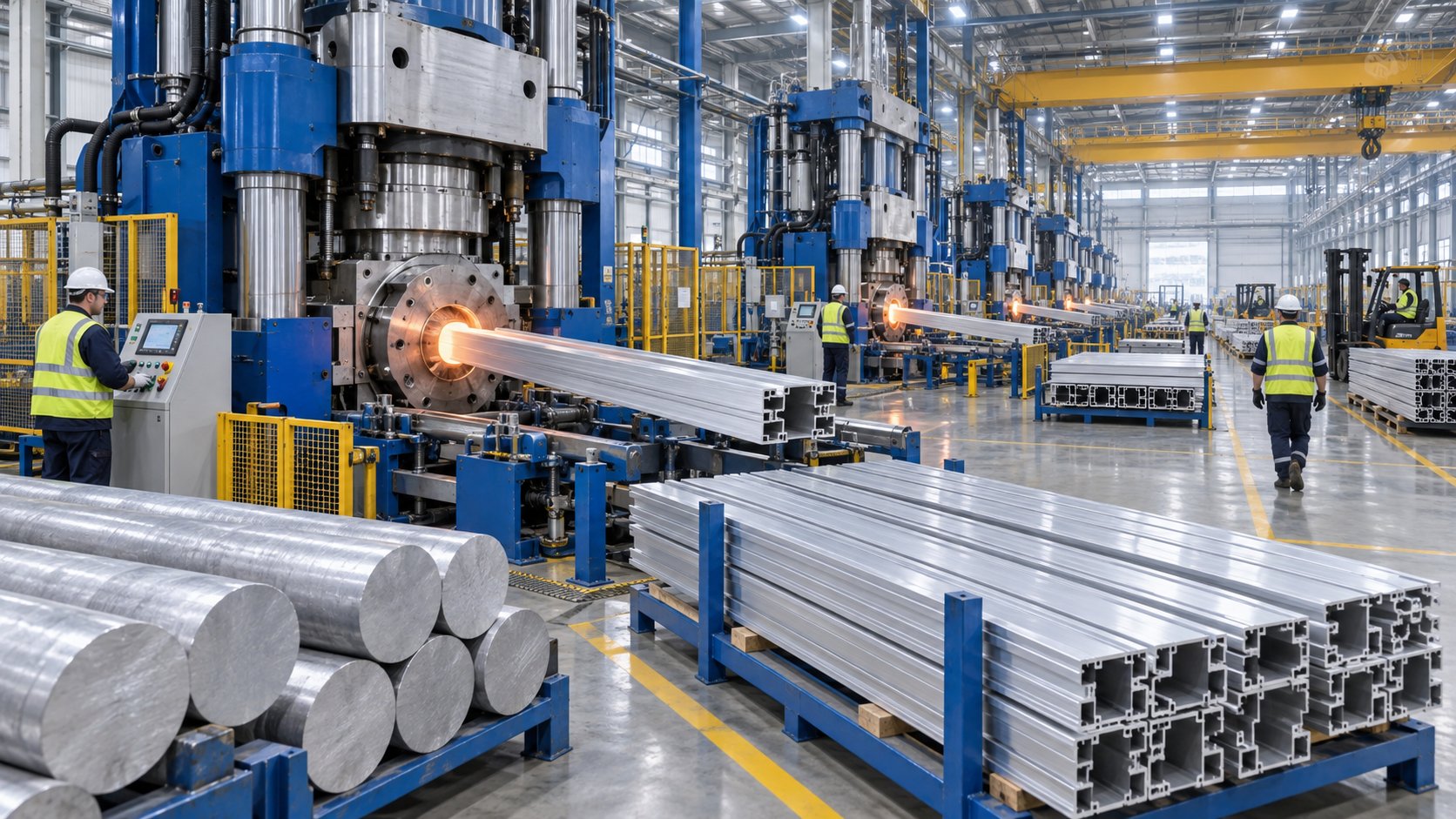
You've determined that 6063 aluminum fits your application, selected the appropriate temper, and planned your fabrication approach. Now comes the practical question that determines project success: where to buy aluminum extrusion that meets your specifications reliably? The difference between a commodity supplier and a genuine manufacturing partner becomes apparent when tight tolerances, consistent quality, and technical support matter.
Whether you're sourcing standard profiles or custom 6063 extrusion designs, the evaluation process requires looking beyond price quotes. According to industry sourcing guidelines, a qualified aluminum extrusion supplier offers much more than extruded profiles—they provide engineering collaboration, quality assurance, and integrated production capabilities that align with your business goals.
Before comparing suppliers, you need to understand exactly what defines quality in extruded aluminum 6063 products. Vague specifications lead to misunderstandings, rejected shipments, and costly delays. Here's what experienced buyers request upfront:
Dimensional tolerances: The Aluminum Association publishes standard tolerance charts covering metal dimensions, space dimensions, straightness, twist, and flatness. According to Bonnell Aluminum's design guidelines, applications where extrusions mate with other components or minimize machining make standard tolerances critical. If your application demands tighter-than-standard tolerances, discuss capabilities early—not every supplier can hold precision specifications consistently.
Surface quality standards: Since aluminum is a soft metal, processing marks can occur during extrusion, handling, and packaging. For exposed architectural surfaces, specify your requirements clearly. Quality suppliers design dies and select packaging specifically to protect critical surfaces from marring.
Certification requirements: At minimum, verify ISO 9001 certification for quality management systems. For automotive applications, look for IATF 16949. Aerospace and defense projects may require AS9100 or specific customer approvals. These certifications validate process control, traceability, and continuous improvement practices that directly affect product consistency.
Available aluminum extrusion sizes: Evaluate whether the supplier's press capacity matches your profile requirements. According to industry specifications, circumscribing circle diameter determines what equipment can produce your shape. Extruded aluminum sizes ranging from small precision components to architectural profiles exceeding 16 inches require different press tonnages and die capabilities.
Material testing documentation: Request details about in-house testing capabilities. Does the supplier offer tensile strength testing, dimensional inspection, hardness verification, and salt spray resistance checks? A strong quality assurance program minimizes rejects and downstream production interruptions.
Finding aluminum extrusions for sale is easy—identifying a supplier capable of supporting complex projects throughout their lifecycle requires deeper evaluation. The best extrusion partners operate as extensions of your production team, not just order-takers.
Consider these evaluation criteria when assessing potential suppliers:
For example, manufacturers like Shengxin Aluminium demonstrate what comprehensive service looks like in practice: 30+ years of industry experience, 35 extrusion presses ranging from 600T to 5500T, state-of-the-art CNC machining centers, and technical support spanning die development through mass production. This vertical integration means customers source complete finished profiles—including surface treatments and precision machining—from a single partner with factory-direct pricing.
Understanding realistic lead times prevents project delays and helps you plan inventory effectively. Several factors influence delivery schedules:
According to supplier evaluation best practices, asking about typical lead times, production capacity, and scalability upfront prevents surprises later. Document and compare information across potential suppliers—it becomes valuable reference material for ongoing supply chain management.
Before committing to production volumes, protect your project with verification steps:
The common sourcing mistake? Choosing suppliers based solely on price without verifying technical capability or quality consistency. Be cautious of vague quality claims, missing certifications, or overpromised lead times. A supplier that cannot provide samples, audit access, or detailed material specifications may not deliver the reliable partnership your projects require.
By approaching supplier evaluation systematically—defining specifications clearly, assessing capabilities thoroughly, and validating claims before commitment—you reduce sourcing risks and establish supply relationships that support consistent product quality for years to come.
6063 aluminum offers superior extrudability and surface finish quality, making it ideal for architectural applications requiring anodizing or decorative finishes. 6061 provides higher tensile strength (310 MPa vs 270 MPa in T6 temper) and better machinability, making it preferable for structural components requiring extensive CNC machining. 6063 has a higher melting temperature and thermal conductivity, while 6061 contains more copper which slightly reduces corrosion resistance but enhances mechanical performance.
Yes, 6063 aluminum is highly formable due to its excellent ductility and balanced magnesium-silicon composition. Its formability, combined with a high strength-to-weight ratio and superior corrosion resistance, makes it the preferred choice for bending aluminum into complex architectural and industrial shapes. The T5 temper offers better formability than T6, making it ideal for applications requiring secondary forming operations after extrusion.
6063 aluminum excels in architectural applications including window frames, door frames, curtain walls, and decorative trim due to its exceptional anodizing response and surface finish. Industrial applications include heat sinks, electrical enclosures, T-slot framing systems, and conveyor components. Emerging applications in solar panel framing and EV battery enclosures leverage the alloy's corrosion resistance, thermal conductivity, and recyclability credentials.
The key difference lies in heat treatment processing. T5 temper is air-cooled from extrusion temperature and artificially aged, offering good formability and lower cost. T6 temper undergoes solution heat treatment, quenching, and artificial aging, delivering approximately 30% higher tensile strength (35,000 psi vs 27,000 psi). Choose T5 for decorative applications where surface appearance matters most; specify T6 when structural loads require enhanced mechanical properties.
Evaluate suppliers based on technical expertise, production capacity (press tonnage range), quality certifications (ISO 9001 minimum), and value-added services like surface finishing and CNC machining. Request physical samples to verify dimensional tolerances and surface quality. Look for suppliers offering end-to-end support from die development through mass production, such as manufacturers with multiple extrusion presses and in-house finishing capabilities, to ensure consistent quality and competitive factory-direct pricing.



 online service
 0086 136 3563 2360
 sales@sxalu.com
 +86 136 3563 2360
 English
 français
 Deutsch
 русский
 español
 português
 العربية
 ไทย
ไทย Việt
Việt Українська