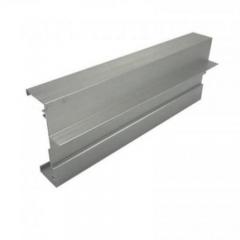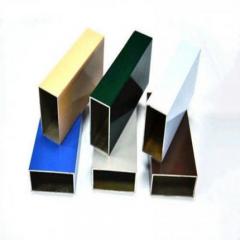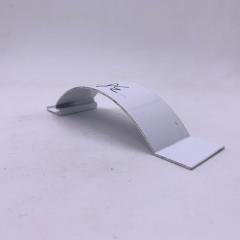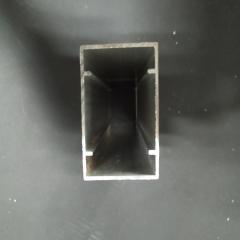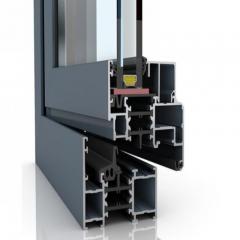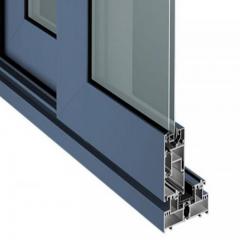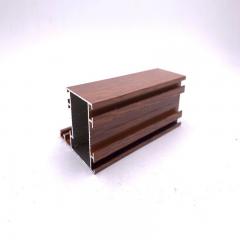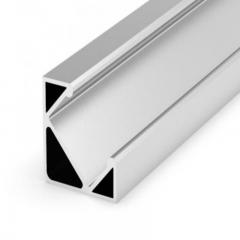
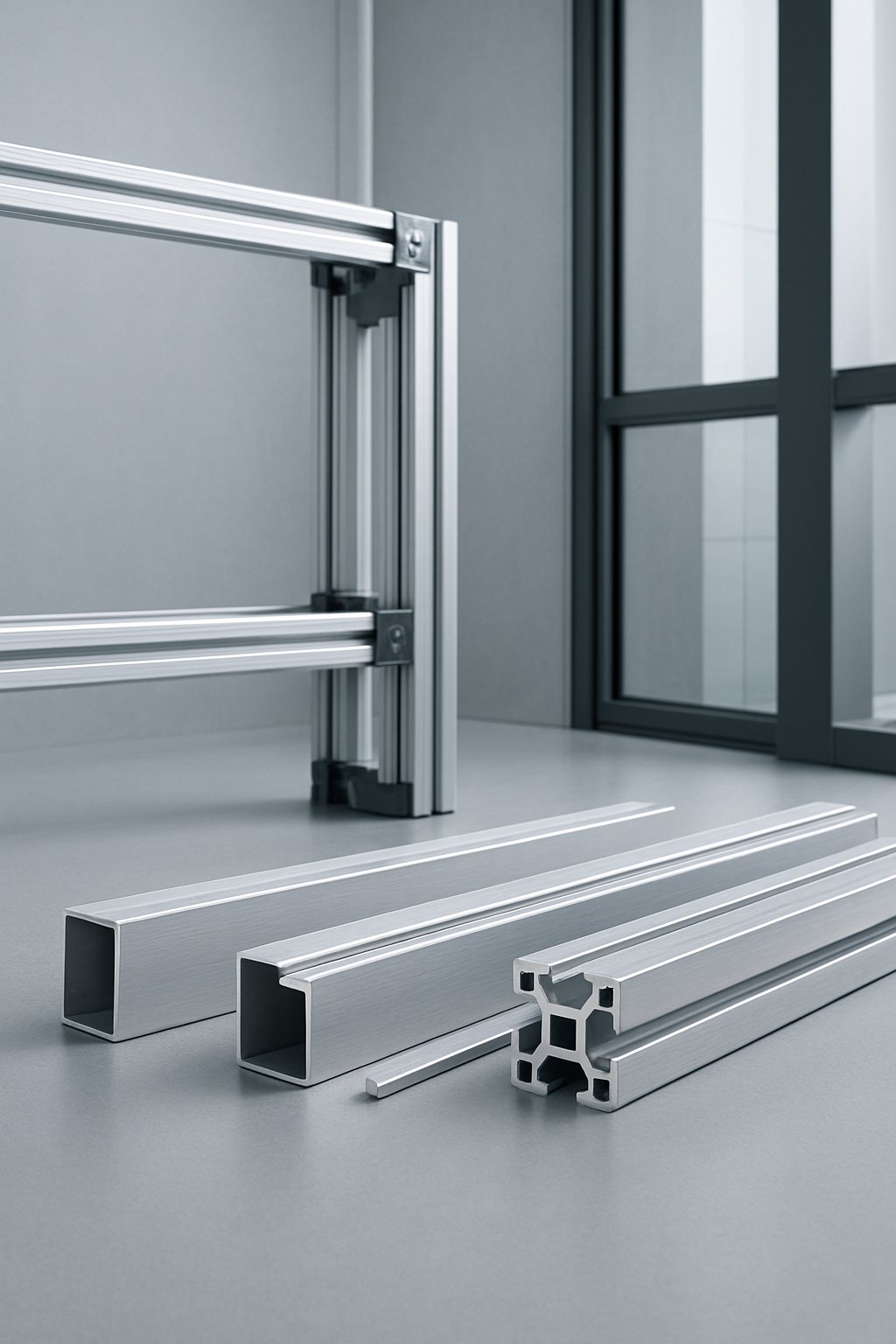
Search this term and the results can feel oddly mixed. One page shows a plain channel. Another shows modular framing. A third points to building components. That overlap is normal. In practice, an aluminium profile is a shaped section of metal made for a specific job, most often through aluminum extrusion, but used across very different industries.
An aluminium profile is a shaped metal section, usually made by extrusion, whose cross-section is designed for a specific structural, assembly, or architectural function.
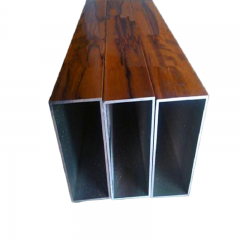
Reference materials on aluminum extrusion describe everything from flat bars and square tubes to angles, channels, tees, and custom sections with slots or interlocks. So when people use this term, they may be talking about a simple support shape, a modular frame member, or a building-oriented section rather than one single product type.
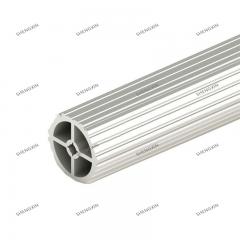
A broad aluminum extrusion profiles catalog may place all of these under one umbrella because they are all extruded aluminum sections. Even something described as an extruded aluminum rail is still a profile if its cross-section has been designed to guide, support, mount, or connect.
Naming usually follows market habits, not one universal rulebook. Industrial suppliers often describe shape first, using terms like channel, angle, hollow, or solid. Modular system suppliers focus on slots, lines, and hardware compatibility. Architectural sources may group products by application rather than raw geometry.
You will also see aluminum and aluminium used interchangeably. In American English, aluminum is standard. In many export, engineering, and architectural contexts, aluminium is common. The metal is the same. For specification work, the smarter question is not what the catalog calls it, but what the cross-section needs to do. That is where wall thickness, corners, hollows, and tolerances start to matter.
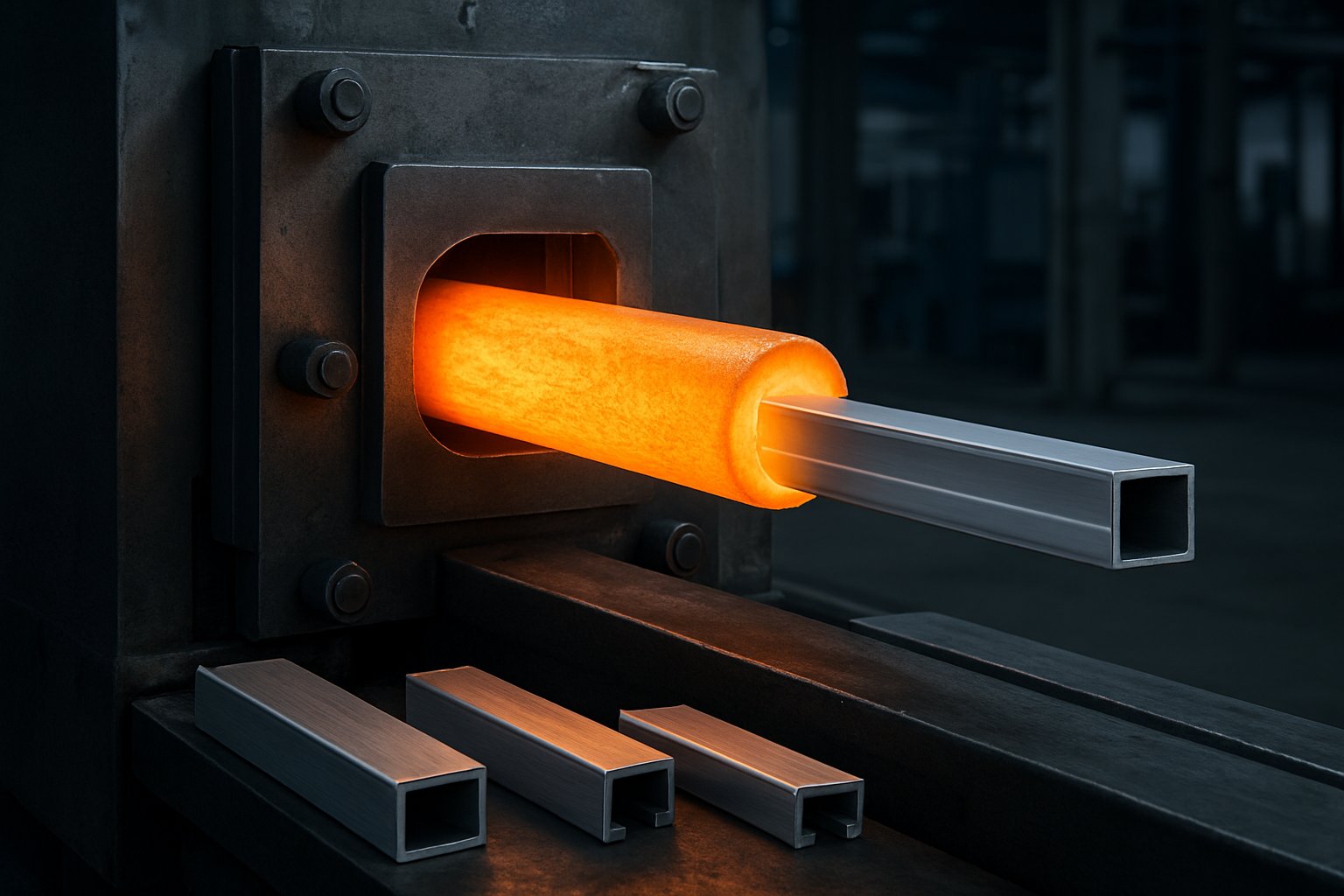
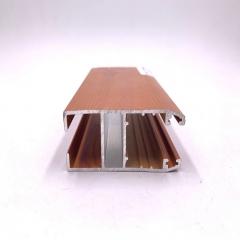
Wall thickness, radii, and hollows are not just drawing details. They come from how the section is made. In extrusion, a heated billet is pushed through a die, and the metal exits as a continuous shape that is cut to length. That is why aluminum extrusions can produce everything from a simple channel to parts used in aluminum framing, an aluminum structure, or specialized aluminum window frame extrusions.
The process sounds simple, but the design consequences are real. Metal flows under compression through the die opening, so the shape must let material move evenly. Guidance from Engineers Edge notes that hollows and intricate sections are possible, yet very tight tolerances are not typically the natural strength of extrusion. Practical design notes from aluminum-extrusions.com also stress balanced flow, smooth transitions, and realistic feature proportions. In plain terms, the friendlier the geometry is to metal flow, the easier it is to get a straighter, cleaner, more repeatable part.
Uniform walls usually behave better than profiles that jump from very thick to very thin. Uneven sections cool at different rates, which can add stress, warp the part, or leave visible finish variation. The same source suggests that many medium profiles run reliably around 1 to 1.5 mm wall thickness, while larger sections may need 2 mm or more, though exact limits depend on size, alloy, and shape.
Corner radii matter for the same reason. Sharp internal corners disrupt flow and increase die stress. A small radius helps, and about 0.5 mm is often treated as a practical baseline, with larger radii preferred when space allows. Deep narrow grooves and tall fins also deserve caution. A rough rule from the same engineering guidance is to keep depth near or below about three times the opening width. That can affect T-slots, guide channels, and profiles used in material flow racks, where a narrow feature may look efficient on screen but prove harder to extrude cleanly.
Typical as-extruded numbers compiled by Engineers Edge include straightness of 0.0125 in per foot, twist of about 0.5 degrees per foot, flatness of plus or minus 0.004 in per inch of width, angular tolerance of plus or minus 1 to 2 degrees, and wall thickness tolerance of about plus or minus 10 percent. The AEC notes that industry-standard and precision tolerance tables both exist, and tighter requirements are often a supplier discussion rather than a default assumption.
| Design factor | Practical effect | Selection implication |
|---|---|---|
| Wall thickness | Uneven walls cool unevenly, which can increase warp, stress, and finish variation. | Keep walls as uniform as function allows. If strength is needed locally, blend thickness changes gradually. |
| Corner radii | Sharp corners restrict flow and stress the die. Radiused corners improve surface quality and die life. | Avoid zero-radius geometry. Add fillets at junctions, especially near slots and internal corners. |
| Hollow vs open shape | Hollows can improve function and stiffness, but tooling and flow become more complex. | Use hollows when they reduce assembly or weight. Simplify multi-void sections if manufacturability becomes risky. |
| Balanced geometry | Heavy mass on one side can promote twist as the part exits the press. | Balance ribs, slots, and thick zones. This matters in aluminum framing and material flow racks where straight assembly is important. |
| Slot or fin proportions | Deep, narrow features are harder to fill and more vulnerable to distortion. | Check depth-to-width ratio early. Widen grooves or shorten fins if the feature is too aggressive. |
| Overall profile size | Larger circumscribed size can limit press options and raise cost. | Keep the cross-section envelope as small as performance allows. |
| As-extruded tolerance level | Straightness, twist, flatness, and wall variation are controlled, but not infinitely tight. | Tighten only the dimensions that truly affect fit or function. Machine critical surfaces if needed. |
| Joining and finishing surfaces | Geometry influences bracket fit, fastener access, anodizing consistency, and coating appearance. | Mark critical faces on the drawing, especially for mating hardware and aluminum window frame extrusions. |
A profile can be extrudable and still be hard to compare in a catalog. Terms like slot, groove, line, and series often carry as much selection value as the geometry itself.
Dimensions tell you what a shape is. Catalog language tells you how that shape behaves inside a system. That is why two similar-looking frames can use hardware that does not interchange. In modular aluminium profiles, words like slot, groove, line, and series usually describe fit rules as much as geometry.
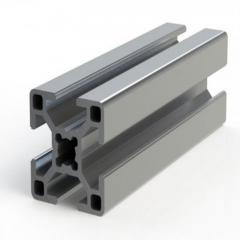
Across modular framing references from item and the 80/20 guide, the slot or groove is the continuous channel that accepts nuts, fasteners, panels, and brackets. The exact shape varies by system, so the name alone is not enough.
Line and series often mean profile family, not just size. In one system, Line 5, 6, 8, 10, and 12 track modular dimension, groove size, and bore size. In another, series numbers identify the broader product category and base dimension used in naming. That makes line or series useful shorthand for compatibility, but not a universal language.
So when comparing an aluminium profile or another aluminum profile type, treat the family name as a fit clue, not a guarantee. The same goes for aluminium profiles that look alike in photos. Before moving to strength or finish questions, confirm the hardware ecosystem first, because material choice only helps when the system can actually be assembled the way you need.
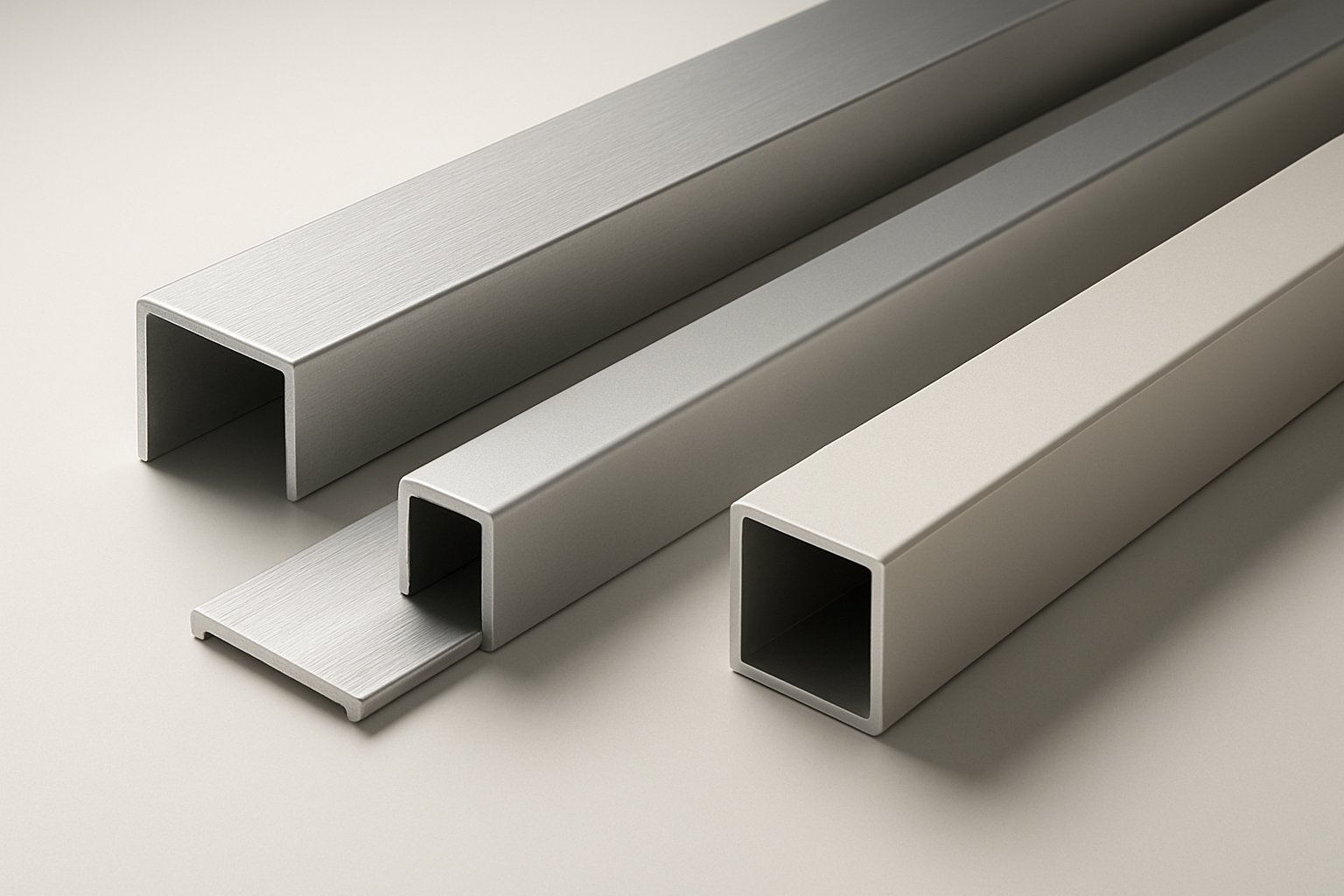
Catalog terms tell you whether parts fit together. Alloy and finish tell you how the section will live in the real world. For any aluminum profile, selection usually comes down to a few practical questions. Does it need higher strength, easier machining, better corrosion resistance, a cleaner anodized look, or simpler forming? That is why many extruded aluminum profiles use 6063 for appearance and extrudability, while more structural parts often lean toward 6061.
Among common 6000-series options, 6061 and 6063 cover a large share of industrial and architectural work. 6063 is easier to shape, weld, and finish attractively. It also offers strong corrosion resistance, which is why it shows up so often in windows, doors, trim, and any visible extruded aluminium channel. A window profile guide also identifies 6063-T5 as the standard choice for many frame systems because it balances strength, formability, and finish quality.
6061 shifts the priority. It brings higher basic strength, better machinability, and greater hardness. PSI lists Brinell hardness at 95 for 6061 versus 73 for 6063, which helps explain why 6061 is favored for more demanding structural or machined parts. The tradeoff is lower extrudability and a surface that is usually less ideal for fine decorative work. For lighter decorative use, 6060 can be appropriate, but with lower mechanical strength than 6063.
Finish can change durability, maintenance, and appearance just as much as alloy. Mill finish is simply the bare as-extruded surface of extruded aluminium. It is useful when appearance is secondary or when the part will be fabricated further. Anodizing becomes part of the metal itself, so it does not peel or flake. The SAF finish guide notes that anodizing is harder than many organic coatings and gives aluminum a richer metallic look. Powder coating, by contrast, is chosen for broad color and texture flexibility. In architecture, PVDF or FEVE systems may be preferred when UV and chemical resistance matter most.
| Choice or consideration | Typical decision criteria | What it usually helps | Tradeoffs or cautions |
|---|---|---|---|
| 6063-T5 | Visible surfaces, complex shapes, good corrosion resistance | Clean finish quality, strong extrudability, common for windows and doors | Lower strength and machinability than 6061 |
| 6061 | Higher loads, more machining, tougher service | Better strength, hardness, and structural confidence | Less ideal for intricate cosmetic shapes or highly refined surface appearance |
| 6060 | Decorative or light-duty parts | Good appearance and corrosion resistance | Lower mechanical strength |
| Mill finish | Low-cost baseline, hidden parts, later fabrication | No added coating process, simple starting point for profile aluminum work | Shows raw extrusion marks and offers no added color layer |
| Anodized finish | Metallic appearance, abrasion resistance, outdoor use | Hard surface, cannot peel, strong visual depth | Color variation can occur, and exterior durability depends on coating thickness and sealing |
| Powder-coated finish | Color choice, texture, exterior durability | Broad design flexibility and factory-applied protection | Surface texture such as orange peel can appear, and performance depends on resin and pretreatment |
| Architectural thermal break | Energy performance in windows, doors, curtain wall | Polyamide barrier reduces thermal bridging and condensation risk | Adds system complexity and compatibility checks beyond the metal section itself |
Even a simple extruded aluminium channel can perform very differently depending on alloy, temper, and finish. Then another layer of confusion appears in catalogs: line, series, light-duty, and heavy-duty labels often sound like material grades, but they usually describe profile families, wall design, and hardware ecosystems instead.
In modular framing catalogs, two labels often sit side by side but mean very different things. One label identifies the family of the profile, usually tied to slot size, groove geometry, and matching parts. The other describes how much material is built into that shape. Confusing those two ideas is a common reason people choose the wrong member.
Using item as a well-documented example, Line 5, Line 8, and Line 10 refer to different modular families rather than simple strength rankings. Their reference dimensions are 20 mm, 40 mm, and 50 mm, and the groove dimension and bore diameter grow with the line. In practical terms, that changes what fasteners, panels, and end connections fit the profile.
That is why Line 5 is typically chosen for compact jigs, covers, and space-saving assemblies, while Line 8 is treated as a versatile all-rounder for machine frames and carts. Line 10 moves into more load-bearing construction. In the same published source, its 10 mm groove accepts M10 accessories, and certain Line 10 connections are listed with a maximum permissible load-bearing capacity of 7000 N.
Duty class answers a different question. Terms such as Economy and Light usually mean reduced material in the section, not a new slot ecosystem. Published Vention data shows this clearly in a 45 x 45 mm example: the light-duty version cuts weight by 31 percent, but the area moment of inertia also drops from 162,325 mm4 to 103,180 mm4. So a lighter member may still fit the same family of aluminum extrusion hardware, yet deflect more under the same span and load.
Standard profiles are the baseline choice in many systems. Heavy-duty is less universal as a catalog term, but it usually points to thicker walls, larger cores, or higher-stiffness geometry. The key idea is simple: family tells you what fits, while duty tells you how the section is likely to behave.
| Family or duty class | Common use case | Typical system characteristics | Selection considerations |
|---|---|---|---|
| Line 5 or 20 mm family | Compact fixtures, small guards, lab accessories | Small modular envelope, lighter members, space-efficient groove family | Good when footprint matters more than maximum rigidity. Confirm panel and fastener size early. |
| Line 8 or 40 mm family | General machine frames, workstations, carts | Balanced size, broad accessory range, common all-purpose framing choice | A strong default for mixed-duty builds. Often easier to source compatible aluminum extrusion hardware. |
| Line 10 or 50 mm family | Machine bases, higher-load frames, robust supports | Larger groove family, stronger connection zones, M10 accessory compatibility in the cited system | Choose when connection capacity and stiffness need to step up, not just when the frame "looks bigger." |
| Economy | Cost-sensitive frames with short spans or lighter service | Material-optimized design, lower maximum tensile loading than standard versions | Useful for non-critical structures. Check deflection and joint loads before substituting. |
| Light | Guards, movable frames, weight-sensitive assemblies | Reduced mass, usually lower bending stiffness than standard at the same outside size | Best where handling weight matters. Verify span, vibration, and sag, not just connector fit. |
| Standard or heavy-duty | General-purpose to demanding structural builds | More material in key webs and corners, typically higher rigidity and better resistance to deflection | Often the safer choice for long spans, repeated loading, or precision assemblies. |
| Aluminum tube profiles | Lean carts, shelving, and flow rack system layouts | Different connector logic from classic T-slot beams, often optimized for fast reconfiguration | Do not assume interchangeability with square T-slot families just because both are modular. |
Family first, duty second is the safest comparison method for aluminum profiles. Two members can share similar outer dimensions yet belong to different slot standards, which changes nuts, brackets, panels, and end fasteners. That is also why older project notes, including bosch aluminum extrusion style terminology, should be translated by groove family and hardware fit rather than by outside size alone.
Application keeps the whole comparison honest. A compact jig, a machine guard, and a flow rack system may all use modular framing, but they do not ask the same thing from the profile. That shift from family labels to real-world use is where selection starts getting practical.
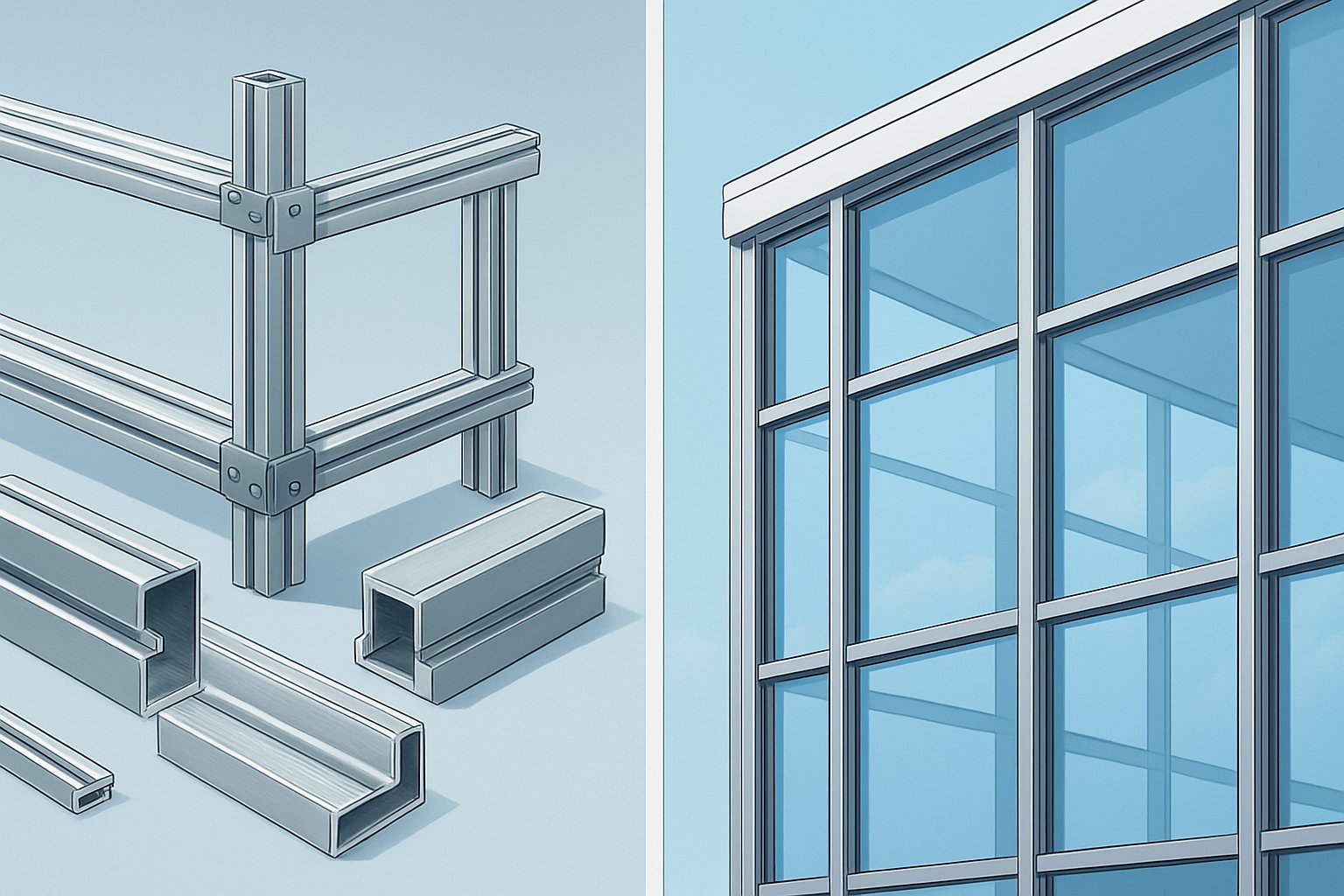
The same metal can end up in a workstation frame, a machine guard, or a thermally broken window. That is why application matters so much. A profile that works well in a modular factory build may be a poor choice for a building envelope, even if both are made from aluminum.
A broad list of manufacturing applications shows aluminium extrusions used in assembly lines, automated systems, safety enclosures, machine guards, material handling equipment, clean room infrastructure, quality control stations, workstations, equipment mounting systems, and custom machine frames. In these settings, modular sections are popular because they support quick changes, accept accessories and panels, and can be built into anything from simple benches to conveyor support structures. That also explains why many aluminum extrusion frame kits are aimed at benches, enclosures, and light industrial structures.
Building applications ask different questions. The thermal break guide highlights aluminum's light weight, weather resistance, low maintenance needs, design flexibility, and ability to support large glass surfaces with relatively slim frames. For windows, doors, and related glazed exterior assemblies, the focus shifts to appearance, weather exposure, glazing integration, and insulation. Thermal-break systems place a glass-fibre reinforced polyamide separator between inner and outer sections to interrupt heat transfer. In specification documents, you may also see this kind of separator described as PA66 nylon insulation bars, so the paperwork deserves as much attention as the section drawing.
| Application | Typical profile used | Main performance concern | Key selection checkpoint |
|---|---|---|---|
| Workstations and quality stations | Modular T-slot framing | Adjustability and accessory mounting | Confirm slot family, bench height needs, and add-on compatibility |
| Machine guards and safety enclosures | Framing profiles with panel infill | Barrier rigidity and panel integration | Check guarding panel fit, door hardware, and mounting points |
| Conveyor structures and assembly lines | Heavier modular support sections | Frame stiffness and equipment support | Review span, mounted components, and future expansion |
| Material handling frames and carts | Light to medium modular members | Weight versus rigidity | Verify joint strength, mobility needs, and load distribution |
| Partitions and clean room framing | Wall and partition frame sections | Controlled-environment suitability | Match infill panels, sealing details, and layout flexibility |
| Equipment enclosures and custom machine frames | Open or enclosed structural profiles | Access, serviceability, and mounting flexibility | Plan openings, equipment interfaces, and connector access |
| Windows and doors | Architectural frame profiles | Weather resistance, appearance, and glazing support | Check finish, glazing details, and hardware documentation |
| Thermal-break assemblies | Multi-part architectural profiles | Reduced heat transfer and condensation control | Confirm polyamide separator details and system test documentation |
If an older project note mentions bosch extrusion or bosch extruded aluminum, treat that as a clue about system style rather than a full specification. The same lesson applies across all aluminium extrusions: the application tells you where to look, but the final choice still depends on load, environment, finish, joining method, and compatibility across the whole system.
Good selection work is usually less about finding one perfect shape and more about asking the right questions in the right order. Guidance from PTSMAKE and Richardson Metals points to the same pattern: start with application, load, joining method, and finish before you compare part numbers. That approach holds whether you are choosing a plain section, a modular member for framing tech, or an 80/20 aluminum extrusion style system.
The right profile balances load capacity, compatibility, and manufacturability.
Before requesting quotes, ask for documentation that answers the real selection questions:
Most selection mistakes are not hidden in the metal itself. They sit in the missing notes: which face is cosmetic, which slot takes which fastener, which tolerance actually matters, and what finish is really being quoted. That makes the next part of the process surprisingly important: learning how to read supplier catalogs and documentation without guessing at the blanks.
A quote request is only as good as the paperwork behind it. When several suppliers seem similar in photos, the real difference usually shows up in drawings, test data, finish detail, and support after delivery. That applies whether you are sourcing structural aluminum for a frame, a decorative architectural section, or everyday aluminum framing material for modular builds.
A useful catalog should do more than display polished product shots. For plain sections and aluminum structural framing alike, look for cross-section drawings, alloy and temper, finish options, stock or custom lengths, compatible hardware, and clear application notes. The CAN Art guide also highlights track record, ISO 9001, customization options, sample review, and lead times as practical screening points. If a catalog only answers the basic question, what does extruded aluminum mean, but leaves out tolerances or finish information, it is not yet specification-grade.
Architectural systems need another layer of scrutiny. The manufacturer guide stresses verifiable AAMA, NFRC, and WDMA references, along with project-specific reports for Design Pressure, Water Penetration Resistance, U-factor, and, when relevant, SHGC. Good suppliers also provide BIM files, detailed shop drawings, warranty scope, and replacement-part support. For industrial sourcing, the test is simpler but no less important: can the supplier document exact geometry, compatible hardware, visible-surface expectations, and fabrication limits for the part you will actually order?
Custom resources are most helpful when they let you compare capability, not just browse shapes. Shengxin Aluminium is one useful starting point if you want to review catalog breadth across custom extrusion profiles, anodized finishes, and applications ranging from facades to machinery parts. Use that kind of resource carefully. If a listing mentions architecture aluminum profile tube with logo, verify whether the branding is a finish step, a machining step, or part of the extrusion design itself. And if a supplier explains what does extruded aluminum mean without showing drawings, finish detail, or support documents, keep looking. In practice, the best supplier is usually the one that makes comparison easiest through clear data, not louder claims.
An aluminium profile is a metal section with a purpose-built cross-section, most often produced through extrusion. The term is broader than many buyers expect. It can refer to a simple channel or angle, a modular T-slot member used in framing, or an architectural section for windows, doors, and facade systems. Because suppliers name products by shape, system family, or end use, the same keyword can lead to very different results. A better way to evaluate any profile is to look at its geometry, wall design, finish, tolerance needs, and how it will be joined in the final assembly.
Aluminium profiles are used across both industrial and architectural projects. In factories, they often appear in workstations, machine guards, enclosures, carts, conveyor supports, and modular frames because they are light, adaptable, and easy to assemble with accessories. In buildings, they are common in windows, doors, partitions, curtain wall components, and other visible framing elements. The application changes the selection logic. Industrial builds usually prioritize rigidity, hardware fit, and easy modification, while architectural systems place more weight on appearance, weather exposure, glazing integration, and in some cases thermal-break design.
Choose 6063 when you need better extrudability, a cleaner visual finish, and strong corrosion resistance for visible or architectural sections. It is often the safer fit for profiles that will be anodized or used in windows, doors, trims, and other appearance-sensitive parts. Choose 6061 when the job involves higher structural demand, more machining, or a harder-working mechanical part. The decision should not stop at alloy, though. Finish, temper, fabrication steps, and service environment all influence whether a profile performs well once installed.
These terms usually describe system compatibility rather than raw material quality. Line or series often identifies a product family with a shared groove standard, base size, and connector ecosystem. Slot size matters because it affects which T-nuts, brackets, panels, covers, and fasteners will actually fit. Two profiles may look similar from the outside and still belong to different systems that do not interchange cleanly. When comparing modular options, confirm the slot geometry, accessory range, and connector logic before assuming one supplier's hardware will work with another profile family.
Start with the technical basics: cross-section drawings, alloy and temper, finish options, available lengths, tolerance standards, and any notes on visible surfaces or machining limits. Then confirm the practical details, such as hardware compatibility, custom extrusion support, lead times, minimum order expectations, and quality documentation. If the profile is architectural, also look for thermal-break information and relevant system testing references where needed. A broad resource such as Shengxin Aluminium's product catalog can be useful for comparing custom aluminum extrusion profiles, anodized options, and application range, but photos alone are never enough. Good supplier selection depends on clear drawings and usable documentation, not just a large product list.



 online service
 0086 136 3563 2360
 sales@sxalu.com
 +86 136 3563 2360
 English
 français
 Deutsch
 русский
 español
 português
 العربية
 ไทย
ไทย Việt
Việt Українська