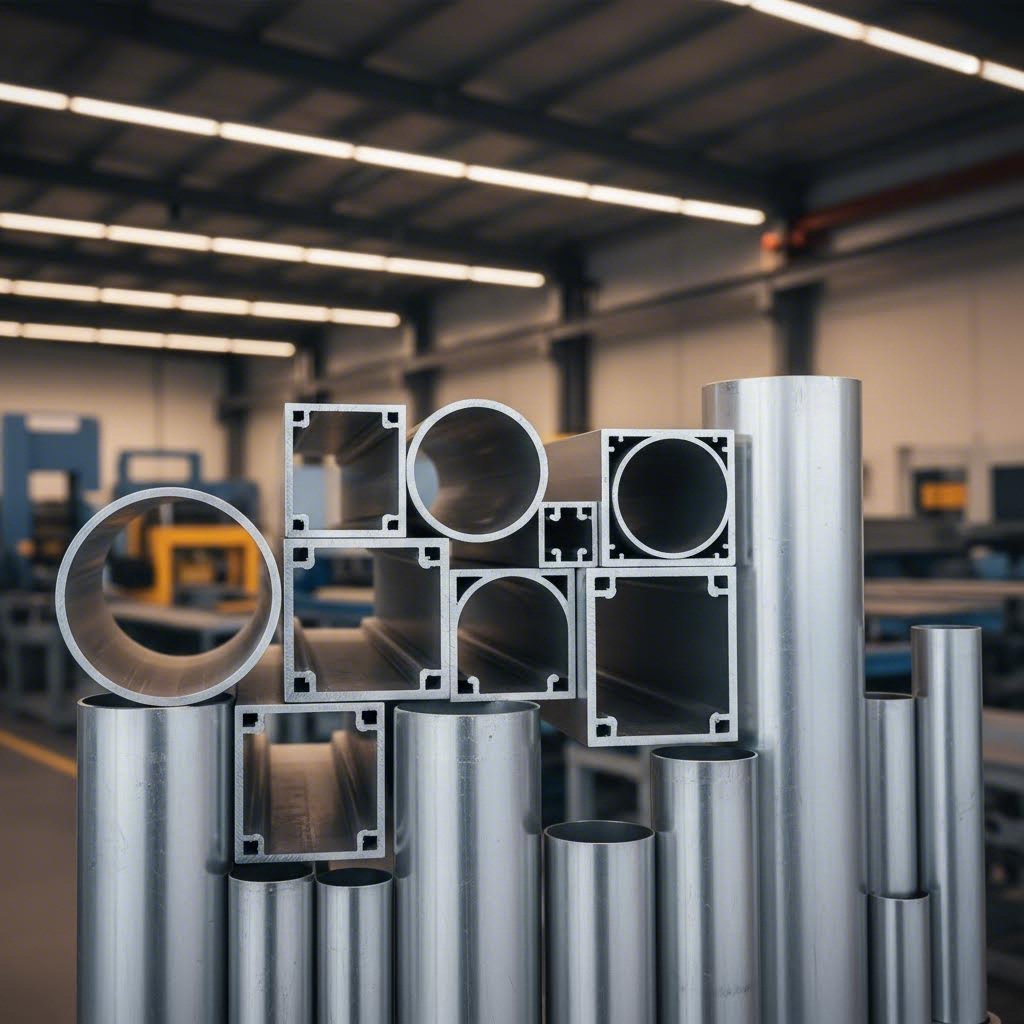
When you need to create aluminum parts with complex cross-sectional shapes, how do manufacturers achieve such precision consistently? The answer lies in a remarkably efficient process that transforms raw aluminum into virtually any profile you can imagine.
Aluminum extrusion is a manufacturing process that forces heated aluminum alloy through a shaped die opening to create parts with specific, consistent cross-sectional profiles.
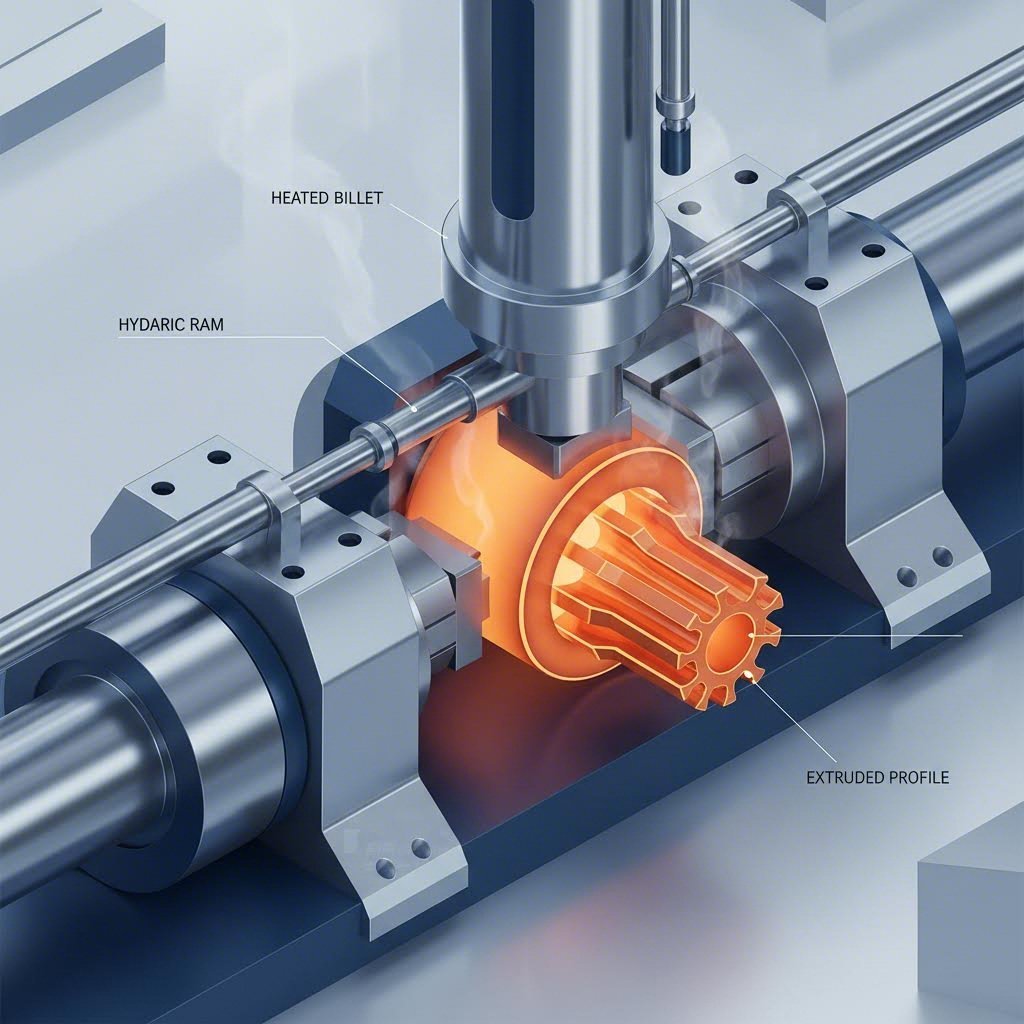
So, what is aluminum extrusion in practical terms? Picture squeezing toothpaste from a tube. The paste takes the shape of the opening as it exits. Aluminum extrusion works on the same principle, but with far greater precision and force. A solid cylindrical aluminum billet is preheated to temperatures between 700-930°F (370-500°C), making the metal soft and pliable. A hydraulic ram then applies immense pressure, ranging from 1,000 to 15,000 tons, forcing the aluminum through a steel die with a carefully designed opening.
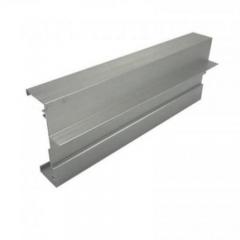
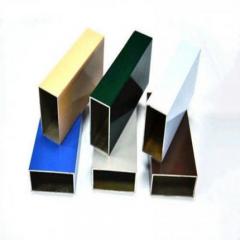
The result? Extruded aluminum profiles that match the exact shape of the die opening, with remarkable dimensional accuracy. These profiles can be solid, hollow, or semi-hollow, and they emerge in lengths of 8 to 24 feet before being cut to specification. The aluminium extrusion meaning extends beyond just shaping metal; it represents a complete manufacturing solution that includes heat treatment, surface finishing, and secondary fabrication operations.
Understanding what is extruded aluminum requires knowing the five critical stages of production. First, billets undergo preheating to achieve optimal plasticity. Next, the heated billet loads into a container within the extrusion press. The hydraulic ram then advances, applying tremendous pressure. As aluminum pushes through the die, it transforms into the desired profile shape. Finally, the extruded profile cools and moves to further processing.
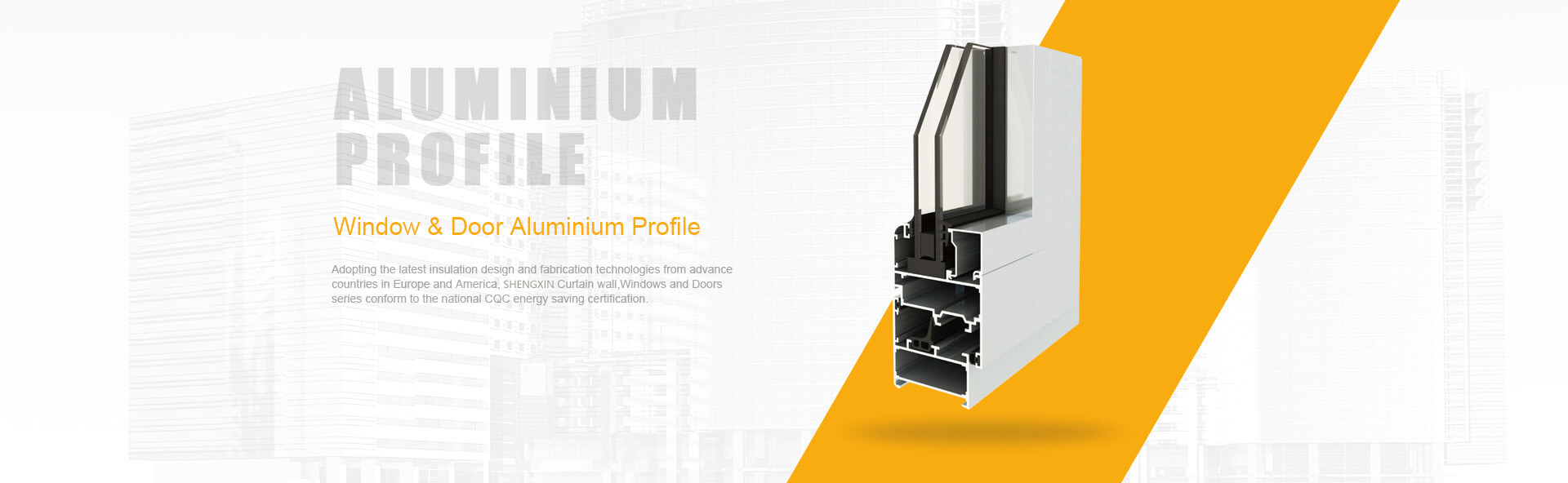
Why does the aluminum extrusion definition matter for your projects? Engineers, designers, and procurement professionals benefit from understanding these fundamentals because it directly impacts material selection decisions. The versatility of this process enables profiles ranging from simple bars and angles to intricate structural members with internal reinforcements. This flexibility explains why aluminum extrusions appear everywhere, from window frames and curtain walls to automotive components and electronic enclosures.
Grasping what is extrusions and how different types serve different purposes positions you to make smarter material choices. The sections ahead will decode the complete taxonomy of extrusion processes, profile geometries, and alloy characteristics, giving you the knowledge to match the right aluminum solution to your specific project requirements.
Ever wondered why some aluminum parts have flawless surfaces while others prioritize raw strength? The answer often comes down to how aluminum extrusion is made, specifically the temperature and method used during the extrusion process. Let's break down the complete taxonomy of extrusion processes so you can understand which approach fits your project best.
Hot extrusion dominates the aluminum extrusion process for good reason. Operating at temperatures between 700-930°F (370-500°C), this method keeps aluminum soft and highly malleable. You'll find this thermal range ideal when creating complex cross-sections, intricate hollow profiles, or large structural components.
Why does temperature matter so much? At elevated temperatures, aluminum's flow stress drops dramatically, requiring less force to push through the die. This allows manufacturers to produce profiles with thinner walls, sharper corners, and more elaborate internal features. The extrusion of aluminium through hot processing also accommodates a wider range of alloys, including the popular 6063 and 6061 series that require heat treatment for optimal properties.
However, hot extrusion comes with trade-offs. Surface oxidation increases at higher temperatures, and dimensional tolerances tend to be slightly looser compared to cold methods. For applications where visual appeal matters more than micrometer-level precision, these factors rarely pose significant concerns.
When your project demands exceptional dimensional accuracy and superior surface finish, aluminium cold extrusion delivers results that hot processing simply cannot match. Performed at or near room temperature, cold extrusion produces parts with tolerances as tight as ±0.001 inches.
The physics here work differently. Without thermal expansion effects, the extruded profile maintains extremely consistent dimensions. The lack of oxidation means surfaces emerge smooth and ready for finishing with minimal preparation. Cold extrusion also work-hardens the aluminum during processing, increasing strength without additional heat treatment.
The limitations? Cold extrusion requires significantly higher forces since the metal lacks the plasticity of heated aluminum. This restricts the process to simpler profiles, smaller cross-sections, and specific alloys with excellent cold formability. Non ferrous extrusion using cold methods typically applies to precision fasteners, small mechanical components, and parts requiring tight concentricity.
Beyond temperature, how the aluminum moves during extrusion shapes the final product's characteristics. Direct extrusion pushes the billet forward through a stationary die, while indirect extrusion keeps the billet stationary as the die moves toward it.
In the aluminium extrusion process using direct methods, the billet slides against the container walls, creating friction that increases force requirements and generates heat inconsistencies. Despite these challenges, direct extrusion remains the industry standard because equipment is simpler and it handles large, complex profiles effectively.
Indirect extrusion eliminates billet-to-container friction, resulting in lower extrusion forces, more uniform temperatures, and superior surface finishes with improved dimensional accuracy. This method excels for small-diameter tubes, thin-wall profiles, and applications demanding exceptional mechanical consistency.
Selecting the right extrusion aluminium process depends on balancing several factors. Consider this comparison to guide your decision:
| Process Type | Temperature Range | Suitable Alloys | Typical Applications | Surface Finish | Production Speed |
|---|---|---|---|---|---|
| Hot Extrusion (Direct) | 700-930°F | 6063, 6061, 6005, 7075 | Architectural profiles, structural components | Good | High |
| Hot Extrusion (Indirect) | 700-930°F | 6063, 6061, 2024 | Precision tubes, aerospace parts | Excellent | Moderate |
| Warm Extrusion | 400-600°F | 6063, 6061 | Moderate complexity parts | Very Good | Moderate |
| Cold Extrusion | Room Temperature | 1100, 3003, 6061-O | Fasteners, precision components | Excellent | Lower |
The engineering rationale comes down to your priorities. Need complex geometries at competitive costs? Hot direct extrusion handles that efficiently. Require tight tolerances and pristine surfaces? Cold or indirect methods justify their additional complexity. Many projects find warm extrusion offers a practical middle ground, balancing formability with dimensional control.
Understanding these process variations positions you to specify exactly what your application demands. With the extrusion method selected, the next critical decision involves choosing the right profile geometry to match your structural and functional requirements.
When selecting aluminum extrusion profiles for your project, geometry matters as much as alloy choice. The cross-sectional shape determines not only what the die looks like but also how much pressure the extrusion process requires, how long the die lasts, and ultimately what your part can accomplish structurally. Three fundamental geometries dominate the extrusion landscape: solid, hollow, and semi-hollow configurations.
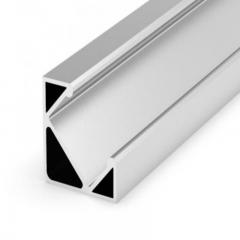
Solid extruded aluminum profiles contain no enclosed voids or openings. Think of bars, angles, channels, and flat strips. These shapes offer the simplest die designs and the most straightforward extrusion process.
Why choose solid profiles? They deliver maximum material strength for load-bearing applications where cross-sectional integrity matters most. The dies used to create them fall into three categories: flat-face dies with openings matching the profile exactly, pocket dies with built-in cavities for continuous extrusion, and feeder dies with separate plates that control aluminum flow. Each die type offers specific advantages depending on your production requirements.
Solid aluminum extrusion profile geometries excel in applications where strength-to-weight optimization takes a backseat to pure structural performance:
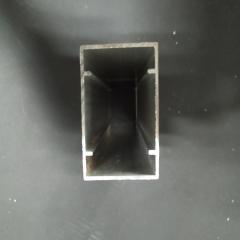
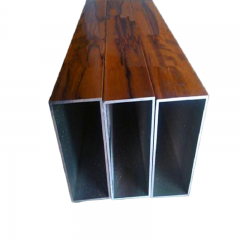
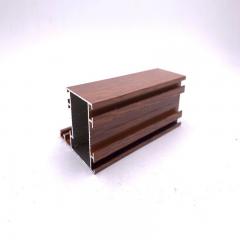
Hollow extrusion profiles feature one or more fully enclosed voids within their cross-section. Simple rectangular tubes and complex multi-void T-slots both fall into this category. These shapes require more sophisticated tooling but deliver exceptional strength-to-weight ratios.
The die complexity increases significantly for hollow profiles. Manufacturers use porthole dies consisting of two interlocking pieces: a mandrel that forms internal features and a cap that shapes external surfaces. During extrusion, hot aluminum enters through ports in the mandrel, flows around supporting webs, welds back together, and exits through the cap opening. This welding action requires precise temperature control and adds considerations for structural applications.
Hollow aluminium extrusion profile designs suit projects prioritizing weight savings without sacrificing rigidity:
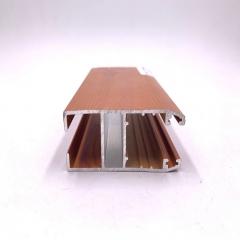
Semi-hollow profiles occupy the middle ground, featuring voids that are partially enclosed rather than fully surrounded by material. Picture a narrow channel or a C-shaped profile with a small gap. These shapes present unique manufacturing challenges that affect both die life and extrusion costs.
So how do manufacturers distinguish between solid and semi-hollow extruded profiles? A formula called the tongue ratio (Area/Gap²) provides the answer. The larger the void area and the narrower the gap, the higher the tongue ratio, and the more likely a shape qualifies as semi-hollow. This matters because higher tongue ratios make extrusion more difficult and increase die wear.
Why does the tongue ratio create challenges? The thin tongue section of the die experiences tremendous stress during extrusion, with up to 15,000 tons of pressure pushing against it. Dies for semi-hollow aluminium extruded profile designs often require reinforced tongue areas and more frequent replacement, adding to project costs.
Semi-hollow configurations serve specialized applications requiring partial enclosure:
Matching profile geometry to your project requirements involves weighing three primary factors. Weight constraints push designs toward hollow profiles that maximize stiffness while minimizing mass. Structural demands may favor solid profiles when concentrated loads require maximum material at stress points. Cost considerations often tip the balance, since solid dies cost less and last longer than the complex tooling required for hollow and semi-hollow shapes. Understanding these trade-offs positions you to specify the optimal geometry before moving on to selecting specific standard shapes or developing custom profiles.
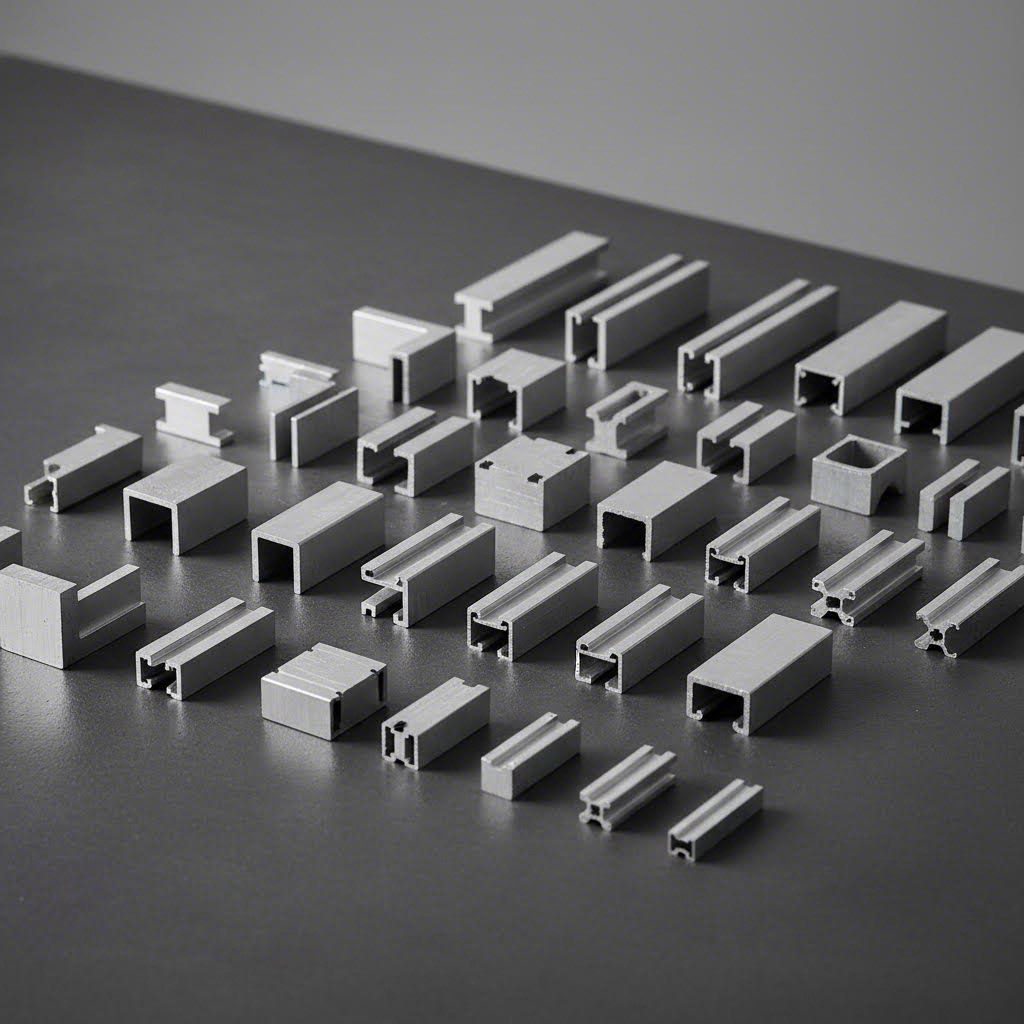
Now that you understand profile geometries, how do you navigate the vast catalog of aluminum extrusion shapes available off the shelf? Manufacturers offer an extensive library of standard extrusion shapes designed to meet common engineering needs without custom die investment. Knowing what's readily available can save your project significant time and money.
Standard extruded aluminum shapes fall into several well-established categories, each serving distinct structural and functional purposes. These profiles ship faster and cost less than custom alternatives because manufacturers keep them in stock or run them frequently.
| Shape Type | Typical Dimensions | Structural Properties | Primary Use Cases |
|---|---|---|---|
| Angles (L-shaped) | 0.5" to 6" legs, 1/16" to 1/2" thickness | Good corner reinforcement, moderate load capacity | Frame corners, brackets, edge protection |
| Channels (C-shaped) | 0.5" to 12" width, various depths | Excellent beam strength, guides for sliding components | Tracks, trim, structural supports |
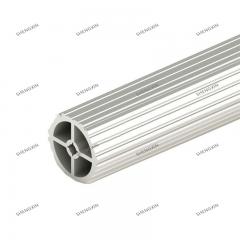
| Round Tubes | 0.25" to 12" OD, various wall thicknesses | Uniform torsional strength, pressure containment | Handrails, pneumatic lines, structural tubes |
| Square/Rectangular Tubes | 0.5" to 8" sides, 1/16" to 1/4" walls | High rigidity-to-weight ratio, flat mounting surfaces | Frames, posts, architectural elements |
| I-Beams | 1" to 6" height, various flange widths | Maximum bending resistance, efficient material use | Structural spans, heavy load supports |
| Flat Bars | 0.25" to 8" width, 1/8" to 1" thickness | Simple, versatile, easy machining | Braces, shims, mounting plates |
When evaluating aluminum shapes for your application, consider both the structural requirements and secondary operations. Channels work beautifully as cable raceways or sliding tracks. Angles reinforce corners while providing attachment points. Round tubes handle torsional loads and pressure applications that would challenge rectangular profiles.
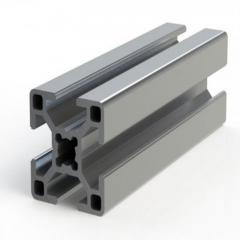
Among aluminum extruded shapes, T-slot profiles deserve special attention for their remarkable versatility. These profiles feature grooves that accept standard hardware, enabling rapid assembly and reconfiguration without welding or drilling.
T-slot systems use series profile designations that communicate key dimensions at a glance. The naming convention typically reflects the profile's cross-sectional size in millimeters. For example, 8040 aluminum extrusions measure 80mm by 40mm, making them ideal for medium-duty structural frames and machine guarding. Similarly, 3060 aluminum extrusion profiles span 30mm by 60mm, offering a narrower option for lighter applications or space-constrained designs.
Common series profile categories include:
The beauty of T-slot extrusion shapes lies in their ecosystem. Standard brackets, hinges, panels, and fasteners integrate seamlessly, letting you build custom structures from standardized components. Need to modify your design later? Simply loosen the hardware, reposition, and retighten.
Thermal management applications demand specialized aluminum extrusion shapes designed to maximize surface area. Heatsink extrusions feature fins, pins, or other protrusions that dissipate heat efficiently from electronic components, LED lighting, and power equipment.
Standard heatsink profiles range from simple finned bars to complex multi-fin configurations. Key specifications include:
Off-the-shelf heatsink extrusion shapes cover widths from 20mm to over 300mm, with fin counts ranging from a handful to dozens. Selecting from standard options often proves more economical than custom designs unless your thermal requirements demand precise optimization.
Why consider standard profiles before jumping to custom designs? Three compelling advantages stand out:
Custom extrusions make sense when standard shapes cannot meet your requirements or when volume justifies tooling investment. However, experienced engineers often find creative ways to use standard profiles, sometimes combining multiple shapes to achieve complex assemblies without custom dies.
With standard shapes and sizes mapped out, your next consideration involves selecting the right aluminum alloy to match both the profile geometry and your performance requirements.
You've selected your profile geometry and identified promising standard shapes, but here's a question that often trips up even experienced specifiers: which aluminum alloy should you choose? The answer depends on how different types of aluminum behave during extrusion and what properties matter most for your finished product.
Not all aluminum types extrude equally well. Extrudability ratings measure how easily an alloy flows through dies, with higher ratings indicating better flow characteristics, finer surface finishes, and the ability to produce more complex profiles. Among the common aluminum types used in manufacturing, the 6000 series alloys dominate extrusion applications because they strike an optimal balance between formability and performance.
When surface appearance matters, 6063 aluminum stands as the most popular extruded aluminum alloy for good reason. This alloy, primarily composed of aluminum with silicon and magnesium as key alloying elements, delivers exceptional extrudability that enables thin-wall profiles and intricate shapes.
What makes 6063 so extrusion-friendly? Its chemical composition creates lower flow stress during hot extrusion, meaning the metal passes through dies more smoothly with less pressure. This translates to several practical advantages:
You'll find 6063 in window frames, door frames, curtain wall systems, furniture components, and decorative trim throughout the architectural industry. The alloy also serves automotive applications where ornamental appearance matters, such as trim pieces and luggage rack rails.
The trade-off? 6063 T6 delivers ultimate tensile strength of at least 28,000 psi and yield strength of 23,000 psi, which falls short when structural demands intensify. For applications where visual appeal outweighs raw strength, this rarely presents a limitation.
When strength requirements exceed what 6063 can deliver, engineers turn to different kinds of aluminum within the 6000 series. Aluminum 6061 offers significantly higher mechanical properties, making it the go-to choice for structural applications.
Developed in 1935, 6061 is a precipitation-hardened alloy strengthened through heat treatment that disperses particles throughout the metal's grain structure. This process yields impressive results: 6061 T6 achieves ultimate tensile strength of at least 42,000 psi and yield strength of at least 35,000 psi, roughly 50% stronger than 6063 T6.
Here's how different types of aluminium compare for extrusion applications:
The connection between alloy selection and downstream processes deserves attention. Both 6063 and 6061 accept anodizing and powder coating effectively, though 6063's superior surface quality produces better cosmetic results after finishing. If your project requires bright dip anodization for a mirror-like finish, 6063 delivers noticeably better outcomes.
Welding also factors into alloy decisions. When 6063 is welded, it often loses as much as 30% of its strength, though heat treatment can restore much of that capacity. Both alloys weld successfully using tungsten inert gas methods, but structural applications requiring welded joints may favor 6061's higher baseline strength.
Choosing between aluminum types ultimately comes down to prioritizing what matters most for your application. Need architectural elegance with intricate profiles? Specify 6063. Require structural performance for load-bearing members? Select 6061. Many projects incorporate both alloys, using 6063 for visible components and 6061 where hidden structural elements carry the load. Understanding these distinctions positions you to make informed specifications as you match extrusion types to specific industry applications.
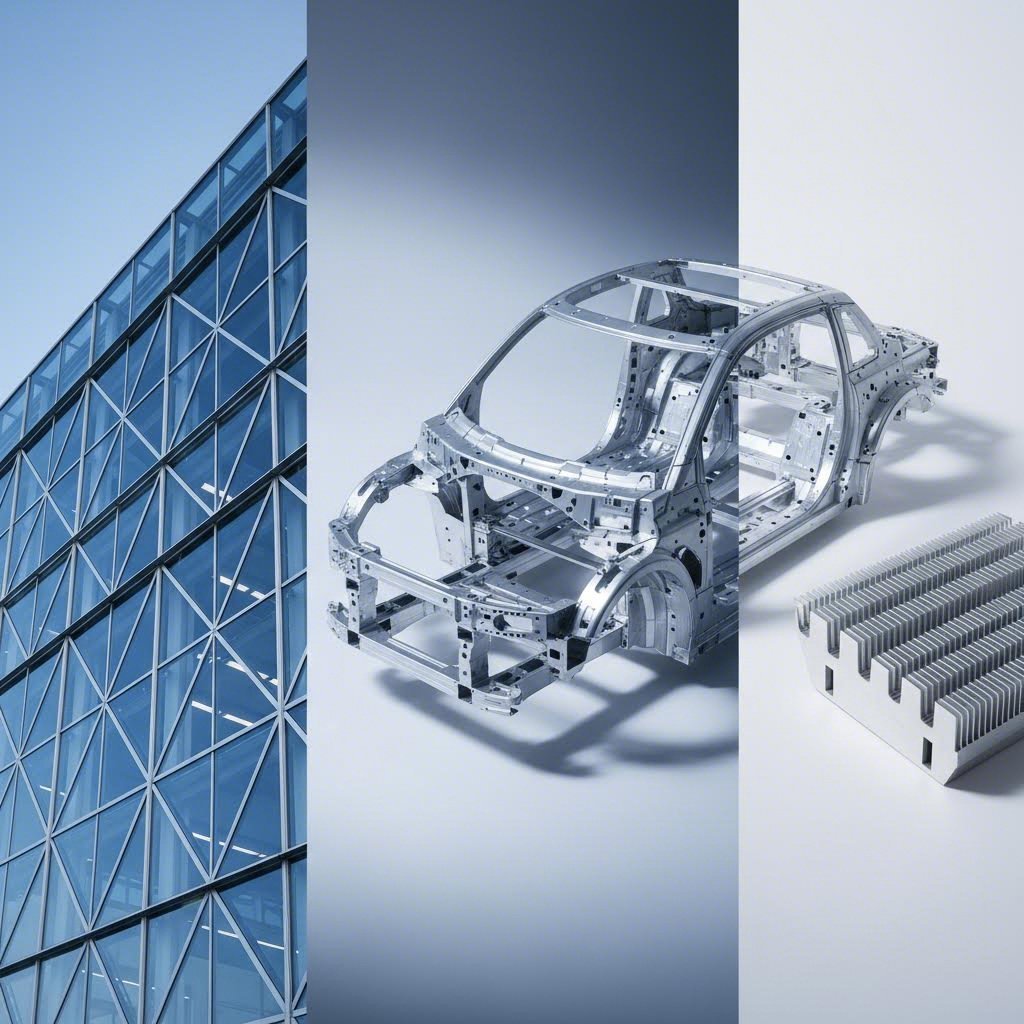
You now understand extrusion processes, profile geometries, and alloy characteristics, but how do these elements come together for real-world projects? What are aluminum extrusions used for across different industries, and how do you match the right combination to your specific challenges? Let's map aluminum extrusion applications to the sectors where they deliver the greatest value.
When architects and builders face the challenge of creating structures that balance aesthetics, durability, and energy efficiency, structural aluminum extrusions provide the solution. The construction sector relies heavily on extrusion technology for components that must withstand environmental exposure while maintaining visual appeal.
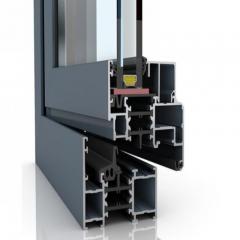
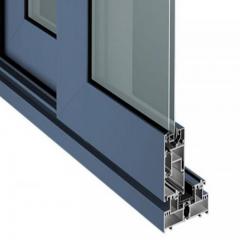
Window and door frames represent the most visible application. These profiles typically use 6063-T5 aluminum in hollow configurations, combining the alloy's excellent surface finish with the weight savings and thermal break capability that hollow geometries provide. Curtain wall systems take this further, spanning entire building facades with structural aluminium extrusions that support glass panels while resisting wind loads and thermal expansion.
Common construction challenges and their extrusion solutions include:
Electronic devices generate heat. Without proper thermal management, components fail prematurely, performance degrades, and warranties become liabilities. Aluminum extrusion profiles act as efficient heat sinks for electronic components, effectively managing heat dissipation across applications from LED lighting to high-performance computing.
Heatsink extrusions dominate this sector, featuring finned solid profiles designed to maximize surface area. The 6063 alloy excels here because its thermal conductivity efficiently transfers heat from component mounting surfaces to fin arrays where air circulation carries it away. Enclosure profiles add another dimension, protecting sensitive electronics while providing EMI shielding and mounting provisions.
High-performance aluminum extrusions industrial applications in electronics address specific thermal challenges:
Every kilogram removed from a vehicle improves fuel efficiency, extends electric vehicle range, and enhances handling dynamics. The automotive industry has embraced the potential of aluminum extrusion profiles as a primary strategy for achieving weight reduction without sacrificing structural integrity or safety performance.
Structural aluminum extrusions in automotive applications demand the higher strength of 6061-T6 alloy, often in hollow configurations that maximize the strength-to-weight ratio. Round aluminum extrusion profiles are pivotal in shaping vehicle chassis and frames, while rectangular tubes form crash structures designed to absorb impact energy progressively.
Aluminum extrusion rail profiles serve both structural and decorative functions in vehicles, from roof rack mounting rails to interior trim applications. The ability to integrate multiple functions into single extrusion profiles, such as combining structural support with wire routing channels, drives ongoing innovation in automotive extrusion design.
Aluminum extrusion profiles, including t-slot and standard profiles, form the basis for modular structures in manufacturing. When production lines need reconfiguration, when machine guarding must adapt to new equipment, or when workstations require ergonomic customization, T-slot framing systems deliver unmatched flexibility.
These hollow profiles in the 40 and 45 series provide the structural backbone for assembly lines, material handling equipment, and automation cells. The aluminum extrusion channel integrated into T-slot designs accepts standard fasteners, brackets, and accessories, enabling rapid assembly and modification without welding or specialized tools.
Choosing the right extrusion combination requires matching your industry's specific demands to the optimal process, geometry, and alloy. This matrix summarizes the proven combinations that solve common challenges:
| Industry Sector | Common Challenge | Optimal Profile Geometry | Recommended Alloy | Typical Applications |
|---|---|---|---|---|
| Construction/Architecture | Weather resistance with visual appeal | Hollow, Semi-hollow | 6063-T5, 6063-T6 | Window frames, curtain walls, storefronts |
| Construction/Structural | Load-bearing capacity | Solid, Hollow | 6061-T6, 6005-T5 | Structural beams, railings, support columns |
| Electronics/Thermal | Heat dissipation | Solid (finned) | 6063-T5 | Heatsinks, LED housings, power electronics |
| Electronics/Enclosures | Protection and EMI shielding | Hollow, Semi-hollow | 6063-T5, 6061-T6 | Equipment housings, chassis, racks |
| Automotive/Structural | Weight reduction with strength | Hollow | 6061-T6, 7075-T6 | Crash structures, chassis members, subframes |
| Automotive/Trim | Surface finish quality | Solid, Semi-hollow | 6063-T5 | Decorative trim, roof rails, moldings |
| Industrial/Framing | Modularity and reconfiguration | Hollow (T-slot) | 6063-T5, 6105-T5 | Machine frames, workstations, guarding |
| Industrial/Conveyors | Wear resistance and precision | Solid, Hollow | 6061-T6 | Conveyor rails, guide tracks, rollers |
Notice how the same alloy and geometry combinations appear across different sectors when they face similar challenges. A curtain wall mullion and an equipment enclosure both need hollow profiles for weight efficiency, even though their industries differ completely. Understanding these patterns helps you identify proven solutions rather than reinventing specifications for each project.
With industry applications mapped to optimal extrusion combinations, you're ready to develop a systematic approach for evaluating your own project requirements and making confident selection decisions.
You've explored processes, geometries, alloys, and industry applications. Now comes the critical question: how do you pull all this knowledge together to select the right aluminum profile type for your specific project? Making this decision requires a systematic approach that weighs multiple factors against your priorities.
Selecting among the various types of aluminum extrusion isn't about finding a single "best" option. It's about matching capabilities to requirements. A profile that works perfectly for architectural trim may fail completely in a structural application. Let's build a decision framework that guides you toward the optimal choice.
Before browsing catalogs or contacting suppliers, take time to define exactly what your project demands. Five key factors shape every extrusion selection decision:
Here's a step-by-step selection process that incorporates these factors:
When does investing in custom extrusions make sense versus adapting standard aluminum extrusions to your needs? The decision hinges on volume, complexity, and long-term value.
Extrusion tooling for presses with 7 to 10 inch circle size often costs between $1,000 and $2,000 for solid shapes and $1,200 to $4,000 for hollows, with typical lead times of 2 to 3 weeks. Compare this to rolled steel tooling exceeding $30,000 with 3-month lead times, and aluminum's custom capability becomes remarkably accessible.
Consider custom dies when:
Stick with standard aluminum extrusion profiles when:
Surface treatment compatibility adds another decision layer. Types of extruded aluminum with thinner walls or complex geometries may distort during anodizing if not properly designed. Powder coating accommodates a wider range of profile shapes but requires consideration of coating thickness on critical dimensions. Discuss finishing requirements with your extrusion supplier early, as it is important to indicate which surfaces on the resulting extruded components will be visible to ensure optimal finish quality where it matters most.
The relatively low cost of extrusion tooling offers a strategic advantage many designers overlook. The relatively low cost and quick availability for extrusion tooling not only preserves budgets, but permits full-scale prototyping with little penalty for subsequent revision. This means you can validate custom designs with actual extruded samples before committing to production quantities, reducing risk significantly compared to other manufacturing processes.
With your selection framework established and the standard versus custom decision clarified, understanding how custom extrusion development actually works will complete your knowledge foundation for executing projects that require tailored solutions.
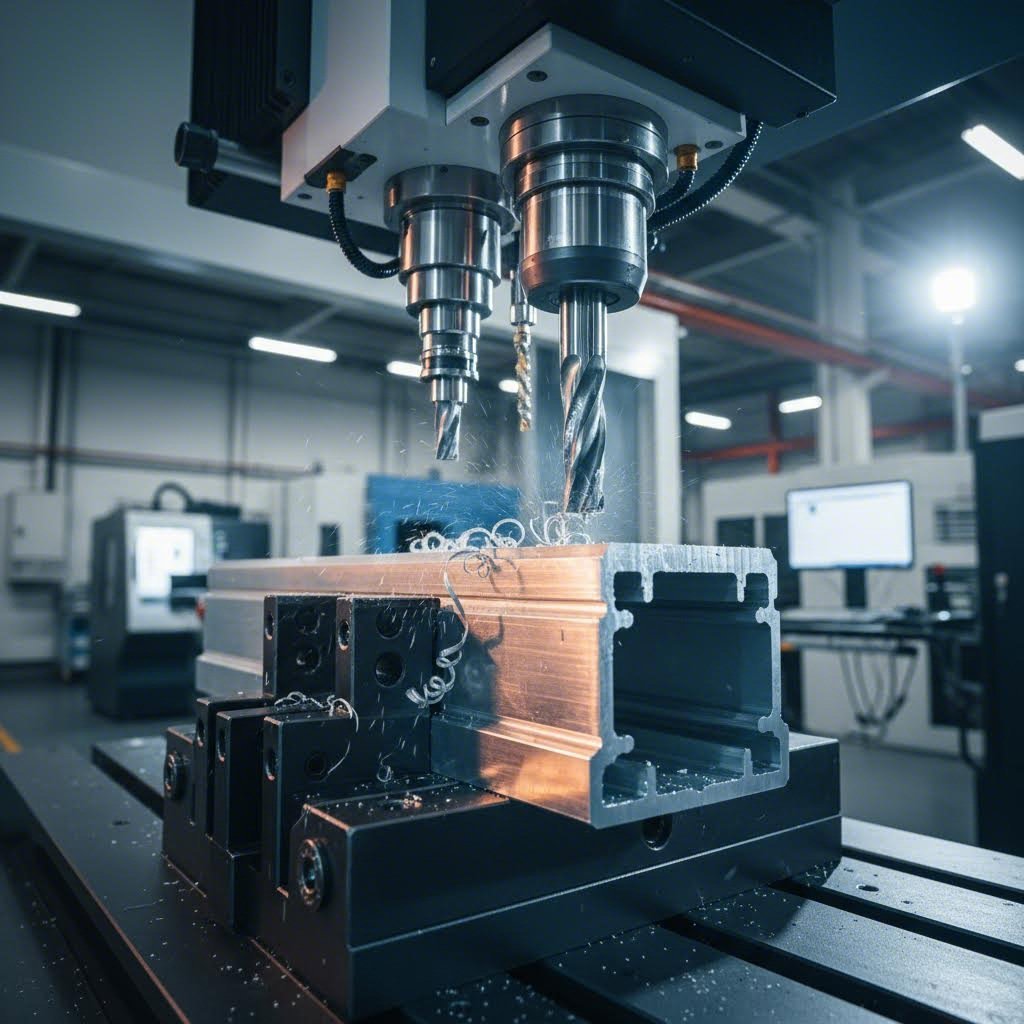
You've decided that standard profiles won't cut it for your project. Maybe you need integrated mounting channels, precise snap-fit features, or weight optimization that off-the-shelf shapes simply cannot deliver. So how does a custom aluminum extrusion go from an idea in your head to finished aluminum extrusion parts ready for assembly? Understanding this journey helps you plan timelines, budgets, and specifications more effectively.
The custom aluminum extrusion manufacturing process follows a structured path that transforms your requirements into precision profiles. Each stage builds on the previous one, and early decisions ripple through the entire production cycle.
Here's what the journey typically looks like:
Experienced manufacturers streamline this process significantly. Shengxin Aluminium, with over 30 years of industry experience, provides end-to-end technical assistance from die development through mass production. Their facility houses 35 advanced extrusion presses ranging from 600T to 5500T capacity, enabling production of everything from small precision profiles to large extruded structural aluminum components.
The aluminium extrusion die represents the heart of your custom profile. Getting the die design right determines whether your project succeeds or struggles through costly revisions. What makes a profile easy or difficult to extrude?
High-quality die design ensures accuracy, material flow balance, and minimal production defects. Several aluminum extrusion design guidelines directly impact die life and profile quality:
Complex designs may require multi-part dies or additional processing, affecting lead times and cost. Highly intricate profiles with thin sections or deep channels need careful die design to control material flow and prevent distortion. Simplifying shapes where possible lowers tooling expenses and improves extrusion consistency.
Press capacity matters too. Advanced extrusion capabilities powered by large presses open up a vast range of size, weight, and tolerance possibilities. A 5,500-ton press can achieve unit pressures exceeding 90,000 lbs/in² at the die face, enabling complex multi-void hollows and quench-sensitive alloys that smaller presses cannot handle. Shengxin Aluminium's range of presses from 600T to 5500T ensures the right match between your profile requirements and available tonnage.
Raw extrusions rarely go directly into final assemblies. Most structural extruded aluminum requires secondary operations to transform profiles into finished components.
State-of-the-art CNC machining centers handle the precision fabrication that takes aluminum extrusion parts from profile to product:
Unlike most extruders, fully integrated suppliers offer complete fabrication and finishing services. Total control of the entire development process ensures your products achieve peak quality. Shengxin Aluminium's CNC machining centers deliver precise cutting, drilling, and bending to meet exact specifications, eliminating the coordination challenges and quality risks of working with multiple subcontractors.
Surface finishing transforms raw aluminum into finished components ready for their intended environment. The treatment you select affects appearance, durability, and compatibility with your application:
Shengxin Aluminium offers this full range of surface treatments in-house, ensuring consistent quality from extrusion through final finishing. Their comprehensive processing capabilities mean your custom profiles arrive ready for assembly rather than requiring additional finishing coordination.
The difference between a frustrating custom extrusion project and a smooth one often comes down to your manufacturing partner's capabilities and experience. What should you look for?
Collaborating with the manufacturer early in the design stage helps avoid tooling issues and ensures a more cost-effective, high-performing extrusion. Technical teams that provide design feedback and validation before production catch problems while changes remain inexpensive.
Key capabilities to verify include:
With custom extrusion development demystified, you're equipped to move from concept to production with confidence. The final consideration? Pulling together everything you've learned to make your aluminum extrusion decision and take concrete next steps toward your project goals.
You've journeyed through the complete landscape of aluminum extrusion types, from hot and cold processes to solid, hollow, and semi-hollow geometries, from alloy characteristics to industry-specific applications. Now it's time to synthesize this knowledge into actionable decisions that move your project forward. What are aluminum extrusions if not solutions waiting to be matched with the right challenges?
Before diving into supplier conversations, anchor your thinking around the core principles that drive successful extrusion selection:
The right aluminum profile emerges when you align three critical factors: the extrusion process that achieves your required tolerances, the profile geometry that delivers your structural performance, and the alloy that balances strength, finish quality, and cost for your specific application.
Let's distill the essential selection criteria you should carry into every project decision:
The types of aluminum extrusions available today continue evolving as industry demands shift. Understanding these trends helps you make forward-looking specifications:
Sustainability takes center stage. The use of recycled aluminum is gaining traction as companies strive to reduce their carbon footprint. The recycling process consumes only 5% of the energy required to produce new aluminum, making recycled-content extrusions increasingly attractive for environmentally conscious projects. Expect suppliers to highlight recycled content percentages and eco-friendly production methods.
Advanced alloys expand possibilities. High-strength aluminum alloys such as 7075 and 7050 are increasingly being used in industries where strength is paramount, including aerospace, military, and automotive sectors. These alloys offer superior tensile strength while maintaining the weight advantages that make aluminum essential for lightweighting initiatives.
Precision and customization accelerate. Advanced computer-aided design (CAD) technology and 3D modeling are increasingly being used to create custom profiles that meet exact specifications. This means your what is aluminum profile question increasingly becomes "what custom solution optimizes my specific application?" rather than "which standard shape comes closest?"
Automation improves consistency. Smart manufacturing techniques and robotic systems are transforming production quality. Predictive maintenance powered by AI ensures a more efficient, cost-effective, and sustainable production environment, translating to better consistency and reliability for your aluminium extrusion types.
Knowledge without action remains theoretical. Here's how to translate your understanding of aluminum extrusion types into tangible project progress:
Partnering with experienced extrusion specialists makes the difference between good outcomes and exceptional ones. Look for manufacturers offering comprehensive surface treatment options, including anodizing in custom colors, powder coating for durability, and PVDF for premium architectural applications. The ability to support your project from prototype through mass production under one roof streamlines communication and ensures consistent quality.
Shengxin Aluminium exemplifies this integrated approach with over 30 years of industry experience and factory-direct pricing. Their 35 advanced extrusion presses ranging from 600T to 5500T handle everything from precision aluminum profiles to large structural components. With in-house CNC machining for secondary operations and a full range of surface treatments, they provide the end-to-end technical support that turns complex aluminum extrusion projects into successful outcomes.
Your aluminum extrusion decision ultimately comes down to matching the right combination of process, geometry, alloy, and manufacturing partner to your specific application. Armed with the knowledge from this guide, you're positioned to specify with confidence, communicate clearly with suppliers, and achieve results that serve your project goals for years to come.
The three fundamental aluminum extrusion profile types are solid, hollow, and semi-hollow configurations. Solid profiles contain no enclosed voids and offer maximum strength for load-bearing applications like structural beams and bus bars. Hollow profiles feature fully enclosed voids, delivering exceptional strength-to-weight ratios ideal for window frames and automotive components. Semi-hollow profiles have partially enclosed voids with narrow gaps, serving specialized applications like cable management channels and snap-fit enclosures. Each type requires different die complexity and extrusion pressures, affecting production costs and profile capabilities.
The 80/20 company named their T-slot aluminum extrusion product line after Pareto's Law, formulated by Italian economist Vilfredo Pareto (1843-1923). This principle states that 80% of results come from 20% of efforts. The naming reflects the modular framing system's efficiency, where standardized T-slot profiles and compatible hardware enable rapid assembly and reconfiguration. These hollow extrusion profiles come in various series designations like 20, 30, 40, and 80 series, with the numbers indicating the profile's base dimension in millimeters.
T5 and T6 are temper designations indicating different heat treatment processes for aluminum extrusions. T5 involves cooling from high-temperature forming by artificial aging, resulting in moderate strength suitable for architectural applications. T6 requires solution heat treatment by artificial aging, producing higher mechanical properties. For example, 6063-T6 achieves ultimate tensile strength of at least 28,000 psi, while 6061-T6 reaches approximately 42,000 psi. Choose T5 for decorative profiles where surface finish matters most, and T6 when structural strength is the priority.
The 6063 aluminum alloy dominates the extrusion industry, particularly for architectural applications. Its chemical composition creates excellent extrudability with lower flow stress during hot extrusion, enabling thin-wall profiles and intricate shapes. The alloy delivers superior surface finish quality, responds well to anodizing and powder coating, and provides good corrosion resistance. For applications requiring higher strength, 6061 aluminum offers approximately 50% greater tensile strength than 6063, making it preferred for structural components, truck frames, and marine applications where load-bearing capacity matters more than surface aesthetics.
Custom aluminum extrusions make economic sense when annual volumes exceed 2,000-5,000 pounds, when standard shapes require extensive secondary machining, or when integrating multiple functions into one profile reduces assembly labor. Custom die costs typically range from $1,000-$4,000 with 2-3 week lead times, significantly lower than other manufacturing methods. Choose standard profiles when quantities fall below minimum thresholds, timelines are tight, budgets limit tooling investment, or when creative combinations of stock profiles can meet your requirements with minimal modification.



 online service
 0086 136 3563 2360
 sales@sxalu.com
 +86 136 3563 2360
 English
 français
 Deutsch
 русский
 español
 português
 العربية
 ไทย
ไทย Việt
Việt Українська