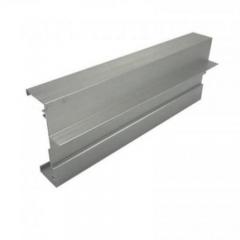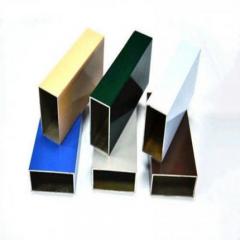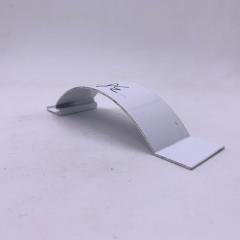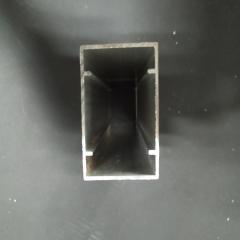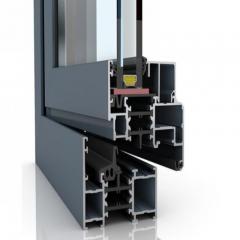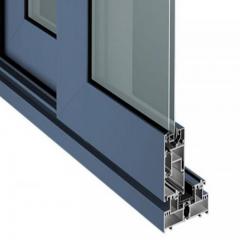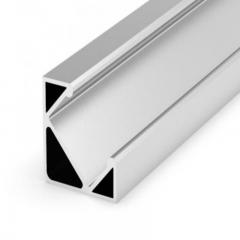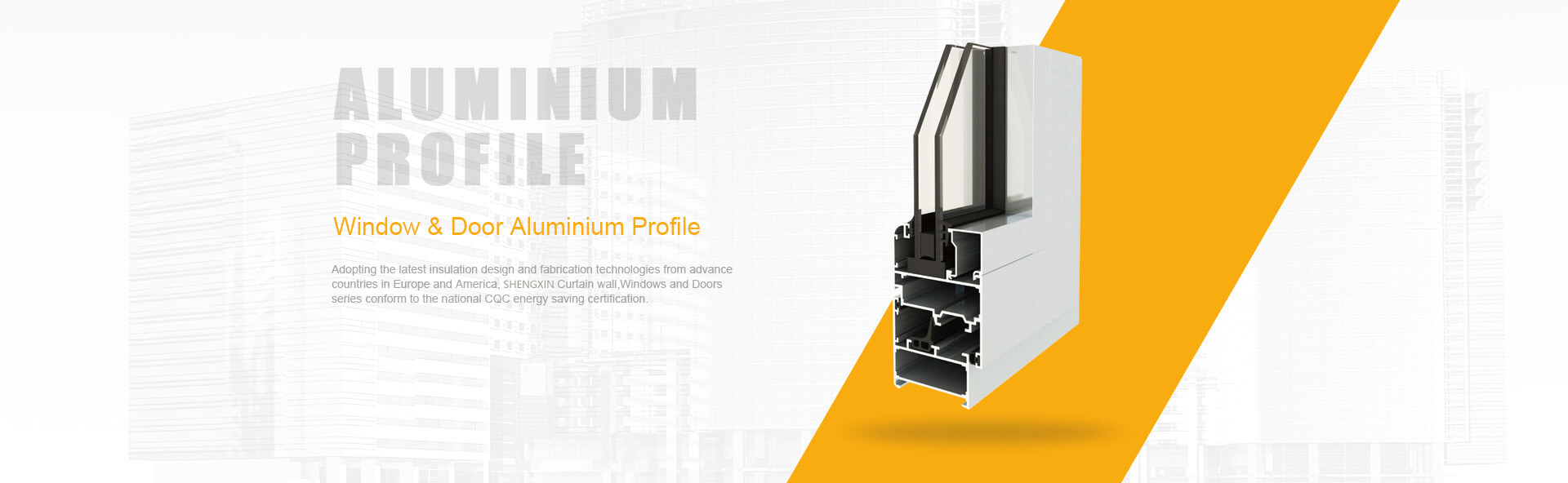
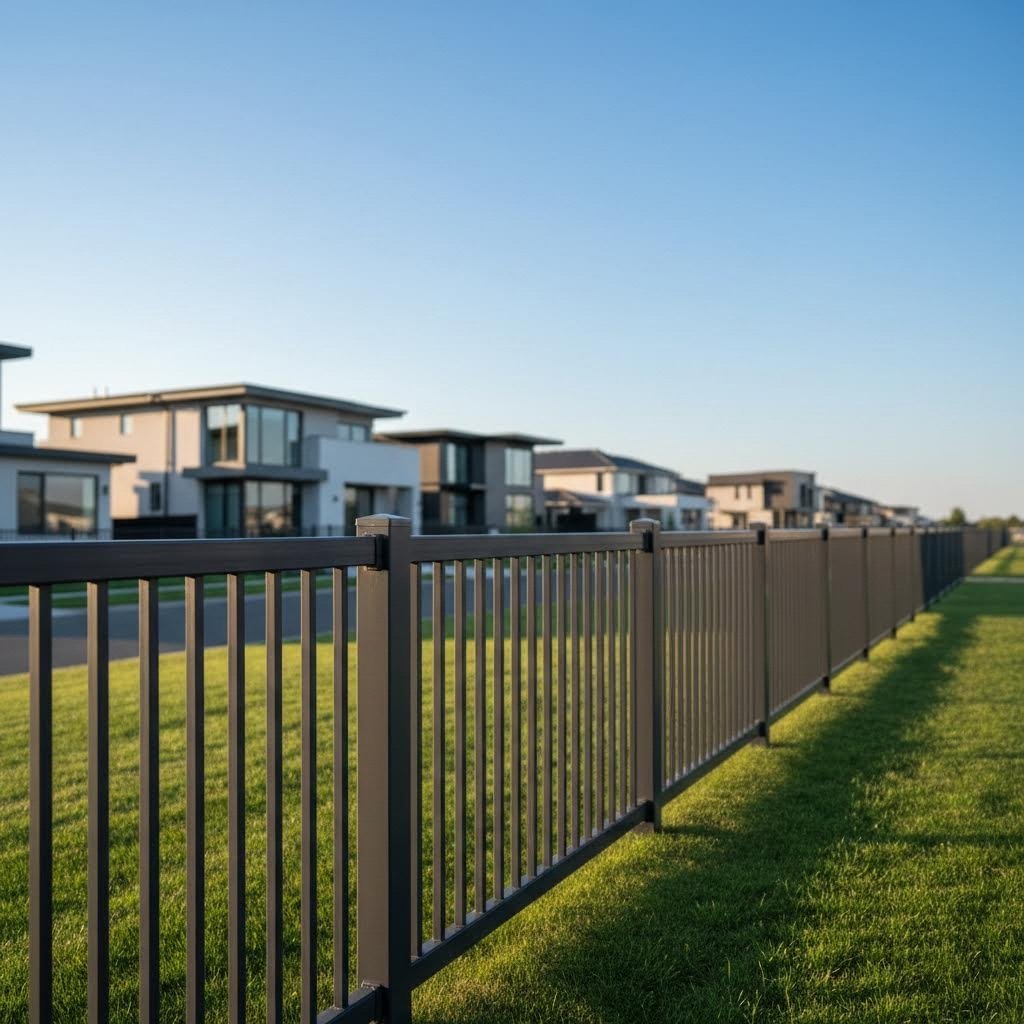
When you're exploring fencing options for your property, you'll quickly discover that not all materials are created equal. Aluminum fence extrusions have become a go-to solution for property owners and contractors who want durability without the constant upkeep. But what exactly makes these profiles so special, and how are they manufactured?
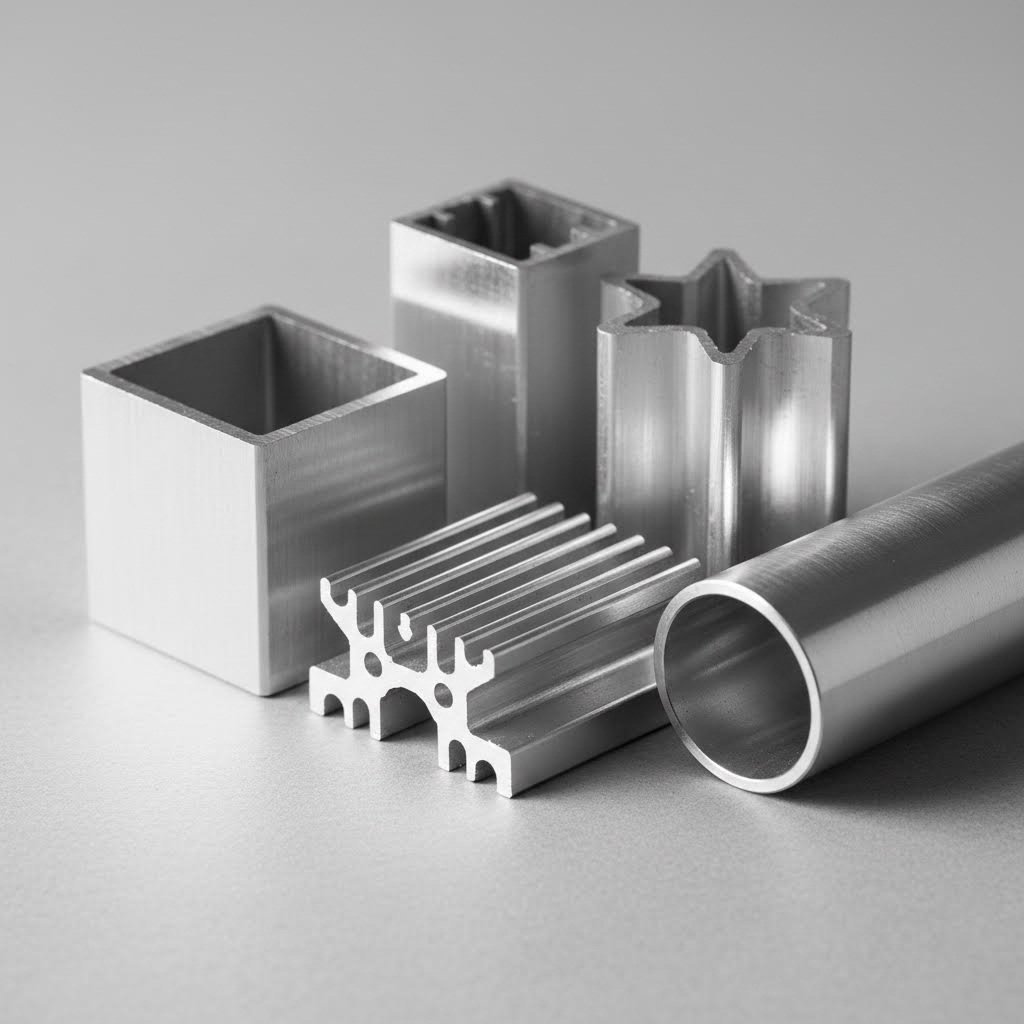
Aluminum extrusion is a manufacturing process where heated aluminum billets are forced through a shaped die under immense pressure, creating continuous profiles with consistent cross-sections that form the posts, rails, and pickets of modern fencing systems.
Imagine a material that resists rust, requires minimal maintenance, and lasts for decades. That's the promise of an extruded aluminum fence. Unlike traditional wrought iron that demands regular painting or wood that warps and rots over time, aluminum profiles maintain their structural integrity and appearance year after year.
The secret lies in the extrusion process itself. When aluminum is extruded, it creates a seamless profile without welds or joints along its length. This matters because joints are typically weak points where corrosion begins. An aluminum extrusion fence offers uniform strength throughout each component, whether you're looking at the vertical pickets, horizontal rails, or sturdy posts.
Every extruded aluminum fence system consists of three primary components:
Sounds complex? Let's break it down step by step. The journey from raw aluminum to finished fence profile involves precise temperature control and massive hydraulic force.
First, manufacturers cut cylindrical aluminum billets from longer logs of material. These billets are preheated in an oven to temperatures between 400-500°C, making the metal soft and malleable without actually melting it. Meanwhile, the extrusion die—essentially a steel plate with a shaped opening—is preheated to 450-500°C to ensure even metal flow.
Next comes the dramatic part. A hydraulic ram applies up to 15,000 tons of pressure, forcing the heated billet through the die opening. The aluminum emerges on the other side as a continuous profile matching the die's exact shape. Think of it like squeezing toothpaste through a shaped nozzle, except with incredible force and precision.
After extrusion, the profiles undergo rapid cooling through water baths or fans—a process called quenching. Workers then stretch the still-warm profiles to correct any twisting and ensure perfectly straight sections. Finally, the long extrusions are cut to specific lengths and heat-treated to achieve the desired strength and hardness.
Understanding this manufacturing process empowers you to make informed decisions when selecting fencing materials. You'll know why quality extrusions cost what they do and what questions to ask suppliers about their production standards. This foundational knowledge becomes invaluable as we explore alloy grades, finishes, and installation techniques in the sections ahead.
Now that you understand how aluminum fence extrusions are manufactured, you might be wondering what makes one fence stronger or more corrosion-resistant than another. The answer lies in the specific aluminum alloy used during production. Not all aluminum is created equal, and the metallurgical differences between alloy grades directly impact how your fence performs over its lifetime.
When manufacturers discuss aluminum fence extrusions, two alloy grades dominate the conversation: 6063 and 6061. Both belong to the 6000 series aluminum-magnesium-silicon family, yet their subtle compositional differences create distinct performance characteristics. Understanding these differences helps you specify the right material for your specific application—whether that's a decorative residential barrier or a heavy-duty security perimeter.
Walk through any neighborhood with aluminum fencing, and you're likely looking at 6063 alloy profiles. This grade has earned its popularity for good reason. According to industry specifications, 6063 contains approximately 0.4% silicon and 0.7% magnesium, creating a blend that prioritizes formability and surface aesthetics over raw strength.
What does this mean for your fence? You'll notice several practical advantages:
The 6063 grade also offers excellent corrosion resistance in outdoor environments, handling rain, snow, and sun exposure without degradation. For residential ornamental fencing, aluminum extrusion cabinets, and architectural trim applications, this balance of aesthetics and durability hits the sweet spot most property owners need.
Sometimes beauty takes a backseat to brute strength. That's where 6061 aluminum enters the picture. This alloy contains higher levels of magnesium (approximately 0.6%) plus added copper (0.25%) and chromium (0.09%), creating a significantly stronger material suited for demanding applications.
Consider 6061 when your project involves:
The trade-off? 6061 profiles are slightly more challenging to extrude into complex shapes, and the surface finish won't be quite as smooth as 6063. However, for security-focused aluminum extrusion kits and reinforced perimeter systems, the strength advantage justifies these minor compromises.
Numbers tell the story more clearly than descriptions alone. The following table breaks down the key differences between these two workhorse alloys based on industry-standard T6 temper specifications:
| Property | 6063-T6 | 6061-T6 | Practical Implication |
|---|---|---|---|
| Tensile Strength | 241 MPa | 310 MPa | 6061 handles higher loads without deformation |
| Yield Strength | 214 MPa | 276 MPa | 6061 resists permanent bending under stress |
| Brinell Hardness | 73 | 95 | 6061 better resists scratches and dents |
| Elongation at Break | 15% | 12% | 6063 absorbs impact slightly better before cracking |
| Fatigue Strength | 69 MPa | 97 MPa | 6061 lasts longer under repeated stress cycles |
| Thermal Conductivity | 200 W/m-K | 170 W/m-K | 6063 dissipates heat more efficiently |
| Surface Finish Quality | Excellent | Good | 6063 preferred for visible decorative applications |
| Relative Cost | Lower | Higher | 6063 offers better value for standard fencing |
| Typical Fence Use | Residential, ornamental, pool enclosures | Security, industrial, commercial perimeters | Match alloy to application requirements |
Your geographic location and surrounding conditions should influence which alloy you specify. Here's how different environments impact long-term fence performance:
Coastal properties: Salt spray accelerates corrosion on most metals. Both 6063 and 6061 perform well in marine environments, but proper surface treatment becomes essential. The slightly better anodizing properties of 6063 can provide an advantage when combined with appropriate coatings.
Industrial settings: Factories, chemical plants, and manufacturing facilities expose fencing to airborne pollutants that attack metal surfaces. Here, 6061's inherently superior corrosion resistance without surface treatment gives it a slight edge, though powder coating equalizes performance for most applications.
Residential neighborhoods: Standard suburban environments present minimal challenges for either alloy. The aesthetic superiority and lower cost of 6063 make it the logical choice for ornamental fencing, aluminum cabinet door extrusions, and decorative applications where appearance matters most.
Extreme temperature zones: Both alloys handle temperature swings well, with melting points above 600°C. However, 6061's slightly lower melting point (582-652°C versus 616-654°C for 6063) means it may perform marginally better in extreme heat applications where thermal expansion becomes a concern.
Choosing the right alloy sets the foundation for decades of reliable fence performance. With this metallurgical knowledge in hand, you're prepared to evaluate how aluminum stacks up against competing materials like steel, vinyl, and wood.
You've learned about alloy grades and their performance characteristics, but how do aluminum fence extrusions actually compare to other popular fencing materials? Whether you're a property owner weighing options or a contractor advising clients, understanding the objective differences between aluminum, steel, vinyl, wood, and wrought iron helps you make confident decisions based on facts rather than sales pitches.
Here's the reality: no single material wins in every category. Each option brings distinct advantages depending on your priorities—budget, maintenance tolerance, aesthetic preferences, and environmental conditions all play roles in determining the best fit.
One of the most common misconceptions in fencing is that steel is simply "better" because it's stronger. This oversimplification misses a critical factor: the strength-to-weight ratio.
Steel is indeed stronger than aluminum when comparing identical cross-sections. However, for two pieces of the exact same size, steel can be up to three times heavier than aluminum. This weight difference creates significant practical implications during installation:
What about actual fence strength? A standard residential aluminum fence can typically withstand around 350 pounds of pressure—more than enough to secure property lines, contain pets, and create safe boundaries. Aluminum achieves adequate strength without excessive bulk because manufacturers engineer thicker wall profiles where needed rather than relying on the material's raw density.
For most residential applications, including extruded aluminum table saw fence projects and ornamental installations, this engineered approach delivers the perfect balance of durability and practicality.
If you live anywhere near the coast or in a humid climate, corrosion resistance becomes paramount. Here's where aluminum's metallurgical properties create a decisive advantage.
Steel is fundamentally an iron alloy, and iron rusts when exposed to moisture and oxygen. According to industry experts, salt spray accelerates this process dramatically—salty coastal air can turn a small scratch into a spreading rust spot that compromises both appearance and structural integrity.
Aluminum behaves differently. When exposed to air, it instantly forms a thin, hard layer of aluminum oxide on its surface. This natural shield prevents further corrosion without any applied coatings. Your aluminum fence extrusions won't require painting or rust-proofing treatments to defend themselves against the elements.
Steel fences must rely on protective coatings like galvanization or powder coating to prevent rust. Any scratch or chip in these coatings becomes an entry point for corrosion. While treated steel performs well initially, maintaining that protection requires ongoing attention and expense.
Upfront pricing tells only part of the story. True cost of ownership includes installation, maintenance, repairs, and eventual replacement. The following comparison uses industry-standard pricing data to illustrate what you can expect:
| Property | Aluminum | Steel | Vinyl | Wood | Wrought Iron |
|---|---|---|---|---|---|
| Initial Cost (per linear foot) | $25-$40 | $25-$50+ | $20-$40 | $10-$30 | $30-$100+ |
| Lifespan Expectancy | 30-50 years | 20-30 years (with maintenance) | 20-30 years | 10-15 years | 50+ years (with maintenance) |
| Maintenance Requirements | Minimal (occasional cleaning) | Moderate (rust prevention, repainting) | Low (periodic cleaning) | High (staining, sealing, repairs) | High (rust treatment, repainting) |
| Approximate Weight (per linear foot) | 1-2 lbs | 3-6 lbs | 1-3 lbs | 4-8 lbs | 5-10 lbs |
| Corrosion Resistance | Excellent (natural oxide layer) | Poor without coating | Excellent | Poor (susceptible to rot) | Poor without coating |
| Environmental Impact | High recyclability (95% energy savings) | Recyclable (70% energy savings) | Low recyclability | Biodegradable but resource-intensive | Recyclable |
| Installation Difficulty | Easy to moderate | Moderate to difficult | Easy | Easy to moderate | Difficult (often requires welding) |
Rather than declaring a universal winner, consider which material best matches specific situations:
Aluminum for coastal properties: The natural corrosion resistance makes aluminum the clear choice where salt spray and humidity would quickly degrade steel or iron. You'll spend less on maintenance while enjoying decades of reliable performance. Aluminum extrusion table applications and outdoor furniture face similar conditions—this material simply handles moisture better than ferrous alternatives.
Steel for maximum security: When your primary concern is creating an impenetrable barrier, steel's superior raw strength justifies the maintenance trade-off. Commercial properties, industrial facilities, and high-traffic areas where impact resistance matters benefit from steel's rigidity. According to fencing specialists, steel's ability to support heavy-duty automated gates and anti-climb designs makes it the go-to for serious security applications.
Vinyl for budget-conscious projects: If minimizing both upfront and ongoing costs drives your decision, vinyl delivers solid value. It won't rot, rust, or require painting. However, vinyl can become brittle in extreme cold and offers limited design customization compared to metal options. The appearance also tends toward a more plastic look that may not suit every architectural style.
Wood for traditional aesthetics: Nothing quite matches the warm, natural character of a well-crafted wooden fence. Cedar and redwood resist decay better than pine, though all wood requires regular staining, sealing, and eventual board replacement. If you love that classic look and don't mind weekend maintenance projects, wood creates curb appeal that synthetic materials struggle to replicate.
Wrought iron for ornate elegance: Historic properties and those seeking maximum visual impact often turn to wrought iron. The material allows for intricate scrollwork and decorative details impossible in other materials. However, the high initial cost, heavy weight, demanding maintenance schedule, and need for professional installation limit wrought iron to specific applications where budget constraints take a backseat to aesthetics.
For eco-conscious property owners, material choice extends beyond personal convenience to broader environmental impact. Aluminum stands out here with remarkable sustainability credentials.
Recycling aluminum saves approximately 95% of the energy required to produce new aluminum from raw materials. Steel recycling achieves around 70% energy savings—still impressive, but aluminum's efficiency is hard to beat. Both metals can be recycled indefinitely without losing quality.
Vinyl and composite materials present more complicated environmental profiles. While composites often incorporate recycled wood fibers and plastics, the end product is difficult to recycle and typically ends up in landfills. Wood is biodegradable but requires harvesting trees and chemical treatments that raise their own environmental concerns.
The longevity factor matters too. A fence lasting 30-50 years with minimal maintenance creates less environmental burden than one requiring replacement every 10-15 years, regardless of what it's made from. Aluminum's durability combined with its recyclability makes it a responsible choice for those weighing ecological impact alongside practical considerations.
With this comparative foundation established, you're ready to explore specific extrusion profiles designed for different fence applications—from ornamental residential installations to code-compliant pool enclosures.
Now that you understand how aluminum compares to other materials, the next question becomes: which specific profile works best for your project? Not all aluminum fence extrusions are interchangeable. The profile dimensions, wall thickness, and post specifications vary dramatically based on whether you're installing a decorative garden border or a code-compliant pool enclosure.
Think of profile selection like choosing the right tool for a job. A residential ornamental fence requires different engineering than a commercial security perimeter. Matching the extrusion profile to your application ensures you get adequate strength without overpaying for unnecessary capacity—or worse, underspecifying and compromising safety.
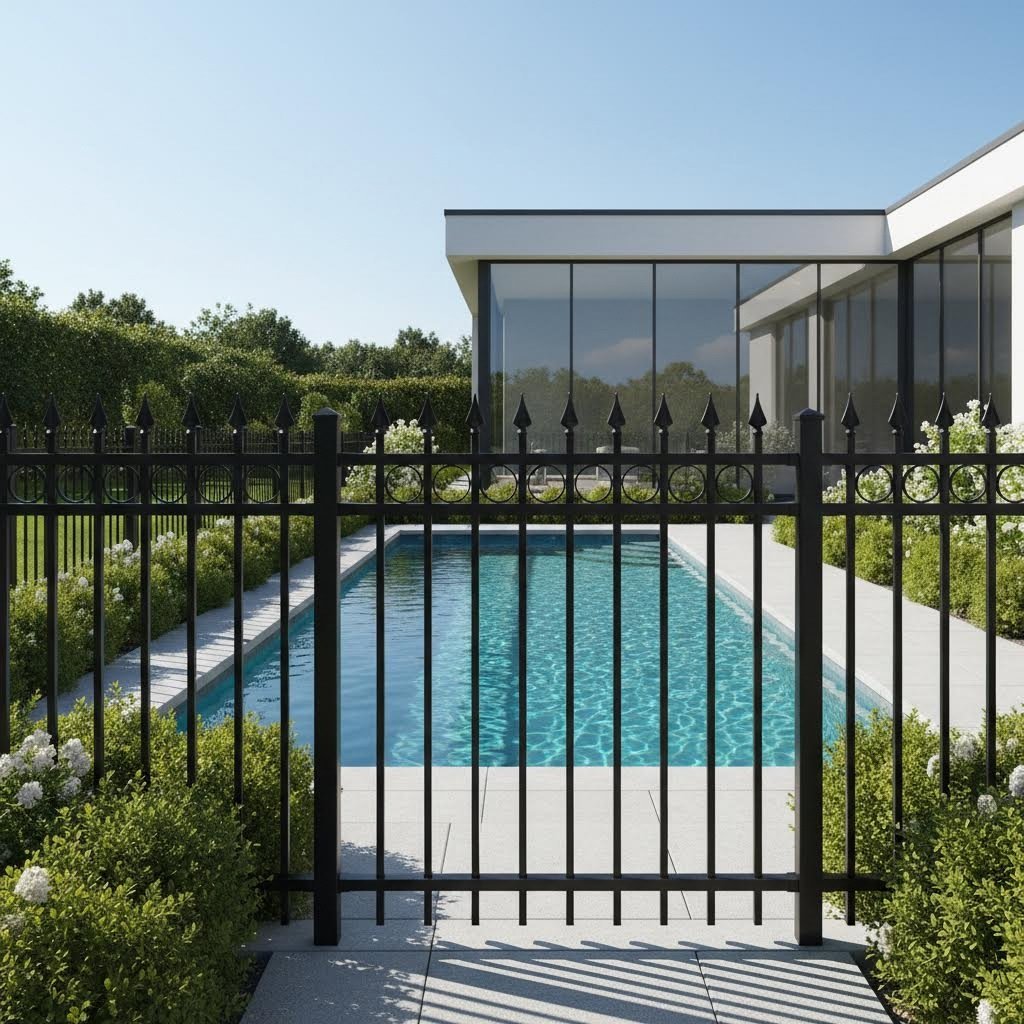
Ornamental fencing prioritizes visual appeal while providing property definition and modest security. These installations typically feature decorative elements that set them apart from purely functional barriers.
According to Ultra Aluminum specifications, residential ornamental profiles commonly include:
Standard residential profiles use 1-5/8 inch picket spacing, while commercial-grade ornamental versions tighten this to 1-1/2 inch spacing for added strength. Heights typically range from 4 to 6 feet, with 4-foot sections most common for front yard applications and 6-foot panels preferred for backyard privacy.
For those tackling woodworking projects alongside fencing, the same precision engineering principles apply to aluminum extrusion table saw fence systems—both require exact tolerances and consistent profiles to function properly.
Pool fencing isn't just about aesthetics—it's a legal and safety mandate. The consequences of non-compliance extend beyond failed inspections to potential liability in the event of an accident.
According to the U.S. Consumer Product Safety Commission guidelines, pool-compliant aluminum fence extrusions must meet strict dimensional requirements:
Commercial pool enclosures often specify routed post and rail designs where rails slide into precision-cut holes rather than attaching via surface brackets. This bracket-free construction eliminates visible fasteners that could be removed or tampered with, creating a more secure and tamper-resistant barrier.
The finish matters equally for pool applications. Chlorinated water and cleaning agents create harsh chemical environments. Quality pool fence extrusions undergo multistage surface preparation by TGIC polyester powder coating with UV inhibitors to resist fading, chalking, and corrosion even in high-humidity climates.
When deterrence becomes the primary objective, standard ornamental profiles won't suffice. Security-focused aluminum fence extrusions incorporate specific design elements that make unauthorized access physically difficult.
According to anti-climb fencing specialists, effective security profiles share these characteristics:
Privacy fence profiles serve dual purposes in security applications. Solid aluminum panels not only prevent climbing but also block visual surveillance of the protected area. This matters for corporate facilities, utility sites, and residential properties where hiding operations or assets reduces security risks.
Industrial-grade posts for security installations typically feature larger cross-sections and heavier wall thicknesses than residential counterparts. Post spacing also tightens—often to 6-foot intervals rather than the 8-foot spacing common in ornamental applications—to reduce panel flex and increase overall rigidity.
Different fencing applications demand different engineering priorities. Here's how profile specifications vary across common use cases:
Before finalizing any fence profile selection, verify requirements with your local building authority. Codes vary significantly between jurisdictions, and what passes inspection in one municipality may fail in another.
Pool fencing codes deserve particular attention. The International Swimming Pool and Spa Code provides baseline standards, but local amendments often impose stricter requirements. Common variations include:
Failure to comply with pool safety regulations can result in fines, rejected inspections, and significant legal liability. Always request written confirmation of local requirements before ordering materials—proper specification saves costly rework.
With your application requirements and profile specifications defined, the next consideration is surface treatment. The finish you select affects both appearance and long-term durability across different environmental conditions.
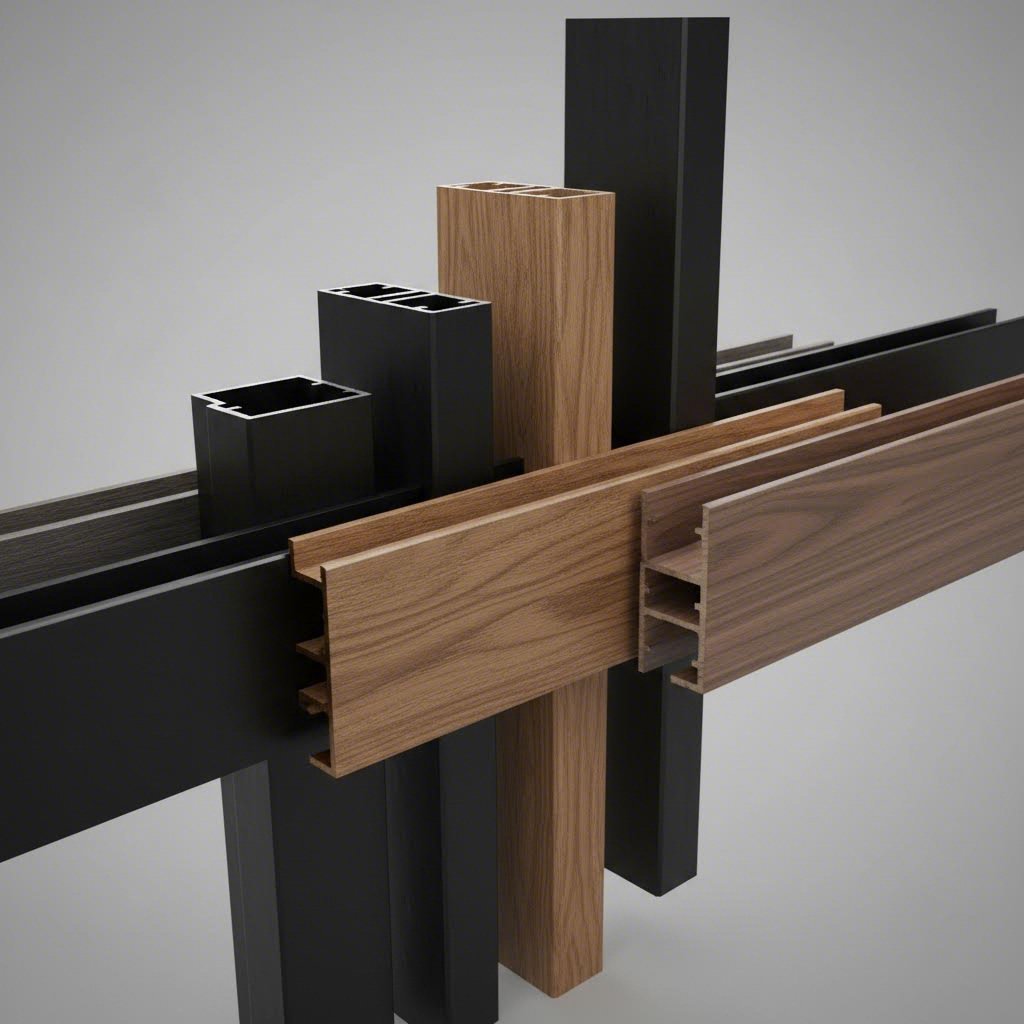
You've selected the right alloy and profile for your application—but without proper surface treatment, even the best aluminum fence extrusions won't reach their full potential. The finish you choose determines everything from color options and aesthetic appeal to how well your fence withstands decades of sun, rain, and environmental stress.
Think of surface treatment as the final layer of engineering. Raw aluminum offers excellent corrosion resistance on its own, but adding a protective finish enhances durability, expands design possibilities, and can dramatically reduce long-term maintenance requirements. Whether you're installing residential ornamental panels or commercial security barriers, understanding your finishing options empowers you to make smarter purchasing decisions.
Two surface treatments dominate the aluminum fence market: anodizing and powder coating. Both provide excellent protection, but they work through fundamentally different mechanisms—and each offers distinct advantages depending on your priorities.
How anodizing works: According to surface finishing specialists, anodizing is an electrochemical process that thickens aluminum's natural oxide layer. Technicians submerge the extruded profiles in an electrolytic bath and run electric current through them. This creates an integrated oxide coating that becomes part of the metal itself rather than sitting on top of it.
What makes anodizing special for fence applications?
How powder coating works: This dry application process uses no solvents, making it an environmentally friendly alternative to liquid paints. A technician sprays electrostatically charged powder onto grounded aluminum profiles, then cures the assembly in an oven at temperatures between 700-750°C. The heat melts the powder into a uniform, solid layer that bonds tightly to the metal surface.
Powder coating advantages for outdoor fencing include:
Which should you choose? Industry experts recommend anodizing when you want tight dimensional tolerances, outstanding corrosion and wear resistance, and an attractive metallic appearance. Powder coating makes more sense when vibrant colors or unique textures take priority, especially for projects where budget constraints matter. Many aluminum extrusion saw applications and workshop equipment use powder coating for its durability and color options at accessible price points.
Beyond the two workhorses, several advanced finishing technologies address specific architectural and performance requirements. These specialty treatments command premium pricing but deliver capabilities that standard finishes simply cannot match.
PVDF (Polyvinylidene Fluoride) Coatings: When maximum weather resistance matters more than cost, PVDF coatings deliver exceptional performance. According to architectural finishing experts, PVDF uses special fluoropolymer resins that form a strong, flexible layer with superior resistance to fading, chalking, and cracking. These coatings maintain their solar reflectance and color stability even after years of harsh sun exposure—independent testing shows minimal color change after extended Florida weathering trials.
PVDF excels in:
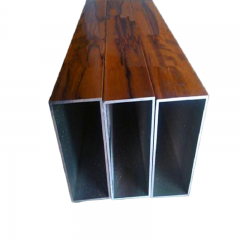
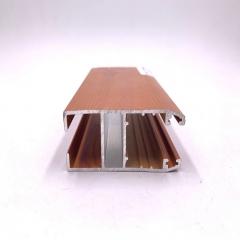
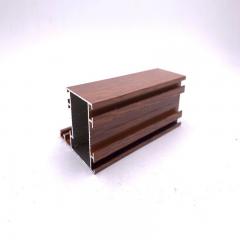
Wood-Grain Finishes: Imagine the warmth of natural timber without the maintenance headaches. Advanced sublimation and heat-transfer processes create remarkably realistic wood-grain patterns on aluminum surfaces. According to industry sources, these finishes replicate natural timber aesthetics so convincingly that most people cannot distinguish them from real wood—even when touching the surface.
Wood-grain aluminum fence extrusions offer compelling advantages:
Micro-Arc Oxidation (Plasma Electrolytic Oxidation): This advanced electrochemical process creates dense ceramic oxide layers through controlled micro-discharges on aluminum surfaces. According to materials specialists, PEO produces extremely hard coatings with hardness values reaching 2000 HV—far exceeding what standard anodizing achieves. The resulting nano-ceramic coating provides outstanding wear resistance and thermal stability up to 800°C, making it suitable for industrial applications where extreme durability matters most.
Different environments and applications demand different finish characteristics. The following table summarizes key performance factors to guide your selection:
| Finish Type | UV Resistance | Salt Spray Performance | Color Options | Relative Cost | Best Applications |
|---|---|---|---|---|---|
| Standard Anodizing | Excellent | Excellent | Limited (natural metallic tones) | Moderate | Architectural, high-wear areas |
| Color Anodizing | Excellent | Excellent | Moderate (bronze, champagne, black, gold) | Moderate-High | Decorative residential, premium commercial |
| Powder Coating | Very Good | Very Good | Virtually unlimited (RAL matching) | Low-Moderate | General purpose, color-critical projects |
| PVDF Coating | Outstanding | Outstanding | Wide range with exceptional retention | High | Coastal, harsh environments, long-warranty projects |
| Wood-Grain Transfer | Very Good | Very Good | Multiple wood species appearances | Moderate-High | Residential, hospitality, natural aesthetic needs |
| Micro-Arc Oxidation | Outstanding | Outstanding | Limited | High | Industrial, extreme wear, high-temperature applications |
Your geographic location and surrounding conditions should heavily influence finish selection. Here's how different treatments perform across challenging environments:
Coastal salt air: Salt spray accelerates corrosion on most metal finishes. Both anodizing and PVDF coatings excel in marine environments, with PVDF offering the longest color retention. Standard powder coatings perform adequately when properly specified but may show earlier signs of degradation compared to premium alternatives.
Industrial pollution: Airborne chemicals from factories and manufacturing facilities attack organic coatings over time. Anodized finishes resist these attacks better because the oxide layer is chemically inert. According to coating specialists, the aluminum oxide barrier protects against SO3, H2S, and SO2 exposure—common industrial pollutants that degrade other finishes.
Extreme UV exposure: Desert climates and high-altitude installations subject fences to intense ultraviolet radiation. PVDF coatings with their fluoropolymer chemistry resist UV degradation better than standard powder coatings. Color-matched replacements years later will show noticeable differences if you've used lower-grade finishes in high-UV zones.
Temperature extremes: Freeze-thaw cycles stress coating adhesion. Powder coatings maintain flexibility across temperature swings better than some rigid alternatives. For applications involving temperature sensitivity, manufacturers like Shengxin Aluminium—with over 30 years of experience and comprehensive surface treatment capabilities including anodizing, powder coating, PVDF, and micro-arc oxidation—can recommend optimal finish specifications for your specific climate conditions.
All surface treatments reduce maintenance compared to bare aluminum, but ongoing care requirements vary:
Proper finish selection at the outset dramatically reduces lifetime maintenance costs. Investing in a higher-grade treatment often pays for itself through avoided repairs and extended service life—especially in demanding environments where budget finishes would require premature replacement.
With surface treatment options now clear, you're equipped to communicate technical requirements effectively when ordering custom aluminum fence extrusions. The next section covers how to specify and order profiles that meet your exact project needs.
You've identified the right alloy, selected an appropriate profile, and determined the ideal surface treatment. Now comes the critical step that separates successful projects from costly headaches: communicating your requirements clearly to an extrusion manufacturer. Whether you're ordering aluminum fence extrusion specifications for a single commercial installation or establishing a long-term supply relationship, the quality of your Request for Quote (RFQ) directly impacts pricing accuracy, lead times, and final product quality.
Sounds intimidating? It doesn't have to be. A well-structured RFQ eliminates the back-and-forth that delays projects and introduces errors. When you provide complete, accurate specifications upfront, manufacturers can quote confidently—and you can compare proposals on equal footing.
Think of your RFQ as a blueprint for success. Missing a single detail can result in profiles that don't fit your application, finishes that fail prematurely, or delivery schedules that throw your project off track. According to industry best practices, a comprehensive specification document should address every aspect of your custom aluminum fence profiles.
Follow this step-by-step checklist to ensure nothing falls through the cracks:
For complex projects, consider providing physical samples of existing profiles you want to match or prototype parts demonstrating your requirements. Many manufacturers can reverse-engineer samples when drawings aren't available—though providing CAD files always yields more precise results.
One of the biggest surprises for first-time buyers is discovering that ordering aluminum fence extrusions isn't like buying off-the-shelf products. Minimum Order Quantities (MOQs) and lead times reflect the economics and technical realities of extrusion manufacturing.
Why MOQs exist: According to extrusion industry experts, several practical factors drive minimum order requirements:
Typical MOQ ranges vary significantly. Standard profiles from an existing catalog might have minimums as low as 100-500 kg, while fully custom fence extrusions often require 500-1,000 kg or more for the initial order. Subsequent reorders generally carry lower minimums since the die already exists and has been proven.
Tooling costs for custom dies: If your project requires custom aluminum fence profiles that don't exist in a manufacturer's standard catalog, you'll need to invest in die development. Dies are precision-machined from H13 tool steel and represent a significant upfront cost. According to industry sources, die complexity determines pricing:
Die costs typically range from a few hundred dollars for simple solid shapes to several thousand for complex hollow profiles. The good news? You own the die once paid for, and it can produce tens of thousands of meters of extrusion before requiring replacement.
Realistic lead time expectations: Plan your project timeline around three distinct phases:
Total lead times for custom orders typically run 4-8 weeks from RFQ approval to delivery. According to market research, average delivery times for custom aluminum profiles range from 10 to 20 days once production begins, with high-volume or extensively machined profiles potentially requiring up to 4 weeks.
Even the most detailed RFQ benefits from direct technical dialogue with your manufacturer's engineering team. Consider scheduling a design review before finalizing specifications—early feedback can catch potential issues before they become expensive problems.
When communicating with manufacturers about ordering aluminum fence extrusions, keep these best practices in mind:
Many manufacturers offer Design for Manufacturability (DFM) consultations that can improve your profiles while reducing production complexity. Small changes to fillet radii, wall thickness transitions, or tolerance specifications often yield meaningful cost reductions without compromising performance.
Learning from others' mistakes saves time, money, and frustration. Watch out for these frequently encountered problems:
Taking time to prepare a thorough, detailed RFQ pays dividends throughout your project. Manufacturers appreciate complete information because it enables accurate quoting and smooth production—and you benefit from fewer surprises, faster turnaround, and better results.
With your specifications locked down and orders placed, the next challenge awaits: installing your aluminum fence extrusions properly. Proper cutting techniques, assembly methods, and post-setting procedures determine whether your fence performs as designed for decades to come.
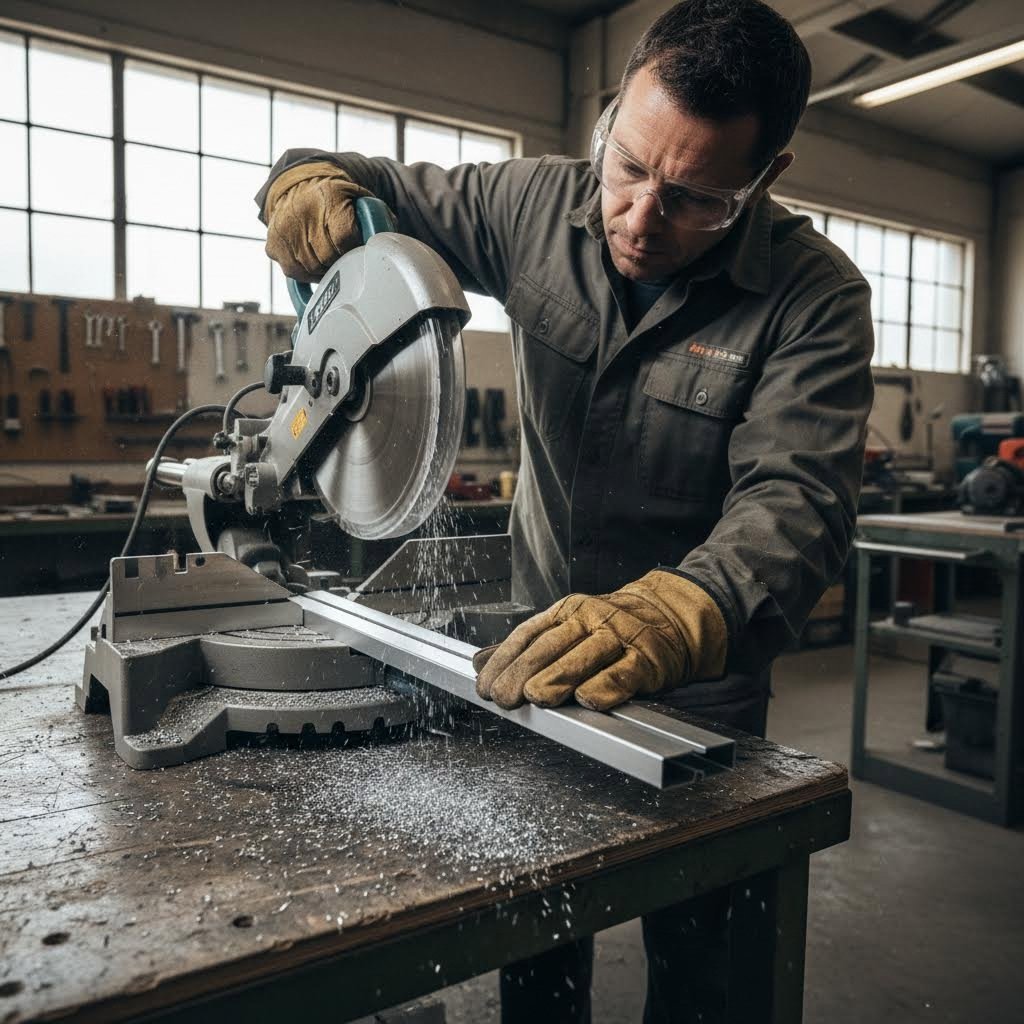
Your aluminum fence extrusions have arrived, specifications match perfectly, and the surface finish looks exactly as ordered. Now comes the moment of truth: turning those profiles into a properly installed fence that will stand straight and strong for decades. Whether you're a contractor handling commercial installations or a homeowner tackling a DIY project, the techniques you use during cutting, assembly, and post-setting determine your fence's long-term performance.
Here's the good news—aluminum's lightweight nature makes it far easier to handle than steel or iron alternatives. But don't mistake easy handling for casual installation. Proper techniques matter, and cutting corners now leads to alignment problems, premature wear, and frustrated repairs later.
Before you make your first cut, gather the right equipment. Using improper tools doesn't just produce sloppy results—it can damage your extrusions and create safety hazards. According to extrusion specialists, cutting aluminum fence extrusions requires specific blade selection and technique to achieve clean, square cuts.
Your essential tool kit should include:
Getting clean, square cuts on aluminum profiles isn't difficult—but it requires attention to detail. Rush through this step, and you'll struggle with panels that don't align, gaps at connections, and a finished fence that looks unprofessional.
Follow these aluminum fence installation tips for cutting success:
For projects requiring numerous identical lengths, set up a stop block on your saw table. According to cutting experts, this simple addition saves time and dramatically improves consistency—every piece comes out the same length without constant measuring.
Your fence is only as solid as its foundation. Post installation determines whether your aluminum fence extrusions stay plumb and aligned for decades or gradually lean and shift over time. Three primary methods exist, each suited to different situations and soil conditions.
Concrete footings: This remains the gold standard for permanent fence installations. According to installation guidelines, dig holes 36 to 42 inches deep (depending on your local frost line) and approximately 6 inches in diameter. Position the hole so it overlaps your string line by about 2 inches on the outside and 4-5 inches on the inside.
Critical aluminum fence post installation steps include:
Driven posts: For temporary installations or soil conditions where digging proves impractical, driven posts offer a faster alternative. This method works best in loose, sandy, or gravel-free soil. Use a post driver or sledgehammer with protective cap to pound posts directly into the ground. While faster, driven posts provide less lateral stability than concrete footings and may shift over time in freeze-thaw climates.
Surface mounting: When drilling into concrete patios, pool decks, or other hardscapes, surface-mount brackets eliminate digging entirely. These flanged bases bolt directly to the existing surface with concrete anchors. Ensure your brackets are rated for the post size and expected wind loads—undersized mounting hardware is a common failure point.
Once posts are set and cured, connecting panels follows a logical progression. Most residential aluminum fence systems use mechanical fasteners, though commercial and industrial applications sometimes specify welded connections for enhanced security.
The aluminum fence assembly guide basics include:
After completing each fence line, step back and check alignment. According to professional installers, it's normal for material to shift slightly during installation. If posts have moved out of line, tamp them back into position before the concrete fully cures. Set your heights and make all alignment adjustments during this window—corrections become exponentially harder once footings harden.
Flat yards are easy. Sloped terrain requires additional planning and technique selection. According to fencing specialists, two primary approaches exist for handling grade changes, and choosing the wrong one creates aesthetic problems or code violations.
Racked (sloped) installation: The rails angle with the slope while pickets remain vertical. This method follows terrain seamlessly, eliminating gaps at the bottom of the fence. Most residential aluminum fence sections are designed to rack up to approximately 12 inches within a 6-foot section. Racking is preferred for pool code compliance since it prevents gaps that children or pets could squeeze through.
Stepped installation: Each panel remains level, but successive panels mount lower on posts as the ground descends. This creates a clean, geometric stair-step appearance. However, triangular gaps form under the low side of each step—problematic for pet containment and prohibited under most pool safety codes.
Tips for sloped installations:
Installing a few panels is straightforward. Maintaining perfect alignment across hundreds of feet of fencing tests your patience and technique. Small errors compound—a post that's 1/4 inch off line becomes noticeable when you sight down a 200-foot run.
Professional contractors rely on these alignment strategies:
Patience during installation pays dividends for years. A straight, plumb fence looks professional and functions properly. A wavy line with tilted posts advertises careless workmanship every time someone looks at your property. Take the extra time now—you'll appreciate the results every day afterward.
With your fence properly installed, attention shifts to keeping it in top condition. Understanding maintenance requirements and realistic durability expectations ensures your investment delivers decades of reliable performance.
Your aluminum fence extrusions are installed, aligned perfectly, and looking sharp. But here's the question property owners inevitably ask: how much work will this fence demand over the coming years? The honest answer might surprise you. Unlike wood that demands annual staining or steel that requires constant rust vigilance, aluminum fencing is remarkably self-sufficient—though "maintenance-free" doesn't mean "attention-free."
According to fencing specialists, aluminum fences can last over 50 years with proper care, compared to wooden fences that typically require replacement after just 15 to 25 years. That's a dramatic difference in long-term value. The key lies in understanding what minimal maintenance actually looks like and how environmental factors affect your specific installation.
Think of fence maintenance like changing your car's oil—regular light attention prevents expensive problems down the road. Your aluminum fence maintenance guide doesn't need to be complicated, but consistency matters.
Routine cleaning schedule:
According to cleaning experts, avoid abrasive cleaners, sponges, or brushes as they may damage the powder-coated finishing. The goal is removing dirt without scratching the protective coating that keeps your fence looking new.
Hardware inspection checklist:
Finish touch-up procedures:
Structural integrity checks:
Your fence faces different challenges depending on where you live. Understanding these environmental factors helps you anticipate maintenance needs and set realistic aluminum fence lifespan expectations.
Coastal salt air: According to maintenance experts, those living near coastal areas experience abrasive salt buildup on fences. Weekly washing is recommended to prevent salt from attacking the finish. The good news? Aluminum's natural oxide layer provides inherent corrosion resistance that steel and iron simply cannot match in marine environments.
Industrial settings: Airborne pollutants from factories and manufacturing facilities deposit onto fence surfaces. These contaminants can degrade coatings over time. More frequent cleaning—monthly or even bi-weekly—keeps industrial residue from causing permanent damage.
Extreme temperatures: Aluminum handles freeze-thaw cycles remarkably well. However, according to installation specialists, consistent freezing and thawing of snow and soil might loosen posts. Install fences when the environment is not too cold, and secure posts with thick cement to prevent shifting during temperature swings.
High-humidity climates: Moisture accelerates finish degradation on any material. While aluminum itself won't rust, trapped moisture around fasteners or in crevices can promote oxidation of steel screws or brackets. Ensure adequate drainage and avoid piling mulch or debris against fence sections.
Winter considerations: Aluminum fences excel in harsh winters because the paint does not corrode due to snow dampness. However, avoid piling snow against fence sections—the pressure can cause structural stress and potentially loosen posts over time.
Even the best-maintained fence occasionally needs repairs. Knowing how to address common problems saves money and extends your fence's functional life. Here are essential aluminum fence repair tips for the most frequent issues:
Dents and scratches: According to repair specialists, small accidents lead to dents and scratches from high-traffic wear, errant balls, or gardening tools. For minor dents, use a heat gun to warm the affected area, then gently tap out the dent with a rubber mallet. For scratches, apply metal filler compound designed for aluminum, smooth with a putty knife, let dry, sand smooth, and touch up with matching paint.
Loose or broken components: Natural wear and strong winds can loosen fence parts over time. Tighten all visible fasteners first. Replace stripped screws with slightly larger diameter alternatives that grip fresh material. For broken rails or pickets, remove the damaged section and install replacement components—most manufacturers sell individual parts for this purpose.
Surface corrosion: While aluminum doesn't rust like iron, it can develop aluminum oxide discoloration, especially where the protective coating has been damaged. Wipe affected areas with a nonabrasive cloth, apply rust-resistant sealant to prevent further oxidation, and touch up with matching paint.
Panel replacement: Severe damage sometimes requires replacing entire sections. Remove screws connecting the damaged panel to posts, slide out the old section, and install the replacement. According to repair professionals, once you replace powder coating with regular paint, you'll need more regular maintenance moving forward, as regular paint wears out more quickly than factory-applied coatings.
What should you honestly expect from your investment? According to industry sources, aluminum fences require minimal maintenance to last over 50 years—a remarkable service life that justifies the initial investment. With consistent care following the maintenance schedule outlined above, your fence should provide decades of reliable performance.
When evaluating warranties, look for coverage that protects against:
Many quality manufacturers offer lifetime warranties on materials for original purchasers, covering panels, posts, and gates. Review warranty terms carefully—understand what voids coverage, what maintenance is required to keep warranties valid, and what remedies are available if problems arise.
The bottom line on aluminum fence durability? This material delivers exceptional long-term value. Initial costs may exceed wood or vinyl alternatives, but when you factor in decades of service with minimal maintenance requirements, aluminum fence extrusions represent smart investments for property owners who value durability and low lifetime costs.
You've explored alloy grades, compared materials, evaluated profiles, and understand surface treatments and installation techniques. Now comes the decision that ties everything together: is aluminum fencing right for your specific project, and who should you trust to manufacture your extrusions? These final choices determine whether your investment delivers decades of satisfaction or becomes a source of ongoing frustration.
Choosing aluminum fence extrusions isn't just about the material—it's about finding the right manufacturing partner who can deliver quality profiles that meet your exact specifications. Let's walk through a practical framework for making both decisions with confidence.
Before placing orders, step back and honestly evaluate whether aluminum aligns with your project requirements. Not every situation calls for the same solution. Ask yourself these critical questions:
Answering these questions honestly prevents buyer's remorse. Aluminum delivers outstanding performance for the right applications—but forcing it into situations where other materials excel creates unnecessary expense and disappointment.
Once you've confirmed aluminum fits your needs, selecting the right aluminum fence extrusion supplier becomes paramount. According to manufacturing experts, a bad supplier can deliver products with scratches, surface marks, twisting, bending, cracks, or weak joins—problems that waste material and require costly fixes.
Evaluate potential partners across these critical dimensions:
Production capacity and equipment: Does the manufacturer have sufficient press capacity to handle your order volume? Look for facilities with multiple extrusion presses across various tonnages—this flexibility allows them to match the right equipment to your profile requirements. For example, manufacturers operating 35 or more extrusion presses ranging from 600T to 5500T can handle everything from delicate decorative profiles to heavy-duty structural sections.
Surface treatment capabilities: Can they apply the finish your project requires in-house? Vertically integrated facilities that handle anodizing, powder coating, PVDF, and specialty finishes under one roof deliver better quality control and faster turnaround than manufacturers who outsource finishing. According to industry sources, in-house capabilities can cut lead times by more than half compared to outsourced operations.
Technical support availability: Does the manufacturer offer engineering assistance from die development through production? Quality partners provide Design for Manufacturability (DFM) consultations that can improve your profiles while reducing production complexity. Look for end-to-end support that guides you from initial concept through final delivery.
Quality certifications: ISO 9001 certification indicates the manufacturer follows documented quality management systems. According to certification experts, this standard ensures consistent dimensions and properties, reliable surface finish and coating quality, documentation of lot history for traceability, and clear processes for addressing defects quickly.
Industry experience: How long has the manufacturer been producing aluminum extrusions? Established companies with decades of experience have encountered—and solved—countless production challenges. Partners with 30+ years in the industry bring institutional knowledge that newer operations simply cannot match.
Anyone can make impressive statements on a website. Verifying those claims protects you from costly mistakes. According to supplier evaluation specialists, combining fact-based checks with trust-building human factors transforms risky imports into confident partnerships.
Use this verification approach:
Bringing it all together, your aluminum fence buying guide comes down to matching material capabilities to project requirements, then selecting a manufacturing partner equipped to deliver on your specifications.
| Decision Factor | Choose Aluminum If... | Consider Alternatives If... |
|---|---|---|
| Budget Priority | You value long-term savings over upfront cost | Immediate budget constraints override lifetime value |
| Maintenance Tolerance | You prefer minimal ongoing attention | You enjoy regular maintenance projects |
| Environmental Exposure | Salt air, humidity, or industrial conditions exist | Protected inland locations with mild conditions |
| Aesthetic Goals | Ornamental elegance or modern clean lines matter | Complete privacy or rustic character takes priority |
| Timeline Flexibility | You can wait 4-8 weeks for custom production | Immediate installation is mandatory |
For those ready to move forward with custom aluminum fence extrusions, manufacturers like Shengxin Aluminium exemplify the capabilities to look for: over 30 years of industry experience, 35 advanced extrusion presses spanning 600T to 5500T capacity, comprehensive surface treatments including anodizing and powder coating, and end-to-end technical support from die development through mass production. This combination of capacity, capability, and experience represents the standard against which to measure any potential manufacturing partner.
Your fence is a long-term investment in your property's security, appearance, and value. Taking time to choose both the right material and the right manufacturing partner ensures that investment pays dividends for decades to come.
6063 aluminum offers superior surface finish and excellent corrosion resistance, making it ideal for residential ornamental fencing. With a tensile strength of 241 MPa, it prioritizes aesthetics and formability. 6061 aluminum provides higher tensile strength at 310 MPa, better hardness ratings, and superior fatigue resistance, making it the preferred choice for commercial security fencing and heavy-duty applications where structural integrity matters most.
Aluminum fence extrusions typically last 30-50 years with minimal maintenance, significantly outperforming wood fences (10-15 years), vinyl fences (20-30 years), and steel fences (20-30 years with regular maintenance). The natural oxide layer that forms on aluminum provides inherent corrosion protection, eliminating the rust problems that plague steel and iron alternatives. Quality manufacturers like Shengxin Aluminium offer comprehensive surface treatments including anodizing and powder coating that further extend service life.
Pool-compliant aluminum fencing must meet strict safety standards: minimum height of 48 inches (54 inches preferred), maximum picket spacing of 4 inches to prevent child access, smooth top rails without protruding spears, and anti-climb design features. Horizontal rails less than 45 inches from the top should face the pool side with vertical spacing not exceeding 1-3/4 inches. Self-closing, self-latching gates with releases positioned above child reach are also mandatory in most jurisdictions.
Use a miter saw equipped with an 80-100 tooth carbide-tipped blade designed for non-ferrous metals. Apply cutting lubricant or wax to the blade before cutting to reduce friction and heat buildup. Secure the workpiece firmly with clamps, let the blade reach full RPM before contacting the material, and apply steady moderate pressure. After cutting, immediately deburr all edges with a file or deburring tool to remove sharp edges and prevent injury during handling.
Evaluate manufacturers based on production capacity (multiple extrusion presses across various tonnages), in-house surface treatment capabilities (anodizing, powder coating, PVDF), technical support availability from die development through production, ISO 9001 quality certifications, and industry experience. Companies like Shengxin Aluminium with 30+ years experience, 35 extrusion presses ranging from 600T to 5500T, and comprehensive finishing capabilities represent the quality standards you should expect from a reliable manufacturing partner.



 online service
 0086 136 3563 2360
 sales@sxalu.com
 +86 136 3563 2360
 English
 français
 Deutsch
 русский
 español
 português
 العربية
 ไทย
ไทย Việt
Việt Українська