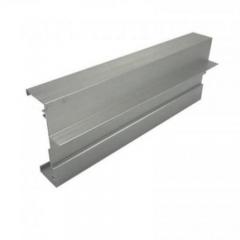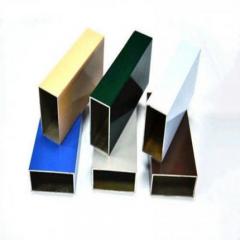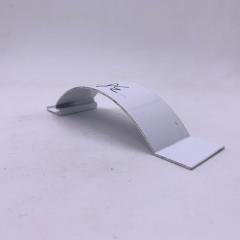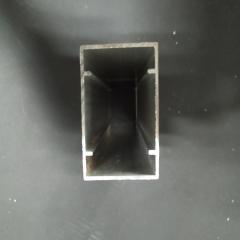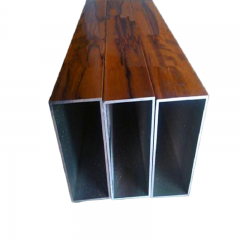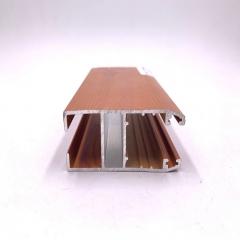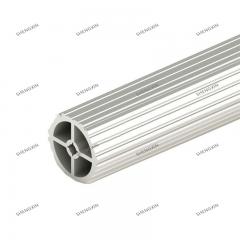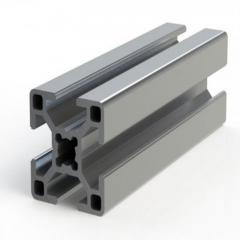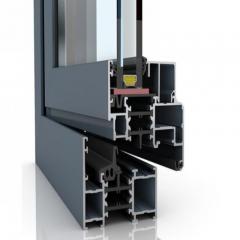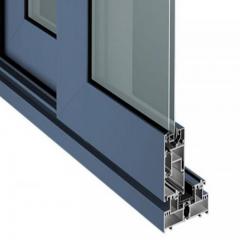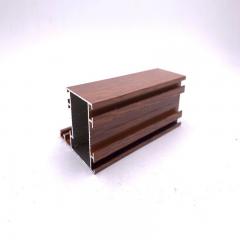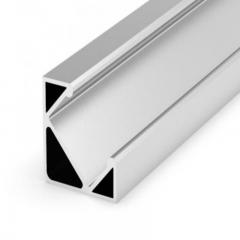
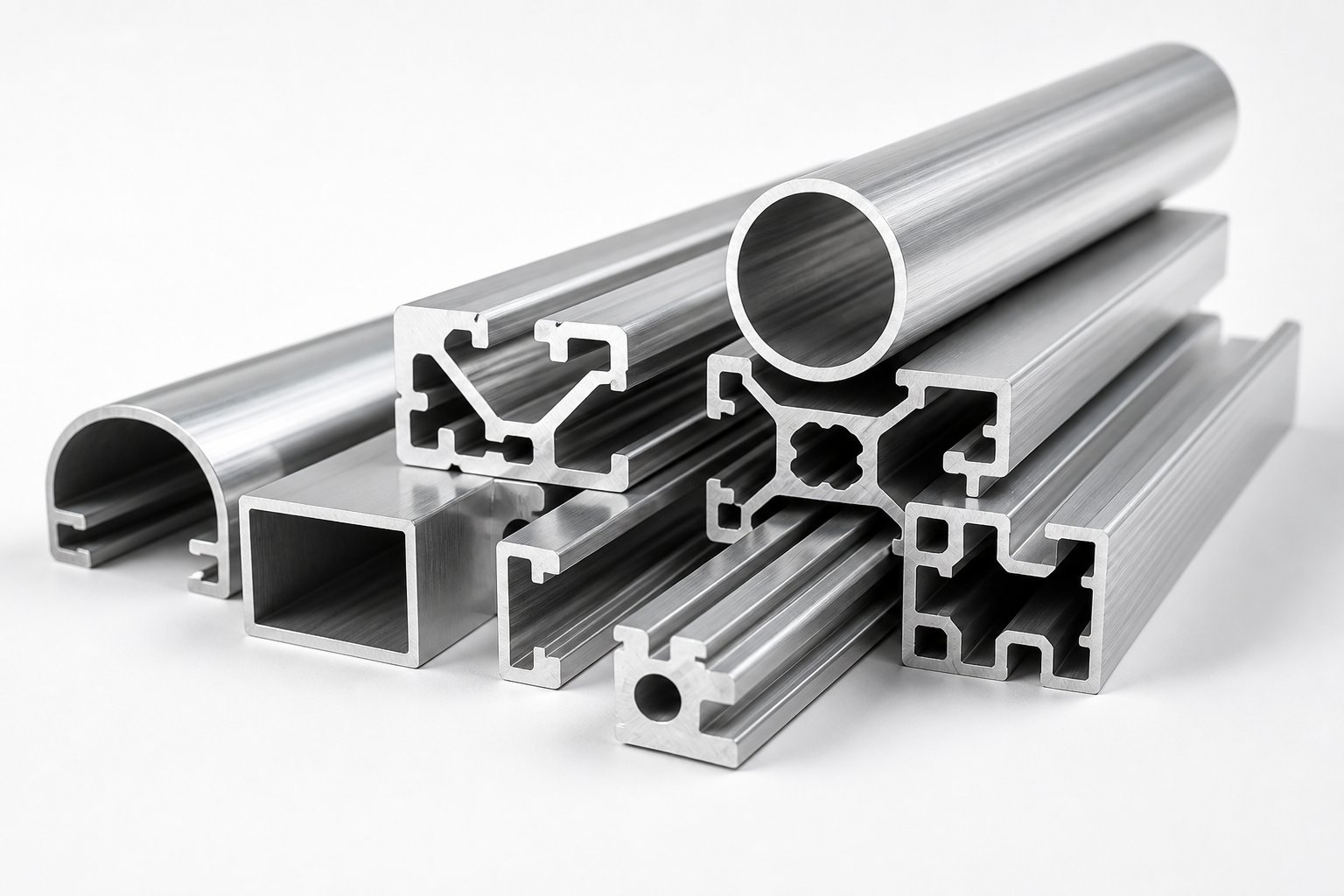
When you're searching for the ideal material for architectural trim, window frames, or precision industrial components, one alloy consistently rises to the top of the list. 6063 aluminum extrusions represent the gold standard for applications demanding both visual appeal and reliable performance. But what exactly makes this particular alloy so special?
At its core, 6063 aluminum is an aluminum-magnesium-silicon alloy specifically engineered for the extrusion process. Think of it as the material that was born to be shaped. The carefully balanced composition allows heated aluminum billets to flow smoothly through complex dies, emerging as intricate aluminum extrusion profiles with remarkably consistent dimensions and surfaces.
Imagine trying to push thick honey through a detailed mold versus water. The 6063 alloy behaves more like that perfectly viscous honey when heated, maintaining enough body to hold complex shapes while flowing easily enough to fill every corner of the die. This exceptional extrudability stems from its unique chemistry, which typically includes approximately 0.4-0.8% magnesium and 0.2-0.6% silicon, with aluminum comprising the remaining balance.
Why does this matter for your project? The answer lies in three key advantages:
6063 aluminum delivers the smoothest, most consistent anodized finish of any commonly extruded aluminum alloy, making it the undisputed choice for visible architectural applications where appearance matters as much as performance.
You'll find extruded aluminum everywhere in modern construction, from sleek curtain wall systems to decorative railings. The reason architects and engineers repeatedly specify 6063 aluminum comes down to its outstanding response to surface treatments. Whether you need a brilliant anodized finish, durable powder coating, or simply a clean mill finish, this alloy delivers results that other extrusions simply cannot match.
The extruded aluminium channel you see framing commercial storefronts? Almost certainly 6063. Those precision heat sinks keeping your electronics cool? Often 6063 as well. This versatility explains why manufacturers worldwide produce millions of tons of this alloy annually.
For readers just beginning their research journey, understanding this foundational knowledge helps you determine whether 6063 aluminum fits your specific requirements. If your project demands excellent corrosion resistance, attractive finished surfaces, and the ability to create complex profile geometries, you're likely looking at the right alloy. In the sections ahead, we'll dive deeper into the technical specifications, temper options, and practical applications that will help you make confident material decisions.
Ever wondered what gives 6063 its remarkable balance of workability and performance? The secret lies in its precisely controlled chemistry and the mechanical characteristics that emerge from different heat treatment processes. Let's break down the numbers behind this versatile aluminum alloy 6063 so you can make informed decisions for your projects.
The 6063 aluminium alloy follows strict compositional standards that ensure consistent performance across manufacturers worldwide. Think of it like a carefully crafted recipe where each ingredient plays a specific role in the final product.
| Element | Composition Range (%) | Function in the Alloy |
|---|---|---|
| Aluminum (Al) | Balance (97.5% min) | Base metal providing lightweight properties and corrosion resistance |
| Magnesium (Mg) | 0.45 - 0.90 | Primary strengthening element, improves corrosion resistance |
| Silicon (Si) | 0.20 - 0.60 | Combines with Mg to form strengthening precipitates during aging |
| Iron (Fe) | 0.35 max | Impurity element, kept low to maintain surface quality |
| Copper (Cu) | 0.10 max | Minor strengthening, kept low to preserve corrosion resistance |
| Manganese (Mn) | 0.10 max | Grain structure control |
| Chromium (Cr) | 0.10 max | Prevents grain boundary corrosion |
| Zinc (Zn) | 0.10 max | Impurity element |
| Titanium (Ti) | 0.10 max | Grain refiner during casting |
Notice how the magnesium and silicon content remains relatively modest compared to higher-strength alloys like 6061? This deliberate restraint is what gives aluminum 6063 its exceptional extrudability. The lower alloy content means less resistance during the extrusion process, resulting in smoother material flow and superior surface finishes.
When evaluating 6063 properties for your application, understanding how different temper treatments affect performance becomes essential. The same base alloy can exhibit dramatically different characteristics depending on how it's processed after extrusion.
| Property | T5 Temper | T6 Temper | T832 Temper |
|---|---|---|---|
| Ultimate Tensile Strength (MPa) | 186 | 241 | 290 |
| Ultimate Tensile Strength (ksi) | 27 | 35 | 42 |
| Yield Strength (MPa) | 145 | 214 | 269 |
| Yield Strength (ksi) | 21 | 31 | 39 |
| Elongation at Break (%) | 12 | 12 | 10 |
| Brinell Hardness (HB) | 60 | 73 | 82 |
| Shear Strength (MPa) | 117 | 152 | 179 |
What do these numbers actually mean for your project? Let's translate the technical data into practical insights:
Understanding aluminium alloy 6063 properties helps you match the material to your specific requirements. For architectural applications where appearance and moderate strength suffice, T5 temper often provides the ideal combination. When structural demands increase, T6 delivers significantly improved mechanical performance while maintaining the same excellent corrosion resistance and finishing characteristics that define this versatile alloy.
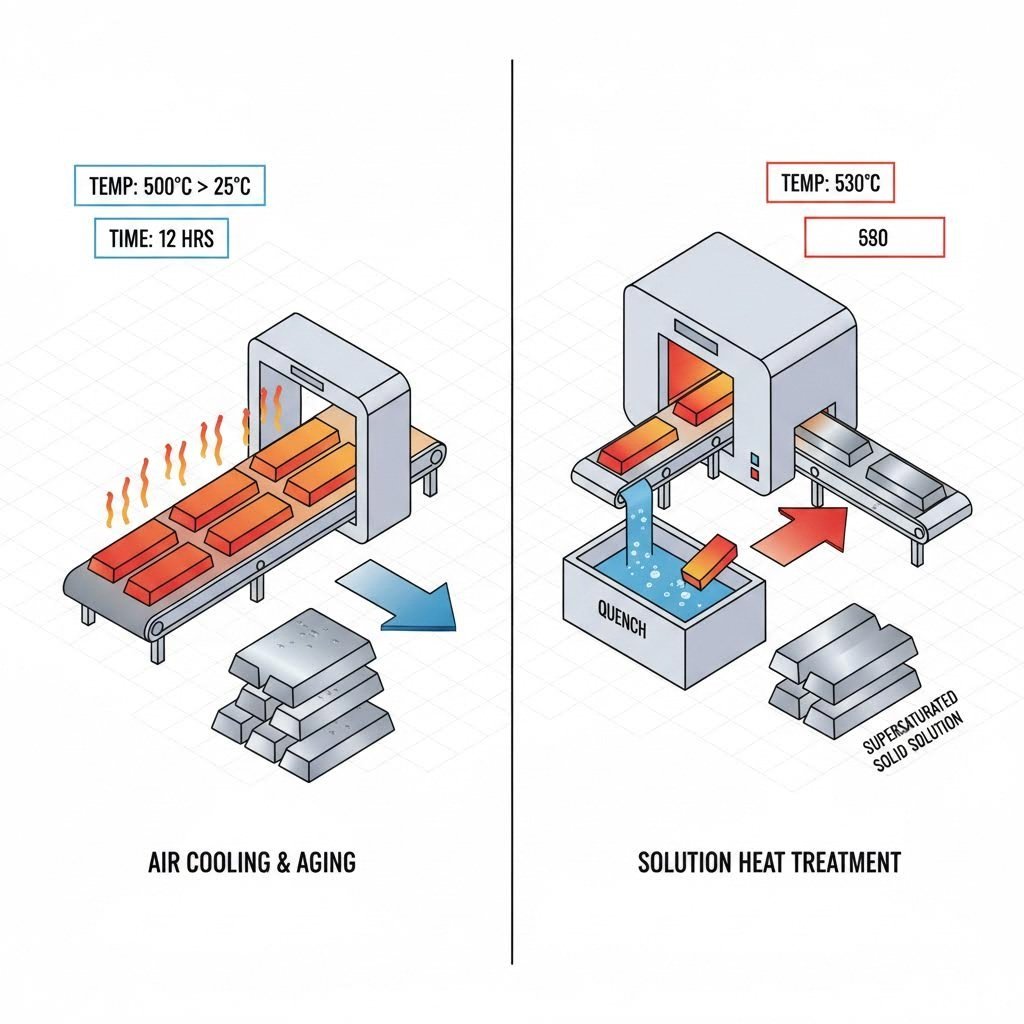
Now that you understand the mechanical properties of different tempers, you might be wondering how to actually choose between them. The temper designation isn't just a random letter-number combination. It tells you exactly how the aluminum extruded material was processed and what performance characteristics you can expect. Let's decode these designations so you can match the right temper to your specific application requirements.
Think of temper designations as recipes that transform the same base alloy into materials with distinctly different personalities. Both T5 and T6 start with the same al 6063 composition, but the heat treatment journey they take creates meaningful differences in final performance.
The T5 Process: After the aluminum extrusion profile emerges from the die at elevated temperatures (around 500°C), it's cooled using air or water quenching. The material then undergoes artificial aging, where it's held at a moderate temperature (typically 175-185°C) for several hours. This process allows strengthening precipitates to form within the aluminum matrix without the additional step of solution heat treatment.
Key characteristics of T5 temper:
The T6 Process: This temper takes an extra step. The extruded material first undergoes solution heat treatment, where it's heated to approximately 520°C to dissolve the magnesium and silicon into a solid solution. After rapid quenching to lock in this condition, the material is artificially aged similar to T5. This additional processing step creates a finer distribution of strengthening precipitates.
Key characteristics of T6 temper:
Choosing between tempers doesn't have to feel overwhelming. Ask yourself these practical questions: Does your application involve significant structural loads? Will the finished surface be prominently visible? What's your budget for processing?
Choose T5 temper when:
Choose T6 temper when:
Understanding 6063-T52: You may encounter the 6063-T52 designation in specifications. This temper indicates material that has been stress-relieved by stretching after cooling from the extrusion process, then artificially aged. The stretching operation (typically 1-3% permanent set) reduces residual stresses that can cause distortion during subsequent machining or finishing operations. For aluminum extruded components requiring tight dimensional tolerances or those destined for precision CNC machining, T52 offers improved stability compared to standard T5.
The beauty of al 6063 lies in its adaptability. Whether you select T5 for its superior finishing characteristics or T6 for enhanced structural performance, you're working with an alloy optimized for the extrusion process. Understanding these temper distinctions empowers you to specify exactly what your project demands, rather than leaving the decision to chance or defaulting to whatever happens to be in stock.
So you've decided aluminum extrusions are right for your project, but which alloy should you specify? This question trips up even experienced engineers because the differences between 6000-series alloys aren't always obvious at first glance. Let's put 6063 side by side with its closest competitors so you can make a confident material selection based on real performance data.
All four major extrusion alloys, 6063, 6061, 6005, and 6082, belong to the same aluminum-magnesium-silicon family. They share the same base chemistry that forms magnesium silicide (Mg₂Si) for strength and corrosion resistance. However, subtle differences in manganese, copper, and trace element content create distinct performance personalities.
Think of it like comparing sedans from different manufacturers. They all get you from point A to point B, but each excels in different driving conditions. Here's how these alloys stack up across the parameters that matter most:
| Property | 6063-T6 | 6061-T6 | 6005-T6 | 6082-T6 |
|---|---|---|---|---|
| Tensile Strength (MPa) | ~241 | ~310 | ~310 | ~350 |
| Yield Strength (MPa) | ~214 | ~276 | ~260 | ~340 |
| Elongation (%) | 8-12 | 12-17 | 10-12 | 8-10 |
| Extrudability | Excellent | Moderate | Good | Difficult |
| Surface Finish Quality | Excellent | Good | Good | Fair |
| Corrosion Resistance | Excellent | Good | Good | Excellent |
| Weldability | Excellent | Good | Excellent | Good |
| Machinability | Moderate | Excellent | Fair | Moderate |
| Anodizing Response | Excellent | Good | Good | Fair |
Notice something interesting? The strength ranking runs 6082 > 6061 ≈ 6005 > 6063, but the extrudability ranking is exactly reversed. This inverse relationship isn't coincidental. The same alloying additions that boost strength, particularly higher manganese and silicon content, make the material harder to push through complex die shapes.
What does this mean practically? If you need thin walls, intricate cross-sections, or tight tolerances in your extruded aluminum profiles, 6063 will produce superior results. The lower alloy content in 6063 means less resistance during extrusion, translating to smoother material flow and more consistent dimensions.
The alloy selection decision often comes down to one fundamental question: Is appearance or strength your primary driver?
When extruded aluminum alloy 6063 is your best choice:
When 6061 makes more sense:
When 6005 or 6082 deserves consideration:
Cost considerations also play a role in alloy selection. Generally, 6063 aluminium extrusions cost less to produce than higher-strength alternatives because the extrusion process runs faster with less die wear. The easier extrudability means manufacturers can produce complex shapes economically, passing those savings along to buyers. However, if you need to machine the extruded profiles extensively, 6061's superior machinability might offset the higher initial material cost through reduced fabrication time.
One final consideration often overlooked: copper content. The 6061 alloy contains approximately 0.28% copper, which enhances strength and machinability but slightly reduces corrosion resistance compared to copper-free alloys like 6063. For outdoor architectural applications where decades of weather exposure are expected, this difference matters. The extruded aluminium profiles you see on commercial building facades are almost universally 6063 precisely because of this superior long-term corrosion performance.
Understanding these alloy distinctions positions you to have informed conversations with your extrusion supplier about surface finishing options and how different treatments interact with each alloy's unique characteristics.

Where does all this 6063 aluminum actually end up? Walk through any modern city and you're surrounded by it, often without realizing. From the sleek window frames in office towers to the display fixtures in your favorite retail store, this versatile alloy works quietly behind the scenes. Let's explore how different industries leverage 6063's unique combination of properties to solve real engineering challenges.
The construction industry consumes more 6063 aluminum than any other sector, and for good reason. When architects specify materials for visible building components, they need something that looks stunning today and still looks stunning decades from now. This alloy delivers on both counts.
Building envelope components:
Interior and exterior trim:
Why does 6063 dominate architectural applications? As one industry publication notes, "aluminum is great for narrow sightlines" and its ability to be extruded into many shapes makes it "really limitless what an architect can do with that product." The alloy's superior response to anodizing creates durable, attractive finishes that won't peel, chip, or fade like painted surfaces might.
Beyond buildings, 6063 aluminum finds its way into applications you interact with daily. The same properties that make it excellent for architecture translate surprisingly well to industrial and consumer products.
Transportation sector:
Electrical and electronic applications:
Consumer products and retail:
Industrial framing and equipment:
What makes 6063 ideal across such diverse applications? The answer lies in versatility. Manufacturers can create everything from simple rectangular tubes to complex custom profiles with internal channels, mounting features, and decorative elements, all in a single extrusion pass. This design freedom, combined with excellent corrosion resistance and finishing options, explains why product designers keep returning to this alloy.
The sustainability factor also plays an increasingly important role. According to The Aluminum Association, nearly 75 percent of all aluminum ever produced is still in use today, with recycling rates exceeding 90 percent in most industrial markets. Recycled aluminum saves 95 percent of the energy needed to make new aluminum, making 6063 extrusions an environmentally responsible choice for forward-thinking manufacturers and specifiers.
With such a broad range of applications in mind, the question becomes how to achieve the perfect surface finish for your specific use case. The next section explores why 6063 excels at anodizing and what finishing options will bring your project to life.
You've seen how 6063 aluminum dominates architectural applications, but have you ever wondered what makes those window frames and curtain walls look so stunning for decades? The secret isn't just the alloy itself. It's how beautifully this material responds to surface treatments. Among all commonly extruded aluminum shapes, 6063 stands alone in its ability to produce flawless, consistent finishes that architects and designers crave.
Imagine dipping two different aluminum extrusion shapes into the same anodizing bath. One emerges with a patchy, inconsistent appearance while the other displays a perfectly uniform, lustrous finish. What's the difference? It comes down to chemistry and microstructure.
The balanced composition of 6063, particularly its low iron and controlled silicon content, creates an exceptionally homogeneous surface. When the electrochemical anodizing process builds up that protective oxide layer, it grows evenly across the entire profile. There are no hidden pockets of different phases or inconsistent grain structures to disrupt the finish.
6063 aluminum produces the most consistent anodized finishes in the industry because its refined microstructure allows the oxide layer to form uniformly, resulting in colors that match perfectly across thousands of extruded aluminum shapes.
According to finishing industry experts, anodizing effectiveness depends heavily on coating thickness and sealing quality. For architectural applications, Class I anodizing (0.7 mils or thicker) provides the durability needed for exterior exposure, while Class II (0.4 mils minimum) works well for interior components. The 6063 alloy accepts both classes beautifully, with minimal surface preparation required.
Whether you're designing a sleek commercial facade or industrial framing, the right surface treatment transforms raw aluminium extruded profile material into a finished product. Here's what you can achieve with 6063:
How do temper designations affect finishing? The T5 temper typically produces slightly superior anodized finishes compared to T6. The lower strength condition means less internal stress in the material, which translates to more uniform oxide formation. For critical architectural applications where finish quality is paramount, many specifiers prefer T5 precisely for this reason.
For extreme durability requirements, micro-arc oxidation (also called plasma electrolytic oxidation) creates ceramic-like surface layers significantly harder than conventional anodizing. This advanced treatment works exceptionally well with 6063 aluminum t extrusion profiles destined for high-wear industrial applications or marine environments where standard finishes might degrade prematurely.
The finishing options available for 6063 represent just one piece of the fabrication puzzle. Understanding how to cut, machine, and join these extrusions properly ensures your finished components meet both aesthetic and functional requirements.
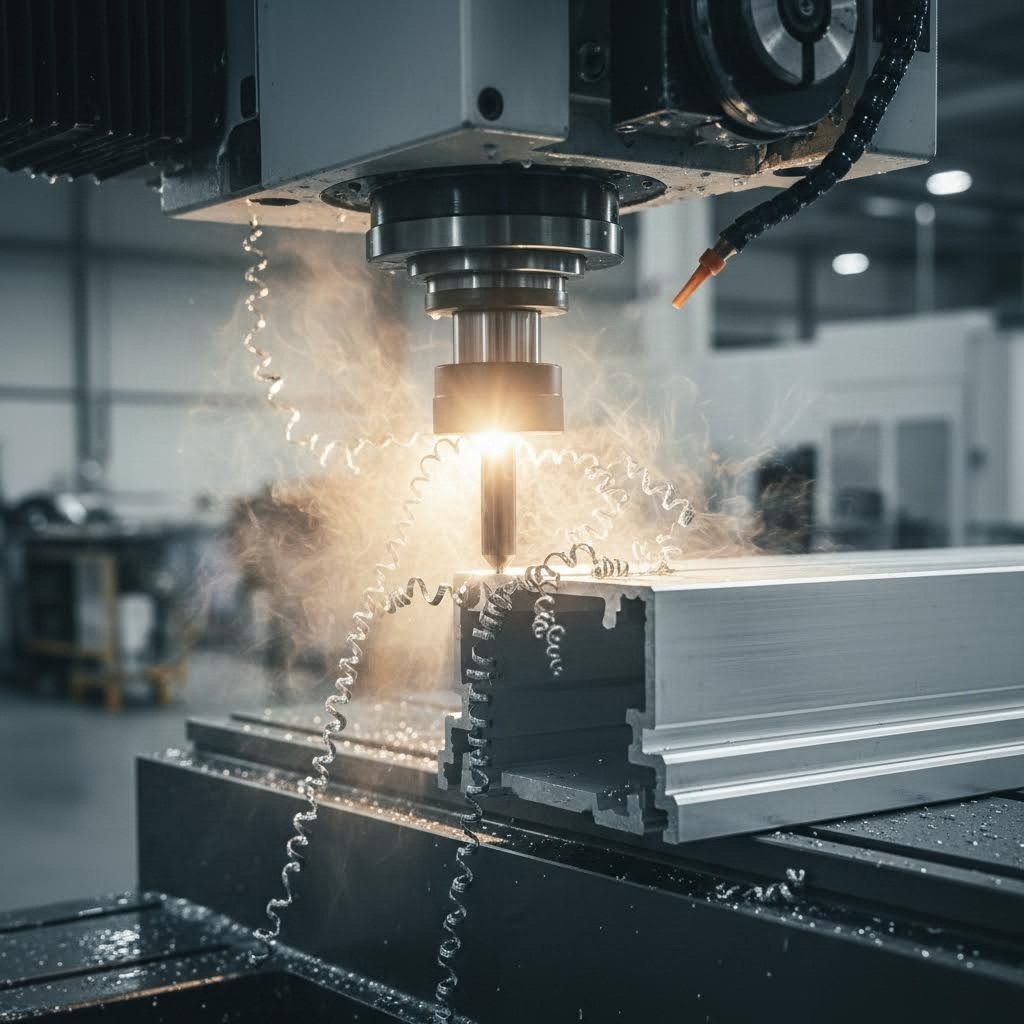
So you've selected the perfect 6063 aluminum extrusion profile and specified an ideal surface finish. Now comes the practical question every fabricator faces: how do you cut, drill, bend, and join this material without ruining all that careful preparation? Working with extruded metal requires understanding both the alloy's capabilities and its quirks. Let's walk through the techniques that separate professional results from frustrating failures.
Here's something that surprises many fabricators: 6063 machines well, but not as freely as its higher-strength cousin 6061. The same lower alloy content that makes 6063 excellent for extrusion creates softer, gummier chips during cutting operations. Without proper technique, you'll end up with built-up edge on your tools and less-than-ideal surface quality.
Cutting methods that work best:
Drilling considerations:
Drilling 6063 aluminum extrusion channel profiles requires attention to chip evacuation. Use sharp, polished-flute drill bits designed specifically for aluminum. Peck drilling (retracting periodically to clear chips) prevents binding in deep holes. Cutting fluid or even WD-40 improves finish quality and extends tool life.
Key fabrication tips for optimal results:
How temper affects machinability:
T6 temper machines noticeably cleaner than T5. The increased hardness from solution heat treatment creates chips that break more readily rather than forming long, stringy curls. If your project involves extensive CNC machining of extruded structural aluminum components, consider specifying T6 even if T5 would otherwise suffice for strength requirements. The improved machinability often justifies the modest cost difference.
Bending capabilities:
6063's 8-12% elongation allows reasonable cold bending without cracking. For tight radii, the T5 temper bends more easily than T6 due to its lower yield strength. General guidelines suggest minimum bend radii of 2-3 times the wall thickness for T5 and 3-4 times for T6 material. Pre-heating to 150-200°C improves formability for demanding bends.
Need to join aluminum extrude profiles together? 6063 welds readily using standard techniques, though some preparation ensures strong, attractive joints.
Recommended welding methods:
Welding preparation essentials:
Maintaining surface finish quality:
Fabrication operations inevitably affect surface appearance. For anodized or powder-coated components, apply protective film before handling. When welding must occur after finishing, plan for localized touch-up or refinishing of affected areas. Some fabricators prefer aluminum extrusion channel profiles in mill finish through fabrication, sending completed assemblies for final surface treatment afterward.
With proper fabrication techniques mastered, the next consideration becomes sourcing. Understanding standard sizes, custom options, and procurement factors helps you obtain exactly what your project requires at competitive pricing.
You've selected 6063 aluminum, chosen your temper, and planned your fabrication approach. Now comes the question that directly impacts your budget and timeline: where do you actually get these extrusions, and what options are available? Whether you need aluminum tubing for sale off the shelf or a completely custom profile, understanding the procurement landscape helps you make smarter buying decisions.
Before commissioning expensive custom dies, explore what's already available. Standard aluminum extrusion sizes cover an impressive range of shapes that might meet your needs immediately:
| Profile Type | Common Size Range | Typical Wall Thickness | Primary Applications |
|---|---|---|---|
| Round Tubes | 6mm - 300mm OD | 1mm - 15mm | Handrails, structural frames, furniture |
| Square Tubes | 10mm - 200mm | 1mm - 10mm | Framing, supports, modular systems |
| Rectangular Tubes | 10x20mm - 100x200mm | 1mm - 8mm | Window frames, structural members |
| Angles (L-shapes) | 10x10mm - 100x100mm | 1mm - 10mm | Corner reinforcement, trim, brackets |
| Channels (U/C shapes) | 10mm - 150mm width | 1mm - 6mm | Tracks, guides, edge protection |
| T-Sections | 15x15mm - 100x100mm | 2mm - 8mm | Structural connections, framing |
| Flat Bars | 10mm - 200mm width | 2mm - 25mm | Bus bars, brackets, base plates |
When standard profiles make sense:
When custom extrusion becomes worthwhile:
Custom die costs typically range from $500 to $5,000 depending on profile complexity and size. For high-volume projects, this investment pays back quickly through reduced assembly labor and optimized material usage. If you're looking to buy aluminum tube in standard dimensions, however, you'll find aluminium tube stock readily available from distributors worldwide.
Tolerance expectations:
Understanding dimensional tolerances prevents costly surprises. Standard 6063 extrusion tolerances follow industry specifications that vary by feature:
Need tighter tolerances? Specify them upfront. Precision extrusions cost more but eliminate fit-up problems during assembly.
Minimum order quantities:
MOQs vary dramatically based on what you're buying:
Lead time realities:
Domestic versus international sourcing:
Where should you buy aluminum tubing and extrusions? The decision involves tradeoffs:
For aluminum tubes for sale at competitive prices, international sourcing often makes sense when order volumes justify shipping costs and lead times align with project schedules. The key is finding suppliers who combine manufacturing capability with reliable quality systems and responsive technical support.
With procurement fundamentals covered, the final piece of the puzzle involves selecting a manufacturing partner who can deliver consistently on quality, capability, and service.
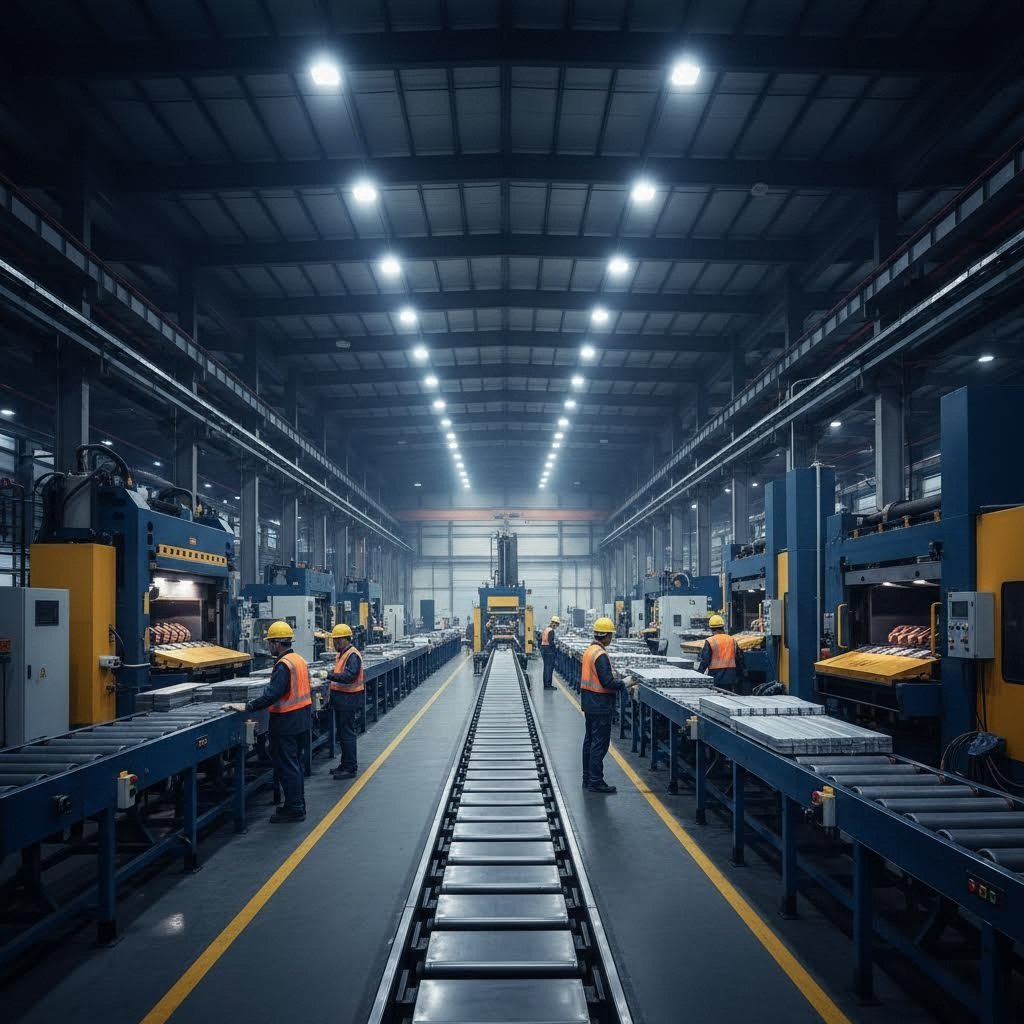
Finding aluminum extrusions is easy. Finding a supplier who consistently delivers quality profiles on time, with the exact specifications you need? That's where many projects stumble. Whether you're sourcing an aluminum extrusion frame for architectural applications or extruded aluminum tubing for industrial equipment, your manufacturing partner's capabilities directly impact your project's success. Let's explore what separates exceptional extrusion suppliers from merely adequate ones.
Think of supplier selection like hiring a contractor for your home. You wouldn't choose based on price alone without checking their equipment, experience, and references. The same logic applies when sourcing aluminum profile extrusion services. Here are the critical factors that distinguish world-class manufacturers:
Press capacity range:
The size and variety of extrusion presses determine what profiles a supplier can produce. Small presses (under 1,000 tons) handle delicate architectural trim and extruded aluminum hardware efficiently. Large presses (3,000+ tons) are essential for heavy structural sections and wide profiles. A supplier with diverse press capabilities, like facilities running 35 extrusion presses ranging from 600T to 5500T, can accommodate virtually any aluminum framing extrusion requirement without outsourcing.
Why does press range matter to you? Suppliers limited to small presses cannot produce large extruded aluminum frame sections. Conversely, facilities with only massive presses may not be cost-effective for intricate small profiles. The ideal partner offers flexibility across the spectrum.
Secondary processing capabilities:
Raw extrusions rarely go directly into final products. Most applications require cutting to length, drilling mounting holes, machining features, or bending into curved shapes. Suppliers with in-house CNC machining centers deliver finished components rather than just raw stock. This integration eliminates coordination headaches between multiple vendors and ensures accountability for the complete part.
Look for capabilities including:
Surface treatment options:
As we discussed earlier, surface finishing transforms raw aluminum into finished products. Suppliers offering comprehensive in-house finishing, including anodizing in custom colors like Champagne and Rose Gold, powder coating, PVDF coating, and advanced treatments like micro-arc oxidation, provide single-source convenience with consistent quality control.
The best extrusion partners function as true manufacturing partners, not just commodity suppliers. They support your project from initial concept through mass production with technical expertise at every stage.
Key supplier evaluation criteria:
Experience matters:
When evaluating potential suppliers, consider their track record. A manufacturer with 30+ years of experience has solved countless production challenges and refined their processes through decades of continuous improvement. This institutional knowledge translates to fewer surprises during your project.
For example, Shengxin Aluminium exemplifies the comprehensive capability profile described above. Their facility combines 35 extrusion presses spanning 600T to 5500T capacity with complete secondary processing including CNC machining for cutting, drilling, and bending. Their surface treatment options encompass anodizing in custom colors, powder coating, PVDF, and micro-arc oxidation for demanding applications. With over three decades of manufacturing experience, they provide end-to-end support from die development through mass production, including custom 6063 aluminum tubes, architectural window frames, aluminum extrusion slider components, and complex industrial profiles.
Questions to ask potential suppliers:
Choosing an extrusion partner is ultimately about risk management. The right supplier reduces uncertainty, maintains consistent quality, and responds effectively when challenges arise. With your evaluation criteria established, the final step is making confident decisions about whether 6063 aluminum is truly the optimal choice for your specific application.
You've journeyed through alloy chemistry, temper designations, fabrication techniques, and supplier evaluation. Now it's time to synthesize everything into actionable decisions. When should you confidently specify 6063 aluminium, and when might alternatives serve your project better? Let's crystallize the key factors that guide smart material selection.
After exploring the technical details, the decision framework becomes remarkably clear. Choose 6063 extrusion when your project prioritizes these characteristics:
Consider alternatives when:
6063 aluminum delivers an unmatched combination of extrudability, surface finish quality, and corrosion resistance that no other alloy can replicate. When appearance and formability matter as much as performance, this alloy remains the definitive choice for professionals worldwide.
Armed with the knowledge from this guide, you're prepared to specify materials confidently, communicate effectively with suppliers, and avoid common pitfalls that derail projects. Whether you need standard 6063 aluminum channel profiles or custom alum extrusion shapes designed specifically for your application, the path forward involves three essential steps:
First, define your requirements precisely. Document the mechanical loads, surface finish expectations, dimensional tolerances, and production volumes your project demands. This clarity prevents misunderstandings and ensures accurate quotes.
Second, evaluate potential manufacturing partners against the criteria we discussed. Look for comprehensive capabilities spanning die development, extrusion, secondary processing, and surface treatment under one roof.
Third, engage early with technical support. Experienced aluminum extrusion specialists can optimize your designs for manufacturability, potentially reducing costs while improving performance.
For readers ready to move forward with custom aluminium extrusion projects, Shengxin Aluminium's deep processing services offer factory-direct pricing combined with end-to-end manufacturing support. Their specialization in custom 6063 aluminum tubes, architectural window frames, and complex industrial profiles, backed by 30+ years of experience, provides a reliable resource for projects demanding consistent quality and responsive technical guidance.
The information in this guide positions you to make confident material decisions. Whether your next project involves sleek architectural trim or precision industrial components, understanding 6063 aluminum extrusions at this depth ensures you'll specify the right material, select capable partners, and achieve results that meet your exact requirements.
6063 aluminum offers superior extrudability and produces smoother surface finishes, making it ideal for architectural applications and anodizing. 6061 provides approximately 30% higher tensile strength but is harder to extrude into complex shapes. Choose 6063 when appearance matters most; select 6061 when structural strength is the priority. 6063 also has better corrosion resistance due to its lower copper content.
Current scrap prices for 6063 bare aluminum typically range around $0.83 per pound, though this fluctuates with market conditions. For new extrusions, pricing depends on profile complexity, quantity, surface finishing, and supplier location. Custom profiles require die investment ($500-$5,000) but offer long-term cost efficiency for high-volume production. Factory-direct suppliers like Shengxin Aluminium often provide competitive pricing on both standard and custom profiles.
T5 temper is best for architectural applications requiring excellent surface finish and anodizing quality, while T6 temper provides approximately 30% higher strength for structural applications. T5 is artificially aged after extrusion cooling, producing superior finishes at lower cost. T6 undergoes additional solution heat treatment for maximum strength. For precision machining applications, T52 temper offers stress-relieved material with improved dimensional stability.
6063 aluminum dominates architectural applications including window frames, door frames, curtain walls, and railings due to its exceptional anodizing response. Industrial uses include heat sinks, electrical conduit, LED lighting housings, and modular framing systems. Consumer products feature furniture frames, display fixtures, and outdoor equipment. Transportation applications include automotive trim and marine accessories where corrosion resistance is essential.
Yes, 6063 welds readily using TIG or MIG methods with 4043 or 5356 filler metals. The alloy machines well but produces gummier chips than 6061, requiring sharp carbide tools, higher spindle speeds, and cutting lubricants. T6 temper machines more cleanly than T5 due to increased hardness. For bending, minimum radii of 2-3 times wall thickness work for T5, while T6 requires 3-4 times. Pre-heating to 150-200°C improves formability for tight bends.



 online service
 0086 136 3563 2360
 sales@sxalu.com
 +86 136 3563 2360
 English
 français
 Deutsch
 русский
 español
 português
 العربية
 ไทย
ไทย Việt
Việt Українська