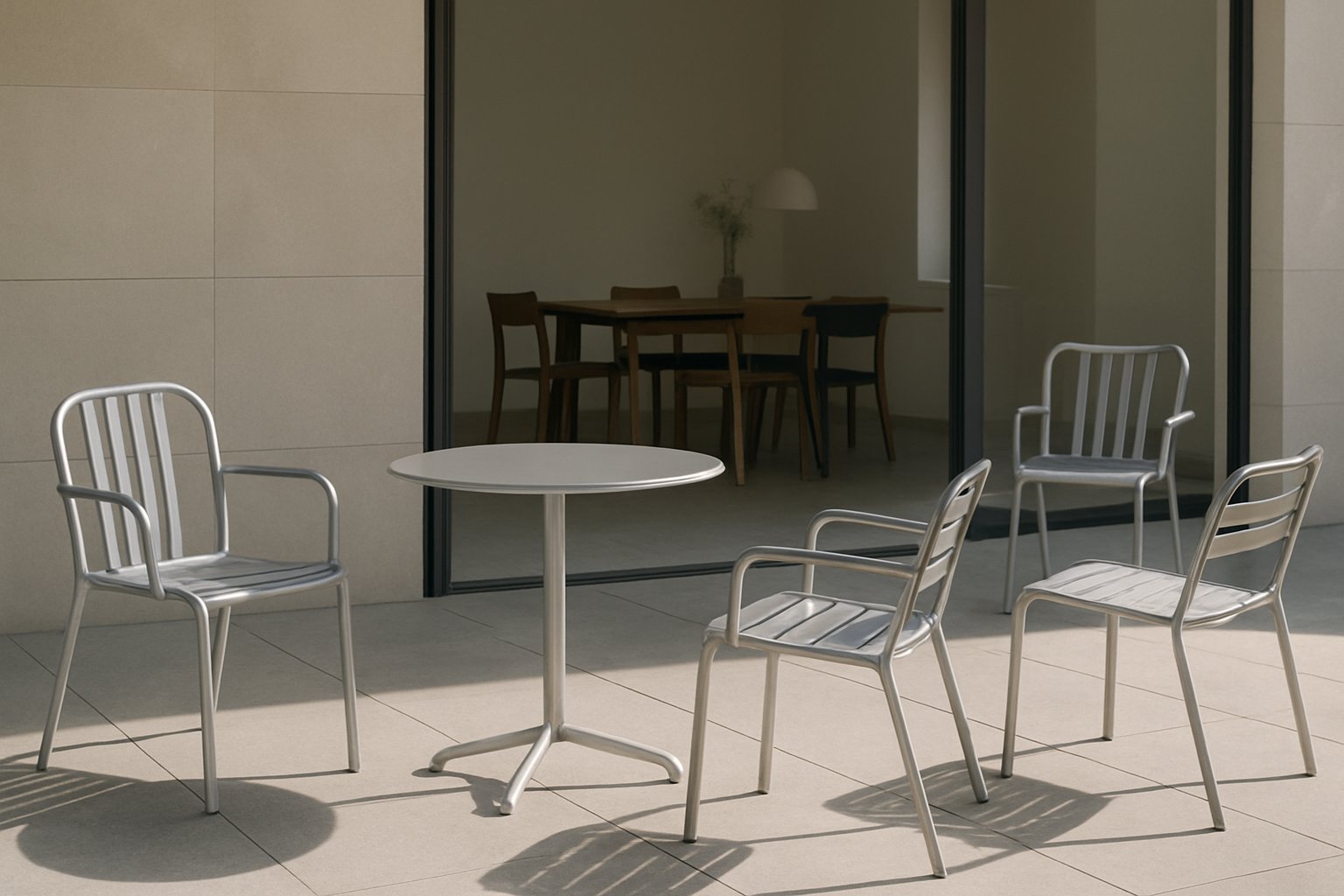
Aluminum chairs are everywhere, from dining rooms and balconies to patios and pool decks, but the label alone does not tell you whether a chair will actually last. This guide starts with the material itself, not a shopping list, so you can judge an aluminum chair on what really matters before comparing styles, prices, or features.
An aluminum chair is a seat that uses aluminum as its main structural material, usually in the frame, for indoor or outdoor use.
That sounds simple, but real-world products vary a lot. One model may be all metal, while another pairs the frame with sling fabric, woven panels, or cushions. Marketplace filters such as 'aluminum chairs outdoor' often group very different designs together. Even classic aluminum lawn chairs share the same base material but not the same construction quality. The takeaway is simple: material is only one part of performance.
Why do so many buyers choose aluminum outdoor chairs and other lightweight metal seating? First, aluminum is easier to move than steel. Remarkable notes it has roughly one-third the density of steel. It also resists rust well because it forms a protective oxide layer. On top of that, the metal is easy to shape into sleek, modern lines or more traditional forms, which helps explain the wide design range across aluminum patio furniture. Many frames also use powder coating for added surface protection and color options.
Still, low maintenance is not the same as no maintenance. Dirt, moisture, salt, and neglected fasteners can shorten finish life, and softer metals can dent under hard impact.
This material usually makes sense when you want seating that is easier to rearrange, less prone to rust problems, and available in many looks. That is true for patio dining, balcony seating, sunrooms, and many aluminum chairs outdoor collections. It also helps explain the enduring appeal of aluminum lawn chairs for casual, movable seating.
One last expectation check matters before you shop: aluminum tells you the base metal, not the whole durability story. Finish quality, frame shape, welds, joints, and hardware often decide whether two chairs that both say aluminum feel sturdy, stack well, or age gracefully. That gap between label and performance is where construction details start to matter.

That gap between label and performance shows up fast in the frame. Two seats can both be sold as aluminum, yet one feels solid and traditional while another feels light, sleek, and easier to move. If you are comparing cast aluminum patio chairs, a slim aluminum frame chair, or a larger aluminum frame outdoor furniture collection, the build method matters as much as the metal itself.
A construction overview explains that cast aluminum starts as liquid metal poured into a mold, then cooled into shaped parts. In outdoor seating, that usually creates thicker forms, decorative details, and a heavier feel. Many cast aluminum chairs and cast aluminum garden chairs get their classic look from this process. Within cast aluminum outdoor furniture, molded parts are a big reason a cast aluminum patio chair often looks more substantial than a slim-lined alternative.
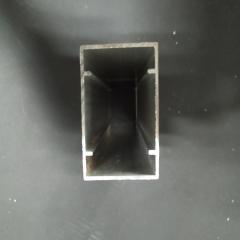
Tubular, extruded, or wrought aluminum is formed differently. The metal is pushed through a die to create tubing, then welded or bolted into a finished frame. This is common in resort, hotel, and poolside seating, often with sling or strap seats, though cushioned styles exist too. The same source notes that high-grade tubing with internal ribbing or reinforcements tends to be more durable, while rolled tubing with a seam is inherently weaker and often shows up in lower-end folding designs. That difference alone can separate a durable aluminum frame chair from a flimsy one.
| Construction or finish | Weight feel | Visual style | Maintenance needs | Typical use cases |
|---|---|---|---|---|
| Cast aluminum frame | Usually heavier-feeling in hand | Traditional, ornate, molded details | Low routine upkeep, but inspect joints and finish | Dining sets, decorative patio seating, many cast aluminum patio chairs |
| Tubular or extruded aluminum frame | Usually lighter-feeling and easier to move | Cleaner lines, modern or resort style | Low routine upkeep, but dents and loose hardware matter | Sling chairs, stackables, poolside, commercial seating |
| Powder-coated finish | Does not change frame weight much | Wide color and texture range | Basic cleaning and periodic inspection | Most standard residential and commercial outdoor furniture |
| Anodized finish | Does not change frame weight much | Metallic, clean, less customizable | Very low, with basic cleaning | Harsh exposure areas, especially where corrosion resistance matters most |
The finish is not the frame. Powder coating adds a separate baked-on protective layer over the metal, while anodizing changes the aluminum surface itself by thickening its oxide layer. A finish guide describes powder coating as the most common baseline finish for outdoor use because it offers broad color choice and practical durability. That same guide notes powder-coated aluminum typically lasts 5 to 20 years outdoors depending on climate and maintenance, while architectural-grade anodizing can reach 15 to 30 years.
Spec-sheet language gets easier once you translate it into shopping terms:
Look past the word aluminum and focus on how the chair is built. That is what tells you whether a piece belongs on a formal patio, a busy balcony, a pool deck, or a row of commercial tables.
The right chair type depends less on the word aluminum and more on where the seat will live, how often it will move, and how long people will stay in it. A compact balcony chair, a casual patio seat, and a restaurant dining chair can all use the same base metal, yet each asks for a different design.
For most households, patio dining is the starting point. Aluminum outdoor dining chairs make sense when you want something easy to pull in and out, simple to wipe down, and light enough to rearrange without much effort. For longer meals, look for aluminum patio dining chairs with an upright back, a seat shape that feels supportive without a cushion, or a frame that clearly accommodates one. The same logic can carry indoors too. In breakfast rooms, sunrooms, and casual dining areas, metal-framed seating can work well if comfort and table fit come first rather than weather resistance alone.
Pool decks and small patios change the priority list fast. In humid, rainy, or splash-prone settings, Patio Productions highlights the value of powder-coated frames and rust-resistant hardware. That is one reason many aluminum pool chairs use open, quick-drying designs instead of thick cushions that hold moisture. On a balcony, visual bulk matters almost as much as footprint. Slim profiles, open backs, and chairs that tuck in neatly usually feel less crowded. Lighter finishes can also stay cooler in direct sun, which helps on exposed decks and upper-level spaces.
Flexibility matters when one space has to do several jobs. Guidance from LifestyleGarden draws a useful line: stacking chairs create a compact storage footprint, while folding chairs store flat and are easier to transport. That makes stackable metal patio chairs especially practical for balconies, occasional guest seating, and patios that need regular clearing. An aluminum folding chair is often the better pick for camping, portable use, or backup seating kept in a shed or closet. If you are browsing aluminium folding chairs, remember that flat storage and travel convenience do not always equal the best comfort for long dinners.
Home buyers usually lean toward style and comfort. Commercial buyers need those things too, but they also need repeatability, easy cleaning, and documented performance. Data summarized by Superior Seating shows why the gap matters: commercial dining furniture is commonly tested for 5 to 10 years in high-traffic settings, versus 1 to 3 years for residential use, and commercial chairs may undergo 250,000 to 500,000 test cycles. That is why aluminum restaurant chairs are often chosen for cafés, indoor dining rooms, and outdoor service areas where the same chair is moved, cleaned, and reused all day.
Picking the right category gets you close, but not all the way there. A chair can suit the setting and still disappoint if the welds, finish, dimensions, or warranty are weak, which is where a hands-on quality check becomes worth your time.
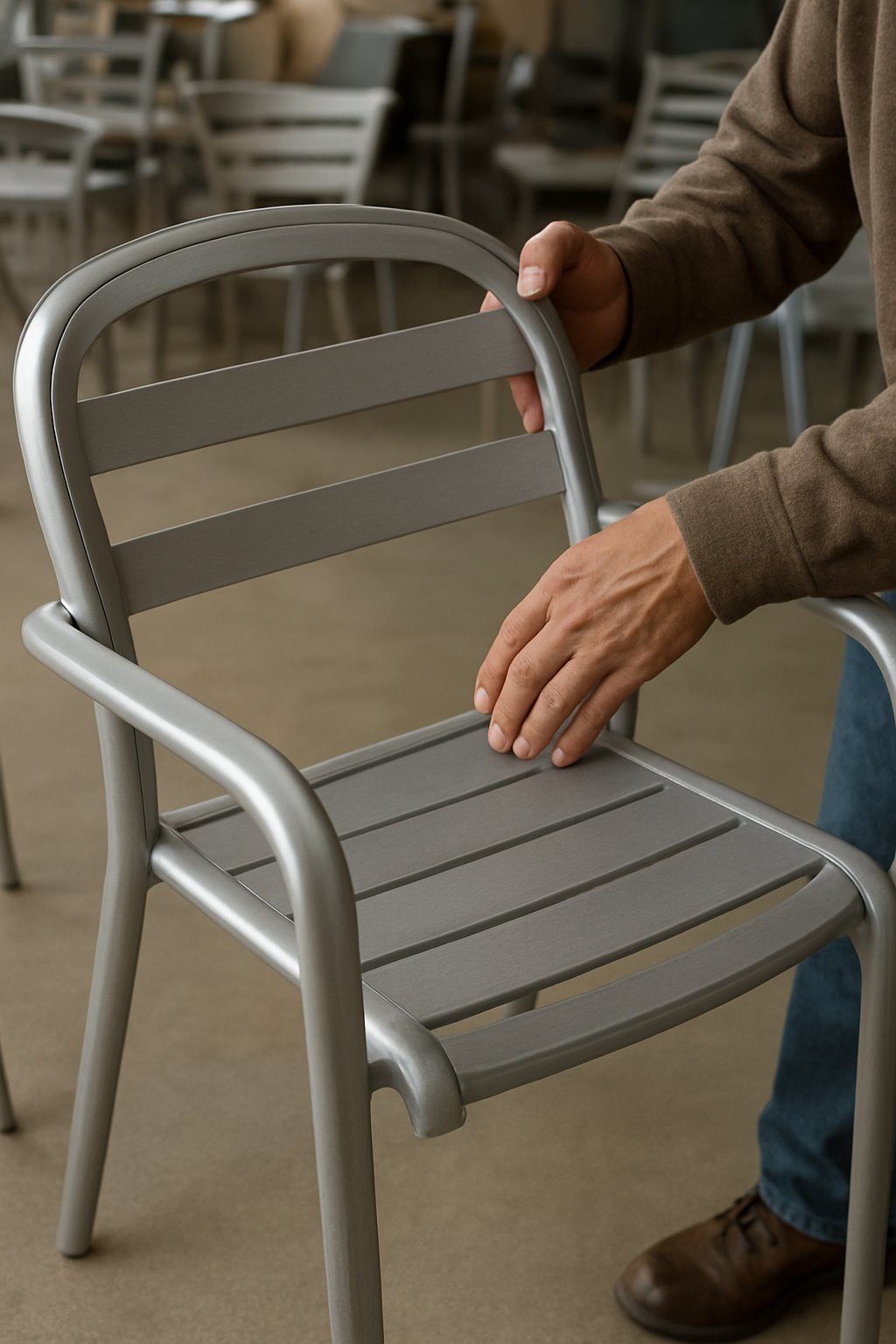
A chair can match your patio, balcony, or dining table on paper and still disappoint once it arrives. Before you buy, treat the listing like an inspection report. The goal is simple: spot the details that separate a durable aluminum patio chair from one that only looks convincing in a thumbnail.
Finish problems often begin at edges, screws, and chair-to-chair contact points on stackable designs. Powder coating is generally a stronger sign than a thin painted finish, and hardware deserves its own look. The same frame guide warns that standard steel fasteners against aluminum can contribute to galvanic corrosion, so stainless hardware is a better signal for exposed settings.
Numbers matter more than reviews. A measurement guide lists dining chair seat height at about 18 inches, lounge seating at 15 to 18 inches, dining seat width at 16 to 20 inches, and armrest height at 7 to 10 inches above the seat. Use those as starting points, then check overall width, arm clearance, and whether cushions are included, sold separately, or clearly supported by the frame design. The same photo checks apply to a cast aluminum rocking chair, especially around joints and finish transitions.
Warranty pages reveal what a seller is willing to stand behind. In the Outer warranty, aluminum chair frames are covered separately from slings and cushions, and coverage is limited to the original purchaser in residential, non-commercial use. It also excludes damage tied to improper care, excess weight, mold, and freezing water in tubing. If a listing skips warranty terms, weight capacity, or stackability details, that silence is part of the quality check too.
A solid inspection routine helps you rule out weak builds fast. It still leaves one fair question on the table: even when construction looks good, is aluminum actually the best material for your space?
A careful frame check can tell you whether a chair is well made. It still does not answer the bigger question: is aluminum the right material for your space at all? For some buyers, the answer is yes. For others, heavier steel patio chairs, resin wicker, or wood will make more sense once daily use, weather, and style are weighed together.
Neighbor describes aluminum as naturally corrosion-resistant because it forms a protective oxide layer, while steel usually needs more finish protection and maintenance to limit rust. The same source notes steel often feels heavier and more substantial, which can be helpful in windy areas. Today's Patio adds that wrought iron is especially heavy, decorative, and well suited to traditional settings, but it also needs rust protection. In practical terms, aluminum is easier to move, while steel and wrought iron usually feel more anchored.
That weight difference affects comfort too. Hauser's Patio notes aluminum can get hot in direct sun, though wrought iron can absorb even more heat. If you browse broad marketplace labels like patio chairs metal chairs or outdoor patio chairs metal, that distinction is easy to miss.
Resin wicker and resin-based plastic seating appeal to a different buyer. Today's Patio explains that modern outdoor wicker is usually synthetic resin over a lightweight frame, and that it resists UV rays, moisture, and changing temperatures. It also notes cheaper wicker can fade, crack, or sag over time. That makes resin options attractive for casual, budget-conscious spaces, but less ideal if you want a crisp metal profile or a frame-first look like cast aluminum outdoor chairs. Wicker also often depends on cushions for comfort, which adds upkeep.
Wood brings warmth that metal rarely matches. Today's Patio describes teak as highly durable and naturally resistant to rot, water, and pests, and notes that it can weather to a silver-gray patina over time. The tradeoff is maintenance. Many wood choices need periodic oiling or sealing if you want to preserve their original tone. Wood is also generally heavier than aluminum, which can be a benefit for stability but a drawback if you like to rearrange seating often. If your goal is a warm garden look, wood may feel more inviting than a sleek metal chair patio setup.
| Material | Weight feel | Corrosion or weather behavior | Upkeep | Comfort considerations | Style range | Typical cost tier |
|---|---|---|---|---|---|---|
| Aluminum | Light to moderate, easy to move | Resists rust well due to natural oxide layer | Low, mainly cleaning and finish checks | Can heat up in direct sun, often improved with cushions or sling seats | Modern to transitional, including many cast aluminum outdoor chairs | Mid to upper-mid |
| Steel or wrought iron | Heavy and more planted | Can rust if coating fails or protection is neglected | Moderate, with touch-ups and rust prevention more important | Stable feel, but metal surfaces can get hot | Industrial, classic, ornate, traditional | Steel often lower to mid, wrought iron often higher |
| Resin plastic or resin wicker | Usually light | Will not rust, but lower-quality pieces may fade, crack, or sag | Low to moderate, depending on weave quality and cushions | Often cushion-dependent, casual seating feel | Coastal, casual, relaxed, bohemian | Budget to mid |
| Teak and other outdoor woods | Moderate to heavy | Teak resists rot and water well; other woods vary more | Moderate to high if you want to preserve color | Usually cooler-looking and warmer-feeling than metal, but weight reduces mobility | Natural, classic, rustic, upscale | Teak premium, other woods vary from budget to mid |
Material labels are helpful, but they also flatten real differences. Search terms like patio chairs metal chairs can hide whether a seat is powder-coated aluminum, rust-prone steel, or resin wrapped around a frame. That is why listings, spec sheets, and bundled set descriptions deserve a closer read before you buy.
Search filters save time, but they also blur important differences. If you are comparing aluminum patio furniture sets, aluminum outdoor furniture sets, or single chairs, the headline usually tells you less than the spec area does. A marketplace label like 'outdoor furniture sets aluminum' may group dining chairs, lounge chairs, and bar seating together even though their fit, construction, and upkeep needs are not the same.
Start with the chair, not the hero image. In many aluminum patio seating sets and aluminum patio table chairs listings, the table dimensions get more attention than the seats. Look for seat height to judge dining comfort, overall height for back support, overall width for tight layouts, and arm height if the chair needs to slide under a table apron.
| Listing term | What to verify |
|---|---|
| Seat height | Whether it fits your table and how easy it is to sit down and stand up |
| Overall height | Back support and whether the chair looks bulky in a small space |
| Arm height | Clearance under the table and comfort at rest |
| Frame material | Whether it clearly says aluminum, not just 'metal' |
| Finish description | Powder coat, painted finish, or another surface treatment |
| Assembly required | How much work is needed and which joints arrive unassembled |
| Stackable or commercial use | Storage efficiency and whether the chair is built for repeated handling |
| Care instructions | Cleaning steps, drying guidance, and finish protection notes |
A listing for a 'black aluminum patio set' may sound specific, but color alone does not tell you how the frame is built or whether the chairs stack. Read the materials line carefully. Then check whether cushions are included, sold separately, or only shown in photos. If the listing is bundled, confirm that the chair details actually match the exact model in the set instead of a generic family description.
Promotional pages, especially 'aluminum patio chairs clearance' pages, often trim the very details you need most. Be cautious if the listing skips chair-only dimensions, hides the finish type, or gives reviews without linking to care or warranty information. Star ratings can tell you how buyers felt. Specs tell you whether the chair fits your space and use. When available, check the manufacturer resources too. Care notes, spec sheets, and warranty terms usually reveal more about real outdoor performance than the sales copy does. That practical reading habit becomes even more useful once weather, moisture, and cleaning enter the picture.
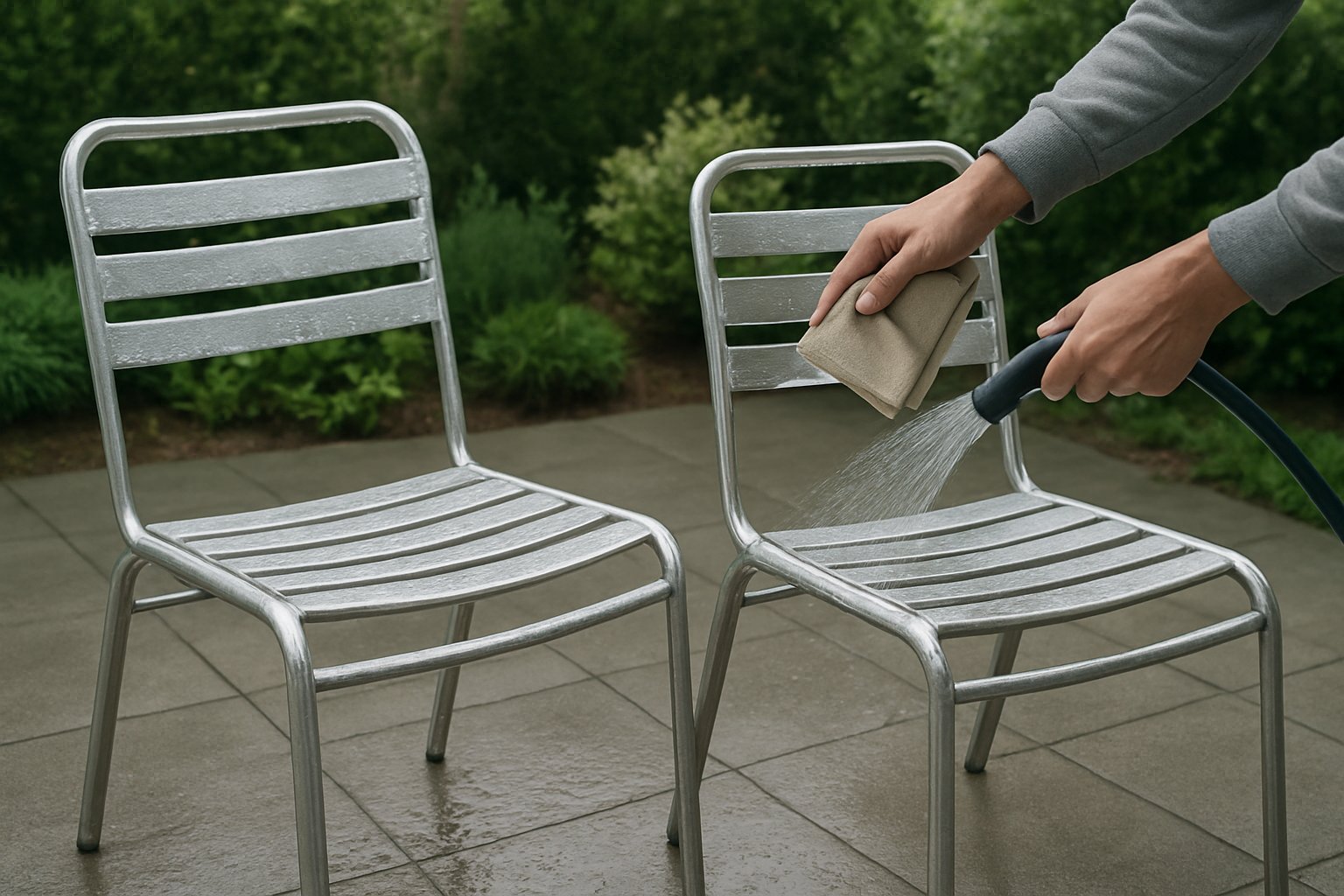
Care notes buried in product listings matter for one simple reason: even well-made aluminum outdoor patio chairs age based on exposure, residue, and upkeep, not just the base metal. For aluminum outdoor patio furniture, a light maintenance routine protects the finish, helps hardware last longer, and gives you regular chances to catch small problems before they spread.
Corrosion resistance helps, but it does not replace cleaning, drying, and periodic inspection.
The basic routine for outdoor aluminum chairs is simple. Both the Neighbor guide and the GreyFox maintenance guide recommend mild soap, soft cloths or brushes, a thorough rinse, and drying afterward.
That approach works for aluminum chairs for outside, most outdoor aluminum furniture, and many aluminum pool furniture layouts. Avoid steel wool, abrasive pads, bleach, or ammonia, especially on coated finishes.
Finish life changes with the setting. In practice, longevity depends on exposure, surface contamination, hardware condition, and whether salt or pool chemicals are present. The salt-air care notes explain that salt particles settle on outdoor surfaces and attract moisture from humid air. Even powder-coated aluminum can have trouble where the finish is chipped or joints stay wet. For aluminum poolside furniture, splash-prone areas and frequent humidity make fresh-water rinsing and closer hardware checks more important, even when the frame still looks clean.
Long inactive periods are often when aluminum outdoor patio furniture picks up preventable wear. Use breathable covers, keep pieces out of standing water when possible, and store damp cushions indoors instead of leaving them against the frame. GreyFox suggests weatherproof covers or indoor storage during winter, while Zing highlights breathable covers and elevating pieces off wet ground. If the manufacturer allows a protective wax or sealant, that can add another barrier. Those care details often reveal which sellers support their chairs well, and which ones leave you to figure it out after the box arrives.
Care instructions do more than explain cleaning. They also point toward the right buying path. If you are shopping for aluminum patio chairs, aluminum deck furniture, or a single patio aluminum chair for home use, the smart move is usually a finished product with clear dimensions, care guidance, and warranty terms. Custom sourcing belongs to a narrower lane.
For most households, stick with finished chairs. Guidance from Patio Productions keeps the priorities grounded: compare welded construction, finish protection such as powder coating, rust-resistant hardware, and warranty coverage before focusing on color alone. That applies whether you are browsing aluminum furniture for a dining set, filtering broad searches like 'aluminum chairs patio' or 'patio furniture aluminum', or narrowing down a pair of aluminium patio chairs for a small balcony or deck.
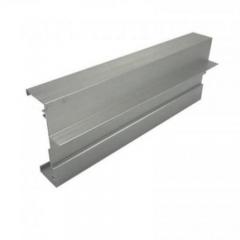
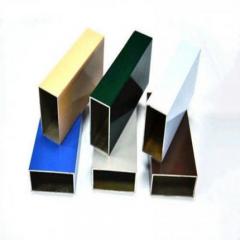
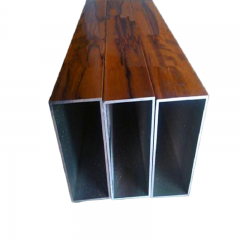
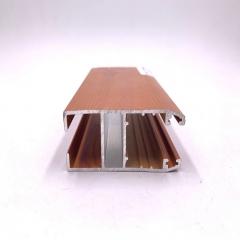
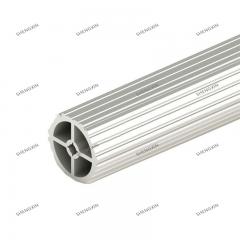
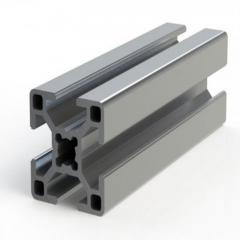
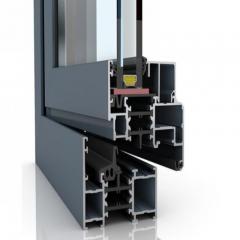
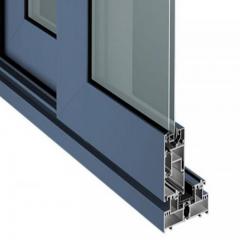
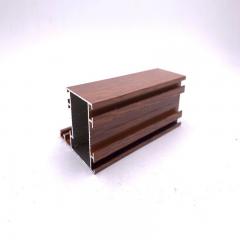
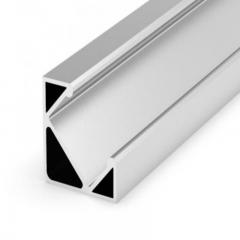
Some projects are not really retail-chair purchases at all. The extrusion guide notes that aluminum extrusions are lightweight, easy to machine, and used in structural frames and furniture applications. That matters for architects, fabricators, and project teams developing custom chair frames, seating components, or adjacent site-furniture systems. In that context, Shengxin Aluminium is a relevant resource because its catalog focuses on custom extrusion profiles, anodized options, and varied finishes rather than finished consumer seating.
That split keeps expectations realistic. Individual buyers should still judge finished aluminum patio chairs on specs, reviews, care guidance, and retailer support, while project teams can widen the search only when standard options no longer fit the brief.
Aluminum does not rust like steel, which is a big reason it is widely used for outdoor seating. That said, outdoor durability still depends on the surface finish, the quality of the hardware, and how often the chair is cleaned. Salt air, pool chemicals, trapped moisture, and chipped coatings can still shorten the life of the finish, so aluminum chairs need occasional rinsing, drying, and inspection.
Cast aluminum chairs are made from molded parts, so they often look thicker, more decorative, and more traditional. Tubular or extruded aluminum chairs usually have slimmer lines and a lighter feel, which makes them easier to move, stack, or use in commercial settings. The better choice depends on the setting: cast styles often suit classic patio dining, while tubular frames fit balconies, poolside areas, and flexible seating layouts.
Start with the space and how the chair will be used. Patio dining usually benefits from supportive seat height and arm clearance that works with the table. Balconies often need compact profiles or stackable designs, while poolside seating tends to work best with quick-drying materials and hardware suited to wet conditions. If cushions are part of the plan, make sure the frame is shaped to support them rather than assuming the styled photos tell the full story.
Focus on the product details that affect long-term use, not just the main image. Look for clear descriptions of the frame material and finish, chair-only dimensions, assembly notes, care instructions, and warranty terms. Close-up photos should help you judge joint quality, edge finishing, and overall shape. Be cautious when a listing only says 'metal,' hides chair measurements inside a bundled set, or skips maintenance information.
Most home buyers should choose finished chairs because comfort, fit, warranty support, and maintenance guidance matter just as much as the base metal. Custom aluminum components are more relevant for architects, fabricators, and project teams building one-off chair frames or related site furniture. In that context, suppliers such as Shengxin Aluminium can be useful for custom extrusion profiles and finish options, while retail shoppers should still compare complete chair specs before ordering.



 online service
 0086 136 3563 2360
 sales@sxalu.com
 +86 136 3563 2360
 English
 français
 Deutsch
 русский
 español
 português
 العربية
 ไทย
ไทย Việt
Việt Українська