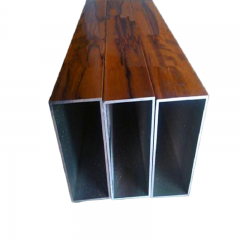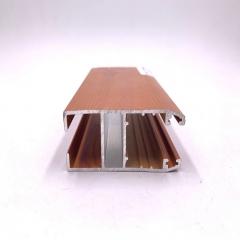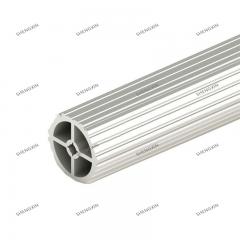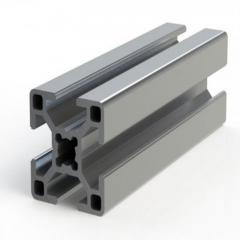
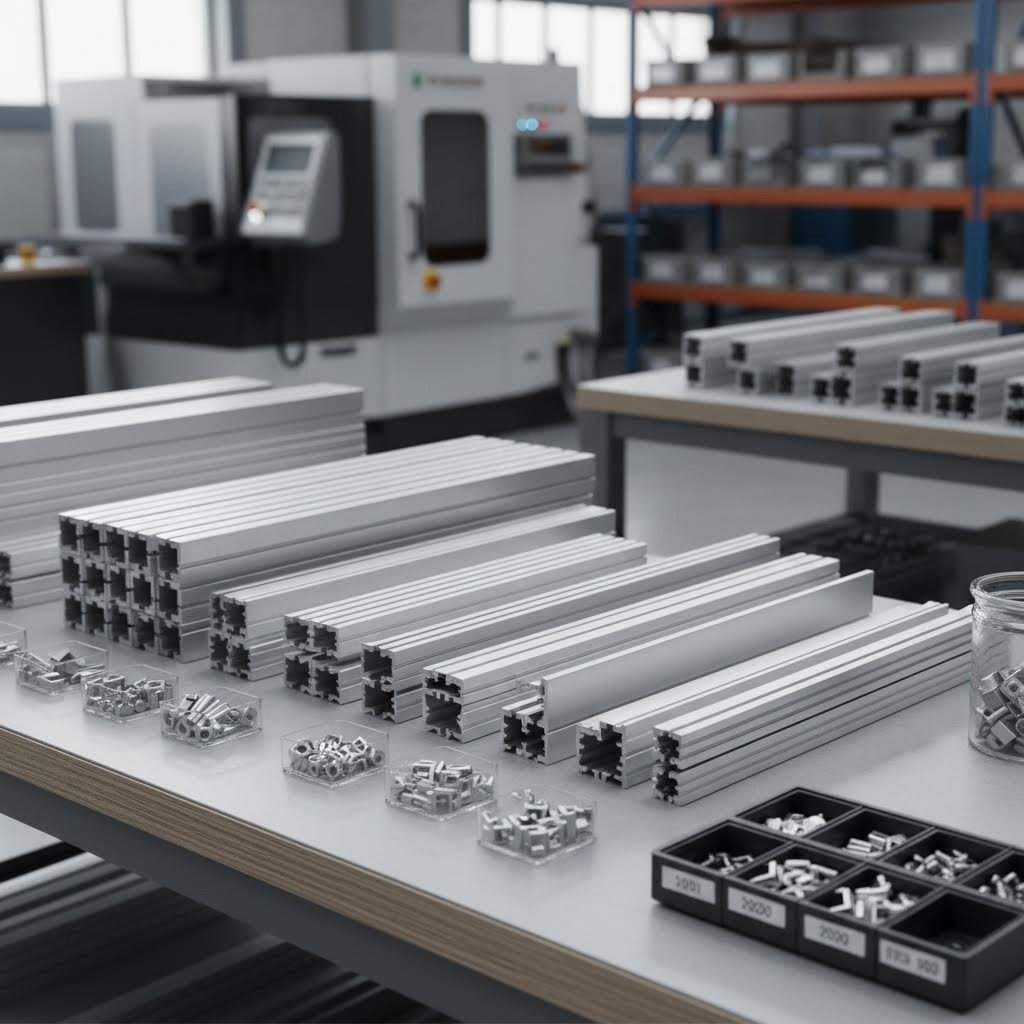
Ever walked through a manufacturing facility and noticed those sleek, precision-engineered frames holding everything together? Chances are, you were looking at aluminum t slot extrusion profiles in action. But what exactly makes these components so versatile that they've become the backbone of modern industrial construction?
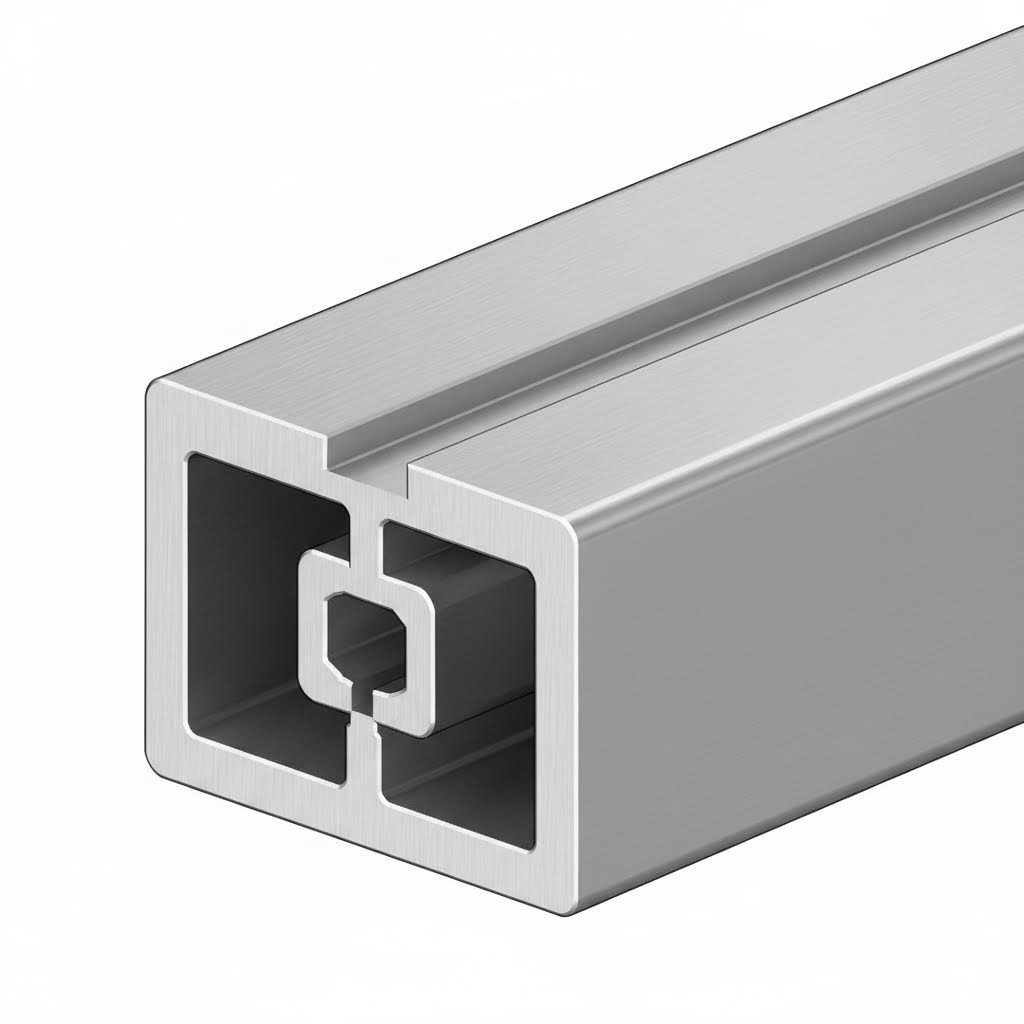
At their core, aluminum t slot extrusion profiles are extruded aluminum bars featuring distinctive T-shaped channels running continuously along their length. These channels are specifically designed to accept specialized fasteners and accessories, creating a modular building system that requires no welding, drilling, or permanent fastening. Think of them as industrial-grade building blocks that snap together with remarkable precision.
The magic starts with the aluminum extrusion process itself. A billet of aluminum alloy, typically from the 6000 series like 6063-T6, is heated and forced through a shaped die under immense pressure. This creates long, consistent lengths of material with the characteristic T-slot geometry that makes the system work.
Understanding the basic components of these aluminum extrusion profiles helps you select the right one for your project. Each profile consists of several key elements working together:
The precision of extruded aluminium profiles ensures consistent dimensions throughout the entire length, which is critical when you're building structures that demand accurate alignment.
Here's where things get interesting. The T-slot design transforms construction from a specialized trade into something accessible to anyone with basic hand tools.
Imagine you need to attach a bracket, mount a sensor, or add a cross-member to your frame. With traditional steel construction, you'd be measuring, drilling, possibly welding, and hoping everything lines up correctly. With modular aluminum framing, you simply slide a T-nut into the slot, position your component exactly where you need it, and tighten a bolt. Done.
Need to move that component later? Loosen the bolt, slide it to the new position, and retighten. This flexibility isn't just convenient; it's transformative for prototyping, production adjustments, and evolving workspace needs.
The system's modularity delivers practical outcomes that matter:
Whether you're building a 3D printer frame in your garage or an industrial safety enclosure on a factory floor, aluminum extrusions provide the same fundamental advantage: professional-quality construction accessible to non-fabricators. That's why everyone from hobbyists to Fortune 500 manufacturers has embraced this versatile building system.
So you understand what aluminum t slot extrusion profiles are, but have you ever wondered why this particular design became the industry standard? The answer lies in the elegant engineering behind that distinctive T-shaped channel and the ecosystem of hardware designed to work with it.
The genius of the t slotted rail system isn't just about the aluminum profile itself. It's about the seamless interaction between the slot geometry and specialized fasteners that creates infinitely adjustable, remarkably strong connections. Let's explore how these components work together to make modular construction possible.
Picture the cross-section of a T-slot channel. At the surface, you'll see a narrow opening, typically ranging from 6mm to 10mm depending on the profile series. But here's where it gets clever: that narrow opening widens into a broader cavity below, creating the characteristic "T" shape.
This geometry serves a specific mechanical purpose. When you insert a T-nut or specialized fastener through the narrow opening and rotate it 90 degrees, the wider head of the fastener catches under the overhanging edges of the slot. The fastener literally cannot pull out. Tightening a bolt into the fastener's threaded stem then draws everything upward, clamping it firmly against the slot's underside.
The aluminum t track design also distributes load efficiently. Unlike a simple drilled hole that concentrates stress at a single point, the broad surface area of the T-nut head spreads forces across a wider section of the extrusion slot. This minimizes localized stress and prevents deformation, even under heavy dynamic loads.
Why did this specific geometry win out over alternatives? Three key reasons:
The t channel aluminum profile is only half the equation. Understanding the fastener ecosystem is essential for successful assembly. Each fastener type offers different advantages depending on your assembly situation and load requirements.
T-Nuts are the workhorses of the system. Characterized by their distinctive "T" shape, they feature a flattened head and a threaded stem perpendicular to it. You slide them longitudinally into the slot, rotate 90 degrees to lock, then tighten your bolt. They're ideal when you can access the slot end or when building from scratch.
Drop-in nuts solve a common problem: what if you need to add a connection point to an already-assembled frame? These fasteners insert vertically through the slot opening without requiring access to the profile end. A spring-loaded ball or mechanism holds them in position until you tighten the bolt.
Roll-in nuts offer another approach for post-assembly installation. They feature an angled design that allows them to be inserted at a slight tilt and then rotated into the locking position. Some designs include threaded bolt inserts for specific applications.
Beyond nuts, the connection ecosystem includes l shaped brackets for 90-degree joints, straight brackets for inline connections, corner connectors for multi-axis intersections, and specialized hardware for everything from panel mounting to cable management.
| Fastener Type | Insertion Method | Holding Strength | Best Use Cases |
|---|---|---|---|
| Standard T-Nut | Slide in from slot end, rotate 90° | High - full contact with slot shoulders | New construction, accessible slot ends, heavy loads |
| Drop-In Nut | Insert vertically through slot opening | Medium-High - spring mechanism assists positioning | Adding to assembled frames, frequent repositioning |
| Roll-In Nut | Insert at angle, rotate to lock | Medium - depends on design and tightening | Post-assembly additions, limited access situations |
| Elastic/Spring Nut | Press directly into slot | Lower - friction-based hold | Light-duty attachments, temporary positioning |
The connection method you choose significantly impacts both assembly efficiency and structural performance. For critical load-bearing connections, standard T-nuts with proper torque provide the most reliable results. For accessories or components that may need repositioning, drop-in or roll-in options offer practical convenience.
One important consideration: over-tightening fasteners can strip aluminum threads or deform the slot profile. Using torque-limiting tools, especially for M6 and larger fasteners, helps ensure secure connections without damaging your tslots.
With the right combination of profile geometry and fastening hardware, you can create structures that rival welded construction in rigidity while maintaining the flexibility to modify, expand, or completely reconfigure as your needs evolve. Understanding how these elements work together is the foundation for selecting the right profile sizes for your specific application.
You've seen the numbers everywhere: 2020, 4040, 8020, 1515, 10-series. But what do they actually mean? This is where many builders get confused, and it's also where costly mistakes happen. Mixing incompatible profile systems or selecting the wrong size can derail your entire project before you've tightened a single bolt.
The aluminum extrusion sizes you'll encounter fall into two distinct measurement systems, each with its own logic, hardware ecosystem, and ideal applications. Understanding both systems, and knowing when to use each, separates successful builds from frustrating ones.
The metric system dominates global manufacturing and represents the majority of extruded aluminum sizes available today. Profile names directly correspond to their cross-sectional dimensions in millimeters. A 2020 profile measures 20mm x 20mm. A 4040 profile is 40mm x 40mm. A 4080 profile? That's 40mm x 80mm, a rectangular section offering enhanced bending resistance along one axis.
Metric profiles are typically organized into series based on slot width:
The fractional or imperial system, sometimes called the inch-based system, uses different naming conventions. Here, profile series numbers often reference the slot width or base dimension in imperial measurements. The popular 80/20 aluminum brand, for instance, uses designations like 10-series (based on a 10mm slot width, despite the imperial naming) and 15-series (based on 1.5-inch or 38.1mm base dimensions).
The 80 20 aluminum naming can initially seem confusing because it blends metric slot references with imperial profile dimensions. The 10-series features profiles like 1010 (1-inch x 1-inch cross-section) and 1020 (1-inch x 2-inch), while the 15-series includes 1515 (1.5-inch x 1.5-inch) and 1530 (1.5-inch x 3-inch) options.
Here's the critical point: metric and fractional systems are generally not interchangeable. Their slot widths differ, their fastener threads often differ (M5/M6/M8 vs #10-32/#1/4-20), and their accessory ecosystems don't cross over cleanly. Attempting to use metric T-nuts in an imperial slot, or vice versa, creates loose connections at best and complete incompatibility at worst.
So which system should you choose? Consider these factors:
Once you've selected your measurement system, profile size selection becomes a matter of matching structural requirements to available options. The 1010 aluminum extrusion or metric 2020 serves lightweight applications like 3D printer frames and small sensor gantries. The 4040 profile offers the sweet spot for medium-duty applications including workbenches, machine enclosures, and automation fixtures. For heavy machinery bases, large safety enclosures, or long unsupported spans, the 8080 or 80 20 10 series heavy profiles deliver the rigidity required.
| Profile Size | Cross-Section | Slot Width | System | Typical Applications |
|---|---|---|---|---|
| 2020 | 20mm x 20mm | 5-6mm | Metric | 3D printers, small frames, prototypes, desktop equipment |
| 2040 | 20mm x 40mm | 5-6mm | Metric | Camera sliders, linear motion systems, directional reinforcement |
| 3030 | 30mm x 30mm | 6mm | Metric | Medium enclosures, workstation frames, display structures |
| 4040 | 40mm x 40mm | 8mm | Metric | Machine guards, workbenches, automation frames, CNC enclosures |
| 4080 | 40mm x 80mm | 8mm | Metric | High bending resistance applications, conveyor supports, long spans |
| 8080 | 80mm x 80mm | 8-10mm | Metric | Heavy machinery bases, large automation systems, structural frames |
| 1010 (10-series) | 1" x 1" (25.4mm) | ~6mm | Fractional | Light-duty frames, maker projects, small fixtures |
| 1515 (15-series) | 1.5" x 1.5" (38.1mm) | ~8mm | Fractional | Medium frames, workstations, equipment enclosures |
| 1530 (15-series) | 1.5" x 3" (38.1mm x 76.2mm) | ~8mm | Fractional | Directional stiffness needs, conveyor frames |
| 3030 (15-series) | 3" x 3" (76.2mm) | ~8mm | Fractional | Heavy-duty industrial applications, machine bases |
A practical tip from experienced builders: when in doubt, size up. A slightly larger profile costs marginally more upfront but saves significant headaches from deflection issues, vibration problems, or the need to add bracing later. For example, if you're debating between 2020 and 3030 for a workbench frame, the 3030 offers meaningfully better rigidity with only a modest weight and cost increase.
Rectangular profiles like 2040 or 4080 provide another strategic option. When your load primarily stresses one axis, orienting the taller dimension in the load direction maximizes bending resistance without the weight penalty of a larger square section. This is why the 1010 series works perfectly for a small printer enclosure, while a 40x80L profile might be the right choice for a sim racing rig that needs stiffness in the vertical axis.
With profile sizing demystified, you're ready to evaluate why aluminum t slot extrusion profiles often outperform traditional materials for structural framing applications.
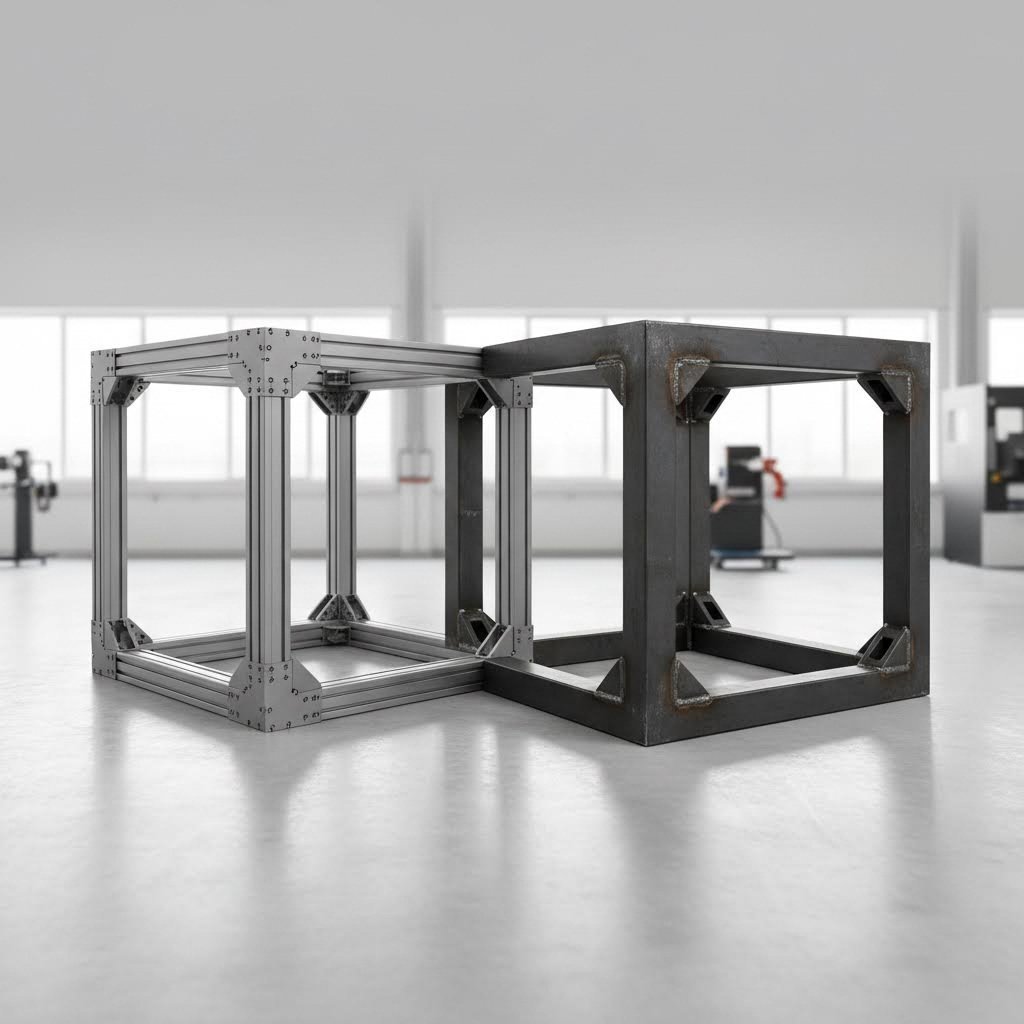
Now that you understand profile sizing, here's the bigger question: why choose aluminum t slot extrusion profiles over traditional materials in the first place? Whether you're comparing against steel tube framing, wood construction, or welded aluminum fabrication, the answer comes down to a compelling combination of physical properties and practical advantages that alternative materials simply can't match.
Let's break down exactly what makes aluminum structural framing the preferred choice for everything from DIY workshops to Fortune 500 manufacturing floors.
Steel has been the go-to structural material for decades, and for good reason. It's strong, widely available, and familiar to fabricators everywhere. But when you compare steel tube frames against aluminum t-slot systems, the advantages shift dramatically toward aluminum for most applications.
Consider the weight difference first. According to 80/20 Inc., aluminum weighs roughly one-third as much as steel. That's not a marginal difference. It's transformative. A workstation frame that would weigh 150 pounds in steel comes in around 50 pounds in aluminum. This lighter weight reduces transportation costs, simplifies installation, and allows structures to be repositioned by hand rather than requiring forklifts or multiple workers.
What about strength? Here's where the math gets interesting. While steel does yield higher tensile strength than aluminum (approximately 50,000 psi versus 36,000 psi), the strength-to-weight ratio tells a different story. Aluminum is nearly twice as strong as steel at the same weight, meaning you can achieve equivalent structural performance with far less material mass.
Corrosion resistance presents another clear advantage. Aluminum naturally forms a protective oxide layer that shields it from rust and environmental degradation. Steel, on the other hand, requires priming, painting, or galvanizing to prevent rust. In humid manufacturing environments, outdoor installations, or facilities with chemical exposure, this difference translates directly into lower maintenance costs and longer service life.
Even cost considerations favor aluminum when you look beyond raw material prices. Yes, aluminum costs slightly more per pound than steel. However, steel tube frames require welding, cutting, drilling, and often grinding, all of which demand specialized equipment, skilled labor, and significantly more time. T-slot aluminum frames assemble with simple hand tools and require no welding whatsoever. When you factor in total labor costs and production time, extruded aluminum framing often comes out ahead financially.
Perhaps the most significant advantage of aluminum t-slot systems isn't any single physical property. It's the fundamental difference in how these structures are built and, critically, how they can be changed.
Welded steel frames are permanent. Once you've joined those metal stud components or aluminum tubing sections together, reconfiguration means cutting, grinding, and re-welding. Need to move a bracket six inches to the left? You're looking at serious rework. Want to repurpose that frame for a different project next year? Good luck.
T-slot assemblies work completely differently. Every connection is reversible. You can disassemble an entire structure, relocate individual components, add new sections, or completely reconfigure the design using the same hardware you started with. That workbench you built for your garage can become a machine enclosure in your shop. The trade show display from last year's conference can transform into this year's retail fixture.
This reusability factor delivers tangible financial benefits. Companies that regularly modify production layouts or prototype new equipment configurations can reuse their aluminum inventory indefinitely. Unlike welded structures that become scrap when requirements change, t-slot components retain their full value through countless reconfigurations.
The table below summarizes how these materials compare across the factors that matter most for structural framing decisions:
| Factor | Aluminum T-Slot Extrusion | Steel Tube | Wood Framing |
|---|---|---|---|
| Weight | Lightweight (1/3 of steel) | Heavy | Medium |
| Corrosion Resistance | Excellent (natural oxide layer) | Poor without coating | Poor (susceptible to moisture, rot) |
| Assembly Method | Simple hand tools, no welding | Welding, cutting, drilling required | Screws, nails, adhesives |
| Reconfigurability | Fully reconfigurable and reusable | Permanent once welded | Limited, often damages material |
| Precision | High (tight extrusion tolerances) | Medium (depends on fabrication) | Low to medium (natural variation) |
| Typical Cost Considerations | Higher material cost, lower labor cost | Lower material cost, higher labor cost | Low material cost, medium labor cost |
| Aesthetic Appearance | Clean, professional, consistent | Industrial, weld marks visible | Casual, requires finishing |
There's also the precision advantage to consider. Aluminum extrusions are manufactured to tight dimensional tolerances, meaning every piece of 4040 profile from a given supplier matches every other piece exactly. Compare that to welded fabrications where heat distortion, human error, and grinding marks introduce variability. For applications requiring accurate alignment, like CNC machine enclosures or automation fixtures, this consistency eliminates hours of fitting and adjustment.
Finally, don't overlook the clean aesthetic that aluminum angle and t-slot profiles deliver. The smooth, anodized finish looks professional without additional painting or finishing. Welded steel often shows grind marks, spatter, and visible seams that require extra finishing steps to achieve a comparable appearance. For customer-facing applications like retail displays, trade show booths, or equipment sold to end users, this visual quality matters.
Understanding why aluminum t-slot extrusion profiles outperform traditional materials sets the foundation. But where exactly do these versatile framing systems get used in the real world? The answer spans more industries and applications than you might expect.
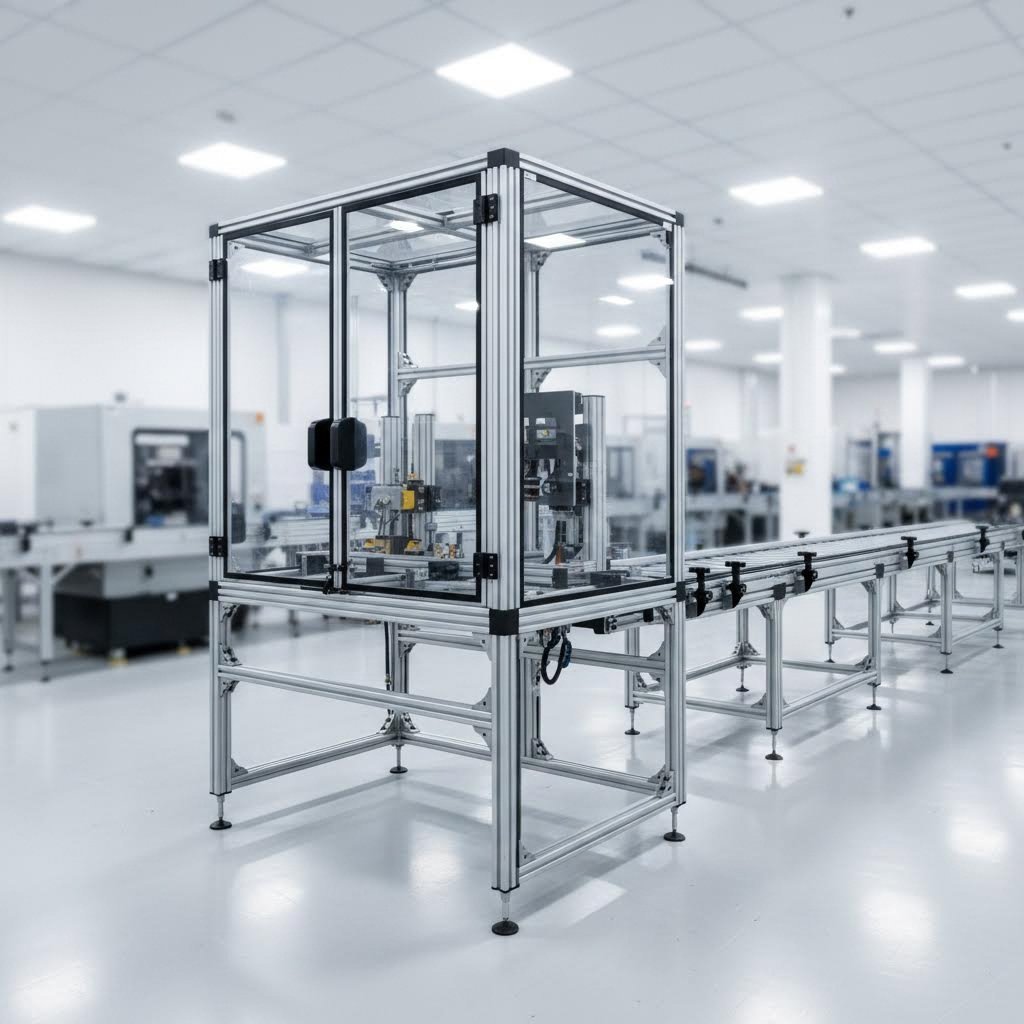
You've seen how aluminum t slot extrusion profiles work and why they outperform traditional materials. But here's what really demonstrates their versatility: the same fundamental building system serves a 3D printer hobbyist in their garage and a multinational manufacturer running automated production lines. How does one framing system span such radically different applications?
The answer lies in the inherent adaptability of the aluminum extrusion frame concept. By selecting appropriate profile sizes, configuring connections for specific load requirements, and leveraging the vast accessory ecosystem, builders customize these systems for virtually any structural challenge. Let's explore the major application categories and discover which profile configurations work best for each.
Walk through any modern manufacturing facility, and you'll encounter aluminum frame extrusion systems everywhere. These industrial applications demand the highest levels of rigidity, safety compliance, and durability that t-slot framing delivers consistently.
Machine Guarding and Safety Enclosures
Perhaps the most critical industrial application, safety enclosures protect workers from moving machinery, flying debris, and pinch points. T-slot systems excel here because they integrate seamlessly with polycarbonate panels, wire mesh, and interlocked access doors. When OSHA compliance matters, the ability to quickly reconfigure guards as production lines evolve provides enormous practical value.
For safety enclosures, 4040 profiles typically provide adequate rigidity for most applications. However, larger enclosures or those requiring heavy door assemblies often benefit from 4080 or even 8080 profiles at critical structural points.
Workstations and Ergonomic Furniture
The adjustability of t-slot systems makes them ideal for creating workstations that adapt to different operators and tasks. Unlike fixed-dimension furniture, an extruded aluminum table can be modified in height, shelf positions, and accessory placement without replacing the entire unit.
According to Vention's design documentation, their tabletop extrusion profiles can support robots producing up to 1800 Nm of e-stop torque when properly configured with perpendicular support members spaced no more than 315mm apart. This demonstrates how thoughtful design transforms standard profiles into high-performance workstation solutions.
Conveyor Systems and Material Handling
Moving materials efficiently requires frames that accommodate motors, belts, rollers, and sensors while remaining precisely aligned over long spans. T-slot profiles provide the mounting flexibility these systems demand.
Conveyor applications typically require 4080 or larger rectangular profiles to minimize deflection across the spans between supports. The 4x4 frame configuration works well for vertical supports, while asymmetric profiles handle the horizontal runs where bending loads concentrate.
Automation Fixtures and Robot Mounting
Collaborative robots, vision systems, and automated assembly equipment all need rigid, precisely positioned mounting structures. The repeatable accuracy of extruded profiles makes them preferred solutions for automation integrators.
The same principles that make aluminum extrusion frame kits valuable in industrial settings translate perfectly to smaller-scale maker spaces, home workshops, and light manufacturing environments. The difference often comes down to profile size selection.
3D Printer Frames and CNC Machine Enclosures
The maker community embraced t-slot framing early, recognizing that these systems provide the rigidity precision equipment demands at accessible price points. A well-designed 2020 or 3030 frame eliminates the flex and vibration that degrades print quality or machining accuracy.
As noted by Gabrian International, 3D printer frames represent one of the most popular applications for t-slot aluminum, combining the need for structural rigidity with the precision that quality prints require. Lighter 2020 profiles suit most desktop printer designs, while larger format machines may require 3030 or 4040 sections.
Trade Show Displays and Retail Fixtures
When structures need to assemble quickly, transport efficiently, and look professional, t-slot systems deliver on all counts. The clean aesthetic of anodized aluminum requires no painting or finishing, and modular designs reconfigure for different venues or product displays.
Display applications typically prioritize lightweight profiles like 2020 or 3030 to minimize shipping costs and simplify setup. The ability to disassemble completely for transport, then reassemble on-site in minutes, provides compelling advantages over welded alternatives.
Laboratory Equipment Frames
Research and testing environments demand equipment frames that resist corrosion, maintain precision, and adapt as experimental requirements evolve. Aluminum t-slot systems check every box.
Laboratory applications often require the precision of larger 4040 profiles combined with the adjustability that lets researchers reposition sensors, cameras, and measurement equipment as experiments evolve. The corrosion resistance of anodized aluminum also proves valuable in environments where chemical exposure occurs.
What makes this versatility possible? The fundamental design principles remain constant across all these applications. Whether you're building a compact 3D printer enclosure or a massive machine guarding system, you're working with the same T-slot geometry, the same fastener ecosystem, and the same assembly methods. Only the profile sizes and specific hardware configurations change to match the load requirements and physical scale of each project.
This universality explains why aluminum extrusion frame kits have become the default choice for so many builders. Learn the system once, and you can apply that knowledge to projects spanning from desktop gadgets to factory-floor installations. But selecting profiles for these diverse applications requires understanding how to match structural requirements to your specific loads and spans.
You've seen the application categories. You understand the profile sizing systems. But here's where many projects go sideways: selecting a profile that looks right but doesn't actually meet your structural requirements. How do you know if that 4040 profile will handle your load, or whether you need to step up to something heavier?
The answer isn't a simple lookup table. It depends on multiple interacting factors that you need to evaluate for your specific situation. Let's walk through the decision-making framework that separates professional-grade builds from structures that sag, deflect, or fail under real-world conditions.
Before selecting any extruded aluminum profile, you need to understand exactly what forces your structure will experience. This isn't about guessing or going with your gut. It's about systematically evaluating five critical factors.
Span Length dramatically affects profile performance. A 4040 profile supporting a 500mm span behaves very differently than the same profile spanning 1500mm. Longer spans experience greater bending moments, meaning the same load creates more stress and deflection as distance increases. According to PTSMAKE's engineering guide, doubling the profile dimension from 20mm to 40mm increases the Moment of Inertia, which measures bending resistance, by more than tenfold. This highlights why span length should be one of your first considerations.
Load Type matters because static and dynamic loads stress structures differently. A workbench holding stationary equipment experiences static loading. A conveyor system with moving product, or a machine base subject to vibration, experiences dynamic loading that can fatigue connections and amplify deflection over time. Dynamic applications typically require sizing up from what static calculations alone would suggest.
Load Direction determines which structural properties matter most. Tension loads (pulling apart) stress connections more than the profiles themselves. Compression loads (pushing together) can cause buckling in slender members. Bending loads, the most common scenario, create stress gradients across the profile cross-section and cause deflection that may affect function even before structural failure occurs.
Deflection Tolerance often proves more restrictive than strength limits. A profile might be strong enough to carry a load without breaking, but deflect enough to cause problems. Precision applications like measurement fixtures or linear motion systems might require deflection under L/500 (less than 1/500th of the span length), while less critical structures might tolerate L/200 or more.
Safety Factors account for uncertainties in load estimates, material variations, and unexpected use cases. Industrial applications commonly apply safety factors of 2x to 4x, meaning the structure should handle two to four times the expected maximum load. Your specific requirements depend on consequences of failure and applicable codes or standards.
Here's a systematic framework for working through profile selection:
Profile geometry significantly affects structural performance beyond simple cross-sectional size. Understanding these relationships helps you make smarter selections.
Solid vs Hollow Cores present a tradeoff. Many structural aluminum extrusions feature hollow or partially hollow centers that reduce weight while maintaining much of the solid section's strength. The material at the outer edges contributes most to bending resistance, so removing material from the center has less impact than you might expect. However, for applications involving point loads or concentrated forces, solid-core profiles or those with internal webbing provide better load distribution.
Single vs Double-Wide Profiles offer directional stiffness options. A 4080 profile (40mm x 80mm) provides significantly more bending resistance when oriented with the 80mm dimension in the load direction compared to the 40mm dimension. This asymmetric stiffness lets you optimize strength-to-weight ratio for loads that primarily stress one axis. Think of how aluminum plate reinforces structures in the direction perpendicular to its thickness.
Reinforcement Options extend the capabilities of lighter base profiles. Adding diagonal bracing, using gusset brackets at corners, or incorporating parallel profiles connected by cross-members can dramatically increase overall frame rigidity without stepping up to heavier individual extrusions. This approach often proves more cost-effective than simply selecting larger profiles throughout.
The aluminum extrusion profile you select should match your specific combination of loads, spans, and precision requirements. When reviewing manufacturer documentation, pay attention to the Moment of Inertia values and load capacity tables they provide. These figures, combined with proper dimensioning and tolerancing practices, enable accurate structural calculations rather than guesswork.
One practical principle worth remembering: when your calculations put you near the limits of a given profile size, stepping up to the next larger option typically costs marginally more but provides significantly more performance headroom. A 4040 profile on the edge of its capacity should probably become a 4080 or even an 8080, especially if future modifications might add load.
Profile extrusions represent a long-term investment in your structure's capability. Selecting adequate strength from the start prevents the frustrating and expensive process of reinforcing or rebuilding undersized frames after the fact. With proper profile selection understood, you're ready to tackle the practical pitfalls that trip up even experienced builders during actual assembly.
You've selected the right profile size. You understand the hardware ecosystem. You're ready to build. But here's the uncomfortable truth: even experienced builders make costly mistakes that product catalogs never warn you about. These aren't theoretical problems. They're the real-world pitfalls that lead to wasted materials, frustrating rework, and structures that don't perform as expected.
The good news? Most of these mistakes are entirely preventable once you know what to watch for. Let's walk through the common errors that trip up aluminum t slot extrusion profile projects and the practical solutions that keep your build on track.
The most expensive mistakes happen before you tighten a single bolt. They occur during planning and purchasing when seemingly minor oversights create cascading problems.
Even with perfect planning, assembly technique determines whether your structure achieves professional-grade results or falls short of expectations.
The stud spacing precision that makes t-slot systems so valuable also means errors propagate rather than absorb. Unlike wood framing where you can force slightly misaligned members into position, aluminum extrusions demand accuracy from the start.
Plan your complete bill of materials, verify system compatibility, and prioritize squareness during assembly. These three practices prevent the vast majority of t-slot project failures.
One final consideration: document your assembly. Take photos of connection details and keep notes on fastener specifications. When you need to expand the structure, troubleshoot an issue, or build a similar project, this documentation proves invaluable. The time invested in avoiding these common mistakes pays dividends throughout the life of your aluminum t slot extrusion profile structure.
With assembly pitfalls understood and avoided, your next consideration becomes sourcing quality profiles and components from suppliers who can support your project requirements.
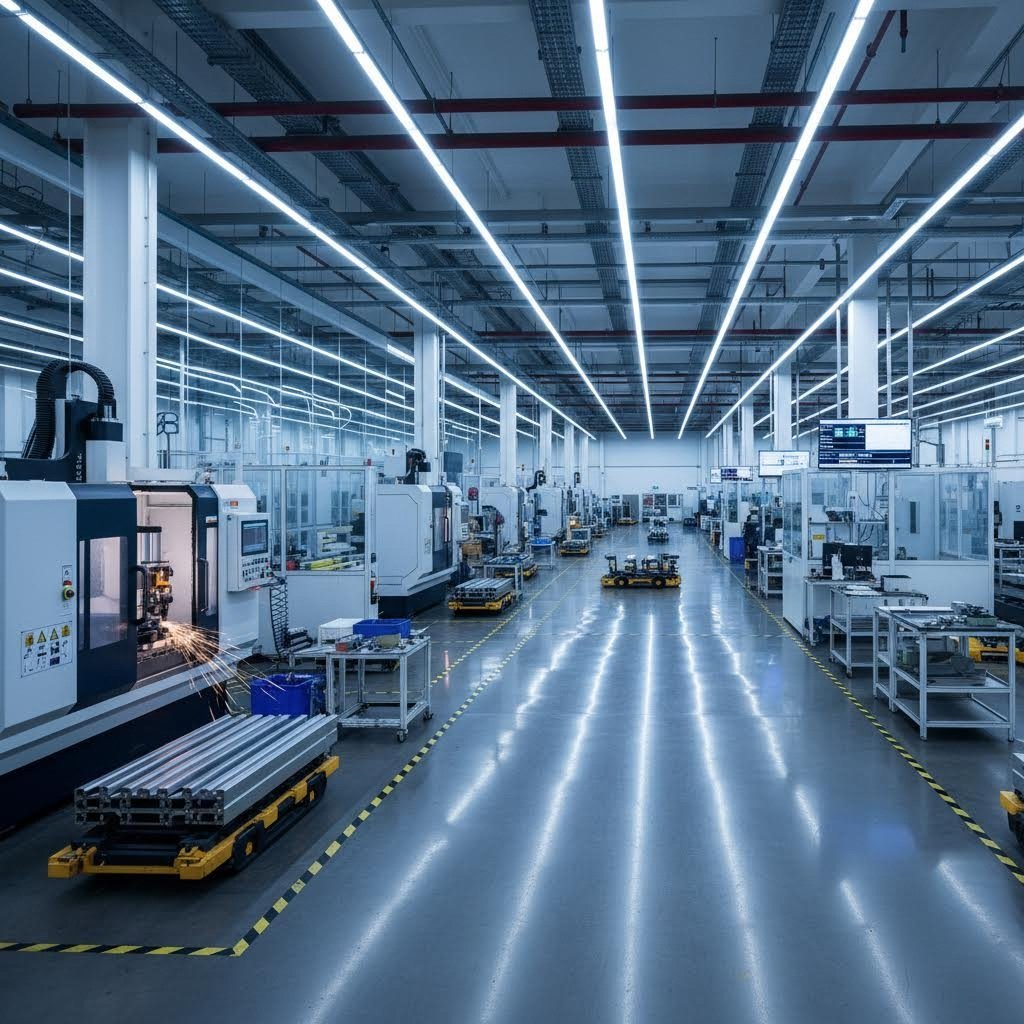
You've planned your project, selected the right profile sizes, and learned the assembly best practices. Now comes a question that determines whether your build succeeds or stalls: where do you actually buy aluminum extrusion profiles that meet your specifications without breaking your budget?
The sourcing landscape for aluminum t slot extrusion profiles spans from major brand distributors to specialized custom manufacturers, each offering different advantages depending on your project scale, timeline, and customization requirements. Understanding this ecosystem helps you find the right partner rather than just the cheapest option.
Not all suppliers offer the same capabilities, and the right choice depends heavily on your specific needs. A hobbyist building a single 3D printer enclosure has different requirements than a manufacturer sourcing hundreds of frames annually. Before comparing prices, evaluate potential suppliers against these key criteria:
For buyers sourcing extruded aluminum channel or extruded aluminum rails in significant quantities, evaluating production capacity matters as much as price. A supplier with insufficient capacity creates bottlenecks that delay your project regardless of their quoted lead times.
Here's where the distinction between profile distributors and full-service manufacturers becomes significant. Distributors stock and ship standard profiles, sometimes with basic cutting services. Full-service manufacturers offer what the industry calls "deep processing": precision cutting, drilling, tapping, counterboring, and custom surface treatments performed before the material ships to you.
Why does this matter? Consider a project requiring 50 profiles, each needing two precisely located mounting holes and threaded inserts for accessories. With a basic supplier, you receive raw profiles and perform all secondary operations yourself. With a deep processing partner, the profiles arrive ready to assemble, holes drilled to your specifications, threads tapped, surfaces finished.
The aluminum extrusion cost equation changes dramatically when you factor in your own labor, equipment, and quality control for these secondary operations. What appears cheaper per meter often costs more per finished component.
For projects requiring custom processing, manufacturers with integrated capabilities deliver several advantages:
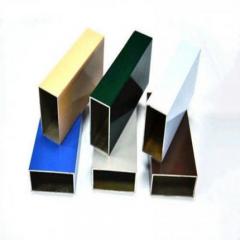
Shengxin Aluminium exemplifies this integrated approach, operating 35 extrusion presses ranging from 600T to 5500T capacity alongside CNC machining centers for precision cutting, drilling, and bending operations. Their surface treatment capabilities include anodizing in custom colors like champagne and rose gold, powder coating for enhanced durability, and PVDF finishes for demanding environments. This combination of extrusion capacity and deep processing under one roof enables projects requiring both standard and custom aluminum extrusion profiles to proceed without coordinating multiple vendors.
When evaluating whether cheap aluminum extrusion from a basic supplier actually saves money, calculate the total cost including your processing time, equipment wear, scrap rate, and quality control overhead. For single prototypes or simple assemblies, raw profiles and DIY processing often make sense. For production quantities or complex specifications, integrated processing typically delivers better value despite higher per-unit quotes.
The sourcing decision also depends on geographic considerations. Domestic suppliers offer faster shipping and easier communication but potentially higher prices. International manufacturers, particularly those in major aluminum-producing regions, provide competitive pricing for volume orders but require longer lead times and attention to import logistics. As noted in comparative supplier analysis, approximately 25% of aluminum products consumed in the U.S. are imported, indicating that many buyers find the trade-off worthwhile for the right projects.
Whatever your sourcing approach, verify that your supplier's capabilities match your requirements before committing. Request samples if possible, especially for surface finishes or custom processing. Check references for projects similar to yours. And always confirm lead times in writing, as delivery delays cascade through project schedules in ways that cost far more than the profiles themselves.
You've covered a lot of ground. From understanding the fundamental anatomy of aluminum t slot extrusion profiles to navigating sizing systems, material advantages, and sourcing strategies, you now have the knowledge foundation that separates successful builds from frustrating failures. But knowledge alone doesn't complete projects. Applying what you've learned through a structured decision-making process does.
Let's distill everything into an actionable framework that guides your next steps, whether you're planning a desktop 3D printer enclosure or a factory-floor automation system.
Before ordering a single profile or fastener, work through these critical decision points in sequence. Skipping steps or making assumptions at any stage creates problems that compound throughout your build.
The greatest value of aluminum t-slot framing lies not in what you build today, but in your ability to modify, expand, and completely reconfigure that structure tomorrow without starting over.
This reconfigurability represents the fundamental advantage that makes extruded aluminum profiles worth the investment. Unlike welded steel or permanent construction methods, every alu extrusion profile you purchase retains its full value through unlimited future applications. That workstation becomes a machine enclosure. That prototype fixture becomes production equipment. The system adapts because you designed it to adapt.
Informed decisions lead to better outcomes. You now understand profile systems well enough to avoid compatibility disasters. You can match t slot framing specifications to structural requirements rather than guessing. You recognize the difference between suppliers who simply ship profiles and partners who deliver complete solutions.
For standard projects using common profile sizes and readily available accessories, domestic distributors with good inventory often provide the fastest path to assembly. Order your bill of materials, verify compatibility one final time, and build with confidence.
For projects requiring specialized profiles, custom processing, or high-volume orders, working with an integrated manufacturer changes the equation. Shengxin Aluminium's end-to-end capabilities span from die development through mass production, enabling custom extruded frame solutions that standard catalogs cannot provide. Their combination of 35 extrusion presses, CNC machining centers, and comprehensive surface treatment options supports projects from initial concept through finished, ready-to-assemble components.
Whatever scale your project demands, the principles remain consistent. Understand your requirements. Select appropriate components. Plan completely before purchasing. Assemble with attention to squareness and proper fastener torque. These fundamentals, applied consistently, transform aluminum t-slot systems from impressive concept into successful reality.
Your next project starts with a clear plan. Build it right the first time.
T-slot aluminum extrusion serves diverse applications across industries. Common uses include machine guarding and safety enclosures, ergonomic workstations, conveyor systems, 3D printer frames, CNC machine enclosures, trade show displays, and laboratory equipment frames. The modular design allows infinite adjustability without welding, making it ideal for prototyping, production equipment, and any application requiring future reconfiguration. Profile sizes range from lightweight 2020 for desktop projects to heavy-duty 8080 for industrial machinery bases.
Metric profiles use millimeter-based dimensions (2020, 4040, 8080) while fractional profiles use inch-based measurements (1010, 1515, 3030). The critical difference lies in slot widths and fastener compatibility. Metric systems typically use M5, M6, or M8 threads, while fractional systems use imperial threads like #10-32 or 1/4-20. These systems are not interchangeable, as mixing them creates loose connections and hardware incompatibility. Choose one system for your entire project based on geographic availability and existing equipment.
Profile selection depends on five factors: span length, load type (static vs dynamic), load direction (tension, compression, bending), deflection tolerance, and safety factors. Longer spans and heavier loads require larger profiles like 4040 or 8080, while lightweight applications like 3D printer frames work well with 2020 profiles. When calculations put you near a profile's limits, size up rather than risk deflection issues. Rectangular profiles like 4080 offer directional stiffness for loads stressing one axis.
Aluminum T-slot systems offer significant advantages including one-third the weight of steel, natural corrosion resistance without coating, assembly with basic hand tools instead of welding, and complete reconfigurability. While steel has higher tensile strength, aluminum provides nearly twice the strength-to-weight ratio. T-slot connections are reversible, allowing disassembly and reuse for new projects. Total project costs often favor aluminum when factoring in reduced labor, no welding equipment needs, and eliminated finishing requirements.
Quality T-slot profiles are available from major brand distributors like 80/20, specialized suppliers, and custom manufacturers. Key factors to evaluate include cut-to-length services, surface finish options (anodized, powder coated), minimum order quantities, and deep processing capabilities like drilling and tapping. For projects requiring custom processing or high volumes, integrated manufacturers like Shengxin Aluminium offer end-to-end support from die development through precision CNC machining and various surface treatments including custom anodizing colors.



 online service
 0086 136 3563 2360
 sales@sxalu.com
 +86 136 3563 2360
 English
 français
 Deutsch
 русский
 español
 português
 العربية
 ไทย
ไทย Việt
Việt Українська