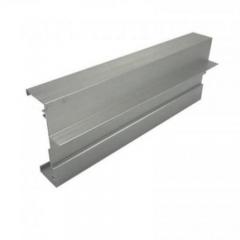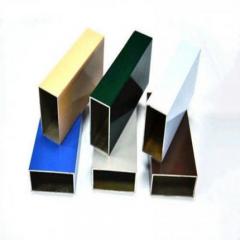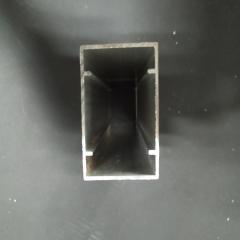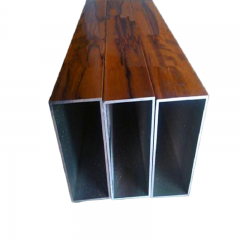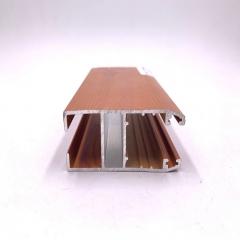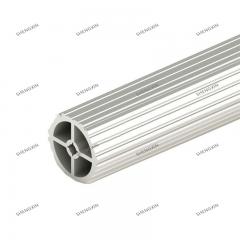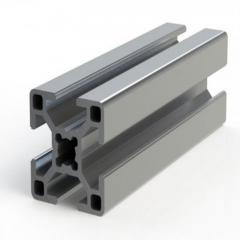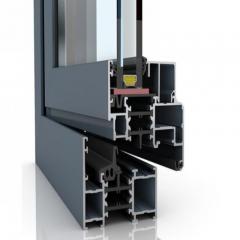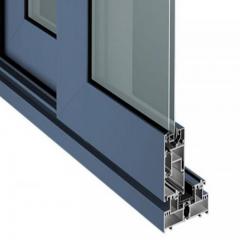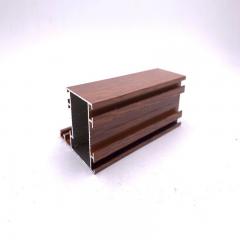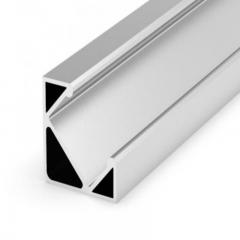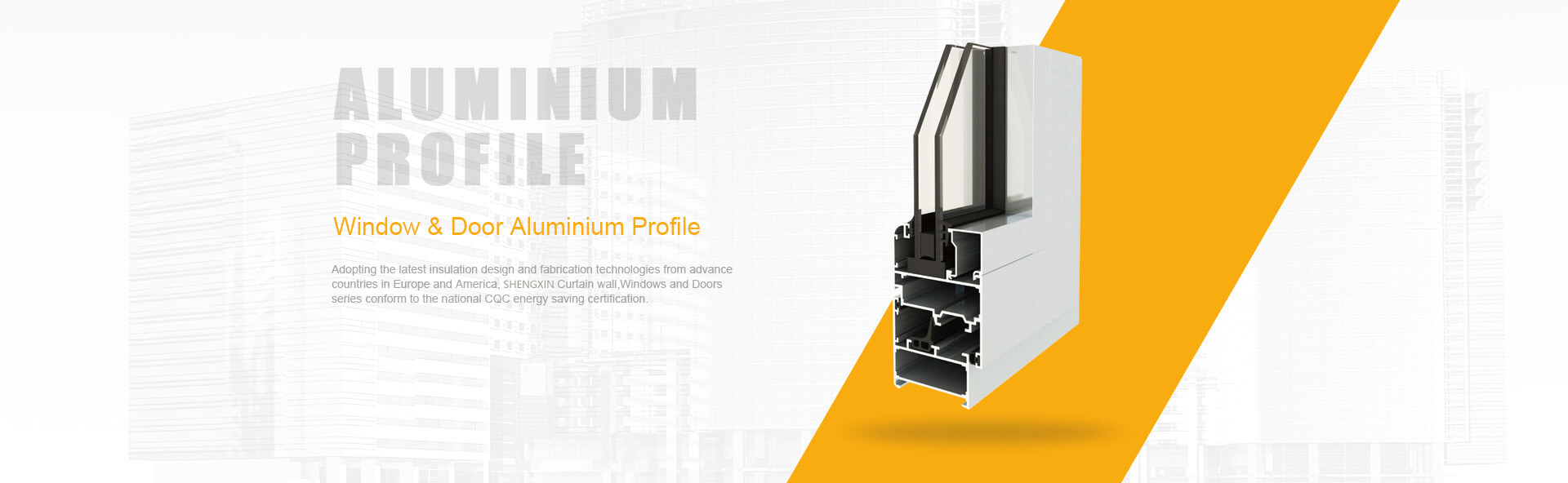
Ever wondered how those perfectly shaped aluminum components in your car, office building, or smartphone get their precise form? The answer lies in custom aluminum extrusion—a manufacturing process that transforms raw aluminum into remarkably versatile profiles tailored to exact specifications.
Custom aluminum extrusion is a technique where heated aluminum alloy material is forced through a specially designed die to create components with specific cross-sectional shapes. Think of it like squeezing toothpaste through a tube—the opening determines the shape of what comes out. For Canadian manufacturers and project developers, this process opens doors to creating everything from simple rods to complex hollow structures with intricate geometries.
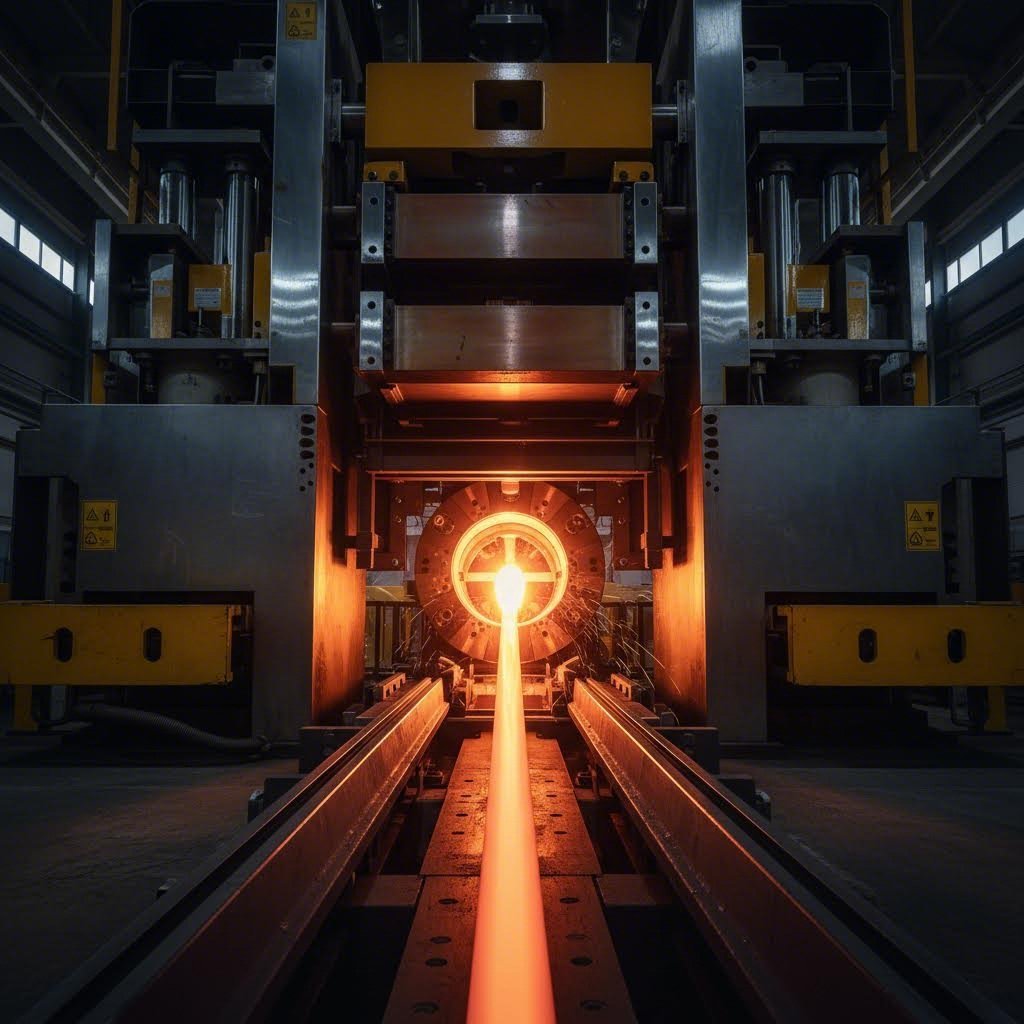
The aluminium extrusion process begins with a solid cylindrical billet of aluminum. Machinists heat this billet to approximately 400-500°C—hot enough to make it soft and malleable, but not molten. A powerful hydraulic ram then pushes this softened material through a precision-engineered die, and the aluminum emerges in the exact shape of that die opening.
Here's where it gets interesting. The extruded aluminum doesn't just pop out ready to use. After exiting the die, the profile travels along a runout table where it's rapidly cooled through a process called quenching. Workers then stretch the profiles to correct any twisting, cut them to specific lengths, and often apply heat treatment to enhance mechanical properties. The result? A perfectly formed aluminium extruded profile ready for its intended application.
What makes this process particularly valuable is the ability to create custom dies. When standard off-the-shelf profiles won't meet your project requirements, manufacturers can design dies specifically for your unique cross-sectional needs—whether that's a simple solid beam or a complex hollow shape with multiple chambers.
Canadian manufacturers across numerous sectors have embraced aluminum extrusion profiles for good reason. The material's exceptional strength-to-weight ratio, natural corrosion resistance, and thermal conductivity make extruded aluminum ideal for demanding applications in our diverse climate.
The following industries benefit significantly from custom extrusion capabilities in Canada:
For Canadian buyers at the research stage, understanding this foundation is essential before making sourcing decisions. Whether you need to aluminum extrude simple profiles or create complex custom shapes, knowing how the process works helps you communicate effectively with suppliers and make informed choices about your project requirements.
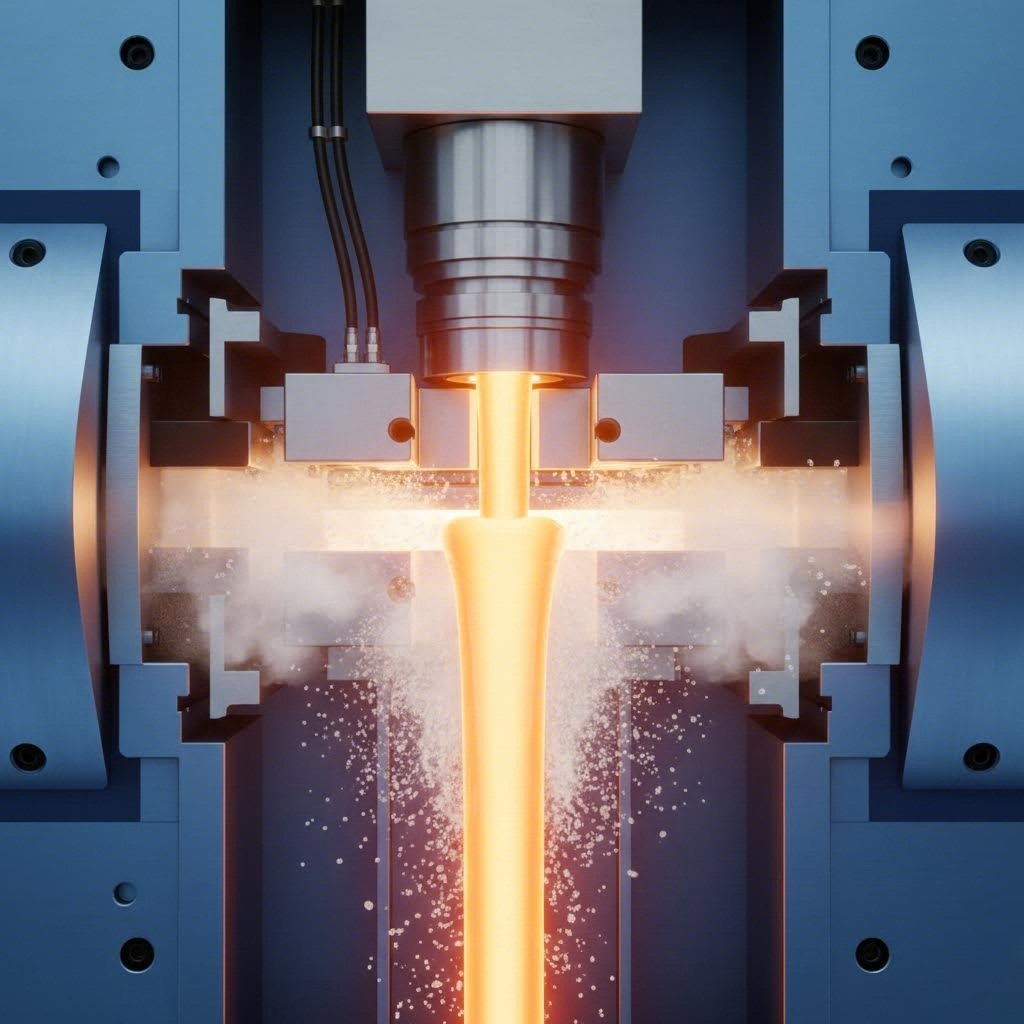
So you've decided that custom aluminum extrusion is right for your project. But what actually happens between submitting your design concept and receiving finished parts? Understanding the complete manufacturing journey helps you plan realistic timelines, communicate effectively with suppliers, and anticipate potential challenges along the way.
The extrusion of aluminium involves a carefully orchestrated sequence of thermal and mechanical operations. Each step directly impacts the accuracy, strength, and surface quality of your final aluminum extrusion profile. Let's walk through the entire process from concept to completion.
Everything starts with the die—the precision-engineered tool that shapes your aluminum into its final form. Think of die development as creating a custom cookie cutter, except this one operates under extreme heat and pressure.
Engineers begin with your CAD drawings or, if you only have samples or sketches, they can reverse-engineer specifications from physical parts. The design phase involves optimizing your profile geometry for manufacturability while maintaining structural performance. Complex shapes with thin walls, tight tolerances, or intricate hollow sections require more sophisticated tooling—and that affects both cost and timeline.
Dies are typically machined from high-grade tool steel like H13, chosen specifically for its resistance to heat and pressure. Before any production begins, every new die undergoes test runs on the extrusion press. Why? The extreme temperatures during extrusion can cause subtle deformations. These trial runs verify that your finished profiles will meet exact shape, size, and tolerance requirements.
Wondering about timelines? For straightforward profiles, expect die development to take approximately 2-4 weeks. More complex aluminum profile extrusion designs with multiple voids or tight tolerances may require 4-6 weeks or longer. Once approved, your die can produce thousands of feet of consistent profiles over its lifespan.
With your custom die ready, the actual production process follows a precise sequence. Here's what happens during each stage:
For manufacturers building modular systems similar to 8020 extrusion frameworks or alu 8020 configurations, this same fundamental process applies—whether producing standard T-slot profiles or completely custom designs.
Quality inspection runs throughout this entire sequence. Dimensional measurements verify tolerances, surface checks identify any defects, and mechanical testing confirms that your extruded aluminum profiles meet strength specifications. Only profiles passing all criteria move forward to packaging or secondary processing.
From billet heating to final packaging, standard production runs typically take several hours to a few days depending on volume and post-processing requirements. The most significant lead time factor? That initial die development phase—which is why experienced buyers often begin the die design conversation well before they need production parts.
You've designed your profile and understand the manufacturing process—but which aluminum alloy should you actually use? This decision significantly impacts everything from structural performance to surface finish quality. Defaulting to the cheapest option without considering how different alloys behave during extrusion and finishing can jeopardize your final product.
The 6000 series dominates aluminum alloy extrusion applications for good reason. Made primarily of magnesium and silicon, these alloys offer an excellent balance of strength, corrosion resistance, and workability. However, understanding the differences between specific alloys within this series—and when to consider alternatives—can mean the difference between a good project outcome and an exceptional one.
Before selecting an aluminum extrusion material, you need to evaluate several key properties against your project demands. Ask yourself which characteristics are critical, which are nice to have, and which don't apply to your situation:
Here's something many buyers don't realize: as mechanical properties within the 6000 series increase, the appearance of the finish can suffer and the ability to extrude the alloy diminishes. You're essentially balancing strength against surface quality and manufacturing ease. This tradeoff makes early consultation with experienced suppliers invaluable.
Canadian manufacturers typically select from a handful of proven aluminium extrusion types, each suited to specific applications. The following comparison helps you understand where each alloy excels:
| Alloy Type | Typical Applications | Tensile Strength | Best Use Cases |
|---|---|---|---|
| 6063 | Window frames, door frames, tubing, heat sinks, decorative trims | 145-186 MPa | Architectural applications requiring excellent surface finish and bright-dip anodizing; most cost-effective option for non-structural needs |
| 6061 | Structural components, marine applications, automotive parts, firearms, medical equipment | 124-290 MPa | Multi-purpose structural applications demanding high weldability combined with good strength and corrosion resistance |
| 6005 | Transportation components, railcar structures, truck trailers, ladders | 170-270 MPa | Applications requiring similar strength to 6061 but with better extrudability and improved surface appearance |
| 6060 | Complex architectural shapes, intricate profiles | 120-170 MPa | Designs requiring thinner walls or more complex geometries than 6063 can achieve |
| 7075 | Aerospace components, high-stress structural applications | 220-570 MPa | Applications where exceptional strength-to-weight ratio is critical and cost is secondary |
For many Canadian projects, 6063 represents one of the most cost-effective extruded aluminum alloy options available. Its heat tolerance, strength, and smooth surface make it ideal for architectural aluminium extrusion products like window frames, shower doors, and reflectors. This alloy accepts bright-dip anodizing beautifully, producing highly reflective, mirror-like finishes.
When structural demands increase, 6061 becomes the go-to choice. It's highly weldable and combines strength with excellent corrosion resistance—perfect for boat components, industrial equipment, and applications exposed to Canadian weather extremes. The 6005 alloy offers similar characteristics but with better extrudability, making it particularly suitable for transportation applications where complex profiles meet structural requirements.
Don't overlook the impact of temper treatments on your final properties. Designations like T5 and T6 indicate different aging processes that significantly affect strength and hardness. A T6 temper treatment, for instance, can dramatically improve tensile strength compared to the same alloy in other temper states.
Working closely with suppliers who have extensive experience in custom aluminum extrusion helps you navigate these choices confidently. They can evaluate your specific requirements—load-bearing capacity, environmental exposure, finishing needs—and recommend the alloy that optimizes your end product's design goals for strength, weight, and cost.
You've selected your alloy and understand the manufacturing process—but here's the question that can save or cost you thousands: should you invest in custom extrusion, or will standard aluminum profiles do the job? This decision fundamentally shapes your project's budget, timeline, and end-product performance.
Standard profiles like 8020 aluminum extrusion systems offer proven convenience. Custom profiles deliver precision-engineered solutions. Choosing between them isn't about which is "better"—it's about matching the right approach to your specific project requirements.
The 80/20 aluminum system—named after the Pareto principle suggesting you achieve 80% of results with 20% of effort—has become incredibly popular for modular construction. These T-slot profiles feature standardized grooves allowing quick attachment of fasteners, brackets, and accessories. For workstations, machine guards, display frames, and automation frameworks, 80 20 extruded aluminum delivers excellent value with minimal engineering overhead.
But standard doesn't mean universal. Here's when off-the-shelf options start limiting your project:
Imagine designing a sealed greenhouse frame requiring integrated wire channels. Using 80 20 t slot aluminum would mean external conduit, additional brackets, and labor-intensive assembly. A custom profile with built-in channels eliminates these complications—and one manufacturer reported cutting material weight by 20% while enabling snap-install wire ducts through this exact approach.
Here's the honest reality: custom extrusion requires upfront investment that standard profiles don't. Die development typically costs between $500 and $5,000+ depending on profile complexity. Simple solid shapes fall toward the lower end; intricate hollow sections with multiple voids push costs higher.
But die costs aren't the complete picture. That tool becomes your asset, capable of producing consistent profiles across multiple production runs over years. The real question is: at what volume does custom make financial sense?
Consider this cost-benefit framework:
For many Canadian projects, the break-even point arrives sooner than expected—sometimes at quantities as low as 500-1,000 pieces when labor and material savings compound against die investment.
That said, standard profiles absolutely make sense in certain situations:
Timeline considerations matter too. Standard profiles ship within days. Custom die development adds 2-6 weeks before production even begins. If your project schedule is inflexible, that constraint may override cost calculations.
The smartest approach? Consult with suppliers early. Experienced manufacturers can analyze your expected volumes, calculate unit-cost projections, and help you determine whether custom tooling investment delivers genuine long-term value—or whether adapting proven standard aluminum profiles serves your project better.
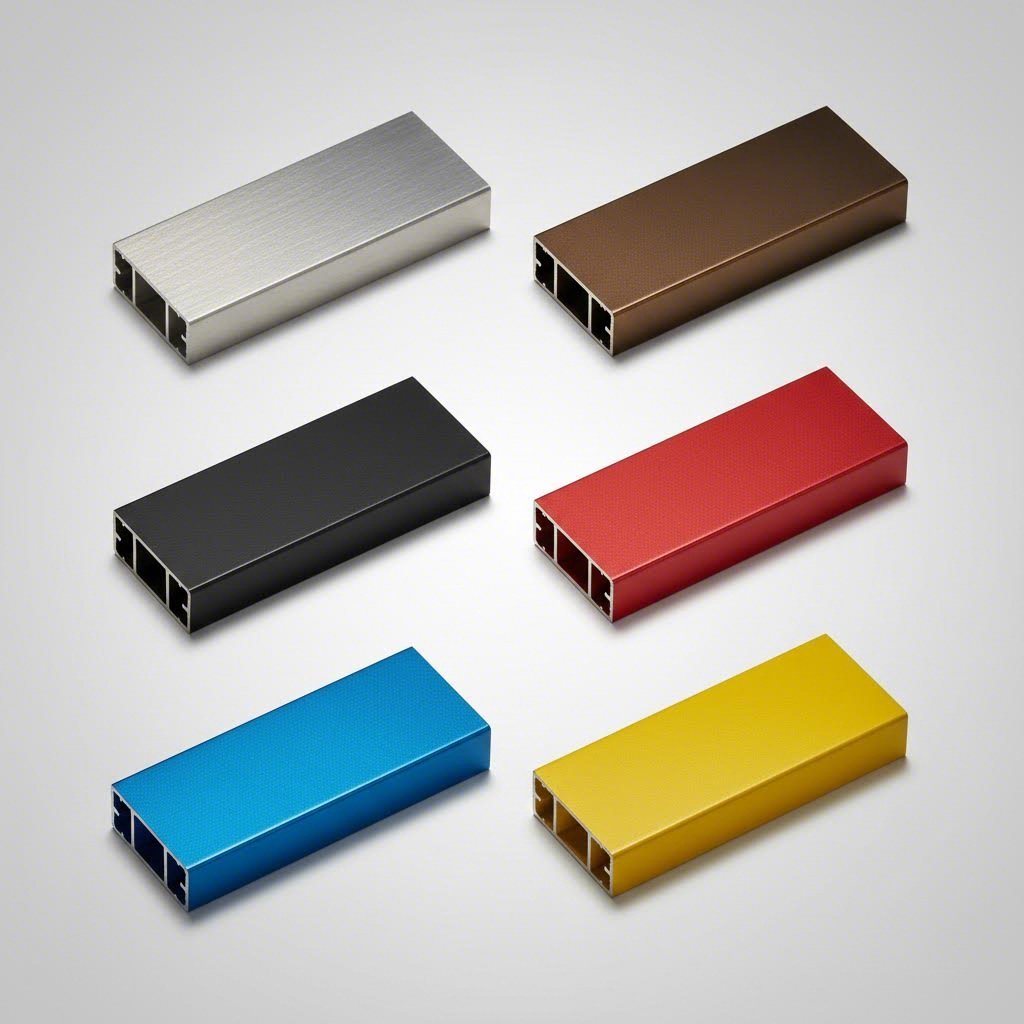
Your aluminum extrusion emerges from the press with what's called a mill finish—a dull, unprotected surface bearing die marks and minor oxidation. For most Canadian projects, that's just the starting point. The real transformation happens through surface treatments and secondary processing that elevate raw profiles into ready-to-install aluminum extrusion parts.
Sounds complex? It doesn't have to be. Understanding your finishing options helps you specify exactly what your project needs—whether that's enhanced corrosion protection for coastal installations, vibrant colors for architectural facades, or precision-machined features for mechanical assemblies.
Surface treatments aren't just about appearance. The right finish can dramatically extend product lifespan, improve functionality, and reduce long-term maintenance costs. Here's what you need to know about each major option:
Anodizing remains the gold standard for aluminum protection. Unlike paints that sit on top of the surface, anodizing uses an electrochemical process to thicken aluminum's naturally occurring oxide layer. The result? A surface that's integral to the metal itself—not a coating that can chip or peel. Clear anodizing maintains aluminum's natural metallic appearance while dramatically improving wear and corrosion resistance. Color anodizing accepts dyes before sealing, offering bronze, black, gold, and other metallic tones that won't fade under Canadian sun exposure.
Powder coating delivers what anodizing can't: virtually unlimited color options and textured finishes. The dry application process sprays electrostatically charged powder onto grounded aluminum parts, then bakes them to cure the coating into a uniform layer. You'll find powder-coated aluminum extrusions profiles on everything from outdoor furniture to industrial equipment. The environmental benefit? No solvents or volatile organic compounds—just clean, durable color.
PVDF coating (polyvinylidene fluoride) excels where powder coating meets its limits. These resin-based finishes resist fading, chemicals, and weathering far longer than standard coatings. Canadian architects frequently specify PVDF for exterior cladding, curtain walls, and facade systems where decades of UV exposure would degrade lesser finishes. The coating applies thinner than powder coat and doesn't require oven curing.
Micro-arc oxidation represents the cutting edge of surface treatment technology. This specialized process creates exceptionally hard ceramic-like layers on aluminum surfaces—significantly harder than conventional anodizing. Applications demanding extreme wear resistance or thermal stability benefit most from this advanced treatment.
| Treatment Type | Key Benefits | Durability | Ideal Applications |
|---|---|---|---|
| Clear Anodizing | Excellent wear resistance; improved heat dissipation; maintains metallic appearance | 20+ years typical; integral to metal surface | Architectural trim, heat sinks, extruded aluminium rails, electronic enclosures |
| Color Anodizing | Decorative metallic colors; fade-resistant; accepts dyes before sealing | 15-20 years; color depth affects longevity | Consumer products, sporting goods, decorative architectural elements |
| Powder Coating | Unlimited color options; textured finishes available; environmentally friendly | 10-15 years exterior; excellent impact resistance | Outdoor furniture, 80 20 panels, industrial frames, consumer appliances |
| PVDF Coating | Superior UV resistance; chemical resistant; thin application possible | 25-30+ years exterior without significant fading | Building facades, curtain walls, exterior cladding systems |
| Micro-Arc Oxidation | Extreme hardness; thermal stability; electrical insulation properties | Exceptional wear resistance in high-stress environments | Aerospace components, high-wear industrial parts, specialized equipment |
When should you choose each treatment? Consider your environment first. Coastal projects facing salt spray benefit from anodizing's integral protection. High-visibility architectural applications often demand PVDF's decades-long color retention. Industrial equipment prioritizing aesthetics alongside protection might favor powder coating's versatility and cost-effectiveness.
Surface treatment addresses protection and appearance—but what about transforming profiles into functional aluminum extrusion parts ready for assembly? That's where secondary fabrication services come in.
Modern aluminum parts assembly service capabilities extend far beyond simple cutting. Here's what integrated fabrication can deliver:
Why does this matter? Receiving ready-to-install components eliminates your need for secondary vendors, reduces coordination headaches, and ensures quality control throughout the manufacturing chain. A single-source provider handling extrusion, finishing, and fabrication can catch integration issues before they become job-site problems.
For Canadian buyers, this integrated approach often proves especially valuable. Shipping semi-finished profiles to separate machine shops adds transit time, handling damage risk, and communication gaps between vendors. The alternative—complete aluminum extrusions profiles arriving ready for immediate installation—streamlines projects and protects your timeline.
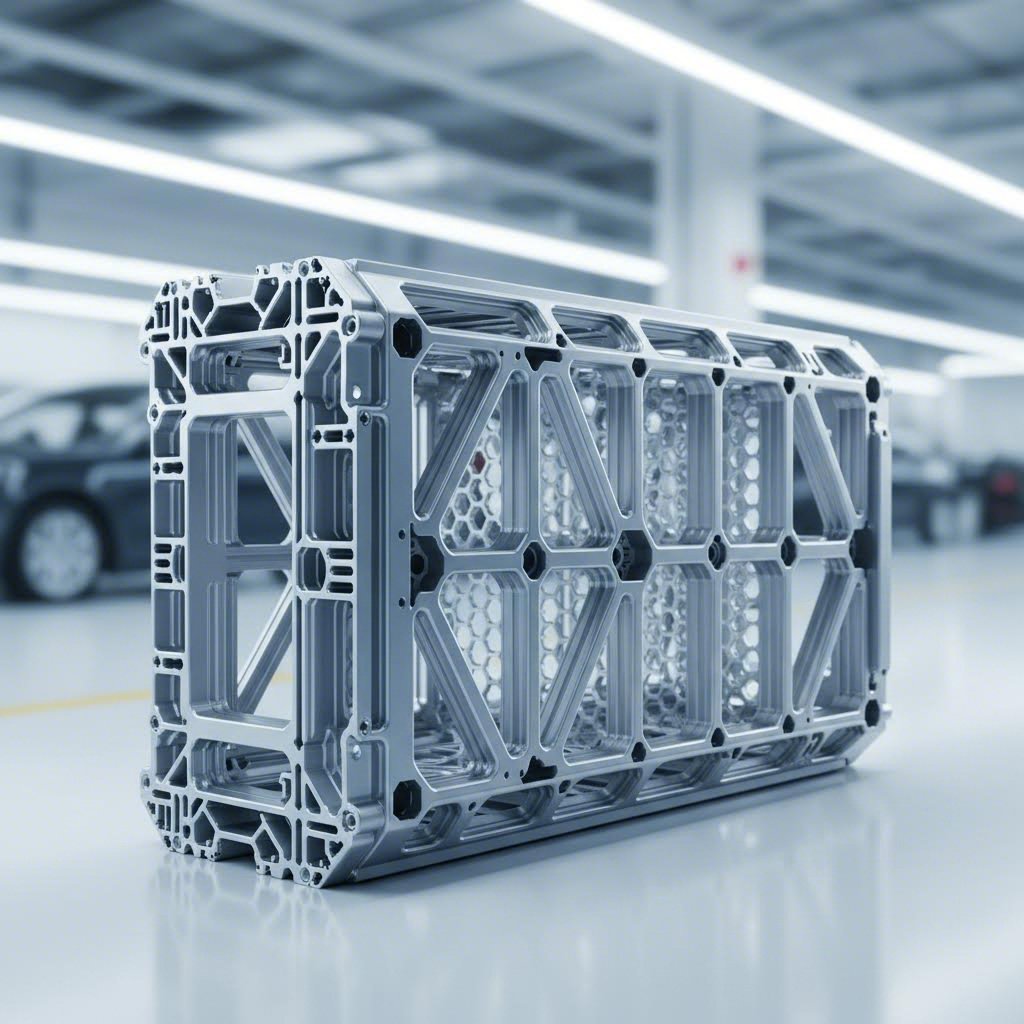
Surface treatments and fabrication transform raw profiles into finished components—but where are those components actually going? Two sectors are driving unprecedented demand for aluminium extrusion profiles across Canada: electric vehicle manufacturing and sustainable construction. Understanding these applications reveals why custom aluminum extrusion capabilities matter more than ever.
Both industries share a common requirement: lightweight materials that don't sacrifice structural integrity. Aluminum delivers exactly that—and Canadian manufacturers positioned to serve these markets are seeing significant growth opportunities.
Here's a number that puts things in perspective: around 80% of EV battery pack enclosures today are constructed from aluminum. And the average extrusion content per electric vehicle is projected to reach 80 kg by 2030. That's not incremental growth—that's a fundamental shift in how vehicles get built.
Why aluminum? Because every kilogram saved in an EV translates directly to extended range. A lighter battery enclosure means the vehicle can carry more cells or travel farther on the same charge. Extruded aluminium profiles deliver this weight advantage while meeting demanding crash safety requirements.
The benefits extend beyond simple weight reduction. Aluminum enclosures offer excellent thermal conductivity for passive and active cooling systems—critical when managing battery temperatures during fast charging or aggressive acceleration. The material can be extruded into complex cooling channel designs that would be impossible or prohibitively expensive to machine from solid stock.
Canadian EV suppliers and component manufacturers are finding custom extrusion essential for these specific applications:
There's another factor driving aluminum adoption: sustainability requirements. Recycling aluminum uses only 5% of the energy required for primary production, reducing CO2 emissions by more than 90%. For automakers facing increasingly strict environmental regulations, this recyclability advantage matters. End-of-life vehicles yield aluminum that feeds directly back into the production cycle—a closed-loop system that thermoplastics and composites struggle to match.
For manufacturers producing modular machine guarding systems or machine guarding accessories for EV production facilities, aluminum extrusion offers similar advantages: rapid assembly, reconfigurability, and the strength needed to protect workers around automated manufacturing lines.
Construction still dominates aluminum extrusion consumption—accounting for over 50% of global usage. But the nature of that demand is evolving. Green building standards and LEED certification requirements are reshaping what architects and developers need from their material suppliers.
Aluminum's inherent properties align remarkably well with sustainable building goals. The material resists corrosion without chemical treatments, maintains structural performance across extreme temperature swings, and—crucially—can be recycled indefinitely without degrading. For projects pursuing LEED credits, specifying recycled-content aluminum extrusions contributes directly to materials and resources categories.
Canadian construction projects are incorporating extruded aluminium profiles across these sustainable applications:
The modular building trend deserves particular attention. Prefabricated aluminum framing systems allow structures to be manufactured in controlled factory environments, then rapidly assembled on-site. This approach minimizes material waste, reduces construction timelines, and delivers consistent quality regardless of weather conditions—all factors that contribute to LEED certification and overall project sustainability.
For Canadian developers navigating increasingly stringent energy codes, aluminum extrusion offers design flexibility that other materials can't match. Custom profiles can integrate thermal breaks, drainage channels, and fastening systems into single components—reducing assembly complexity while improving building envelope performance.
Whether serving EV manufacturers or green building projects, suppliers offering custom aluminum extrusion capabilities in Canada are positioned at the intersection of two powerful market trends. Understanding the specific requirements of each sector helps buyers communicate effectively with potential partners—and ensures the profiles they specify actually deliver the performance these demanding applications require.
You've identified your application, selected an alloy, and decided custom extrusion makes sense for your project. Now comes the practical question every Canadian buyer asks: how much will this cost, and how long will it take? These details rarely appear in competitor content—yet they're exactly what you need for realistic project planning.
Understanding the difference between die development timelines and ongoing production schedules helps you set appropriate expectations. And knowing which factors actually drive pricing prevents budget surprises when quotes arrive.
Lead times for custom aluminum extrusion break down into three distinct phases—each with its own timeline considerations:
Tooling Lead Time: Before any production begins, your custom die must be designed, machined, and tested. According to industry benchmarks, standard die development takes 2-4 weeks for straightforward profiles. Complex geometries with hollow sections, tight tolerances, or intricate features may require additional time. Die complexity directly impacts this timeline—a simple solid shape moves faster than a multi-void hollow profile requiring bridge or porthole tooling.
Extrusion Production Lead Time: Once your die passes testing, actual production scheduling begins. Where your order falls in the supplier's queue affects timing. Initial production runs include die trials to verify that extruded shapes match specifications. Only after sample approval does full production commence. The aluminum then requires cooling, stretching, cutting, and heat treatment before moving forward.
Fabrication and Finishing Lead Time: Many orders require secondary operations—anodizing, powder coating, CNC machining, or complete assembly. These steps add days or weeks depending on complexity. A simple cut-to-length order ships faster than profiles requiring multiple surface treatments and precision drilling patterns.
What about minimum order quantities? Here's where expectations often need adjustment. MOQs exist for legitimate technical and economic reasons:
For Canadian buyers seeking where to buy aluminum extrusion with reasonable minimums, expect typical MOQs ranging from 500 kg to several tonnes depending on profile complexity and supplier capabilities. Some suppliers offer lower minimums for sample orders, though per-unit costs increase significantly.
When you buy aluminum extrusion, the quoted price reflects multiple cost components stacked together. Understanding this breakdown helps you evaluate quotes intelligently and identify opportunities for cost optimization.
According to 2025 market analysis, raw aluminum ingot pricing represents 60-75% of total extrusion cost. Current rates show aluminum priced at approximately $2.50-$2.80 per kilogram for standard 6063 alloy, with higher-performance alloys like 6061 adding 10-20% premium. This commodity pricing fluctuates based on London Metal Exchange rates, energy costs, and supply conditions.
Beyond raw material, these factors shape your final pricing:
For Canadian buyers evaluating domestic versus international sourcing, the trade-offs deserve careful consideration. Domestic suppliers offer shorter shipping times, easier communication, and no import duties—but typically at higher per-kilogram pricing due to labor and energy costs. International sourcing from manufacturing hubs may offer aluminum extrusions for sale at $2.50-$3.50 per kilogram, but ocean freight, customs clearance, and longer lead times add complexity.
Looking for cheap aluminium extrusion options? Focus on design optimization rather than supplier selection alone. Simplifying profile geometry, selecting standard alloys, minimizing surface treatment requirements, and consolidating orders into larger volumes often deliver more savings than hunting for the lowest quoted price. A profile designed for efficient extrusion costs less to produce regardless of which supplier manufactures it.
Before finalizing any supplier, discuss these timeline and cost considerations explicitly. Request detailed breakdowns showing die costs, material pricing, processing charges, and finishing expenses separately. This transparency helps you compare quotes accurately and identify which extruded aluminum for sale offers genuine value—not just the lowest headline number.
You've defined your project requirements, understand lead times, and have realistic budget expectations. Now comes a decision that will shape your entire manufacturing experience: which supplier should you actually partner with? The difference between a smooth project and a coordination nightmare often comes down to one fundamental choice—single-source integration versus multi-vendor approaches.
For Canadian buyers sourcing aluminum extrusion systems, this decision impacts far more than convenience. It affects quality consistency, timeline reliability, and ultimately your total project cost. Let's break down what each approach really means for your bottom line.
Imagine coordinating a custom extrusion project across four separate vendors: one for die development, another for extrusion, a third for surface treatment, and a fourth for CNC machining. Each handoff introduces risk. Each transition creates potential for miscommunication. And when something goes wrong? You're left playing detective, trying to determine which vendor caused the defect.
This multi-vendor reality is more common than you might expect. Many smaller extrusion shops outsource die manufacturing, surface finishing, or secondary fabrication to third parties. The result? Fragmented responsibility and extended lead times as your profiles travel between facilities.
Vertically integrated suppliers take the opposite approach. Under one roof—or at least under unified management—they handle everything from initial die design through final fabricated assembly. When your aluminum extrusion builder controls the complete manufacturing chain, several advantages emerge:
The 80/20 company model—where suppliers handle most processes internally while outsourcing specialty operations—works for some buyers. But for complex projects requiring tight coordination between extrusion parameters and downstream processing, full integration delivers measurable advantages.
Consider what happens when surface treatment specifications interact with extrusion tolerances. An integrated supplier understands that their anodizing line requires specific dimensional consistency from the extrusion press. They can adjust upstream processes to optimize downstream results. Disconnected vendors lack this feedback loop.
Not all integrated suppliers offer equal capabilities. Before committing to a partnership, you'll want to evaluate specific technical criteria that determine whether a supplier can actually deliver what your project requires.
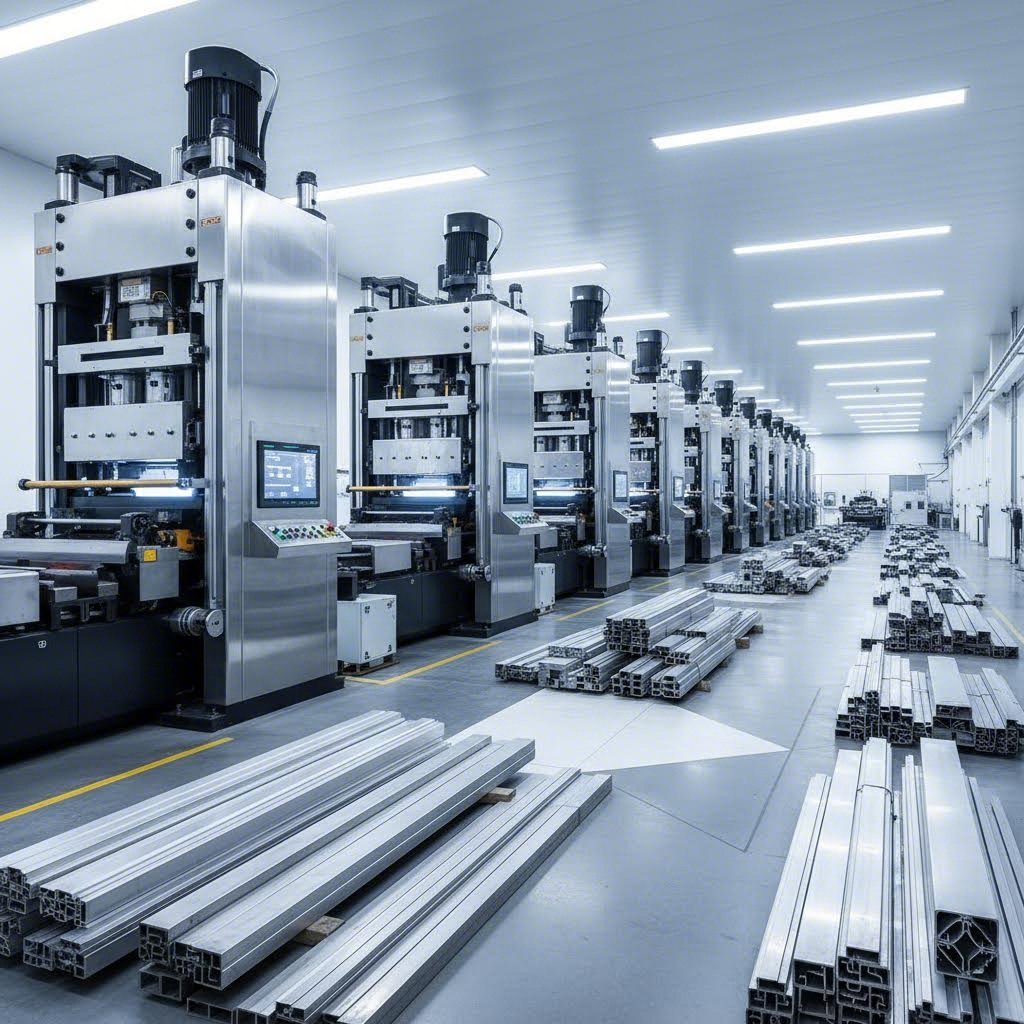
Press Capacity Range: The extrusion press defines what profiles a supplier can produce. According to industry evaluation guidelines, small presses (600-1800T) handle thin, precise profiles. Medium presses (2000-3500T) suit general industrial applications. Large presses (5000T and above) produce heavy structural components. A supplier with multiple press capacities—like operations running 35 presses ranging from 600T to 5500T—can handle diverse projects and maintain flexibility as your production volumes change.
Die Design and Maintenance: Many suppliers outsource die manufacturing to third parties, leading to longer lead times and slower problem resolution. Suppliers with in-house die workshops can modify or repair tooling quickly, ensuring production continuity. Ask specifically: do they design and manufacture dies internally, or subcontract this critical step?
CNC Machining Integration: Modern aluminum extrusion systems often require precision drilling, tapping, and milling before installation. Integrated CNC machining centers allow suppliers to deliver finished components rather than raw profiles requiring secondary processing elsewhere. This capability proves especially valuable when tight tolerances must carry through from extrusion to final fabrication.
Surface Treatment Options: Comprehensive finishing capabilities should include anodizing (with custom color options), powder coating for unlimited colors and textures, PVDF coating for long-term exterior durability, and specialized treatments like micro-arc oxidation for extreme wear resistance. Suppliers offering this full range can match treatment to application without outsourcing.
For example, Shengxin Aluminium's deep processing services demonstrate what comprehensive integration looks like in practice—35 extrusion presses spanning 600T to 5500T capacity, state-of-the-art CNC machining centers, and complete surface treatment capabilities including anodizing, powder coating, PVDF, and micro-arc oxidation under unified quality control.
When evaluating potential suppliers for stock aluminum extrusion profiles or custom projects, work through this capability checklist:
Strong suppliers differentiate themselves through technical communication—not just quoting prices. They provide design-for-manufacturability feedback on your drawings, suggest tolerance optimizations, and share inspection documentation before shipment. As sourcing experts note, suppliers who proactively prevent issues deliver far more value than those who simply react after defects occur.
The apex aluminum extrusions in any project come from suppliers who understand your application requirements—not just your profile dimensions. Whether you need extruded aluminum sizes for architectural facades or precision components for industrial equipment, the right partner brings technical depth that commodity suppliers can't match.
Before finalizing any supplier relationship, request physical samples to validate extrusion precision and surface finish quality. Ask for references from companies with similar needs. And if possible, conduct a factory audit—virtual or in-person—to assess equipment condition, workflow organization, and quality control implementation. These verification steps protect your project from suppliers whose marketing promises exceed their actual manufacturing capabilities.
You've absorbed a tremendous amount of information—from alloy selection and manufacturing processes to surface treatments and supplier evaluation. Now it's time to transform that knowledge into action. Whether you're sourcing aluminum extrusions for Ontario projects or working with suppliers across Canada, having a clear decision-making framework prevents costly missteps and keeps your project on track.
The difference between a successful custom extrusion project and a frustrating experience often comes down to preparation. Buyers who arrive at supplier conversations with clear specifications, realistic expectations, and the right questions consistently achieve better outcomes. Let's consolidate everything into actionable next steps.
Before reaching out to potential suppliers, work through these critical decision points. Having answers ready streamlines the quoting process and demonstrates that you're a serious buyer worth prioritizing:
According to the aluminum extrusion enquiry checklist, buyers should also consider packaging requirements, stockholding preferences for ongoing orders, and whether finished lengths require tight tolerances. These details affect both pricing and supplier capability matching.
Ready to initiate your project? Follow this step-by-step process to move from concept toward production:
For Canadian buyers seeking aluminum extrusion profiles products with comprehensive support, suppliers offering end-to-end capabilities simplify project execution significantly. Shengxin Aluminium's deep processing services exemplify this integrated approach—with over 30 years of experience, their technical team provides support from initial die development through mass production. Their facility houses 35 extrusion presses ranging from 600T to 5500T, CNC machining centers for precision fabrication, and complete surface treatment options including anodizing in custom colors, powder coating, PVDF, and micro-arc oxidation.
Whether your project involves custom 6063 aluminum tubes for architectural applications, complex industrial profiles requiring tight tolerances, or high-volume production runs demanding consistent quality, factory-direct partnerships eliminate the coordination headaches that plague multi-vendor approaches.
The path from concept to finished part doesn't have to feel overwhelming. Armed with the knowledge from this guide—understanding how extrusion works, which alloys match your needs, when custom makes sense, and what to expect from suppliers—you're positioned to make confident decisions. Your next step? Start those supplier conversations with clear specifications and realistic expectations. The right manufacturing partner will recognize a prepared buyer and respond with the technical depth your project deserves.
Custom extrusion uses specially designed dies to create unique cross-sectional shapes tailored to your exact specifications, while standard profiles like 80/20 T-slot systems come in pre-made configurations. Custom profiles require upfront die investment ($500-$5,000+) but offer weight optimization, integrated features, and precise tolerances. Standard profiles ship quickly and suit modular applications, prototypes, or low-volume projects under 100 units where die costs cannot be effectively amortized.
Lead times involve three phases: die development (2-4 weeks for simple profiles, 4-6 weeks for complex hollow sections), extrusion production (depends on order queue and volume), and finishing/fabrication (additional days to weeks based on requirements). Total timeline from concept to delivery typically ranges from 4-10 weeks. Domestic Canadian suppliers offer shorter shipping times, while international sourcing adds ocean freight and customs clearance delays.
The 6000 series dominates extrusion applications. 6063 is most cost-effective for architectural uses requiring excellent surface finish and anodizing. 6061 suits structural applications demanding high strength and weldability. 6005 works well for transportation components needing similar strength to 6061 with better extrudability. 7075 provides exceptional strength-to-weight ratio for aerospace but at higher cost. Alloy selection depends on strength requirements, corrosion resistance, weldability, and surface finish needs.
Common treatments include anodizing (clear or colored) for integral corrosion protection lasting 20+ years, powder coating for unlimited colors and textures with 10-15 year exterior durability, PVDF coating for 25-30+ years of UV resistance on building facades, and micro-arc oxidation for extreme hardness in high-wear applications. Integrated suppliers like Shengxin Aluminium offer all these options under unified quality control, eliminating coordination between multiple vendors.
Raw aluminum ingot represents 60-75% of total cost, currently priced at $2.50-$2.80 per kilogram for 6063 alloy. Additional factors include die tooling costs (amortized across production volume), extrusion processing (15-25% of material costs), surface treatments ($0.10-$1.00+ per kg depending on finish), secondary fabrication (15-40% increase for CNC machining), order volume, and profile complexity. Larger quantities and simpler geometries reduce per-unit costs significantly.



 online service
 0086 136 3563 2360
 sales@sxalu.com
 +86 136 3563 2360
 English
 français
 Deutsch
 русский
 español
 português
 العربية
 ไทย
ไทย Việt
Việt Українська