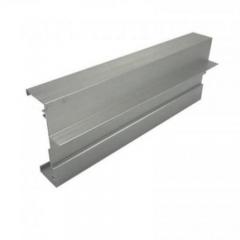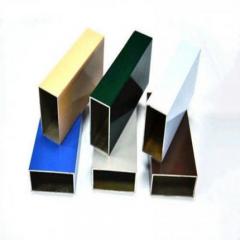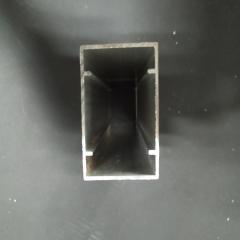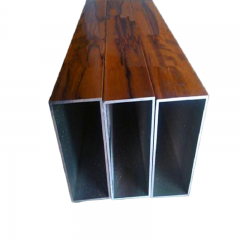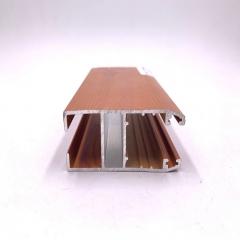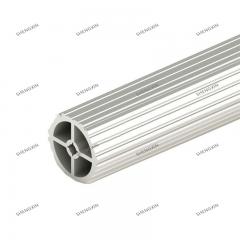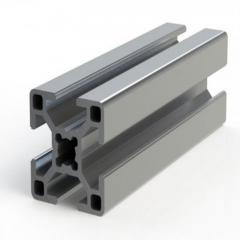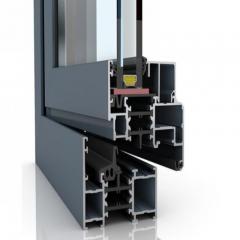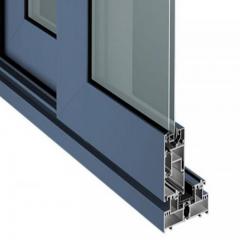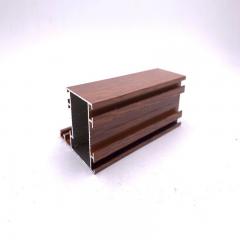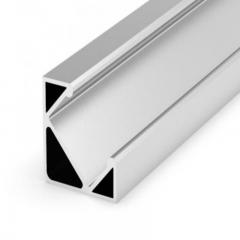
If you search what is aluminum profile, many pages mix up three different ideas: the shape of the part, the way it is made, and the job it does in a factory. Separating those ideas makes selection much easier.
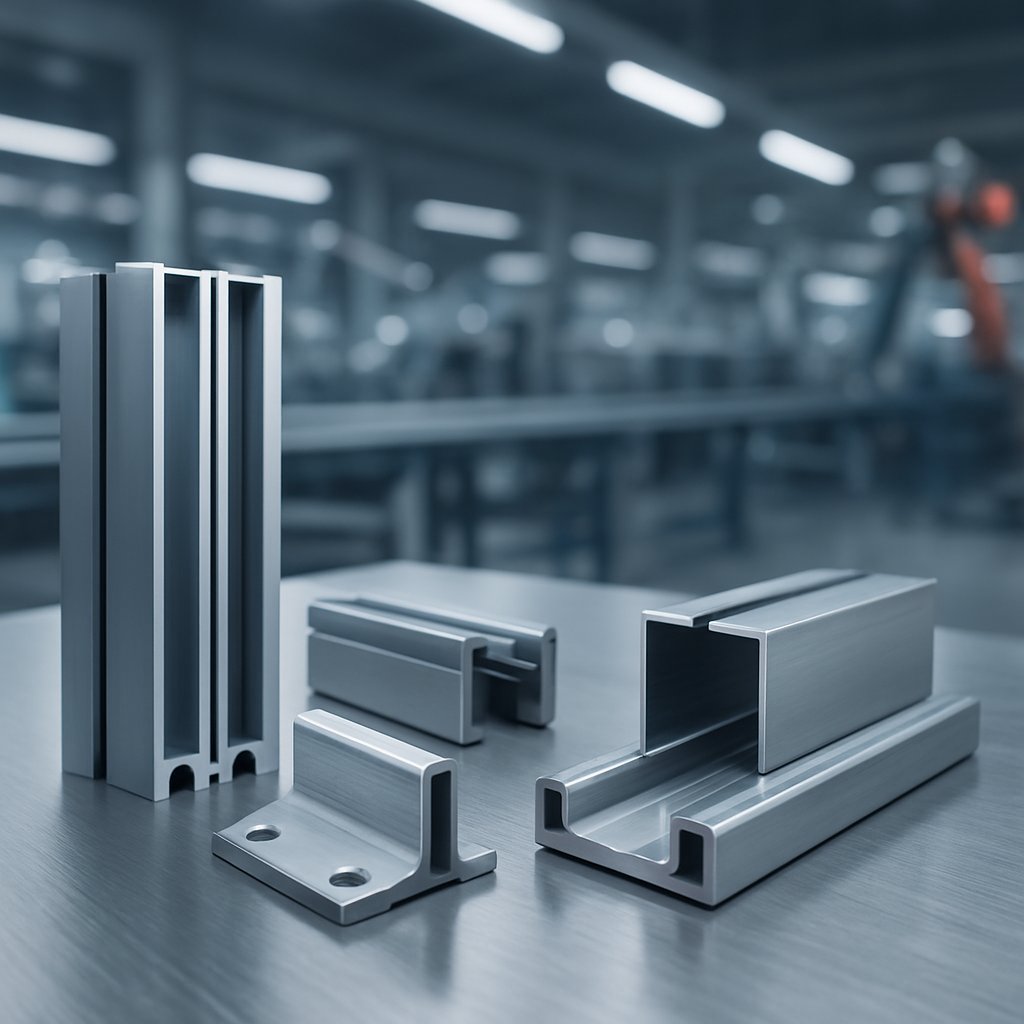
An industrial aluminum profile is a long aluminum part with a consistent cross-section, supplied for structural, support, enclosure, or assembly use in manufacturing.
In simple terms, the word profile refers to the shape you would see if you looked at the cut end of the part. Industry primers from Escal and Sinoextrud both describe these products as shaped aluminum sections used across machinery, construction, and modular systems.
What does extruded aluminum mean? It means heated aluminum alloy is forced through a die to produce a long piece with the same shape from end to end. That process is called aluminum extrusion. After the metal leaves the press, it may still be cooled, stretched, cut, finished, or machined before it becomes a ready-to-use aluminum profile.
T-slot framing is one subset of this broader category, not the category itself. It is popular because its slots let bolts, nuts, and accessories attach easily, but many industrial applications use other shapes such as square tubes, angles, channels, and custom sections. That is why the question what is aluminum profile has more than one practical answer. The shape matters, the process matters, and the end use matters. On the factory floor, the real difference often appears in how those slots and connection points turn a simple shape into a working frame.
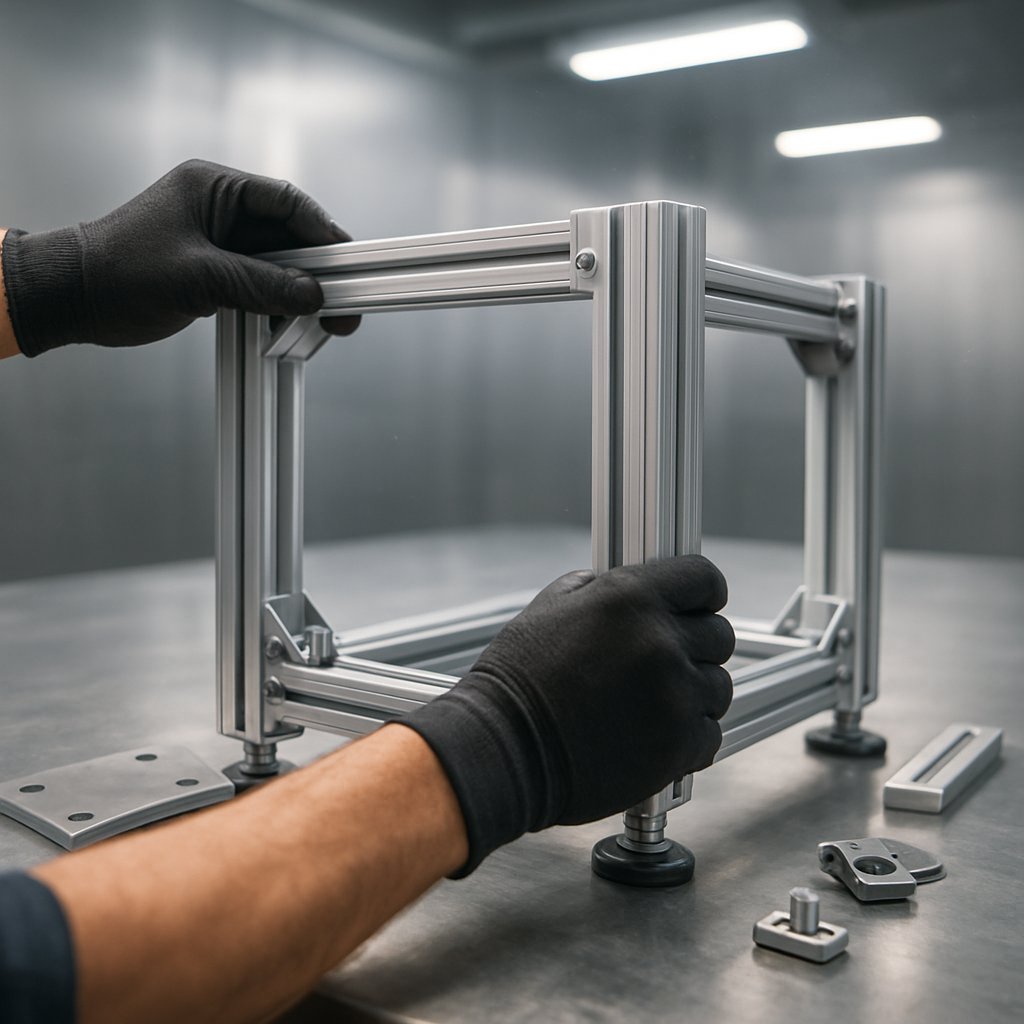
Slots are where a profile stops being just a shape and starts behaving like a system. In a practical build sequence outlined by AngleLock, T-slot framing is assembled by organizing parts, preparing any tapped ends, loosely joining the structure, aligning it, and only then tightening everything down. That sequence explains why an extruded aluminum t slot frame is so flexible in real factory work.
Each slot acts like a continuous mounting channel. A T-nut sits inside that channel and gives a bolt or bracket something to clamp against. Because the channel runs along the profile, connections can often be moved to different positions without drilling new holes. Many systems also allow drop-in T-nuts to be inserted at the needed location, which helps when a guard, shelf, or sensor mount gets added later.
Buyers often search 80/20 aluminum or 8020 aluminum extrusion when they mean this general framing style. If your team uses the phrase 80/20 framing extrusion as shorthand, the working principle is still the same: slots create adjustable connection points along the length of the member.
| Component type | Function | Compatibility concern |
|---|---|---|
| T-slot profile | Main structural member with continuous mounting channels | Slot geometry and profile size must match the intended hardware |
| T-nut | Provides a threaded anchor inside the slot | Not every system uses the same nut style; drop-in and slide-in options differ |
| Corner bracket | Creates an external joint between profiles | Needs correct bracket size and enough tool access for tightening |
| End fastener | Joins profiles through the tapped end for a cleaner connection | Requires the right end machining and thread preparation |
| Joining plate or assembly plate | Ties faces together or reinforces a connection | Hole pattern and face size must match the profile |
| Panel retainer or panel-in-slot setup | Holds guards or infill panels inside the frame | Panels often need to be inserted before final tightening |
| Leveling foot | Stabilizes the frame on the floor | Usually depends on correct tapped holes at the profile end |
| Accessory items | Adds usability, such as handles or end caps | Blocked ends or closed joints can limit when they can be installed |
Traditional T-slot framing is not effortless. The same source notes that alignment and retightening can repeat because moving one connection can pull another out of square. Still, the payoff is real: the frame is built from separate members and mechanical joints, so one area can be loosened, adjusted, or replaced without remaking the whole structure. That is why 80/20 framing extrusion remains common for benches, guards, and machine support frames that change over time. Profile shape gets you started, but hardware compatibility decides how smoothly that frame evolves in service.
A frame can use the same nuts and brackets yet behave very differently once the profile family changes. That is why buyers should look past outside size alone. Among extruded aluminum profiles, the cross-section tells you how easily the part accepts accessories, how clean it stays, and whether it is better suited to a light cart, a workstation, or a heavier machine base.
In modular systems, one aluminum profile type is not just a scaled copy of another. A profile overview shows structural families organized around modular dimensions such as 20, 30, 40, 50, and 60 mm, with groove size and core bore changing along with the line. In practical buying terms, smaller families fit compact jigs, covers, and handling tools, while mid-size profiles are the common all-around choice for machines and benches. Larger families are aimed at more load-bearing frames and test structures.
Design names matter too. Standard profiles are the default structural choice. Light, or lite, versions use less material and weigh less, but the same source notes that their maximum tensile loading is reduced versus standard designs. Smooth-surface options usually mean closed grooves or cleaner outer geometry. Those shapes are easier to wipe down and look neater, which matters in labs, cabins, and clean production areas.
| Profile family | Typical industrial use | Assembly friendliness | Main tradeoffs |
|---|---|---|---|
| Standard structural T-slot | Machine frames, workstations, guards, conveyors | High | Best general accessory compatibility, but open grooves can trap dirt and look more utilitarian |
| Lite or light profile | Compact jigs, covers, tables, trolleys | High | Lower weight and easier handling, but less tensile capacity than standard versions |
| Smooth-surface or closed-groove profile | Clean enclosures, lab equipment, cleanroom structures | Medium to high | Easier to clean and better looking, but fewer exposed grooves can limit quick add-ons |
| Profile tube | Lean factory equipment, carts, racks | Medium | Fast connections and simple handling, but it uses a different fastening logic from classic T-slot framing |
| Channel or angle section | Simple supports, panel edging, basic frames | Low to medium | Compact and straightforward, but offers fewer built-in modular connection points |
| Hollow or solid simple section | Straight supports, rails, spacers, custom fixtures | Low | Clean geometry, but assembly usually depends more on drilling, plates, or custom machining |
Not every project needs slots on all four sides. Buyers also run into simpler aluminium sections such as channels, angles, tubes, and plain hollow or solid members. These shapes make sense when the job is mostly support, edge framing, or enclosure detail rather than constant reconfiguration. Catalogs often separate these non-slotted aluminium sections from full modular framing systems for exactly that reason.
Think of shape as a shortcut for predicting behavior. Open T-slots favor flexibility and accessory mounting. Lite versions favor lower weight. Closed-groove or smooth profiles favor cleanability and appearance. Tube-style systems favor fast lean builds with their own connector method. An aluminum extrusion profile may share similar outside dimensions with another member and still create a very different assembly experience.
Industrial use cases make that difference easy to see. Workstations, machine guards, conveyors, test frames, and cleanroom structures do not reward the same shape in the same way. When two profiles look similar on paper, the better choice is often the one whose form matches the environment and hardware strategy. That is also where deeper specifications start to matter more than shape alone.
Spec sheets feel routine until a frame arrives with the wrong finish, a long member refuses to line up, or end connections need extra shop work. In real buying decisions, the useful questions are rarely about size alone. Material, temper, finish, and manufacturing limits shape how well a profile performs once it leaves the drawing.
A good starting point is the alloy and temper callout. Guidance on 6061 and 6063 keeps the comparison simple: 6063 is widely chosen when extrudability and surface appearance matter, while 6061 is preferred when higher strength is more important. EngineersEdge adds a useful buying clue: 6063 is commonly recommended when finish quality is critical or when the part will be anodized, while 6061 is useful when better machining is a factor.
Dimensions alone do not tell you whether a profile will stay straight, finish well, or install efficiently.
Finish choice quickly becomes practical in harsh environments. OneSky recommends anodizing or powder coating for added durability in tropical and marine conditions. That is why an anodized aluminum material often makes more sense where moisture, cleaning chemicals, or corrosion exposure are part of daily use.
Manufacturing tolerance matters just as much. An extrusion tolerance review notes that tight tolerances are not typical for the process, even though standard industry tolerances are usually adequate. The same source lists approximate straightness at 0.0125 in per foot, twist at 0.5 degrees per foot, flatness at 0.004 in per inch of width, and wall thickness tolerance around plus or minus 10 percent. For procurement teams, that translates into a simple check: long, highly visible, or tightly stacked assemblies need closer review before ordering.
Machining deserves its own line item on the RFQ. If the design needs a drilled feature, end prep, or a tapped hole, confirm it before release rather than treating it as shop-floor cleanup. That small detail can change how fast feet, end fasteners, and joining parts go on during assembly.
Material choice plays into that decision. EngineersEdge notes that 6061 is useful when better machining is a consideration, while 6063 machines and forms well and supports more intricate shapes. So when an extruded aluminum member looks acceptable on paper, the smarter question is whether its alloy, temper, finish, and machining package match the actual job. That is where profile selection stops being theoretical and starts looking like a workstation, guard, conveyor, or machine base with very specific demands.
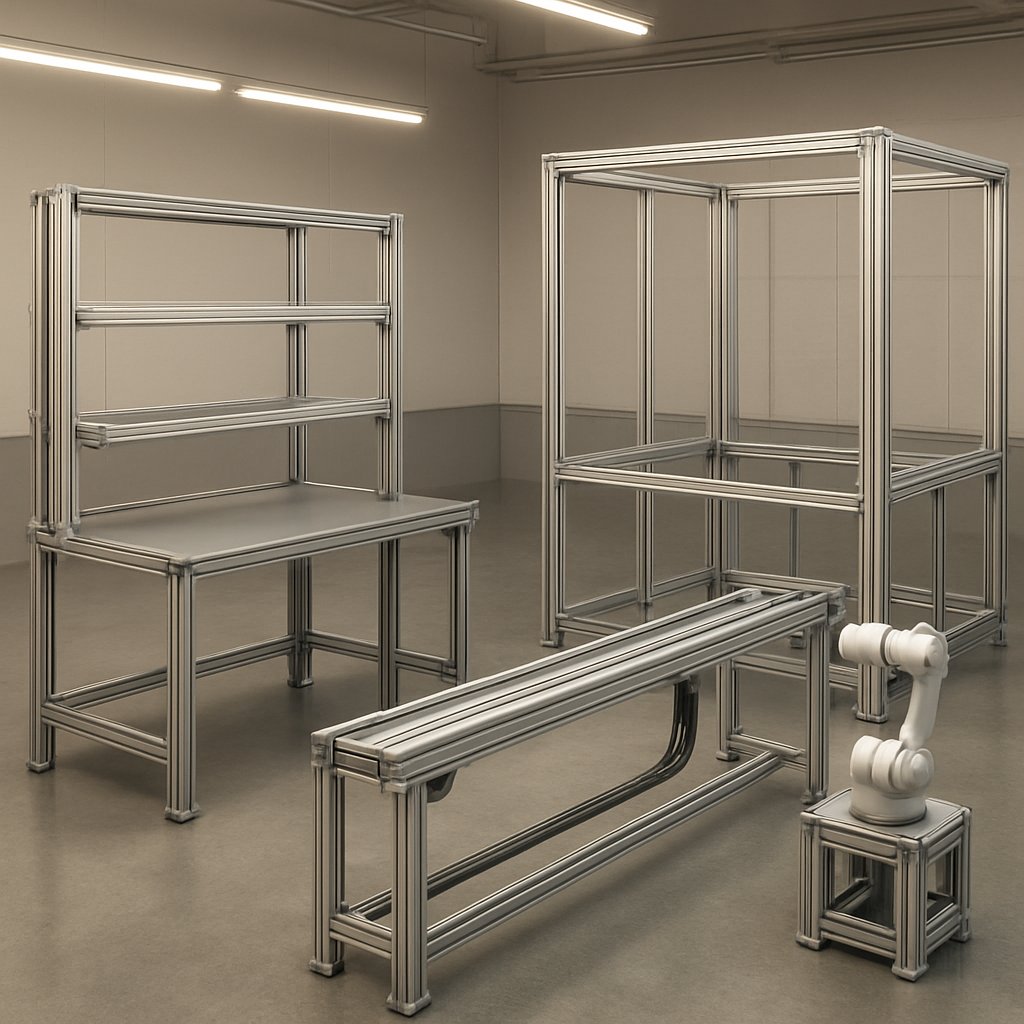
A profile that looks strong on a drawing can still be the wrong buy in practice. What matters is the job. A bench, a guard, a conveyor support, and a robot pedestal do not ask the same thing from an aluminum frame. The best selection process starts with the application, then works backward to stiffness, accessory support, finish, and room for future changes. That is where industrial aluminum profiles become much easier to compare.
Workstations usually reward flexibility more than maximum mass. Guidance on custom workstations highlights why T-slot profiles are so common here: shelves, monitor arms, lighting, bins, and tool holders can be added exactly where they are needed. For benches and inspection stations, prioritize a profile series with good accessory availability, enough rigidity for the work surface, and clean anodized surfaces that are easy to maintain.
A common mistake is buying heavier sections than the station needs while ignoring future expansion. If the bench may gain drawers, upper frames, or poka-yoke devices later, choose an aluminum profile system with spare slot access and standard hardware support.
Guards and enclosures depend on more than beam strength. References covering protective enclosures and conveyor frames show two recurring priorities: panel integration and modular access. Machine guards need profiles that accept polycarbonate, mesh, doors, hinges, and safety-related accessories without awkward adapters. Enclosures benefit from smoother surfaces when wipe-down and visibility matter.
Conveyors shift the focus toward straightness and stiffness over longer spans, while still needing easy mounting for motors, rollers, sensors, and controls. Buyers often size only for static load and forget cable routing, side guards, or later conveyor extensions. That creates rework fast.
Robot stations are less forgiving. Robotic workstation guidance consistently stresses stable mounting and repeatable positioning. That means higher stiffness, shorter unsupported spans, stronger joints, and better resistance to vibration. Pedestals also need a clear load path from the robot mount down to the floor, not just a tall frame with convenient outside dimensions.
When motion loads rise, profile shape, joint layout, and bracing matter as much as section size. A light-duty member may look adequate for static weight but still deflect too much during acceleration or emergency stops.
| Application type | Profile priorities | Accessory needs | Common selection mistakes |
|---|---|---|---|
| Workstations and assembly benches | Moderate stiffness, easy expansion, clean finish, good slot access | Shelves, lights, bins, monitor mounts, power strips, feet | Oversizing the frame while neglecting accessory compatibility and future add-ons |
| Machine enclosures | Panel retention, door alignment, surface cleanability, service access | Panels, hinges, handles, latches, seals, cable pass-throughs | Choosing by outer dimension only and forgetting door hardware or panel thickness |
| Safety guarding | Rigid perimeter frame, dependable panel support, easy modification | Mesh or clear panels, door hardware, mounts for safety devices | Ignoring access points, retrofit changes, or safety accessory mounting space |
| Conveyors | Long-span stiffness, straightness, equipment mounting points, expansion potential | Motor mounts, sensor brackets, side guides, cable management | Checking static weight only and missing dynamic loads or future line extensions |
| Robot bases | High stiffness, low deflection, strong joints, vibration resistance | Mounting plates, gussets, leveling hardware, anchor interfaces | Using light profiles that carry the weight but do not control movement |
| Pedestals | Vertical stability, bracing, direct load path, floor connection strength | Base plates, anchor hardware, covers, cable routing | Building tall unsupported columns with weak base details |
Application-first buying keeps the decision grounded. It tells you which family is likely to work before you get lost in catalog dimensions. Still, even a well-matched profile can cause trouble if the series, slot geometry, and hardware ecosystem do not line up across the full assembly.
The trouble usually starts with a part that looks right. A buyer sees the same face size, the same general shape, and assumes the hardware will cross over. In T-slot framing, that shortcut gets expensive fast. A familiar-looking industrial aluminum profile can belong to a different slot family, a different measurement system, or a different accessory ecosystem.
A series profile name is only a starting clue. In these naming conventions, a 10 Series 2020 is an inch-based 2.00 in x 2.00 in profile, while a metric 20 Series 20-2020 is a 20 mm x 20 mm profile. The numbers look similar, but they are not the same part. A compatibility guide also shows how slot widths change by family, including 0.26 in for 10 Series, 0.32 in for 15 Series, 5 mm for 20-05, 6 mm for 20 Series, 8 mm for 30 Series and some 40 Series, and 10 mm for 40 Series and 45 Series. That is why matching a face size alone tells you very little.
Matching outside dimensions is not enough if slot geometry or hardware standards differ.
Fasteners are where bad assumptions show up first. The slot measurement guide recommends measuring the narrowest part of the slot opening, checking slot depth, and confirming bolt and nut compatibility before ordering. That matters for a small 2020 aluminum extrusion just as much as for a larger frame member. A metric bolt size chart can help identify threads, but it does not prove that the head style, T-nut, or slot opening will work together. Review the drawing for metric bolt dimensions, not just the nominal thread callout.
Mixing inch and metric systems is especially risky. The compatibility guide recommends not mixing metric and inch profiles, even though profiles within the same measurement family are often compatible. Accessories need the same caution. That same source notes that some square nuts are not compatible with 40-10 series profiles. It also warns about galvanic corrosion when aluminum is paired with other metals in wet conditions, which matters when stainless hardware is being considered.
| Item to confirm | Compatibility question | Why it matters |
|---|---|---|
| Profile | Is the series, slot width, and measurement system an exact match? | Similar names can hide different geometry and hardware standards |
| Connector | Does the bracket or internal fastener match the face size and hole pattern? | A connector may fit the outline but miss the mounting points |
| T-nut and bolt | Does the nut style fit the slot, and does the bolt head clear the channel? | A generic metric bolt size chart cannot confirm actual slot fit |
| End fastener | Is tapping, drilling, or access machining required? | Some joints need prep that is not included with raw cut lengths |
| Panels and retainers | Does the slot accept the panel thickness and retainer type? | Panel systems often fail at the edge details, not the frame size |
| Accessories | Are feet, hinges, covers, and specialty nuts approved for that series? | Small accessory mismatches create large assembly delays |
| Environment | Will mixed metals or moisture create corrosion concerns? | Material compatibility can change what hardware is safe to use |
When that checklist starts uncovering adapters, special machining, or repeated exceptions, the issue may not be purchasing discipline at all. It may be a sign that a standard catalog profile is no longer the right answer.
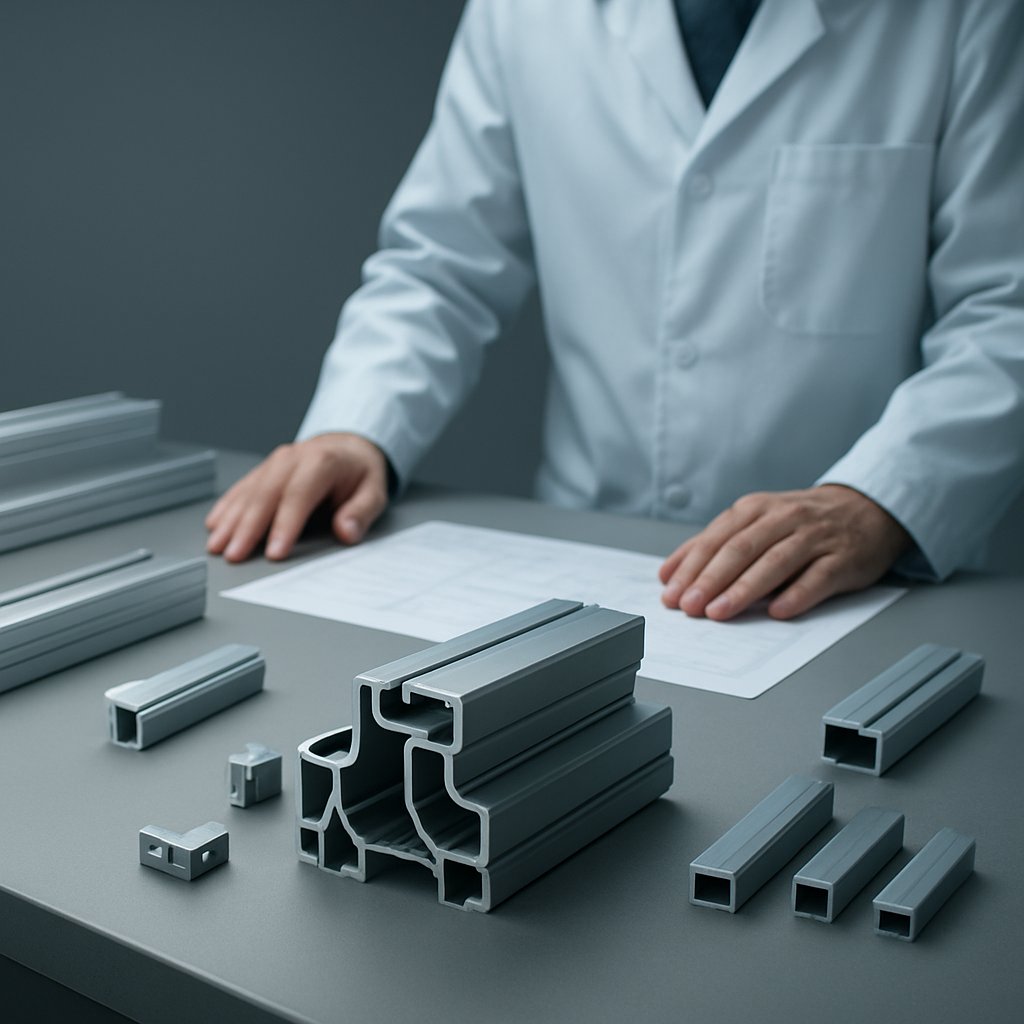
Sometimes the failed fit is only a symptom. When a project needs adapters, repeated drilling, or awkward connector workarounds, the real issue may be that the catalog series was never the right starting point. In industrial aluminum extrusion, the lowest unit price does not always create the lowest total project cost.
Pre-designed extrusions such as T-slots, U-channels, I-beams, and L-shaped sections remain the practical choice for a large share of factory builds. The Shengxin guide highlights the main reasons: lower cost, easier availability, and a good fit for generic design requirements.
A standard extruded aluminum profile is usually enough when the job needs common geometry, ordinary accessory hardware, and a short lead time. Workbenches, guards, basic supports, and simple frames often fit this route because the section already exists, the hardware ecosystem is established, and there is no need to fund a new die.
Custom extrusions begin with a unique die made for a specific cross-section. That adds tooling cost and time, but the trade can be worth it when the design calls for unusual geometry, integrated features, or larger structural dimensions. The design considerations from Clinalu show why: balanced wall thickness, symmetry, and smooth transitions improve manufacturability, while sharp corners, deep grooves, and unnecessary tight tolerances raise cost and production risk.
A custom aluminum profile often delivers better value when it removes extra brackets, combines several parts into one section, or reduces secondary machining. This is also where aluminum profile manufacturing support matters. Early design review can reveal whether a shape is practical to extrude, whether the tolerance request is realistic, and whether standard alloys or finishes can reduce cost. For teams comparing both routes in one place, Shengxin Aluminum is a useful example because its range includes catalog T-slot options and custom capability, with stated support for large cross-sections up to 500 mm. That kind of range matters when a standard series is close, but not quite enough.
| Decision factor | Standard catalog profile | Custom extrusion | Best buying cue |
|---|---|---|---|
| Upfront cost | Lower because tooling already exists | Higher because a new die is required | Stay standard if the existing shape already meets the functional need |
| Lead time | Shorter and easier to source | Longer due to design review and tooling | Go custom only when the design benefit offsets the extra time |
| Geometry flexibility | Limited to existing sections | Built around the required cross-section | Choose custom for unusual openings, ribs, or integrated features |
| Accessory needs | Usually strong catalog hardware compatibility | May require bespoke connectors or adapted hardware | Favor standard when modular add-ons and interchangeability matter most |
| Secondary processing | More drilling, plates, or adapters may be needed | A purpose-built shape can reduce extra operations | Custom makes sense if it removes repeated shop work |
| Manufacturing support | Mostly profile selection and cut-to-length service | Requires die review, feasibility input, and production coordination | Pick a supplier that can review drawings early and challenge weak assumptions |
A custom extruded aluminum profile should solve a problem, not create a new supply-chain puzzle. Good questions at this stage turn a rough concept into a clean RFQ package, and they also show which profiles, channels, and brackets are actually worth comparing side by side.
The difference between a smart standard choice and a smart custom choice usually shows up in the RFQ. If the package is vague, suppliers quote different assumptions, hardware gets missed, and the cheapest line item can become the most expensive order.
Use sources that show both section options and downstream processing. For example, Shengxin Aluminum is a practical first stop if you want to compare T-slot profiles, aluminum extrusion channel profiles, brackets, and custom capability in one place. Its catalog lists industrial profile lines, T-slot products, anodizing, powder coating, CNC processing, and large-size profile capability. The company also states 30 years of experience, annual capacity of 60,000 tons, and support for cross-sections up to 500 mm.
That kind of catalog helps buyers compare aluminium profiles on the right criteria before formal quoting begins. A clean RFQ does the rest. It forces every supplier to answer the same question, reduces surprise machining charges, and keeps one wrong aluminium profile from turning into a second purchase.
An industrial aluminum profile is a long aluminum section with the same cross-section from end to end, made for factory structures such as frames, guards, enclosures, and supports. The profile is the shape itself, while extrusion is the process used to produce that shape. T-slot members are one common type, but channels, angles, tubes, and custom sections also fall under the same broader category.
No. Aluminum extrusion is the manufacturing method, and T-slot framing is one use case built from extruded profiles. T-slot systems add continuous channels that accept T-nuts, brackets, and accessories, which makes them useful when a machine frame or workstation may need future changes.
Start with the job the frame must do. A workstation usually needs accessory flexibility and a clean finish, while a guard needs panel support, and a robot pedestal needs stiffness and stable joints. After that, confirm the profile family, hardware ecosystem, alloy, finish, and any machining such as drilling or end tapping before you compare prices.
Sometimes, but it should never be assumed. Two profiles can look nearly identical on the outside and still use different slot widths, slot depths, nut styles, measurement systems, or connector hole patterns. The safest approach is to review profile drawings and hardware requirements together before ordering, because matching face size alone does not guarantee fit.
Choose custom when a standard section creates too many adapters, extra plates, repeated drilling steps, or awkward geometry compromises. Standard catalog profiles are usually the faster and lower-risk option for common benches, guards, and support frames, but custom extrusions can lower total build complexity when the shape must do more. For buyers comparing both routes, suppliers with both catalog T-slot systems and custom capability, such as Shengxin Aluminum, can be useful because they combine profiles, brackets, machining, finishing, and larger cross-section support in one sourcing path.



 online service
 0086 136 3563 2360
 sales@sxalu.com
 +86 136 3563 2360
 English
 français
 Deutsch
 русский
 español
 português
 العربية
 ไทย
ไทย Việt
Việt Українська