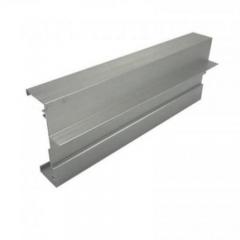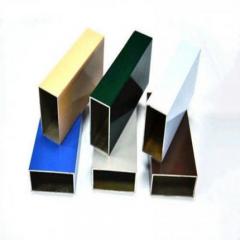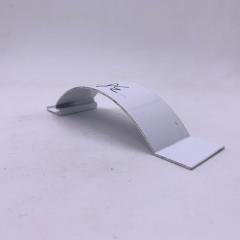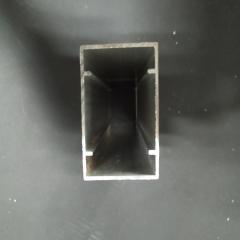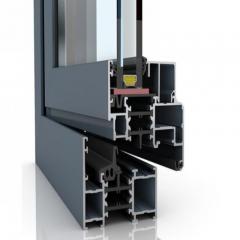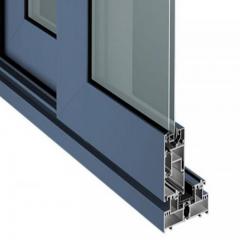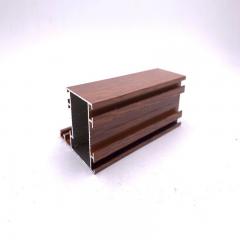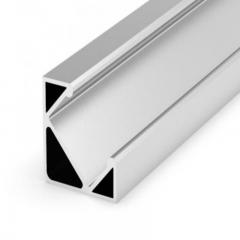
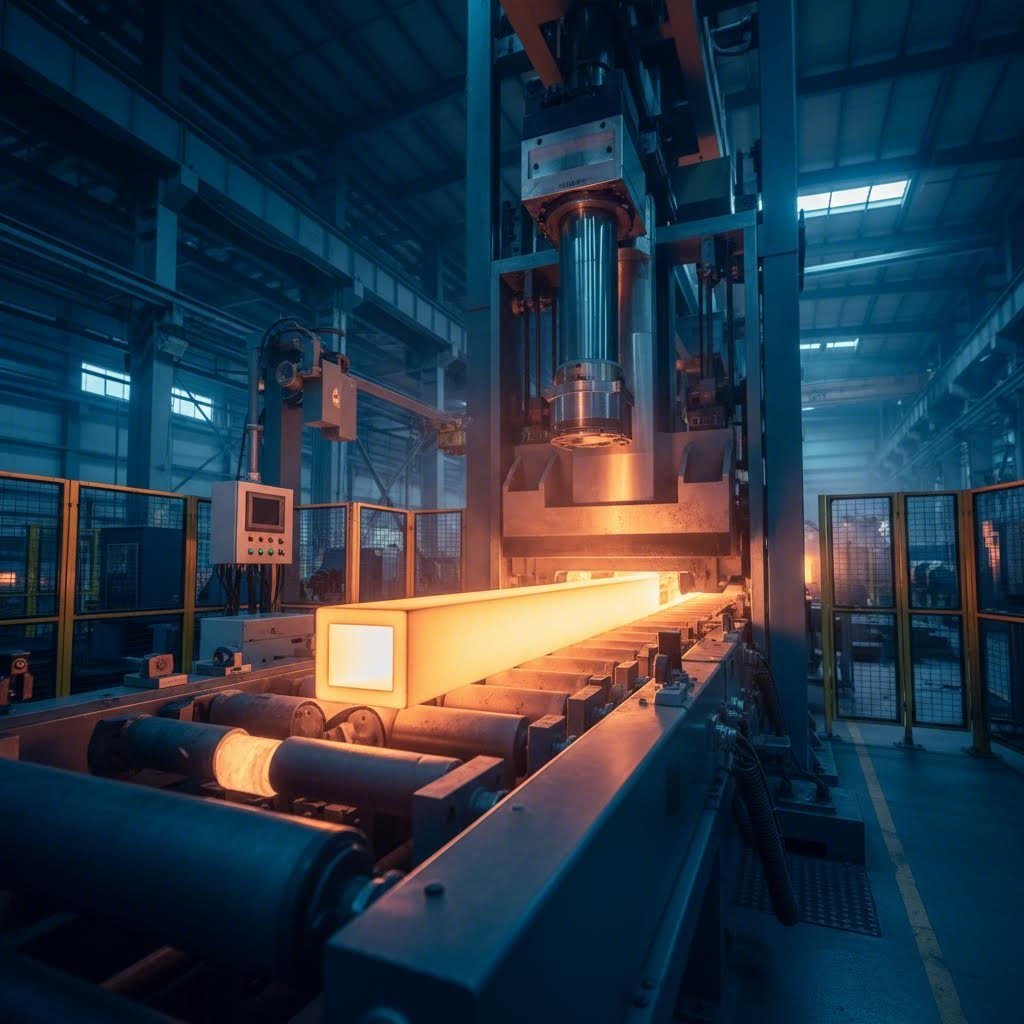
Have you ever wondered how those perfectly shaped aluminum tubes in trailer frames, window systems, or industrial equipment are made? The answer lies in a fascinating manufacturing process that transforms raw aluminum into precisely engineered profiles.
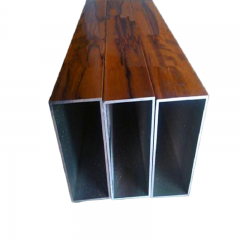
Rectangular aluminum extrusions are hollow metal profiles with four-sided cross-sections featuring two parallel longer sides and two parallel shorter sides, created by forcing heated aluminum billets through specially designed dies under immense pressure.
This definition captures the essence of what makes aluminum rectangular tubing unique in the world of metal fabrication. Understanding these fundamentals sets the stage for making informed decisions about specifications and applications.
The journey from raw material to finished rectangular tube begins with aluminum billets—solid cylindrical logs of aluminum alloy. Here's what happens during the extrusion process:
First, the billet is heated to temperatures between 375°C and 500°C (705°F to 932°F). This elevated temperature increases the metal's plasticity, allowing it to flow smoothly without melting. The heated billet then enters a cylindrical chamber where a powerful ram—driven mechanically or hydraulically—applies tremendous compressive force.
The magic happens at the die. This precision-engineered steel tool contains an opening shaped exactly like the desired rectangular profile. As pressure builds, the aluminum flows through the die opening, emerging as a continuous rectangular tubing profile. Specialized die and mandrel combinations create the hollow interior, eliminating the need for welded seams and producing seamless aluminum extrusion tube profiles with superior structural integrity.
The extruded profiles typically emerge in lengths of 8 to 24 feet, ready for subsequent processing including heat treatment, surface finishing, and fabrication to meet specific project requirements.
What makes rectangular tubing the preferred choice for countless applications? Several fundamental properties work together to deliver exceptional performance:
How do rectangular profiles differ from their round and square counterparts? Round tubes excel in applications involving internal pressure or fluid flow. Square tubing offers symmetrical strength in all directions. Rectangular tubing, however, provides directional strength advantages—it's stronger when oriented with the longer dimension resisting bending forces. The flat surfaces also simplify mounting, joining, and creating flush connections with other components.
Solid bar stock, while useful for machining applications, lacks the weight efficiency of hollow profiles. A rectangular extrusion can provide comparable stiffness at a fraction of the weight, translating to material cost savings and easier handling during installation.
With the global aluminum extrusion market exceeding $67 billion and growing at approximately 3.8% annually, these versatile profiles continue gaining importance across construction, automotive, transportation, and consumer product industries. Understanding these basics prepares you to navigate the more detailed specifications covered in the sections ahead.
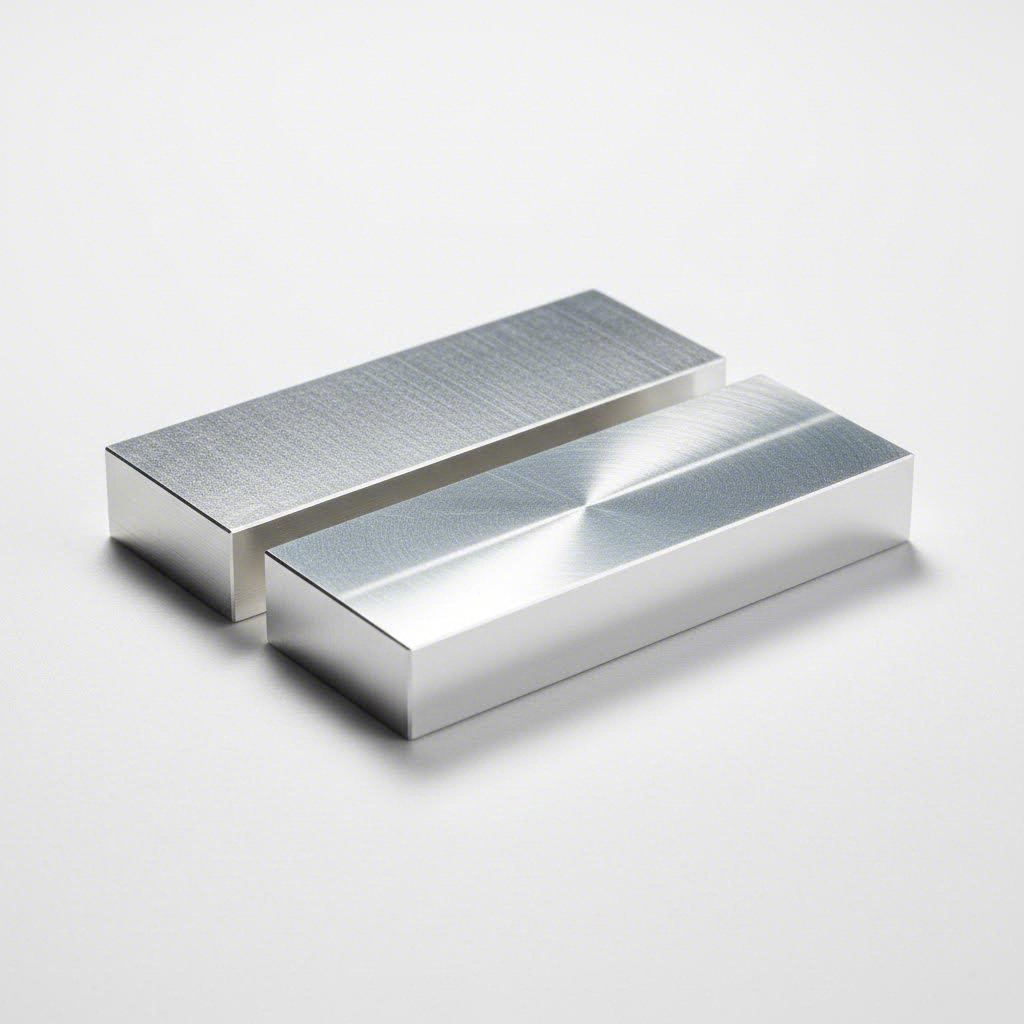
Now that you understand how rectangular aluminum extrusions are manufactured, the next critical decision involves selecting the right alloy. Think of it this way—choosing between alloys is like selecting the right tool for a specific job. The two dominant players in the rectangular extrusion world are 6061 and 6063 aluminum, and understanding their differences will directly impact your project's success.
Both alloys belong to the 6000 series, meaning they share magnesium and silicon as their primary alloying elements. However, their distinct chemical compositions create meaningfully different performance characteristics that make each suited to particular applications.
What separates these two popular alloys? The answer lies in their composition and the resulting mechanical properties.
6061 aluminum alloy contains approximately 0.6% magnesium, 0.25% copper, and 0.09% chromium. This higher concentration of alloying elements—roughly 30-50% more magnesium and silicon than 6063—translates to superior strength and hardness. When you need 6061 aluminum tubing for structural aluminum tubing applications, you're choosing a material built for demanding load-bearing scenarios.
6063 aluminum alloy features a simpler composition with approximately 0.4% silicon and 0.7% magnesium. This formulation prioritizes extrudability and surface quality over raw strength. The result? Extruded aluminum tubing with exceptional finish characteristics that anodizes beautifully—making it the preferred choice for architectural applications where appearance matters as much as performance.
Here's a practical comparison to guide your selection:
| Property | 6061-T6 Aluminum | 6063-T6 Aluminum | Winner For |
|---|---|---|---|
| Tensile Strength | 310 MPa | 241 MPa | 6061 (structural applications) |
| Yield Strength | 276 MPa | 214 MPa | 6061 (load-bearing frames) |
| Brinell Hardness | 95 | 73 | 6061 (wear resistance) |
| Thermal Conductivity | 170 W/m-K | 200 W/m-K | 6063 (heat dissipation) |
| Elongation at Break | 12% | 15% | 6063 (formability) |
| Surface Finish Quality | Good | Excellent | 6063 (architectural uses) |
| Weldability | Good | Better | 6063 (complex assemblies) |
| Corrosion Resistance | Excellent | Good | 6061 (harsh environments) |
| Typical Applications | Trucks, towers, ships, machine parts | Railings, window frames, cabinet frames | Application-dependent |
When should you choose each alloy? If you're building a structural aluminium tube frame for industrial equipment, trailer components, or machine bases, 6061 tubing delivers the mechanical strength you need. On the other hand, if you're designing aluminum structural tubing for architectural railings, window systems, or furniture, 6063 provides superior aesthetics and easier fabrication.
You've probably noticed letter and number combinations like T5 or T6 following alloy designations. These temper designations tell you exactly how the aluminum has been heat-treated—and they significantly impact the material's final properties.
Here's what happens during heat treatment: The aluminum is first raised to approximately 980°F (527°C) and held at that temperature for about an hour. This process dissolves all alloying elements into a solid solution within the aluminum matrix. The material is then rapidly quenched in water to lock these elements in place.
The subsequent aging process—heating to temperatures between 325°F and 400°F—causes the alloying elements to form ordered atomic structures called GP zones. These microscopic formations dramatically increase the aluminum's strength and hardness.
What do the common temper designations mean for your project?
Imagine you're specifying rectangular extrusions for a conveyor system frame. You'd likely choose 6061-T6 for its superior strength and fatigue resistance. For decorative interior trim work, 6063-T5 would provide the surface quality you need while keeping costs reasonable—since 6063 is more commonly available and typically priced lower than 6061.
Understanding these alloy and temper combinations empowers you to specify exactly what your application demands. The next consideration? Determining the right dimensions and wall thickness to meet your structural requirements.
You've selected your alloy and temper—now comes the question that determines whether your project fits together perfectly or becomes a fabrication headache. What size rectangular aluminum extrusion do you actually need? Understanding aluminum tube sizes and wall thickness options is essential for matching your structural requirements to available profiles.
Unlike custom machined parts where you specify exact dimensions, rectangular tubing typically comes in standardized sizes. Knowing what's readily available helps you design efficiently while avoiding costly custom orders for common applications.
Rectangular aluminum tubing is specified by three critical measurements: the two outer leg dimensions (width × height) and the wall thickness. According to industry standards documented by Thomas, these profiles serve both structural and architectural applications where strength and aesthetics are equally important.
Here's what you'll typically find in stock from aluminum suppliers:
| Size (Width × Height) | Common Wall Thicknesses | Typical Applications |
|---|---|---|
| 1" × 2" | 1/16", 1/8", 3/16" | Furniture frames, light fixtures, decorative trim |
| 1" × 3" | 1/16", 1/8", 3/16" | Handrails, display frames, equipment guards |
| 1.5" × 3" | 1/8", 3/16", 1/4" | Machine frames, conveyor supports, enclosures |
| 2" × 3" | 1/8", 3/16", 1/4" | Trailer components, structural frames, solar mounts |
| 2" × 4" (2x4 aluminum tubing) | 1/8", 3/16", 1/4", 3/8" | Vehicle frames, heavy equipment, industrial structures |
| 2" × 6" | 3/16", 1/4", 3/8" | Large structural beams, bridge components, heavy frames |
| 3" × 4" | 1/4", 3/8", 1/2" | Main structural members, crane systems, platforms |
| 4" × 6" | 1/4", 3/8", 1/2" | Primary load-bearing applications, large machinery |
When comparing rectangular tubing dimensions across materials, you'll notice aluminum tube sizes often mirror steel rectangular tubing sizes and dimensions. This parallel standardization simplifies material substitution when weight reduction is the goal. If you're transitioning from steel rectangular tubing sizes to aluminum, the same nominal dimensions are frequently available—though wall thickness requirements may differ due to aluminum's lower modulus of elasticity.
Standard stock lengths typically range from 8 to 24 feet, with 12-foot and 20-foot lengths being most common. Aluminum tubing sizes for smaller profiles may also be available in coiled form for continuous applications.
Choosing the right wall thickness involves balancing three competing factors: structural performance, weight, and cost. As aluminum alloy tube specialists explain, wall thickness directly affects strength, durability, and weight—a thicker wall means more strength but also adds weight and cost.
How do you determine the appropriate thickness for your application? Consider these key factors:
Here's a practical guideline for rectangular steel tube dimensions translated to aluminum applications: larger diameter tubes generally require proportionally thicker walls to maintain structural integrity. A 1" × 2" profile might perform adequately with 1/8" walls, while a 4" × 6" section typically needs 1/4" or thicker to prevent localized buckling under load.
The relationship between wall thickness and load capacity isn't linear. Doubling wall thickness more than doubles the section's moment of inertia—the property governing bending resistance. This means strategic thickness increases deliver outsized performance gains, particularly for applications where deflection limits matter more than ultimate strength.
Ever tried fitting parts together only to find they don't quite align? Dimensional tolerances determine how precisely extruded profiles match their nominal specifications—and these tolerances directly impact assembly fit-up and final product quality.
According to industry standards published by the Aluminum Association and ANSI, standard tolerances account for both manufacturing capabilities and designer needs. These specifications are detailed in ANSI H35.2 and the Aluminum Standards and Data (ASD) publication.
What tolerances should you expect? Here are practical rules of thumb for rectangular tubing:
These standard tolerances are achievable for properly designed profiles under normal extrusion conditions. Tighter tolerances are possible but require die modifications, slower extrusion rates, increased inspection, and sometimes higher rejection rates—all factors that increase costs.
When does dimensional precision become critical? Consider applications involving:
For most applications, standard industry tolerances work perfectly well. However, if your design has critical dimensions, discuss specific tolerance requirements with your extruder before placing orders. An experienced manufacturer can often suggest minor design modifications that achieve your functional requirements while staying within standard tolerance capabilities.
With dimensions and tolerances understood, the next step is exploring how these profiles perform across different industry applications—and why rectangular geometry solves specific engineering challenges that round or square tubing cannot address.
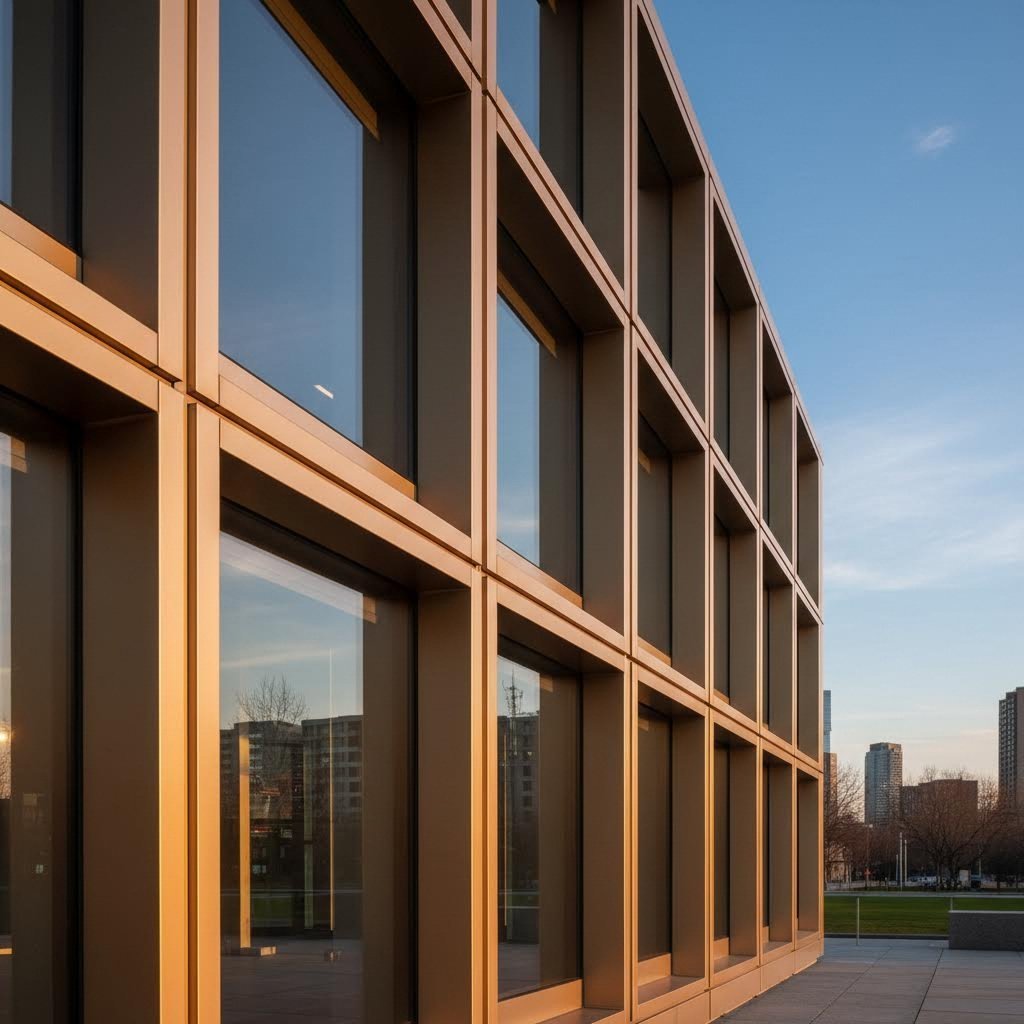
Now that you understand sizing and dimensional standards, let's explore where these profiles actually perform. What problems are engineers and fabricators solving with rectangular aluminum extrusions? The answer spans virtually every industry—from towering curtain walls to backyard DIY projects.
The key advantage driving adoption across sectors? Flat surfaces. Unlike round aluminum tube or aluminum pipe profiles, rectangular geometry creates natural mounting planes that simplify connections, reduce hardware requirements, and create cleaner assemblies. Let's examine how different industries leverage this advantage.
Walk through any modern commercial building, and you're surrounded by rectangular aluminum profiles—often without realizing it. The construction industry relies heavily on these extrusions for both structural and aesthetic purposes.
Why choose rectangular over square aluminum tubing in these applications? Orientation matters. A 2" × 4" profile positioned with its 4" dimension vertical provides significantly more bending resistance than a 3" × 3" square tube of equivalent weight. Architects exploit this directional strength advantage to create slender-looking structures that handle substantial loads.
Step onto a factory floor, and rectangular aluminum extrusions are everywhere—forming the bones of production equipment, safety enclosures, and material handling systems. According to industry observations, aluminum rectangular tube has become essential in constructing machinery and equipment where the ability to withstand heavy loads without compromising weight makes it a preferred material.
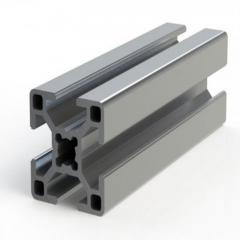
The modular t-slot extrusion systems popular in industrial settings are essentially specialized rectangular profiles with integrated connection channels. These systems allow rapid assembly and reconfiguration—perfect for lean manufacturing environments where flexibility matters.
Weight reduction directly translates to fuel savings in transportation—making aluminum the material of choice for vehicles, trailers, and marine vessels.
Beyond industrial applications, rectangular aluminum extrusions have become favorites among hobbyists, makers, and custom fabricators. The material's workability opens creative possibilities.
What makes rectangular profiles particularly suited for fabrication projects? The flat surfaces simplify drilling, tapping, and bolting operations. Corners meet at predictable angles. And unlike aluminum square tube profiles, the rectangular cross-section lets you optimize strength in the direction it's needed most.
Understanding these diverse applications helps you visualize how your own project fits within the broader landscape of rectangular extrusion uses. But appearance matters too—which brings us to the surface finish options that determine both aesthetics and long-term performance.
You've selected your alloy, specified your dimensions, and identified your application. Now comes a decision that affects both how your rectangular aluminum extrusions look and how long they last. Surface finishing isn't merely cosmetic—it's functional protection that can extend service life by decades.
What finish options are actually available, and how do you choose between them? Let's cut through the confusion and examine each major finishing process, from basic mill finish to specialized architectural coatings.
Every aluminum extrusion begins with mill finish—the natural state of aluminum as it exits the extrusion die. According to finishing specialists at Gabrian, mill finish aluminum can display die marks, a dull appearance, oxidation, and white surface deposits immediately after extrusion.
When does mill finish make sense? Consider it for:
However, mill finish aluminum tubing offers minimal protection against environmental degradation. For any application where appearance matters or long-term durability is required, you'll want to explore the finishing options below.
Anodizing transforms aluminum's natural oxide layer into something far more protective. Unlike paint or coating, anodizing doesn't add material to the surface—it converts the aluminum itself into a hard, corrosion-resistant oxide layer through an electrochemical process.
What makes anodizing unique? As BRT Extrusions explains, the anodic oxide layer acts as a barrier protecting the extrusion from moisture, chemicals, and UV radiation. This makes anodized aluminum extrusions suitable for outdoor and high-moisture environments.
Here's what anodizing delivers:
Thin wall aluminum tubing and delicate profiles benefit particularly from anodizing since the process adds virtually no dimensional change—typically just 0.0002" to 0.001" depending on coating thickness. This precision matters when tight tolerances are critical.
Color options range from clear (natural silver) through bronze, black, gold, and various architectural tones. The dyeing process creates durable, integrated color that outlasts painted surfaces in most applications.
When color variety, UV protection, or specific aesthetic requirements drive your finish selection, coating technologies offer solutions that anodizing cannot match.
Powder Coating applies dry paint powder electrostatically, then cures it in an oven to create a durable, attractive finish. According to industry analysis from Master Craft Finishers, advances in powder formulation have led to AAMA 2605-certified finishes offering warranties of 20 to 30 years.
Powder coating advantages include:
However, powder coating has limitations. Surface imperfections like orange peel texture can occur, color matching requires larger minimum orders, and touch-up repairs are more difficult than with liquid paints.
PVDF Coatings (often known by the trade name Kynar) represent the premium choice for architectural exterior applications. These resin-based coatings have proven their durability since 1965, offering:
The trade-offs? PVDF paints require primer and pretreatment, cure at higher temperatures (around 450°F), cost more than powder coatings, and must be applied by licensed applicators. They also cannot achieve the high-gloss finishes possible with powder coating.
How do you choose the right finish for your project? Consider these factors:
| Consideration | Best Finish Choice | Why |
|---|---|---|
| Maximum hardness needed | Anodizing | Integral oxide layer resists abrasion better than coatings |
| Specific color matching | Powder Coating or PVDF | Widest color selection and custom matching capabilities |
| Long-term exterior exposure | PVDF | Proven 20+ year performance in architectural applications |
| Environmental sustainability | Powder Coating | Lowest VOC emissions and recyclable overspray |
| Thin wall aluminum pipe profiles | Anodizing | Minimal dimensional change preserves tight tolerances |
| Budget-conscious projects | Mill Finish or Clear Anodizing | Lower processing costs while maintaining acceptable appearance |
Remember that surface treatment selection impacts more than just appearance. The right finish protects your investment, reduces maintenance requirements, and ensures your rectangular aluminum profiles perform as expected throughout their service life. With finish options understood, the next consideration involves how these profiles behave under structural loads—and how to join them effectively in your assemblies.
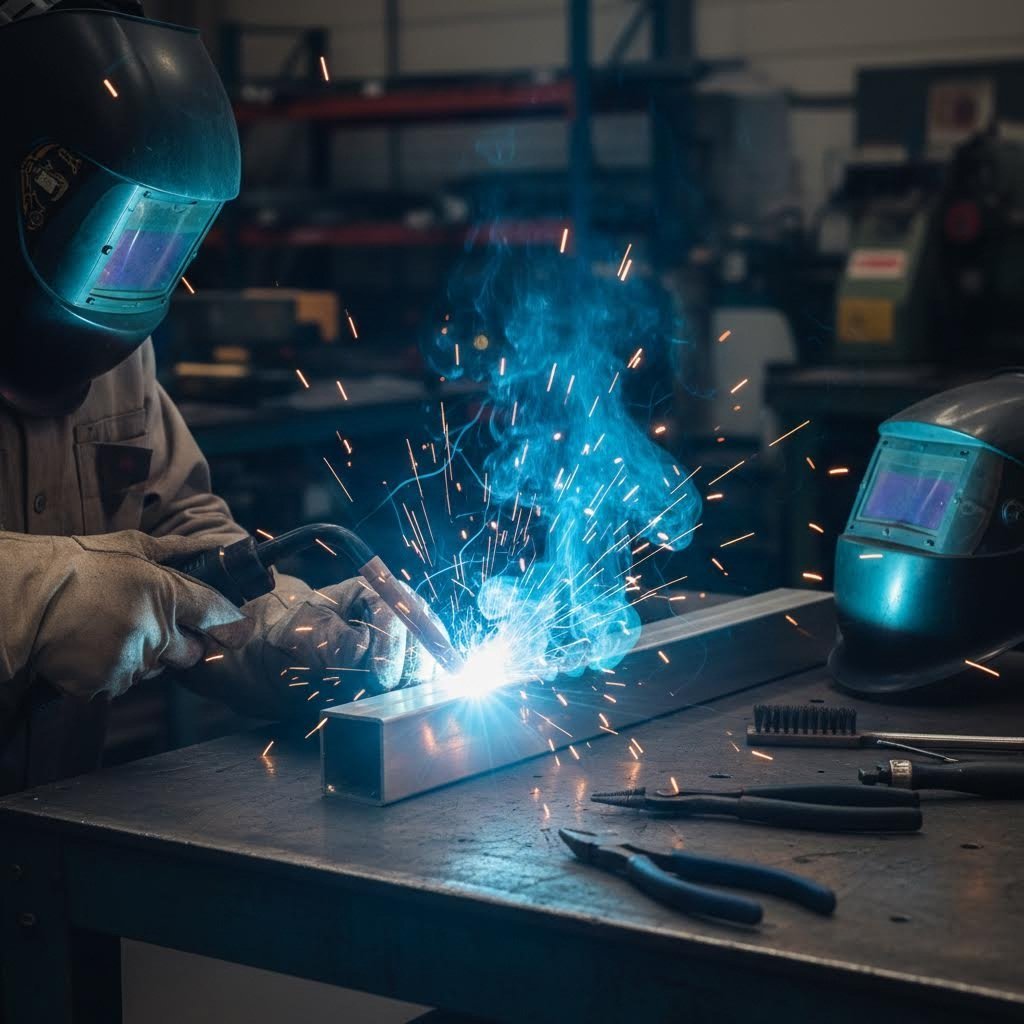
You've selected your alloy, specified dimensions, and chosen a surface finish. But here's where engineering knowledge separates successful projects from costly failures. How will your rectangular aluminum extrusions actually perform under load? Understanding structural behavior and fabrication methods ensures your design works in the real world—not just on paper.
Unlike rectangular tube steel or steel rectangle tube profiles where sheer material strength often compensates for design inefficiencies, aluminum's lower modulus of elasticity demands smarter engineering. The good news? When you understand the principles, aluminum's unique properties become advantages rather than limitations.
Imagine holding a ruler flat and pressing down on it—it bends easily. Now turn that same ruler on edge and apply the same force. Dramatically stiffer, right? This simple demonstration reveals the most important structural principle for rectangular tube metal profiles: orientation matters enormously.
The property governing this behavior is called moment of inertia—a measure of how a cross-section's material distribution resists bending. For rectangular hollow sections, the moment of inertia formulas reveal why orientation creates such dramatic performance differences:
What do these formulas mean practically? Consider a 2" × 4" aluminum 2x4 rectangular tube with 0.125" wall thickness:
The same profile delivers three times more bending resistance simply by rotating it 90 degrees. This directional strength characteristic is precisely why engineers choose rectangular over square tubing when loads act primarily in one direction.
When designing with rectangular steel tubing or aluminum equivalents, keep these structural principles in mind:
For critical structural applications, deflection often governs design rather than strength. A rectangular steel tube might satisfy strength requirements at a given size, but the equivalent aluminum profile may need upsizing to meet deflection limits—particularly for long spans or applications where stiffness matters (machinery bases, precision equipment frames).
Your structural members are only as strong as their connections. How do you join rectangular aluminum extrusions effectively? The answer depends on your alloy selection, load requirements, and production volume.
Welding Compatibility by Alloy
Both 6061 and 6063 aluminum alloys are weldable, but their behavior differs significantly:
Critical welding consideration: Heat treatment cannot be restored after welding without full solution heat treatment and aging of the completed assembly. For structural welds in 6061, design connections assuming reduced strength in heat-affected zones, or specify post-weld heat treatment if maximum strength is essential.
Mechanical Fastening Options
When welding isn't practical or desirable, mechanical connections offer versatile alternatives:
Adhesive Bonding
Modern structural adhesives create surprisingly strong joints in aluminum assemblies. Benefits include distributed stress (no stress concentrations around fastener holes), sealed joints preventing moisture intrusion, and the ability to join dissimilar materials. Two-part epoxies and methacrylate adhesives are common choices for structural aluminum bonding.
Beyond joining, how easily can you work with rectangular aluminum profiles in your shop or with your fabrication partner?
Cutting: Standard carbide-tipped saw blades cut aluminum cleanly. For production volumes, cold saws or miter saws with appropriate blade speeds minimize burrs. Plasma and laser cutting work well for complex profiles, while waterjet cutting produces excellent edge quality without heat-affected zones.
Drilling and Tapping: Aluminum machines beautifully with proper tooling. High-speed steel or carbide drills with appropriate speeds and feeds produce clean holes. Tapping is straightforward—aluminum's softness relative to steel means excellent thread formation with reduced tap wear.
Bending: Rectangular profiles can be bent, though the process requires understanding material limits. Minimum bend radii depend on wall thickness, alloy, and temper. Thinner walls and softer tempers (T4 vs T6) allow tighter radii. Mandrel bending prevents collapse of hollow sections during forming.
Key fabrication principles for engineers and fabricators:
With structural behavior and fabrication methods understood, you're ready to translate project requirements into precise specifications—the subject of our next section.
You understand alloys, dimensions, finishes, and structural principles. But here's the challenge many buyers face: how do you translate your project requirements into a precise specification that suppliers can quote accurately? Getting this right the first time saves weeks of back-and-forth communication and prevents costly re-orders.
Think of specification as connecting the dots between what your project demands and what aluminum rectangular tubing can deliver. The framework below walks you through this process systematically—ensuring nothing gets overlooked.
Before contacting suppliers or reviewing an aluminum rectangular tubing sizes chart, work through these fundamental questions. Your answers directly determine every specification detail that follows.
1. What loads will the profile bear?
Start with the forces your extrusion must handle. Are you building a load-bearing frame supporting hundreds of pounds, or a decorative trim piece carrying only its own weight? Consider:
Heavy structural loads push you toward 6061-T6 alloy with thicker walls and larger rectangular tube sizes. Lighter applications allow 6063 alloy with thinner walls—saving weight and cost.
2. What environmental exposure exists?
Where will your finished product live? Indoor climate-controlled environments demand far less protection than coastal marine installations or industrial settings with chemical exposure. Evaluate:
Harsh environments require enhanced surface protection—anodizing for corrosion resistance, PVDF coatings for long-term UV stability, or specialized treatments for chemical resistance.
3. What surface appearance is required?
Aesthetic requirements vary dramatically between hidden structural members and visible architectural features. Ask yourself:
Visible applications typically require 6063 alloy for its superior surface quality, plus anodizing or powder coating. Hidden structural members can use mill finish 6061, reducing costs significantly.
4. What fabrication will be performed?
Post-extrusion processing affects both alloy and temper selection. Consider:
Extensive welding favors 6063 for its better weldability. Significant bending operations may require softer tempers (T4 or T5) rather than fully hardened T6 material.
With your project requirements clearly defined, follow this logical workflow to build your complete specification:
Even experienced engineers sometimes stumble when specifying rectangular tube dimensions and properties. Watch out for these pitfalls:
Over-engineering: Specifying 6061-T6 with heavy walls when 6063-T5 with lighter walls would perform identically wastes money and adds unnecessary weight. Always verify that your strength requirements actually demand premium specifications.
Under-specifying: Failing to account for deflection limits leads to structures that meet strength requirements but feel "bouncy" or deflect visibly under load. Remember—aluminum deflects three times more than steel under identical loading.
Ignoring standard sizes: Designing around non-standard rectangular tubing sizes forces custom die charges and extended lead times. Whenever possible, adjust your design to accommodate readily available aluminum tube dimensions.
Overlooking tolerance stack-up: When multiple components assemble together, standard tolerances can accumulate into significant misalignment. Identify critical interfaces and specify tighter tolerances only where genuinely needed.
Mismatching alloy and finish: Specifying 6061 for an architectural application requiring beautiful anodized finish creates problems—6063 anodizes far more uniformly. Match alloy selection to your finish requirements.
A complete specification document prevents misunderstandings and ensures accurate quotes. Include alloy and temper, rectangular tube dimensions with tolerances, surface finish requirements, quantity needed, and any secondary processing. With specifications finalized, you're ready to explore whether standard profiles meet your needs—or whether custom extrusion makes sense for your project.
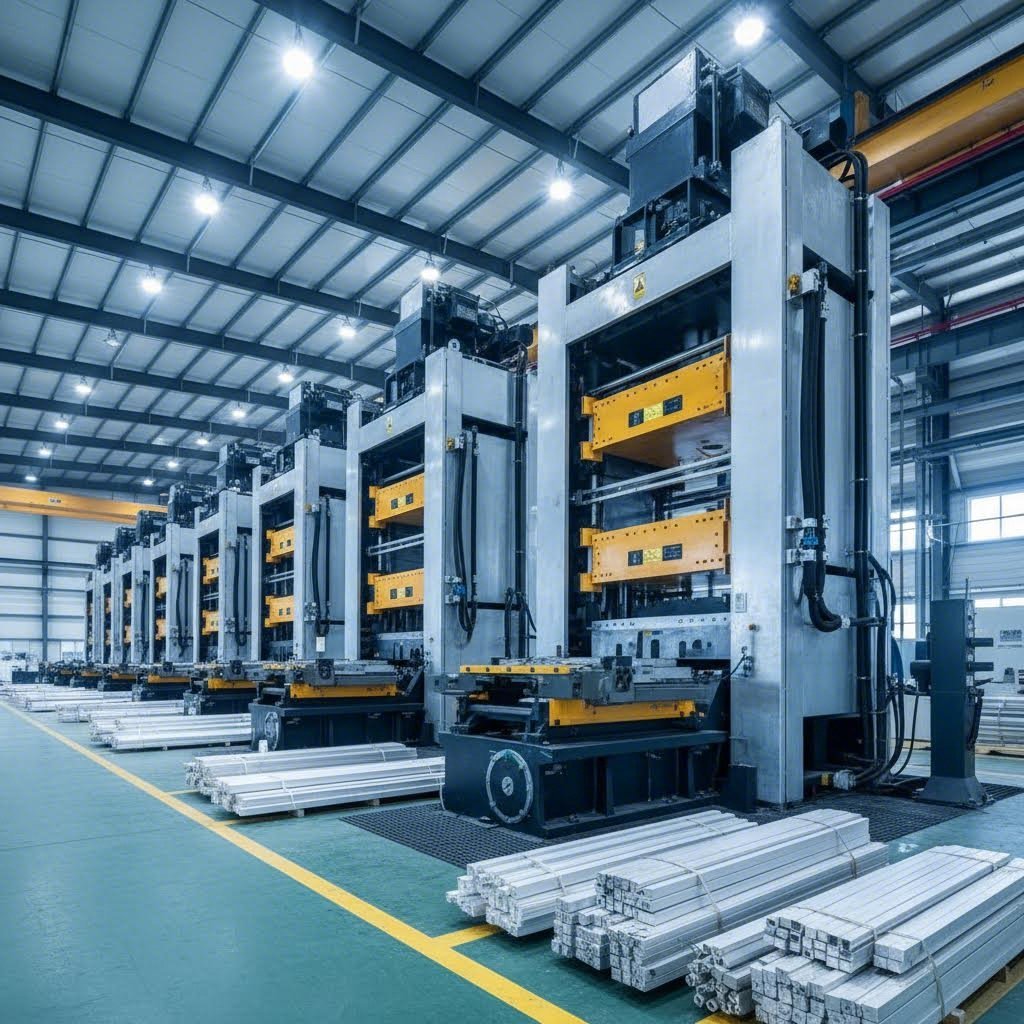
You've explored standard rectangular aluminum extrusions, but what happens when off-the-shelf profiles don't quite match your vision? Maybe you need an integrated mounting channel, a specialized hollow aluminum tube geometry, or a profile that eliminates costly secondary machining. This is where custom extrusion enters the picture—transforming your exact design requirements into production reality.
The question isn't whether custom profiles are possible. The real question is whether they make economic sense for your specific project. Let's break down the decision process and demystify what actually happens when you commission a custom extruded aluminum tube profile.
Standard profiles serve most applications well—they're readily available, competitively priced, and require no upfront tooling investment. So when does custom extrusion become the smarter choice?
Consider custom dies when your project involves:
Think about an aluminium tube frame application requiring precise alignment features. A standard extruded tube might need machined brackets, additional fasteners, and careful assembly labor. A custom profile with integrated alignment channels could eliminate all that complexity—the extrusion process itself creates your connection system.
When should you stick with standard profiles? Low-volume projects, prototype development, and applications where standard aluminum tube stock dimensions satisfy requirements without modification typically don't justify custom tooling investment.
What actually happens between submitting your design concept and receiving production extrusions? Understanding this process helps you plan realistic timelines and budgets.
Step 1: Design Review and Feasibility Assessment
Your extruder evaluates whether your proposed shape can actually be extruded. Two primary factors govern feasibility: the profile's weight per linear foot and its circumscribed circle size (the smallest circle that completely contains the cross-section). According to industry guidelines, profiles with circumscribed circles of 1 to 10 inches diameter and section areas from 1 to 2.5 square inches are widely available from most extruders. Larger or more complex shapes require presses with greater capacity.
Step 2: Die Design and Engineering
Experienced die designers translate your profile geometry into tooling that will produce consistent results. This involves calculating metal flow patterns, determining optimal die geometry, and specifying steel grades that will withstand extrusion pressures. Subtle design modifications at this stage—adjusted corner radii, optimized wall transitions—can significantly impact both extrudability and final cost.
Step 3: Die Manufacturing
Precision CNC machining creates the die from tool steel. The die opening exactly mirrors your desired profile shape, while internal features control material flow during extrusion. Die costs typically run into the thousands of dollars, but as The Fabricator notes, this represents "a relatively small amount in the scope of an entire architectural project."
Step 4: Trial Extrusion and Qualification
Initial runs validate die performance. Technicians measure dimensional accuracy, evaluate surface quality, and verify that the profile meets specifications. Minor die corrections may follow these trials before full production approval.
Step 5: Production Extrusion
With qualified tooling, production runs commence. Established manufacturers with extensive press capacity—ranging from smaller presses for intricate profiles to large-tonnage equipment for substantial cross-sections—can match appropriate equipment to your profile's requirements.
How long does custom extrusion actually take? Realistic planning requires understanding each phase:
| Phase | Typical Duration | Variables Affecting Timeline |
|---|---|---|
| Design review and quote | 3-7 days | Profile complexity, revision cycles |
| Die manufacturing | 2-4 weeks | Die complexity, shop workload |
| Trial extrusion | 1-2 weeks | Correction requirements, scheduling |
| Production run | 1-3 weeks | Order quantity, finishing requirements |
| Total typical timeline | 6-12 weeks | First order from concept to delivery |
Reorders from existing dies move much faster—typically 2-4 weeks since tooling already exists and is qualified.
Regarding minimum orders, most aluminium tube suppliers require 1,000 to 2,000 pounds minimum per shape per order. However, stated minimums are sometimes negotiable, particularly for prototyping phases or when your custom profile accompanies larger orders of standard extrusions.
Custom dies represent upfront investment, but the payback often exceeds expectations. Consider this economic comparison:
Standard Profile Approach:
Custom Profile Approach:
For production volumes, custom profiles frequently deliver lower total cost despite higher apparent material pricing. The die becomes an asset for future orders, and optimized profiles reduce labor throughout your manufacturing process.
Not all extruders offer equal capabilities. When evaluating potential partners for custom extruded tube projects, consider:
With over 30 years of experience in aluminum extrusion, established manufacturers offer the end-to-end support that transforms custom profile concepts into production reality. From initial die development through mass production and finishing, the right partner simplifies what might otherwise seem like a complex process.
Whether your project calls for standard profiles or custom solutions, understanding these manufacturing capabilities positions you to make informed decisions. The final section ahead synthesizes everything covered—helping you select the ideal partner for your rectangular aluminum extrusion needs.
You've navigated alloy comparisons, dimensional standards, surface finishes, structural principles, and custom manufacturing options. Now comes the decision that ties everything together: choosing the right supplier to bring your rectangular aluminum tubing project to life. This choice affects far more than just pricing—it determines project timelines, technical support quality, and ultimately whether your finished product performs as designed.
Let's consolidate the critical decision factors and establish clear criteria for evaluating potential manufacturing partners.
Before reaching out to suppliers, ensure you've addressed these fundamental specification elements. Each decision builds on the others to create a complete aluminum rectangular tube specification:
Successful rectangular extrusion projects balance three core decisions: alloy selection based on strength versus formability requirements, dimensional specifications driven by structural loads and deflection limits, and finish selection matched to environmental exposure and aesthetic needs.
Alloy Selection Summary:
Dimensional Specification Summary:
Surface Finish Summary:
Your supplier relationship extends far beyond simple material transactions. The right partner provides technical guidance, production flexibility, and reliable delivery that keeps your projects on schedule. But how do you distinguish exceptional suppliers from adequate ones?
According to supplier evaluation guidance from industry specialists, experienced suppliers bring more than just technical expertise—they bring lessons learned from years of solving complex extrusion challenges. Look for partners demonstrating these qualities:
Production Capability Alignment:
Technical Support Quality:
Value-Added Processing:
Quality and Reliability:
For projects requiring aluminum rectangular tubes with comprehensive support, manufacturers offering integrated services simplify procurement significantly. Shengxin Aluminium exemplifies this approach with over 30 years of industry experience, 35 extrusion presses spanning 600T to 5500T capacity, and complete deep processing capabilities including precise cutting, drilling, and bending.
Their surface treatment options cover the full spectrum—anodizing in custom colors like champagne and rose gold, powder coating, PVDF, and micro-arc oxidation for specialized durability requirements. Whether your project involves custom 6063 rectangle aluminum tubing for architectural applications or complex industrial profiles demanding tight tolerances, their technical team provides end-to-end support from die development through mass production.
Factory-direct pricing eliminates middleman markups, while comprehensive capabilities mean single-source responsibility for your complete specification. This integration reduces lead times, simplifies communication, and ensures consistent quality across all processing stages.
With specifications defined and evaluation criteria established, you're positioned to move forward confidently. Start by:
Rectangular aluminum extrusions deliver exceptional performance across countless applications—but only when properly specified and expertly manufactured. The knowledge you've gained throughout this guide equips you to make informed decisions at every stage. Your ideal manufacturing partner transforms that knowledge into tangible results: profiles that fit precisely, perform reliably, and arrive when promised.
Rectangular aluminum tubing is available in standard sizes ranging from small profiles like 1" × 2" up to large structural sections such as 4" × 6" and beyond. Common dimensions include 1" × 3", 2" × 3", 2" × 4", and 2" × 6". Wall thickness options typically range from 1/16" for lightweight decorative applications to 1/2" for heavy-duty structural uses. Stock lengths usually span 8 to 24 feet, with 12-foot and 20-foot lengths being most commonly available from suppliers.
6061 aluminum contains higher concentrations of alloying elements, delivering superior tensile strength (310 MPa vs 241 MPa) and hardness, making it ideal for structural and load-bearing applications like machine frames and trailer components. 6063 aluminum prioritizes extrudability and surface finish quality, producing profiles that anodize beautifully for architectural applications such as window frames and railings. 6063 also welds more easily with less cracking susceptibility and typically costs less than 6061.
Rectangular aluminum tubes serve diverse applications across industries. In construction, they're used for window frames, curtain walls, railings, and storefront framing. Industrial applications include machine frames, conveyor systems, safety enclosures, and workstations. Transportation uses encompass trailer components, truck bodies, marine structures, and RV framing. DIY and specialty projects include custom furniture, solar panel mounting, signage structures, robotics platforms, and outdoor garden structures.
Wall thickness selection depends on four key factors: load requirements (heavier loads need thicker walls), span length (longer unsupported spans require more material to prevent deflection), environmental conditions (corrosive environments may warrant additional thickness as a safety margin), and alloy selection (higher-strength 6061-T6 can use thinner walls than 6063-T5 for equivalent performance). A general guideline: larger profile dimensions typically require proportionally thicker walls to prevent localized buckling under load.
Major finishing options include mill finish (as-extruded, lowest cost for hidden components), anodizing (provides integrated corrosion protection with color options including clear, bronze, black, and gold), powder coating (offers unlimited colors and textures with excellent impact resistance), and PVDF coatings (premium architectural finish with 20+ year warranties for exterior applications). Manufacturers like Shengxin Aluminium offer comprehensive treatments including custom anodizing colors, powder coating, PVDF, and micro-arc oxidation for specialized durability requirements.



 online service
 0086 136 3563 2360
 sales@sxalu.com
 +86 136 3563 2360
 English
 français
 Deutsch
 русский
 español
 português
 العربية
 ไทย
ไทย Việt
Việt Українська