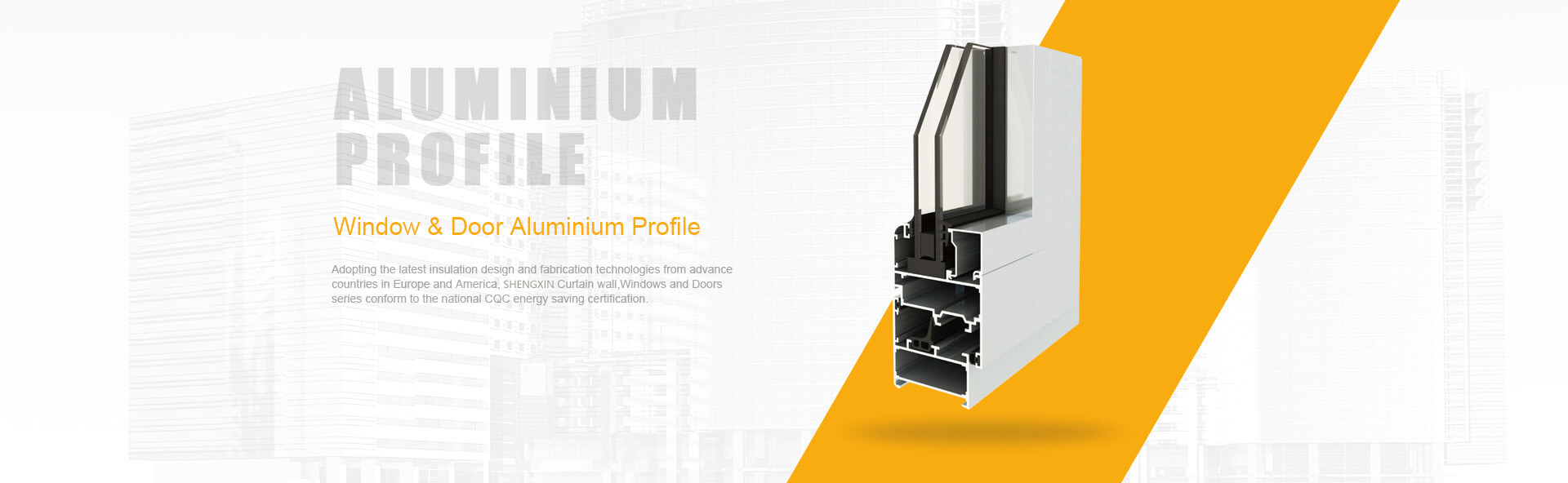
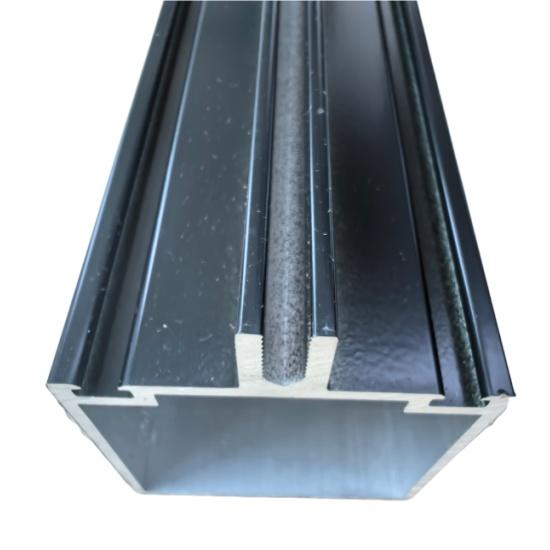
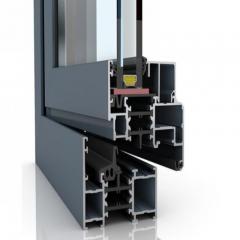
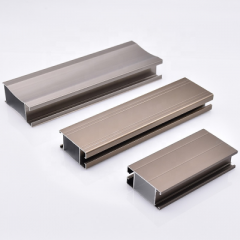
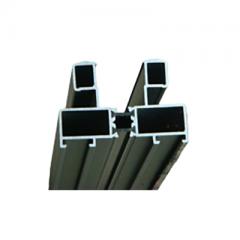
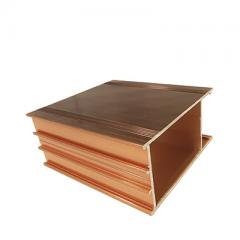
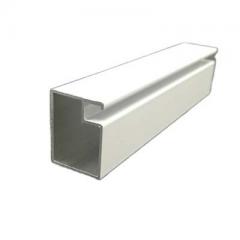
The Thermal Break Aluminum Profile, widely referred to as broken bridge aluminum or insulated aluminum profile, is the foundational component of modern energy-efficient window, door, and curtain wall systems. Its defining feature is a structural separation between the interior and exterior aluminum sections, achieved by embedding a low-thermal-conductivity polyamide (PA66 GF25) strip between two independently extruded aluminum profiles. This "thermal break" physically interrupts the path of heat flow through the metal, dramatically reducing the profile's overall thermal transmittance (Uf value) and effectively eliminating the cold bridge that causes condensation and energy loss in traditional aluminum frames.
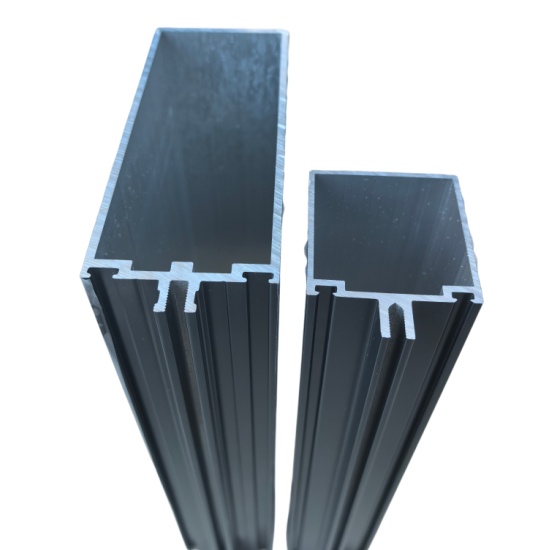
The thermal performance improvement is substantial. A standard non-insulated aluminum profile can have a Uf value exceeding 6.0 W/m²K, while a well-designed thermal break profile with a 24–34mm PA66 strip can achieve Uf values below 2.0 W/m²K. This directly translates into lower heating and cooling costs for building occupants and is essential for meeting contemporary building energy codes such as ASHRAE 90.1, EN 14351-1, and Passive House standards. Beyond thermal insulation, the polyamide strip also provides acoustic dampening, reducing external noise transmission by up to 35 dB depending on the profile design and glazing configuration.
Shengxin manufactures both the aluminum profile components and performs the thermal break assembly in-house. Our 35 extrusion lines produce the inner and outer aluminum sections from 6063-T5 alloy — chosen for its excellent extrudability and anodizing response — while our thermal break assembly line crimps the PA66 strips into place under precisely controlled pressure and alignment conditions. With 29 years of aluminium manufacturing experience and a vertically integrated factory covering extrusion, thermal break assembly, and surface finishing, we supply aluminium extrusions for thermal break systems to window and door fabricators across 97 countries. For a complete window system, our thermal break profiles are often combined with our range of glazing beads, weather seals, and accessory profiles — all available from a single source.
Features & Benefits
-
PA66 GF25 polyamide thermal barrier: The glass-fibre-reinforced polyamide strip combines exceptionally low thermal conductivity (0.30 W/m·K vs. 160 W/m·K for aluminum) with high mechanical strength — ensuring the composite profile maintains structural integrity under wind load, impact, and thermal expansion cycles.
-
Uf values as low as 1.8 W/m²K: Depending on the strip width and profile geometry, our thermal break profiles achieve Uf values that meet or exceed the most stringent energy code requirements, including Passive House certification thresholds.
-
Condensation resistance: By keeping the interior aluminum surface warmer, thermal break profiles dramatically reduce condensation risk on window frames — protecting interior finishes, improving occupant comfort, and preventing mould growth.
-
Acoustic insulation: The polyamide strip acts as a vibration damper, reducing external noise transmission through the frame by up to 35 dB — a significant benefit for buildings in urban, airport, or highway-adjacent locations.
-
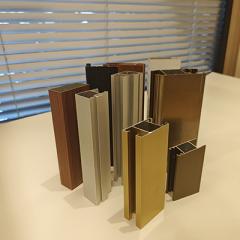
Compatible with all standard finishing: 6063-T5 aluminum sections accept anodizing, powder coating, and PVDF finishes beautifully. The PA66 strip is chemically resistant and unaffected by the anodizing bath, ensuring a clean, uniform finish across the entire composite profile.
-
Proven long-term durability: PA66 GF25 strips are tested for tensile shear strength, aging resistance, and thermal cycling per EN 14024 standards. The mechanical interlock between aluminum and polyamide is designed to withstand decades of thermal expansion and contraction without separation.
Thermal Performance Reference Table
The following table illustrates the relationship between PA66 strip width and typical Uf values for our standard thermal break window profiles. Actual values depend on profile geometry, glazing specification, and spacer type.
|
Profile Type
|
PA66 Strip Width
|
Typical Uf Value
|
Application
|
|
Standard Residential Window
|
14.8 – 18.6 mm
|
2.6 – 3.2 W/m²K
|
Apartments, houses in moderate climates
|
|
High-Performance Window
|
20.0 – 24.0 mm
|
2.0 – 2.6 W/m²K
|
Cold climates, energy code compliance
|
|
Premium / Passive House
|
28.0 – 34.0 mm
|
1.8 – 2.2 W/m²K
|
Passive House, net-zero buildings
|
|
Curtain Wall System
|
20.0 – 34.0 mm
|
2.0 – 2.8 W/m²K
|
Commercial facades, high-rise
|
Uf values are indicative and based on standard EN 12412-2 hot box testing methodology. Contact our engineering team for project-specific thermal simulation and Uf calculation.
Technical Specifications
|
Profile Type
|
Thermal Break / Insulated / Broken Bridge Aluminum Profile
|
|
Aluminum Alloy
|
6063-T5 (inner and outer sections); 6061-T6 available on request
|
|
Thermal Barrier Material
|
PA66 GF25 (polyamide with 25% glass fibre reinforcement)
|
|
Strip Width Range
|
14.8 mm – 34.0 mm (standard); custom widths available
|
|
PA66 Thermal Conductivity
|
0.30 W/m·K (vs. 160 W/m·K for aluminum)
|
|
Assembly Method
|
Mechanical crimping (roll-forming) with controlled knurling depth
|
|
Surface Finish
|
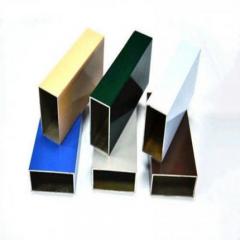
Anodized (clear/black/bronze), powder coated (RAL), PVDF, wood grain
|
|
Standards Compliance
|
EN 14024, EN 755, EN 12020, Qualanod, AAMA, GB 5237
|
|
Standard Length
|
6.0 m – 7.0 m bars; cut-to-length service available
|
Thermal Break vs. Standard Aluminum Profile: Performance Comparison
|
Performance Aspect
|
Standard Aluminum Profile
|
Thermal Break Aluminum Profile
|
|
Frame Uf Value (typical)
|
5.0 – 7.0 W/m²K
|
1.8 – 3.2 W/m²K
|
|
Condensation Risk
|
High — cold interior surface in winter
|
Low — interior surface stays warmer
|
|
Sound Reduction (frame contribution)
|
Minimal — aluminum transmits sound
|
Up to 35 dB improvement
|
|
Energy Code Compliance
|
Fails most modern energy codes
|
Meets or exceeds ASHRAE, EN, Passive House
|
|
Upfront Material Cost
|
Lower
|
Moderate — offset by lifetime energy savings
|
For projects where energy efficiency, condensation control, and acoustic comfort are priorities — and they increasingly are in modern building codes — the thermal break profile is no longer optional. It is the industry standard for aluminum fenestration systems in most climate zones.
Applications of Thermal Break Aluminum Profiles
-
Residential windows and patio doors: Thermal break profiles are mandatory for new residential construction in most developed markets. They keep homes warmer in winter, cooler in summer, and free from frame condensation — all while supporting large glass areas with slim sightlines.
-
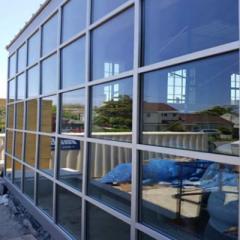
Commercial curtain wall and storefront systems: High-rise office towers, hotels, and retail buildings use thermally broken aluminum framing to meet energy codes without sacrificing the clean, modern aesthetic that architects specify aluminum for.
-
Passive House and net-zero energy buildings: Our widest PA66 strips (28–34mm) enable Uf values below 2.0 W/m²K, contributing to the whole-window Uw values required for Passive House certification and net-zero building performance targets.
-
Cold climate and mountain region projects: In regions where winter temperatures regularly drop below freezing, non-thermal break aluminum frames become uncomfortably cold and prone to ice formation. Thermal break profiles eliminate this issue entirely.
-
Acoustic-sensitive buildings: Schools, hospitals, hotels, and residential buildings near transport corridors benefit from the sound-dampening properties of the polyamide thermal barrier, which reduces external noise ingress through the frame structure.
-
Renovation and retrofit projects: When upgrading from old steel or non-insulated aluminum windows, thermal break profiles provide a modern, high-performance replacement that fits within existing openings while dramatically improving the building's energy rating.
Value-Added Processing Options
|
Service
|
Capability
|
|
Thermal Break Assembly
|
In-house PA66 strip crimping with automated roll-forming for consistent mechanical interlock
|
|
Cut-to-Length
|
Precision saw cutting of assembled thermal break profiles; ±0.5 mm tolerance
|
|
CNC Machining
|
Drilling, tapping, drainage slots, and hardware preparation per window system design
|
|
Surface Finishing
|
In-house anodizing (3 lines), powder coating (3 lines), PVDF, wood grain transfer
|
|
Gaskets & Accessories
|
Matching EPDM gaskets, glazing beads, and hardware channels available
|
|
Packaging
|
Protective interleaving, custom pallets, labelled bundles for fabricator receiving
|

Why Shengxin for Thermal Break Aluminum Profiles?
A thermal break profile is only as reliable as the mechanical bond between the aluminum and the polyamide strip. Poorly crimped assemblies can separate over time, causing structural failure, air leakage, and complete loss of thermal performance. With 29 years of aluminium manufacturing expertise, Shengxin combines precision extrusion, automated thermal break assembly, and rigorous quality testing to deliver composite profiles that window fabricators trust for decades of service.
Automated Crimping Line
Our dedicated thermal break assembly line uses computer-controlled roll-forming with real-time knurling depth and crimping force monitoring. Every metre of assembled profile is checked for strip alignment and mechanical interlock integrity.
Certified PA66 GF25 Material
We use only premium-grade polyamide strips from approved suppliers, with full traceability and compliance to EN 14024. Tensile shear strength and aging resistance are verified on incoming material and production samples.
Integrated Quality System
From extrusion to anodizing to thermal break assembly — all under one roof. One quality system, one traceability record, one point of accountability. We support PPAP, factory audits, and project-specific testing.
Global Supply & Technical Support
$120 million in assets. 100,000-ton annual capacity. Shipped to 97 countries. Our application engineers provide Uf calculation support, profile optimization suggestions, and installation guidance.
Comprehensive Documentation: Every order includes aluminum mill certificates, PA66 strip certification, thermal break assembly inspection reports, and surface finishing compliance documents. 5,000-ton warehouse and 5 container loading platforms ensure your profiles arrive on schedule, properly protected for transit.
Thermal Break Aluminum Profile FAQ
Q: What exactly is a thermal break in an aluminum profile?
A: A thermal break is a low-conductivity barrier — typically a PA66 GF25 polyamide strip — inserted between the interior and exterior aluminum sections of a window or door frame. It physically separates the two metal halves, interrupting the flow of heat and preventing the frame from acting as a thermal bridge between inside and outside.
Q: How much energy can thermal break profiles actually save?
A: The frame represents approximately 20–30% of a window's total area. Reducing its Uf from 6.0 to 2.0 W/m²K can lower the whole-window Uw by 0.5–1.0 W/m²K, translating to heating and cooling energy savings of 10–25% depending on climate, building type, and glazing specification. The exact savings can be calculated for your project.
Q: Can thermal break profiles be anodized or powder coated after assembly?
A: Typically, the aluminum sections are finished before thermal break assembly. Anodizing and powder coating are applied to the extruded profiles first, then the PA66 strip is crimped into place. This ensures the finish is uniform and the polyamide strip is not exposed to the anodizing bath or curing oven temperatures. We manage the complete sequence in-house.
Q: What PA66 strip width should I specify for my project?
A: The required strip width depends on your target Uf value, climate zone, and building energy code. As a general guide: 14.8–18.6mm for moderate climates and standard energy codes; 20–24mm for cold climates and stricter codes; 28–34mm for Passive House and net-zero buildings. Our engineering team can run thermal simulations based on your profile geometry to recommend the optimal strip width.
Q: Do you manufacture the PA66 strip yourself, or purchase it?
A: We purchase premium-grade PA66 GF25 strips from certified suppliers who specialise in polyamide thermal barrier technology. All incoming strips are inspected for dimensional accuracy, tensile strength, and thermal conductivity. We perform the thermal break assembly — crimping the strip into our own extruded aluminum profiles — in our factory.
Custom Thermal Break Aluminum Profile Solutions
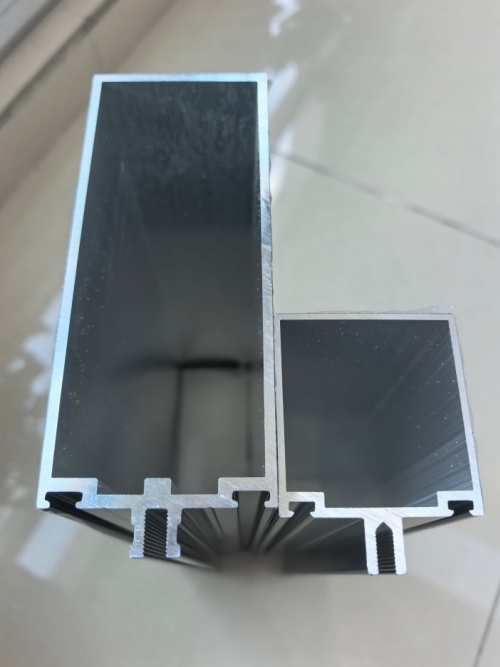
Every window and door system has unique profile geometries, thermal performance targets, and design requirements. Whether you need a custom profile shape, a wider PA66 strip, a specific alloy, or a complete thermal break system developed from your drawings, Shengxin's custom extrusion and assembly service delivers precision thermal break profiles engineered to your exact specifications.
How It Works:
-
Send your drawing — 2D PDF/DWG or 3D STEP/IGES file of your profile design.
-
Our engineers review — we assess extrudability, thermal break feasibility, and suggest optimisations for Uf performance.
-
Receive a quotation — including die cost, PA66 strip specification, unit price, and lead time.
-
Approve a sample — we extrude the aluminum sections, perform the thermal break assembly, and send a sample for your approval.
-
Full production — consistent quality, delivered on schedule, with full quality documentation.
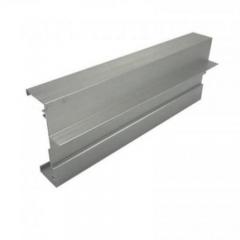
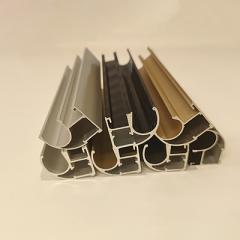
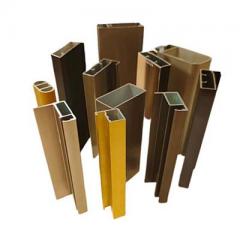
⚠️ Important Note: All profile images and dimensional drawings on this page are for reference only. Each thermal break profile is unique — final dimensions, PA66 strip specifications, Uf values, and surface finish will be confirmed based on your approved production drawing and thermal simulation. Please contact our engineering team to discuss your specific requirements before placing an order.
← Back to Aluminum Profiles for Doors and Windows product category
| See also: Standard Shape Profiles


 English
 français
 Deutsch
 русский
 español
 português
 العربية
 ไทย
ไทย Việt
Việt Українська

 online service

