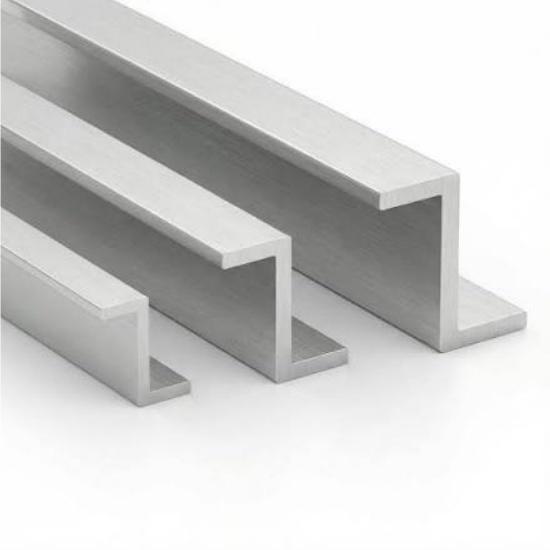
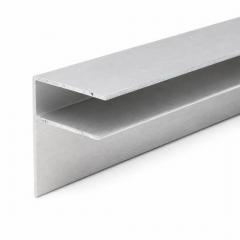
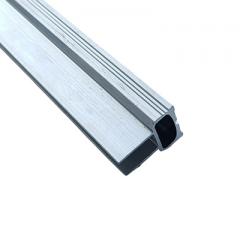
The Z Aluminium Profile, also known as a Z-bar or Z-section, is defined by its distinctive staggered geometry — two parallel flanges pointing in opposite directions, connected by an angled central web. This Z-shaped cross-section creates a natural offset that makes the profile uniquely suited for overlapping, interlocking, and flush-connecting applications that other standard aluminium extrusions like angles, channels, or T sections cannot achieve as efficiently. Where an angle can only brace one side, and a channel can only capture one edge, a Z profile can simultaneously overlap two parallel planes and connect them across a stepped interface.
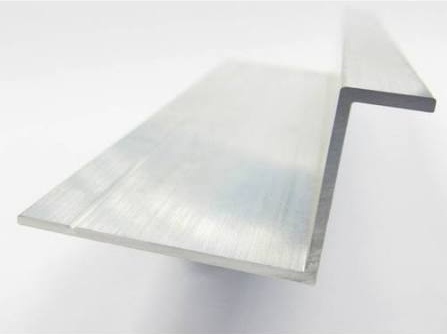
We extrude Z profiles from 6063-T5 and 6061-T6 aluminium alloys. 6063-T5 is the preferred grade for architectural applications — such as flashing trims, panel joint covers, and decorative screen frames — where its excellent extrudability produces smooth surfaces that anodize beautifully. For structural and load-bearing applications like roof purlin overlaps, mezzanine floor connectors, and vehicle body framing, 6061-T6 delivers the higher tensile strength (≥290 MPa) and weldability required for reliable performance under load and vibration.
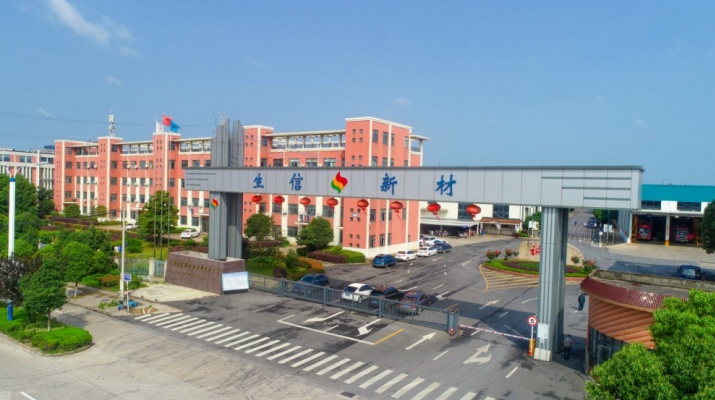
Shengxin manufactures Z profiles entirely in-house on our 35 extrusion lines, with flange widths ranging from 15mm compact trims to 150mm structural sections. Custom flange lengths, web angles, wall thicknesses, and alloy grades are all available to match your specific design. With 29 years of extrusion expertise and over 500,000 dies in our mould library, we can often supply a custom Z section without the lead time or tooling cost of starting from scratch.
Features & Benefits
-
Unique offset geometry: Two parallel flanges pointing in opposite directions create a natural stepping function — perfect for overlapping panels, bridging uneven surfaces, and interlocking components without additional brackets.
-
Ideal for flush and near-flush connections: The web offset allows one flange to sit on top of a substrate while the other sits underneath an adjacent panel, creating a clean, snag-free overlap with minimal visible fasteners.
-
Lightweight structural performance: The angled web provides diagonal bracing between the two flanges, giving Z profiles better torsional rigidity than a flat bar of equivalent weight — important for framing and bracing applications.
-
Excellent anodizing surface: 6063 alloy Z profiles anodize to a uniform, high-quality finish, making them suitable for visible architectural details like feature trims, reveal covers, and decorative screen frames.
-
Corrosion resistant and durable: Aluminium's natural oxide layer provides inherent rust protection. Anodized or powder coated finishes add decades of service life, even in exterior and coastal installations.
-
Easy to fabricate and install: Z profiles can be cut, drilled, and mitred using standard metalworking tools. We offer precision fabrication services — cut-to-length, hole drilling, and surface finishing — so your Z sections arrive ready to install.
Standard Z Profile Sizes (Commonly Produced)
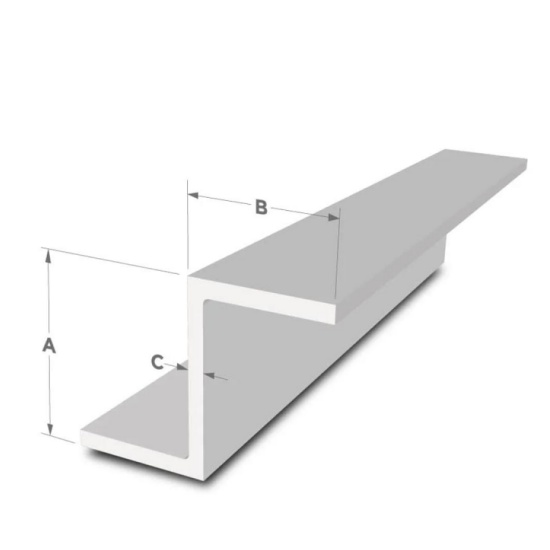
These are representative standard dimensions. Custom flange widths, web heights, and wall thicknesses are produced to order. Dimensions shown as Top Flange Width x Web Height x Bottom Flange Width x Thickness.
|
Size (W1 x H x W2 x t)
|
Top Flange
|
Web Height
|
Bottom Flange
|
Thickness
|
Typical Alloy
|
|
15 x 10 x 15 x 1.5 mm
|
15 mm
|
10 mm
|
15 mm
|
1.5 mm
|
6063-T5
|
|
20 x 12 x 20 x 2.0 mm
|
20 mm
|
12 mm
|
20 mm
|
2.0 mm
|
6063-T5
|
|
30 x 15 x 30 x 2.5 mm
|
30 mm
|
15 mm
|
30 mm
|
2.5 mm
|
6063-T5 / 6061-T6
|
|
40 x 20 x 40 x 3.0 mm
|
40 mm
|
20 mm
|
40 mm
|
3.0 mm
|
6061-T6
|
|
50 x 25 x 50 x 4.0 mm
|
50 mm
|
25 mm
|
50 mm
|
4.0 mm
|
6061-T6
|
Not seeing your required dimension? We custom-extrude Z profiles with flange widths up to 200 mm and web heights up to 150 mm. Unequal flanges and non-standard web angles are our speciality. Contact us with your drawing for a quotation.
Technical Specifications
|
Profile Type
|
Z Section (Z-Bar / Z-Profile)
|
|
Alloy Options
|
6063-T5 (architectural), 6061-T6 (structural), 6005A, 6082
|
|
Flange Width Range
|
10 mm – 200 mm per flange
|
|
Web Height Range
|
5 mm – 150 mm
|
|
Wall Thickness
|
1.0 mm – 8.0 mm (uniform or tapered per design)
|
|
Standard Length
|
6.0 m (custom cut-to-length available)
|
|
Surface Finish
|
Mill finish, anodized (clear/black/bronze), powder coated (RAL)
|
|
Compliance
|
EN 755, EN 12020, JIS H4100, GB 5237
|
Z Profile vs. Other Standard Shapes: Choosing the Right Section
|
Application Requirement
|
Z Profile
|
U Channel
|
Angle (L)
|
T Section
|
|
Overlapping panel joints
|
✅ Best — flanges step over and under
|
❌ Cannot overlap
|
❌ Cannot overlap
|
❌ Cannot overlap
|
|
Capturing/retaining a panel edge
|
⚠ Partial — one flange only
|
✅ Best — full channel capture
|
❌ No capture function
|
❌ No capture function
|
|
Flush connection across two planes
|
✅ Unique Z advantage
|
❌ Cannot flush-connect
|
❌ Cannot flush-connect
|
⚠ Possible but less efficient
|
|
Simple edge protection or corner brace
|
⚠ Over-designed
|
⚠ Possible
|
✅ Best — simple and effective
|
⚠ Possible but not ideal
|
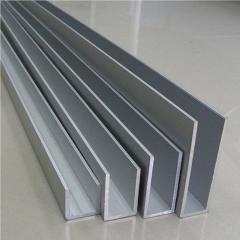
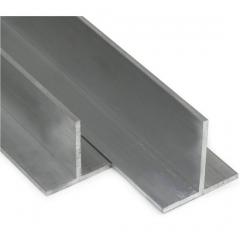
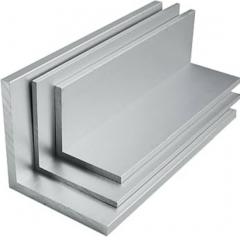
Z profiles are the optimal choice when your design requires two parallel surfaces to be connected across an offset or step. For panel edge protection and sliding tracks, see our U profile aluminium. For simple corner bracing, see our aluminium angle profiles. For surface-mount dividers, see our aluminium T section.
Typical Applications of Z Aluminium Profiles
-
Roofing and cladding overlaps: Z profiles serve as side laps and end laps in metal roofing and wall cladding systems, where one sheet overlaps the next — the Z shape creates a weathertight joint without protruding fasteners.
-
Interlocking panel systems: Adjacent wall or ceiling panels can be interlocked using Z profiles, where one panel's edge sits on the top flange and the neighbouring panel rests on the bottom flange, creating a secure, hidden connection.
-
Framing connectors and bridging: In light-gauge steel and aluminium framing, Z sections are used as bridging members between studs or joists, providing lateral bracing and improving the overall stiffness of the frame assembly.
-
Architectural reveals and shadow gaps: Anodized Z profiles create stepped shadow lines between cladding panels, ceiling tiles, and joinery elements — the offset web provides the reveal depth while the flanges provide fixing surfaces.
-
Door and window frame extensions: Z profiles are used as frame extenders or adaptors, bridging the gap between a window/door frame and the surrounding wall structure when the two are not in the same plane.
-
Vehicle and trailer body trims: In commercial vehicle bodies, Z sections serve as edge trims where side panels meet roof or floor panels, providing a neat overlap that is both structural and weather-resistant.
Value-Added Processing Options
|
Service
|
Capability
|
|
Cut-to-Length
|
Precision saw cutting to specified lengths; deburred ends
|
|
Drilling & Tapping
|
CNC drilled holes, slots, countersinks, and threaded holes
|
|
Mitre Cutting
|
45° and custom angle mitre cuts for clean frame corners
|
|
Surface Finishing
|
In-house anodizing (3 lines), powder coating (3 lines), PVDF
|
|
Welding & Assembly
|
Fabrication of welded Z-section frames and complete assemblies
|
|
Packaging
|
Protective wrapping, custom pallets, labelled bundles for easy receiving
|
Why Shengxin for Z Aluminium Profiles?
The Z profile's defining characteristic — two parallel flanges offset by an angled web — demands precise die design to ensure both flanges remain truly parallel and the web angle is consistent across the entire extrusion length. Any twist, bow, or angular drift will compromise the profile's ability to overlap and interlock cleanly. With 29 years of aluminium extrusion expertise, Shengxin combines advanced die engineering, 35 extrusion lines (up to 5,500 tons), and rigorous quality control to deliver Z sections that meet exacting geometric specifications.
Precision Die Design
Z section dies require careful balancing of material flow to both flanges simultaneously. Our in-house die shop engineers tooling that fills uniformly, maintaining flange parallelism and web angle consistency.
500,000+ Mould Library
Many Z section dimensions — including unequal flange configurations — are already in our die inventory. We can often supply a custom Z profile without full new tooling costs or extended lead times.
Complete In-House Finishing
3 anodizing lines, 3 powder coating lines, and PVDF coating — all within our factory. Your Z profiles arrive finished, protected, and ready for immediate installation.
Global Export & Compliance
$120 million in assets. 100,000-ton annual capacity. Shipped to 97 countries across 6 continents. Full mill certificates and compliance documentation with every order.
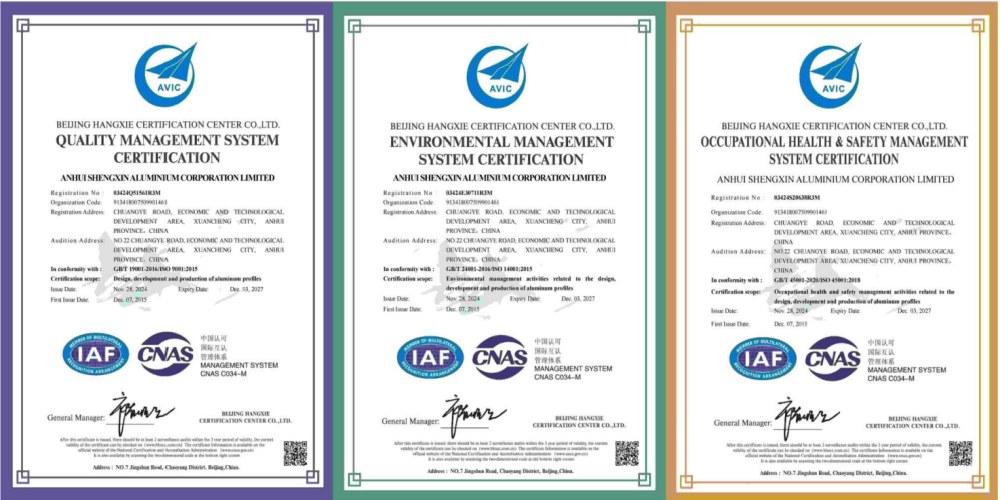
Quality You Can Build On: Every Z section order includes dimensional inspection reports, alloy composition certificates, and surface quality documentation. We support PPAP and project-specific quality requirements. 5,000-ton warehouse and 5 container loading platforms ensure on-time dispatch.
Z Aluminium Profile FAQ
Q: What makes a Z profile different from a C-channel or U-channel?
A: The key difference is flange direction. A U-channel has both flanges pointing in the same direction, creating an open trough. A Z profile has flanges pointing in opposite directions, creating a stepped or offset shape. This makes Z profiles ideal for overlapping connections, while U-channels are better for capturing and retaining panels. See our U profile aluminium page for comparison.
Q: Can the two flanges be different widths?
A: Yes. Unequal flange Z profiles are common. For example, a wider top flange can serve as a larger bearing surface, while a narrower bottom flange provides just enough overlap for a secure connection. Custom flange widths are produced to order — provide your drawing, and we will manufacture the exact profile.
Q: What web angle is standard for Z profiles?
A: Most standard Z profiles have a perpendicular web — meaning the web connects the two flanges at 90°. However, angled webs (e.g., 60° or 70° to the flange) are possible for specific design requirements. Custom web angles require a custom die; we can design and produce it to your specification.
Q: Are Z profiles suitable for outdoor structural applications?
A: Yes. For exterior structural use, we recommend 6061-T6 alloy for its higher strength, combined with anodizing or powder coating for corrosion protection. Z profiles are commonly used in outdoor applications such as roofing, cladding, solar panel mounting, and façade substructures. Provide your load and environmental requirements, and our engineers will confirm suitability.
Q: Do you keep Z profiles in stock, or are they made to order?
A: A selection of common Z section sizes is held in our 5,000-ton warehouse for rapid dispatch. Non-standard dimensions are extruded to order, typically with a 3-5 week lead time depending on die availability. Contact our sales team with your required dimensions for a stock check and delivery estimate.
Custom Aluminium Z Profile Solutions
Every project has unique requirements. Whether you need unequal flange widths, a custom web angle, thicker walls, or a completely bespoke Z section profile, Shengxin's custom extrusion service delivers precision aluminium profiles engineered to your exact drawings and specifications.
How It Works:
-
Send your drawing — 2D PDF/DWG or 3D STEP/IGES file.
-
Our engineers review — we assess feasibility and suggest optimisations.
-
Receive a quotation — including die cost, unit price, and lead time.
-
Approve a sample — we extrude a trial section for your sign-off.
-
Full production — consistent quality, delivered on schedule.
⚠️ Important Note: All product images and dimensional drawings on this page are for reference only. Each custom profile is unique — final dimensions, tolerances, and surface finish will be confirmed based on your approved production drawing. Please contact our engineering team to discuss your specific requirements before placing an order.
← Back to Standard Shape Profiles product category
| See also: U Profile Aluminium, Aluminium T Section, Aluminium Angle Profiles


 English
 français
 Deutsch
 русский
 español
 português
 العربية
 ไทย
ไทย Việt
Việt Українська

 online service

