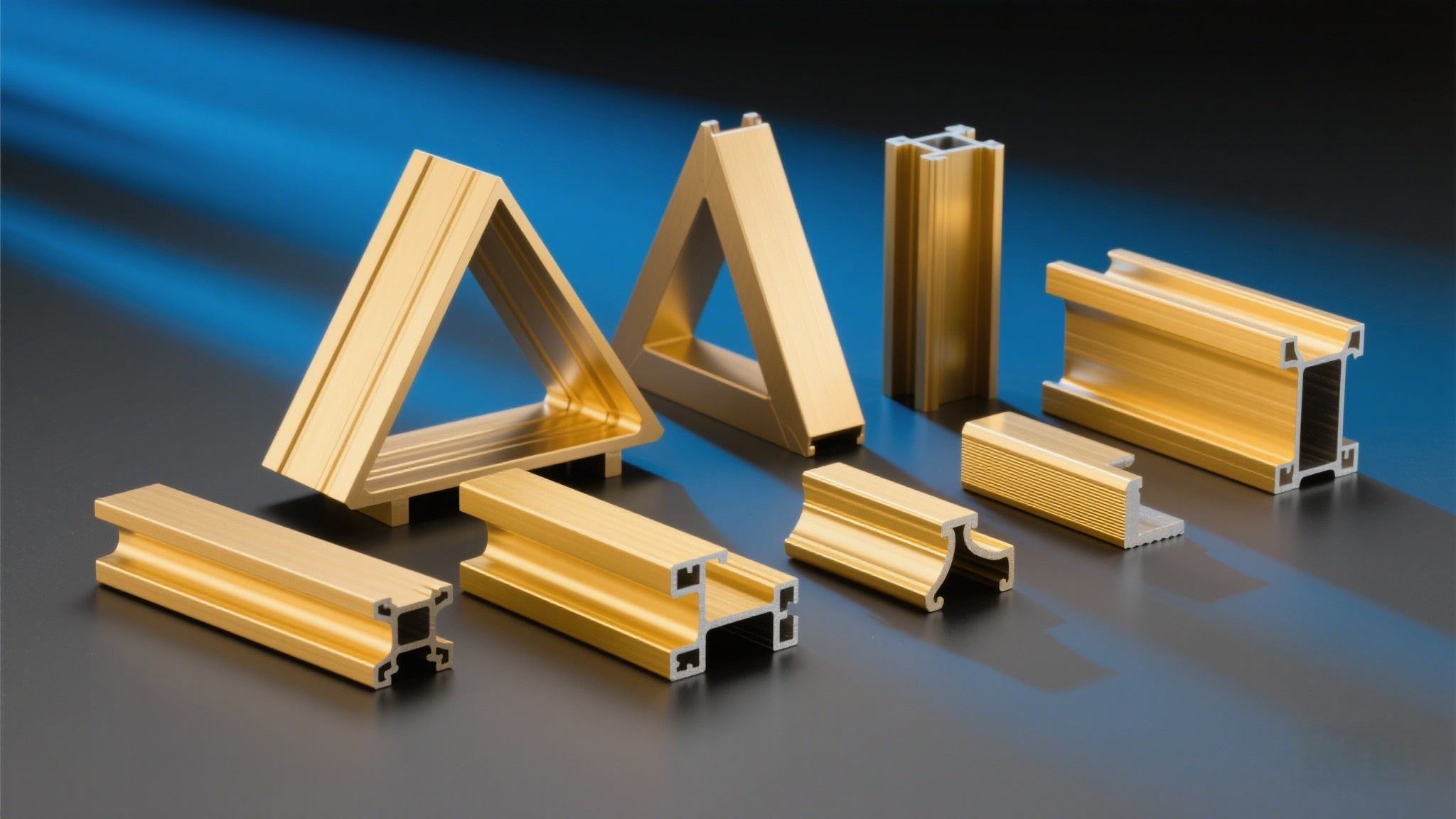
2 Aluminum Wire Ampacity That Actually Works in the Field What 2 AWG Aluminum Wire Means and Why It Matters for Modern Projects When you’re planning a feeder or service entrance, you’ll often come across the term 2 aluminum wire. Sounds complex? Let’s break it down so you can confidently specify, install, or inspect this essential conductor. What 2 AWG Aluminum Really Means First, "2 AWG" stands for "2 American Wire Gauge," which is a standard measurement for wire diameter in North America. The smaller the AWG number, the larger the wire. In practice, #2 aluminum wire is a common choice for residential and light commercial feeders—think subpanels, service entrances, or large equipment circuits. It’s especially popular when budget or weight are concerns, since aluminum is lighter and typically less expensive than copper for the same ampacity. But not all #2 aluminum is the same. The most widely used constructions are: XHHW-2: Cross-linked polyethylene insulation, rated for 90°C in wet or dry conditions. This is the classic xhhw aluminum wire you’ll see in conduit or cable trays. USE-2: Underground Service Entrance cable, designed for direct burial. If you’re running a feeder to a detached garage or outbuilding, use-2 wire is the go-to. SER: Service Entrance Rated cable, often used for main panel feeds. Common Insulations: XHHW-2, USE-2, and SER Each insulation type affects where and how you can install #2 al wire. For example, XHHW-2 is moisture- and heat-resistant, making it suitable for both indoor and outdoor conduit runs. USE-2 wire is built for direct burial and is sunlight-resistant. SER is typically used above ground for service entrances and branch circuits. Conductor material: AA-8000 series aluminum alloy Insulation: XHHW-2 or USE-2 (cross-linked polyethylene) Temperature rating: 90°C wet/dry Voltage rating: 600V Most 2 AWG aluminum wire ampacity is governed by a 75°C termination limit, even if the insulation is rated for 90°C. Always check your panel and device labeling for the correct column to use in ampacity tables. Where 2 Aluminum Wire Fits in 2025 Projects Imagine you’re running a feeder to a subpanel in a new addition, a barn, or a detached garage. #2 aluminum wire, especially in its 2-awg aluminum stranded black xhhw wire form, is a cost-effective and code-compliant solution for many 90A and 100A service applications. It’s also a staple in solar, backup power, and even certain industrial setups where weight and cost savings are priorities. Still, it’s not a one-size-fits-all answer. You’ll need to match the wire type to your environment and check for local code amendments. For instance, direct burial jobs call for USE-2 wire, while conduit runs often use XHHW-2. Quick Glossary 2 AWG: American Wire Gauge size, denoting wire diameter AA-8000: Modern aluminum alloy for electrical conductors XHHW-2: Cross-linked polyethylene insulation, 90°C rated USE-2: Underground Service Entrance cable, direct burial rated SER: Service Entrance R...
Read More
Food Scores: Is Sodium Aluminum Phosphate Actually Safe? What Is Sodium Aluminum Phosphate (SAP)? Ever wondered what’s behind the label “E541” on your favorite baked goods or processed cheese? If so, you’re not alone. Many consumers are curious about sodium aluminum phosphate—often abbreviated as SAP or SAlP—and its role in the food industry. Let’s break down what is sodium aluminum phosphate, why it’s used, and what makes it unique among food additives. Breaking Down the Chemical Name SAP is a family of inorganic compounds, technically known as sodium salts of aluminum phosphates. Sounds complex? Imagine SAP as a group of related substances made by combining sodium, aluminum, and phosphate ions. The most common form you’ll see in food is labeled as E541 in Europe. The sodium aluminum phosphate chemical formula can vary, but a widely used version is NaH14Al3(PO4)8·4H2O. This means each molecule contains sodium (Na), aluminum (Al), phosphate groups (PO4), hydrogen (H), and water (H2O) molecules. Other names: sodium aluminium phosphate, aluminum sodium phosphate, SAlP Appearance: White, odorless powder Solubility: Insoluble in water, but soluble in hydrochloric acid When you see the phrase “chemical formula for sodium aluminum phosphate,” it’s referring to these specific arrangements of the elements. The formula can look intimidating, but it simply reflects the ratios of sodium, aluminum, and phosphate in the compound. For example, the basic form may be written as Na3H15Al2(PO4)8, while the acidic form is NaH14Al3(PO4)8·4H2O[source]. Acidic vs. Basic SAP Not all SAP is created equal. There are two main types: Acidic SAP: Most commonly used in baking, this form acts as a leavening acid. It reacts with baking soda to release carbon dioxide, helping doughs and batters rise. Basic SAP: This version is primarily used as an emulsifier, especially in processed cheese products. It helps blend ingredients smoothly and maintain texture. Understanding the distinction between acidic and basic SAP is key to grasping its many uses in food. Both types are produced through a chemical synthesis involving sodium carbonate, aluminum hydroxide, and orthophosphoric acid, but their functions in food differ significantly. So, next time you scan an ingredient list and spot “sodium aluminium phosphate” or E541, you’ll know it’s more than just a mysterious additive—it’s a precisely engineered compound with a clear chemical identity and purpose in food science. SAP's Role in Baking and Food Production Have you ever wondered why some muffins are extra fluffy or why certain processed cheeses melt so smoothly? The answer often lies in a hidden helper: sodium aluminum phosphate. This ingredient, sometimes listed as sodium aluminum phosphate in food labels, plays a behind-the-scenes role in creating the textures and qualities we expect from many everyday foods. But how exactly does it work, and where will you most likely find it? The Science of Leavening When it comes to baking, ...
Read More
GTAW Welding Aluminum in 7 Steps: From Prep to Perfect Weld Why GTAW is Essential for Welding Aluminum Ever wondered why aluminum welding is considered so tricky, or why GTAW (also known as TIG welding) is the top choice for this metal? If you’re new to aluminum welding, you’ll quickly notice it’s not quite like working with steel. Let’s break down the essentials of gtaw welding aluminum and see what makes it the gold standard for achieving clean, precise welds. Why GTAW is the Gold Standard for Aluminum GTAW, or Gas Tungsten Arc Welding, is simply another name for TIG (Tungsten Inert Gas) welding. Both terms describe the same process. This method stands out for its unmatched control over heat and filler material, making it ideal for aluminum welding where precision is critical. But how does welding with aluminum differ from welding with steel? Aluminum’s low melting point and high thermal conductivity mean it heats up and cools down far more quickly than steel. As a result, you need a process that offers fine-tuned heat management—exactly what TIG welding aluminum delivers. Precision: TIG welding allows you to control the arc and filler rod independently, perfect for thin or delicate aluminum pieces. Clean Results: The process produces minimal spatter and a visually appealing weld bead. Versatility: GTAW lets you use a range of filler metals, so you can match the weld to the base metal’s properties. Another common question is, ac or dc for tig welding aluminum? For most applications, AC (Alternating Current) is essential because it alternates between cleaning and penetrating the aluminum, which is key to a strong weld. Understanding the Aluminum Oxide Challenge The toughest obstacle in aluminum welding is the stubborn oxide layer: it melts at more than twice the temperature of the base metal and can prevent proper fusion if not removed. Aluminum naturally forms a thin oxide coating almost instantly when exposed to air. This oxide layer has a melting point around 2072°C (3762°F), while pure aluminum melts at just 660°C (1220°F). If you try to weld without addressing this, you’ll either fail to create a weld puddle or risk burning through the base metal before the oxide melts. That’s where AC TIG welding shines. The alternating current not only provides the heat needed to melt the aluminum but also “scrubs” away the oxide layer during the positive half of the cycle. This action is sometimes described as a sandblasting effect you can see right at the weld zone. So, can you weld aluminum with TIG? Absolutely—but only if you understand these core challenges and set up your welder correctly. In fact, among different techniques, GTAW is what type of welding is slower and easier to control, making it the preferred method for intricate or high-quality aluminum projects. Ready to dive deeper? Next, we’ll walk through the essential equipment and safety gear you’ll need before you strike your first arc. Step 1 Gather Your Essential GTAW Equipment and Safety...
Read More
From Neutral Atom to Ion: The Charge of Aluminum Explained What Is the Charge of an Aluminum Ion? Have you ever wondered what gives metals like aluminum their unique chemical behavior? The answer lies in something called ionic charge. When you see the term “charge of aluminum,” it refers to the electrical charge an aluminum atom carries after it gains or loses electrons during chemical reactions. This simple concept is at the heart of how aluminum interacts with other elements—and why it’s so widely used in everything from soda cans to airplanes. Defining Ionic Charge In chemistry, an element’s ionic charge tells us whether its atom has more protons (positively charged) or electrons (negatively charged). A neutral atom has equal numbers of both, but when it reacts, it can lose or gain electrons, resulting in a net charge. This new charged particle is called an ion. For example, when you ask, what is the charge of an aluminum ion, you’re really asking: does aluminum lose or gain electrons, and how many? Aluminum's Consistent +3 Charge Aluminum stands out because it almost always forms an ion with a +3 charge, written as Al³⁺. This means that a neutral aluminum atom loses three electrons, becoming a positively charged ion. If you were to predict the charge that an aluminum ion would have, the answer is nearly always +3. This consistency is due to aluminum’s atomic structure, which makes it energetically favorable for the atom to shed three electrons and achieve a more stable, lower-energy state. Aluminum ion (Al³⁺): Always has a +3 charge in common compounds Chemical stability: Losing three electrons allows aluminum to reach a stable electron configuration Aluminum's predictable +3 charge is the foundation of its chemical behavior and utility. Throughout this article, you’ll discover not only what is the charge of aluminum, but also why this charge is so reliable and how it shapes the ways we use aluminum every day. From its atomic roots to its real-world applications, understanding the aluminum charge unlocks the science behind one of the world’s most essential metals. Ready to explore how and why aluminum always becomes Al³⁺? Let’s dive in. Decoding Aluminum's Atomic Structure Aluminum on the Periodic Table When you first look at the aluminum periodic table entry, you’ll notice aluminum sits in Group 13 and Period 3. This position isn’t just a label—it tells you a lot about how aluminum behaves. Group 13 elements all have similar outer electron arrangements, which is key to understanding why aluminum forms the charge it does. The aluminum atomic number is 13, meaning every neutral atom of aluminum contains exactly 13 protons in its nucleus. That’s the fingerprint of aluminum—no other element has this combination. But what about the other subatomic particles? To fully grasp the charge of aluminum, it’s helpful to break down its atomic structure. Here’s how a neutral aluminum atom is built: Subatomic Particle Count in a Neutral Aluminum Atom Partic...
Read More
The 8-Step Aluminum Brightener Method for a Pro-Level Shine Step 1: Understanding and Choosing Your Brightener What is an Aluminum Brightener? Ever noticed how aluminum surfaces lose their shine over time, turning dull or even chalky? That’s where aluminum brighteners come into play. These are specialized chemical solutions designed to remove oxidation, stains, and discoloration from aluminum, restoring a like-new finish. Whether you’re caring for boat pontoons, semi-truck tanks, or decorative trim, choosing the right aluminum brightener is the first step to achieving a professional-grade result. Sounds complex? It doesn’t have to be. The main goal is simple: use a cleaner that tackles the specific type of grime or oxidation your aluminum has picked up. The best aluminum brightener will break down tough surface contaminants and help you maintain that brilliant, reflective look. Acidic vs. Non-Acidic Brighteners: Which to Choose? When you start shopping for cleaners for aluminum, you’ll notice two main categories: acid-based and non-acidic brighteners. Each has distinct strengths and ideal use cases, so understanding the difference is key to getting the results you want—and to protecting your surfaces. Feature Acid-Based Brightener Non-Acidic Brightener Effectiveness on Heavy Oxidation Excellent – breaks down tough oxidation and stains quickly. Often uses hydrofluoric acid (HF) or ammonium bifluoride (ABF) as the acid to clean aluminum. Good for light to moderate oxidation; may require multiple applications for severe cases. Safety Level Low – requires strict safety precautions, including gloves and goggles. Improper use can damage surfaces or pose health risks. Higher – generally safer for users and surfaces, but still requires basic protective gear. Surface Compatibility Best for non-polished, raw, or heavily oxidized aluminum. Can damage polished or anodized finishes if not used carefully. Safe for most aluminum types, including polished and anodized. Always test a small area first. Typical Use Cases Fleet vehicles, semi-trucks, pontoons, and equipment with severe oxidation or staining. Routine maintenance, decorative trim, wheels, and surfaces needing gentle cleaning. For example, if you’re dealing with a semi-truck that’s seen years of road grime, an acid-based solution like those containing hydrofluoric acid (a powerful acid that cleans aluminum) will give you fast, dramatic results. However, for regular upkeep or sensitive finishes, a non-acidic aluminium brightener is a safer bet. Imagine using alumi clean on decorative trim—gentle but effective, with less risk of damaging the surface. It’s important to note that while acid-based options are often considered the best aluminum brightener for heavy-duty restoration, they require careful handling and proper dilution. Non-acidic cleaners, on the other hand, are ideal for those seeking a balance between cleaning power and safety. So, how do you choose? Start by assessing the level of oxidation,...
Read More


 online service
 0086 136 3563 2360
 sales@sxalu.com
 +86 136 3563 2360
 English
 français
 Deutsch
 русский
 español
 português
 العربية
 ไทย
ไทย Việt
Việt Українська