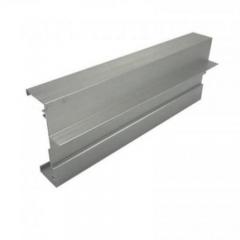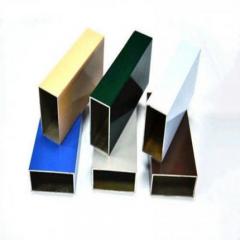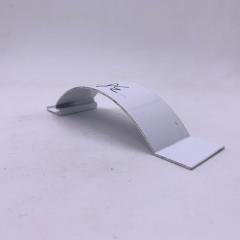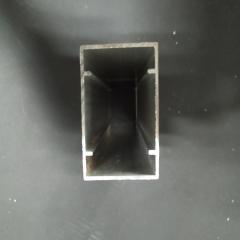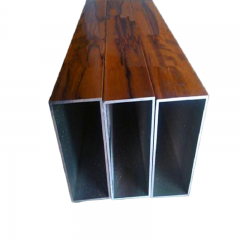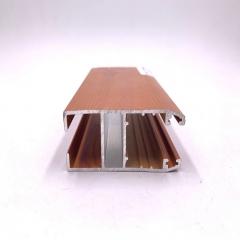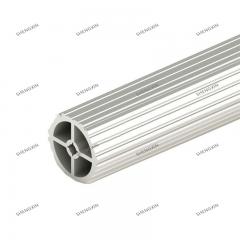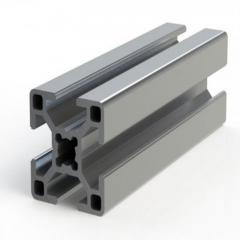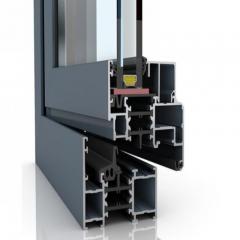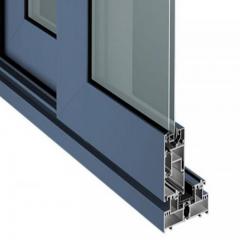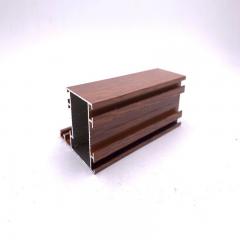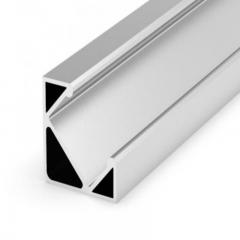
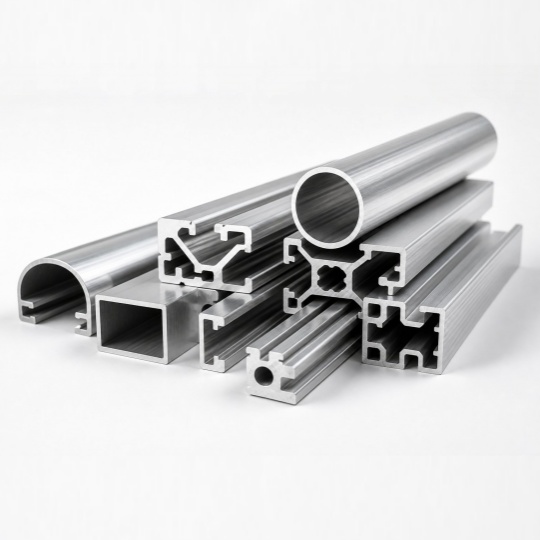
6063 Aluminum Extrusions Decoded: From Alloy Chemistry To Perfect Finish Understanding 6063 Aluminum Extrusions and Why They Matter When you're searching for the ideal material for architectural trim, window frames, or precision industrial components, one alloy consistently rises to the top of the list. 6063 aluminum extrusions represent the gold standard for applications demanding both visual appeal and reliable performance. But what exactly makes this particular alloy so special? At its core, 6063 aluminum is an aluminum-magnesium-silicon alloy specifically engineered for the extrusion process. Think of it as the material that was born to be shaped. The carefully balanced composition allows heated aluminum billets to flow smoothly through complex dies, emerging as intricate aluminum extrusion profiles with remarkably consistent dimensions and surfaces. What Makes 6063 the Go-To Extrusion Alloy Imagine trying to push thick honey through a detailed mold versus water. The 6063 alloy behaves more like that perfectly viscous honey when heated, maintaining enough body to hold complex shapes while flowing easily enough to fill every corner of the die. This exceptional extrudability stems from its unique chemistry, which typically includes approximately 0.4-0.8% magnesium and 0.2-0.6% silicon, with aluminum comprising the remaining balance. Why does this matter for your project? The answer lies in three key advantages: Superior formability - Complex cross-sections with thin walls and intricate details become achievable Excellent surface quality - Smooth, consistent finishes straight from the press Moderate strength - Sufficient structural integrity for most architectural and light industrial applications 6063 aluminum delivers the smoothest, most consistent anodized finish of any commonly extruded aluminum alloy, making it the undisputed choice for visible architectural applications where appearance matters as much as performance. The Architectural Aluminum Standard Explained You'll find extruded aluminum everywhere in modern construction, from sleek curtain wall systems to decorative railings. The reason architects and engineers repeatedly specify 6063 aluminum comes down to its outstanding response to surface treatments. Whether you need a brilliant anodized finish, durable powder coating, or simply a clean mill finish, this alloy delivers results that other extrusions simply cannot match. The extruded aluminium channel you see framing commercial storefronts? Almost certainly 6063. Those precision heat sinks keeping your electronics cool? Often 6063 as well. This versatility explains why manufacturers worldwide produce millions of tons of this alloy annually. For readers just beginning their research journey, understanding this foundational knowledge helps you determine whether 6063 aluminum fits your specific requirements. If your project demands excellent corrosion resistance, attractive finished surfaces, and the ability to create complex profile ...
Read More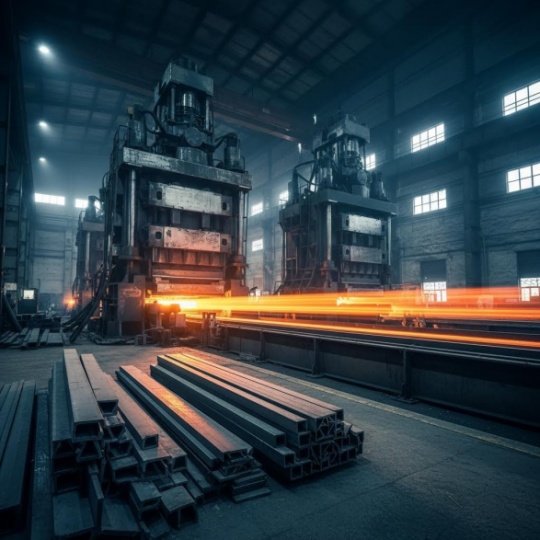
Aluminum Extrusions From China: Navigate Duties, Vet Suppliers, Scale Smart Understanding Aluminum Extrusions and China's Manufacturing Dominance Imagine pushing soft clay through a shaped cookie cutter. Now scale that concept up to industrial proportions, replace clay with heated aluminum, and you have the basic idea behind aluminum extrusion. This manufacturing process creates uniform metal profiles used in everything from window frames to automotive components. For businesses sourcing aluminum extrusions from China, understanding both the process and why the country dominates global production is essential for making informed purchasing decisions. An aluminum extrusion definition is straightforward: it refers to any aluminum product created by forcing heated aluminum alloy through a shaped opening called a die. The result is a profile with a consistent cross-section that can stretch to remarkable lengths while maintaining precise dimensional accuracy. How the Extrusion Process Works The extrusion process transforms raw aluminum into finished profiles through a carefully controlled sequence. First, manufacturers preheat a round die to 450-500°C to ensure even metal flow and maximize die longevity. Meanwhile, cylindrical aluminum billets are heated in ovens to 400-500°C, making them malleable without becoming molten. Once prepared, the softened billet enters the extrusion press, where a hydraulic ram applies up to 15,000 tons of pressure. This immense force pushes the aluminum through the die opening, and the metal emerges fully formed with the desired cross-sectional shape. A puller then grasps the extrusion to guide it along a cooling table, where it undergoes quenching through water baths or fans to stabilize its structure. After cooling, technicians use stretchers to correct any twists and ensure the profiles meet exact specifications. Finally, the extrusions are cut to desired lengths and aged in ovens to achieve proper temper designations like T5 or T6, which determine the material's final mechanical properties. The most common types of aluminum extrusions include: Solid profiles – Dense shapes without internal voids, ideal for structural applications requiring maximum strength Hollow profiles – Tubular shapes with one or more internal cavities, commonly used in curtain walls and framework Semi-hollow profiles – Partially enclosed shapes with gaps that don't fully close, offering a balance between weight savings and structural integrity Why China Leads Global Production China's position as the world's leading producer of aluminum extrusions didn't happen by accident. The country has systematically built manufacturing infrastructure that dwarfs competitors globally. According to the International Aluminum Institute, China alone produced over 40 million metric tons of aluminum in 2023, accounting for more than 60% of Asia Pacific production. This massive capacity stems from several strategic advantages. Chinese manufacturers benefit from int...
Read More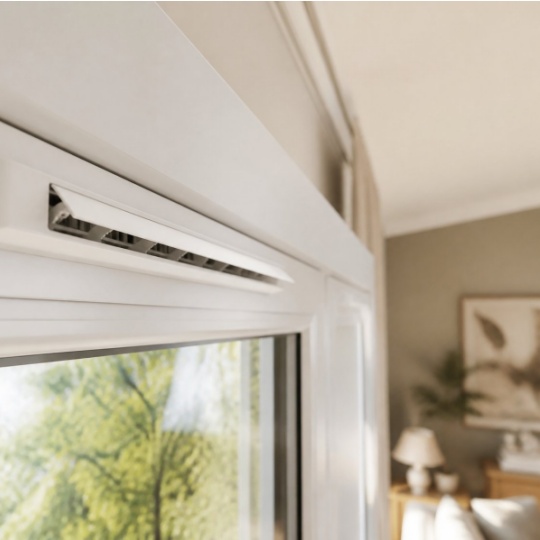
Window Trickle Vents: Kill Condensation Without Freezing Your Home What Are Window Trickle Vents and Why Do They Exist Imagine waking up on a cold morning to find your windows dripping with condensation, mould creeping into the corners of your bedroom, and a stale, heavy feeling in the air. You've sealed every draught, upgraded to double glazing, and insulated your loft - so why does your home feel less healthy than ever? The answer often comes down to one small, overlooked component: the trickle vent. What Exactly Is a Trickle Vent A window trickle vent is a small, controllable ventilation opening integrated into the frame or sash of a window. It allows a continuous, low-level flow of fresh air into a room without requiring the window to be opened, providing passive background ventilation that helps maintain healthy indoor air quality. You'll sometimes hear these referred to as background ventilators or drip vents in windows - they all describe the same thing. Typically positioned along the top (head) of a window frame, a trickle vent consists of an external canopy that deflects rain, a slot routed through the frame, and an internal flap that occupants can open or close. The design is deliberately simple: no electricity, no moving motors, no filters to replace. One common point of confusion worth clearing up early: trickle vents are not weep holes. Weep holes are tiny drainage channels built into the bottom of a window frame to let trapped water escape. A trickle vent, by contrast, sits at the top of the frame and is engineered specifically for airflow, not water management. In the UK, these vents became a key compliance feature under Approved Document F of the Building Regulations, which sets out requirements for adequate ventilation in dwellings. Even when replacing existing windows, current regulations generally require trickle vents to be included - and a homeowner cannot simply sign a disclaimer opting out. Other markets across Europe, Australia, and parts of North America are increasingly adopting similar background ventilation standards as energy-efficient construction tightens building envelopes worldwide. Why Background Ventilation Matters in Modern Homes Here's the paradox of modern building design: the better you insulate and seal a home, the worse its air quality can become. High-performance double and triple glazing, cavity wall insulation, and draught-proofing all do a fantastic job of keeping heat in - but they also trap moisture, carbon dioxide, volatile organic compounds (VOCs), and cooking odors inside with you. Older, draughtier homes had a crude but effective ventilation system - gaps around windows, doors, and floorboards let air leak in and out constantly. That "natural" leakage was inefficient and uncomfortable, but it did prevent moisture from building up to dangerous levels. Modern construction has eliminated most of those gaps, which means fresh air no longer enters a home by accident. It has to be invited in deliberate...
Read More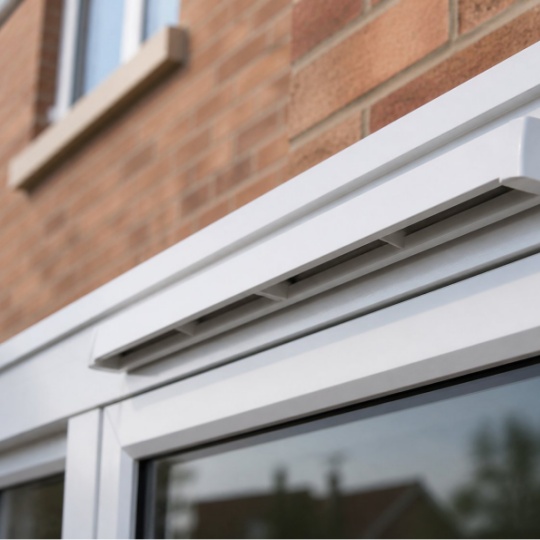
Trickle Vent Canopy: Stop Guessing Sizes, Materials, and Regs What Is a Trickle Vent Canopy and Why Does It Matter Look at the outside of almost any modern window and you will spot a slim, horizontal cover sitting along the top of the frame. Most people walk past it without a second thought. Yet that modest strip of plastic or aluminium — the trickle vent canopy — is doing more work than nearly any other visible component on the window's exterior face. Defining the Trickle Vent Canopy A trickle vent canopy is the external weatherproof cover mounted over the vent slot opening on the outside face of a window frame. It shields the opening from rain, wind-driven moisture, insects, and debris while still permitting a controlled stream of background airflow into the building. That definition is short, but every word earns its place. The canopy is not the entire trickle vent — it is only the external cover. Inside the frame, a separate controllable grille (often called a hit-and-miss slider) lets occupants open or close the airflow path. Between these two parts sits the vent slot or sleeve routed through the frame's head rail. Together, these three components form the complete trickle vent assembly. The canopy is simply the outermost piece of that system. Why does the distinction matter? Because homeowners, contractors, and even professional specifiers routinely confuse the canopy with the full vent assembly. Someone searching for a "replacement trickle vent" might actually need only a new external cover — or they might need the entire three-part kit. Mixing up these terms leads to wrong orders, incompatible parts, and wasted time. A canopy designed for one manufacturer's frame profile will not necessarily clip onto another brand's window, even when both frames are made from the same material. Knowing exactly which component you need is the first step toward getting the job done right. Why the Canopy Is the Most Critical External Component Imagine the vent slot on a window frame without any cover at all. Every rain shower drives water straight into the frame cavity. Wind pushes dust and leaves into the opening. Insects find a direct route indoors. Within a single season, the unprotected slot would cause water damage, blockages, and compromised indoor air quality. The canopy prevents all of that. Its baffled channels and drainage features deflect rain while allowing air to pass through. As Sternfenster explains, the hooded or canopy design "helps shield the vent from rain, wind-driven moisture and debris, while often incorporating insect screens to prevent pests from entering." It is the first line of defence, and it faces the toughest conditions — direct UV exposure on south-facing elevations, freeze-thaw cycles in winter, and constant wind pressure throughout the year. That relentless exposure makes the canopy the component most likely to crack, discolour, or lose its clips over time. A failed internal grille is an inconvenience; a failed canopy is a l...
Read More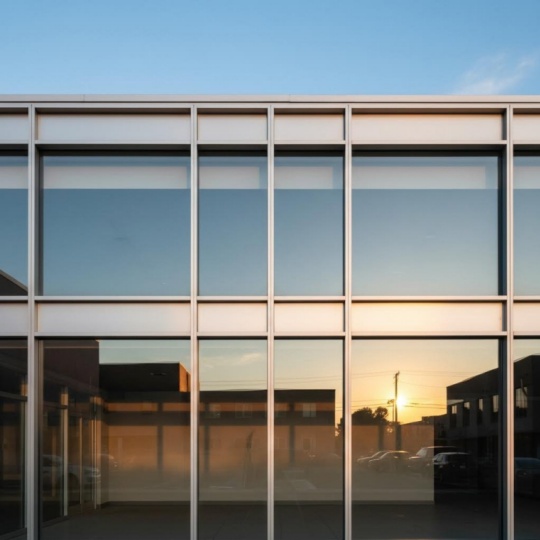
Aluminum Storefront Extrusions: From Raw Billet To Building Facade What Are Aluminum Storefront Extrusions and How Are They Made When you walk past a modern retail shop or office building, chances are you're looking at aluminum storefront extrusions in action. These precisely engineered metal profiles form the structural framework that holds glass panels in place, creating the sleek, transparent facades we see throughout commercial districts worldwide. But what exactly goes into making these essential building components? At its core, an aluminum storefront is a framing system composed of extruded aluminum profiles designed to support glass panels, doors, and other glazing elements. The term "extrusion" refers to the manufacturing method—a fascinating process that transforms solid aluminum into complex, custom-shaped profiles with remarkable precision. How Aluminum Extrusions Are Manufactured Imagine squeezing toothpaste from a tube. The paste emerges in the shape of the tube's opening. The aluminum extrusion process works on the same principle, but with significantly more force and heat involved. The journey begins with an aluminum billet—a cylindrical log of cast aluminum feedstock. Before extrusion can occur, this billet must be preheated in a furnace to temperatures ranging from 700°F to 930°F (375°C to 500°C), depending on the specific alloy. At these temperatures, the aluminum becomes soft and malleable while remaining solid—its melting point sits around 1,220°F (660°C). Here's what happens next: Loading: The heated billet is placed into a steel container within a hydraulic press Compression: A powerful ram applies immense pressure—anywhere from 100 to 15,000 tons—forcing the softened aluminum forward Shaping: With nowhere else to go, the aluminum squeezes through a specially designed steel die, emerging on the other side as a fully formed profile Cooling: The newly formed extrusion is quenched (rapidly cooled) to lock in its shape and properties Finishing: Profiles undergo aging treatments, cutting, and surface finishing before shipment This process enables manufacturers to create virtually any cross-sectional shape imaginable—from simple rectangular tubes to complex hollow profiles with intricate internal chambers. For architectural storefront applications, this means designers can specify custom mullion shapes, thermal breaks, and integrated drainage channels. Why Aluminum Dominates Commercial Facades Walk through any commercial district, and you'll notice that metal storefront systems overwhelmingly feature aluminum rather than steel or other materials. This dominance isn't coincidental—it stems from aluminum's unique combination of properties that make it ideal for storefront material applications. The choice of aluminum alloy matters significantly. Two alloys dominate the storefront industry: 6063-T5: The preferred choice for architectural applications, this alloy offers excellent aesthetic properties and can be easily anodized and co...
Read More


 online service
 0086 136 3563 2360
 sales@sxalu.com
 +86 136 3563 2360
 English
 français
 Deutsch
 русский
 español
 português
 العربية
 ไทย
ไทย Việt
Việt Українська