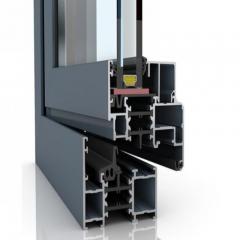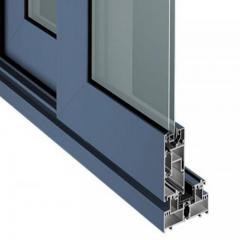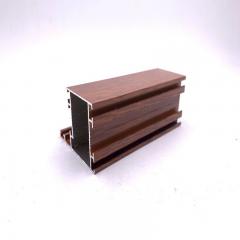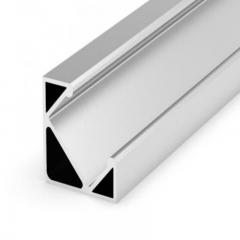

North America Aluminum Extrusion Market: Where Billions Flow Next Understanding the North American Aluminium Extrusion Landscape Have you ever wondered what connects the sleek frame of your smartphone, the sturdy railings on a modern building, and the lightweight components in your car? The answer lies in aluminium extrusion—a manufacturing process that quietly shapes the products surrounding us every day. The north america aluminum extrusion market stands as the third-largest regional market globally, commanding billions of dollars in annual revenue and serving as a critical backbone for industries ranging from automotive to aerospace. What Makes Aluminum Extrusion Essential to Modern Manufacturing Imagine squeezing toothpaste through a tube—now scale that concept up dramatically. Aluminum extrusion works on a similar principle, where heated aluminum alloy billets are forced through a specially designed die to create profiles with precise cross-sectional shapes. This seemingly simple process unlocks extraordinary design flexibility that other manufacturing methods simply cannot match. The beauty of extrusion lies in its versatility. Manufacturers can create everything from simple tubes and angles to incredibly complex hollow sections with multiple chambers. You'll find extruded aluminum in window frames, heat sinks for electronics, structural components in buildings, and even the frames of electric vehicle battery enclosures. The aluminum extrusion market continues expanding precisely because this process delivers an unbeatable combination of strength, lightweight properties, and design freedom. What sets aluminum apart from other metals in extrusion applications? Consider these key advantages: Weight-to-strength ratio approximately one-third that of steel Natural corrosion resistance eliminating the need for protective coatings in many applications Excellent thermal and electrical conductivity 100% recyclability without degradation of material properties Ability to achieve tight tolerances and complex geometries in a single operation North America's Strategic Position in Global Aluminum Production While the Asia Pacific region dominates global aluminum extrusion production, North America has carved out a strategic position that extends far beyond raw volume. The regional market benefits from proximity to major end-use industries, sophisticated manufacturing infrastructure, and stringent quality standards that command premium pricing in specialized applications. North America represents the third-largest aluminum extrusion market globally, distinguished not by volume alone but by its leadership in high-value applications across automotive, aerospace, and advanced construction sectors. The global aluminum extrusion market presents a fascinating study in regional dynamics. While emerging markets like the india aluminum extrusion market are experiencing rapid growth driven by infrastructure development and industrialization, North American producer...
Read More
Aluminum Extrusion Standard Tolerances: What Engineers Get Wrong Understanding Aluminum Extrusion Tolerances and Their Critical Role Have you ever received a batch of extruded aluminum profiles only to discover they don't quite fit your assembly? Or perhaps you've watched a project timeline slip because components needed rework after delivery? These frustrating scenarios often trace back to one overlooked element: aluminum extrusion tolerances. For engineers, designers, and procurement professionals working with extruded aluminum, understanding these specifications isn't just technical knowledge—it's the difference between a smooth production run and costly delays. Yet tolerance information remains scattered across industry documents, leaving many professionals piecing together fragmented guidance. What Are Dimensional Tolerances in Aluminum Extrusion Simply put, aluminum extrusion tolerances define the acceptable deviation from nominal dimensions in extruded profiles. When you specify a wall thickness of 3.0 mm, for example, the actual manufactured part won't measure exactly 3.000 mm. Tolerances establish the acceptable range—perhaps 2.9 mm to 3.1 mm—within which the part remains functional and acceptable. According to industry standards, these limits of variation are mutually agreed between manufacturers and customers before production begins. Tolerances appear on engineering drawings as plus or minus decimal fractions of millimeters (or inches) and apply to various aluminum extrusion dimensions including cross-sectional features, wall thicknesses, and delivered lengths. The aluminum extrusion definition of tolerance encompasses more than just size. It includes geometric characteristics like straightness, twist, and flatness—each critical to how your profiles will perform in real-world applications. Different aluminum extrusion sizes require different tolerance considerations, as larger profiles present unique challenges compared to smaller ones. Why Tolerance Specifications Matter for Your Projects Imagine ordering thousands of extruded channels for a structural assembly, only to find they're slightly out of spec. The consequences cascade quickly: rejected parts, production halts, rush orders for replacements, and missed deadlines. This scenario plays out more often than you'd think when tolerance specifications aren't properly understood or communicated. Tolerances protect both the manufacturer and the customer—they let extruders know how much they can deviate from specified dimensions for the part to work properly, while preventing costly rejections of otherwise functional components. Several key factors affect achievable tolerances in aluminum extrusions: Wall thickness: Thicker walls can be more challenging to control due to variability in material flow and cooling rates Profile complexity: Larger, more intricate profiles may present challenges in maintaining uniform tolerances Alloy selection: Different alloys behave differently under ext...
Read More
Aluminum Extrusion Manufacturing Process: From Raw Billet To Finished Profile What Is Aluminum Extrusion and Why Does It Matter Ever wondered how those sleek window frames, intricate heat sinks, or lightweight structural beams get their perfectly consistent shapes? The answer lies in a manufacturing technique that transforms raw aluminum into virtually any cross-sectional profile you can imagine. Aluminum extrusion is a manufacturing process that forces heated aluminum alloy through a shaped die opening to create profiles with uniform cross-sections along their entire length. Think of it like squeezing toothpaste through a tube—the material emerges in the exact shape of the opening. This fundamental concept allows manufacturers to produce everything from simple round tubes to highly complex architectural profiles with remarkable precision and consistency. The Basic Principle Behind Aluminum Extrusion So, what is aluminum extrusion in practical terms? The process begins with a cylindrical aluminum billet—a solid log of aluminum alloy—that gets heated until it becomes soft and malleable. This softened billet is then placed in a container and pushed by a powerful hydraulic ram through a precision-machined steel die. As the aluminum passes through the die opening, it takes on the exact shape of that opening, emerging as a continuous length of extruded aluminum profile. To define extrude simply: it means to shape material by forcing it through a die. The extrusion of aluminium leverages this principle exceptionally well because aluminum's unique properties allow it to flow smoothly through complex die geometries without cracking or tearing. What makes this process different from casting, rolling, or machining? Unlike casting, which pours molten metal into molds, extrusion works with solid (though heated) material, resulting in superior structural integrity. Compared to rolling, extrusion can produce far more complex cross-sections in a single operation. And unlike machining, which removes material to create shapes, extrusion wastes virtually no material—achieving utilization rates often exceeding 95%. Why Aluminum Is Ideal for Extrusion Manufacturing You might ask: what is extrusions' secret to success? The answer lies in aluminum's remarkable metallurgical properties. When you explore what is extruded aluminum, you'll discover that this metal offers an unmatched combination of characteristics: Exceptional malleability at elevated temperatures: Aluminum becomes highly workable when heated to extrusion temperatures, allowing it to flow through intricate die patterns without fracturing Outstanding strength-to-weight ratio: Extruded aluminum profiles are approximately one-third the weight of steel while maintaining impressive structural capabilities Natural corrosion resistance: Aluminum forms a protective oxide layer that shields it from environmental degradation Excellent surface finish potential: The extrusion process produces smooth surfaces ideal fo...
Read More
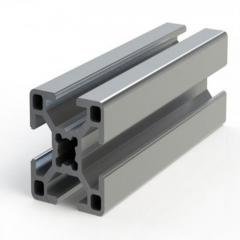
Aluminum Extrusion V Slot Vs T Slot: Which One Fits Your Build? Choosing Between V-Slot and T-Slot Aluminum Extrusions You've sketched out your next build - maybe it's a custom 3D printer, a sturdy workbench, or an automated pick-and-place system. You know aluminum extrusion is the way to go for that perfect blend of strength, modularity, and clean aesthetics. But then you hit that inevitable crossroads: should you go with V slot or T slot profiles? If you've ever stood in front of stacks of extruded aluminum wondering which groove geometry actually matters for your project, you're not alone. This decision trips up makers, engineers, and DIY builders every single day. Why Your Slot Choice Makes or Breaks Your Project Here's the thing - choosing the wrong profile isn't just a minor inconvenience. It can mean hardware that doesn't fit, motion systems that bind or wobble, and structures that can't handle the loads you need. Imagine building an entire CNC frame only to discover your linear motion setup requires completely different extrusions. That's wasted time, wasted money, and a whole lot of frustration. The v slot vs t slot decision ultimately comes down to one core question: does your project need integrated linear motion capability, or is pure structural strength your priority? T-slots excel at rigid, heavy-duty assemblies with their vast ecosystem of compatible hardware. V slot profiles, with their angled grooves, double as both structural members and guide rails for wheel-based motion systems. The right extrusion choice doesn't just affect assembly - it determines whether your project achieves precision movement, handles required loads, and remains easy to modify as your needs evolve. What This Guide Covers This guide delivers exactly what you need to make a confident decision. You'll discover a ranked breakdown of the best applications for each slot type, from CNC machines to industrial enclosures. We'll walk through the key differences in geometry, hardware compatibility, and load-bearing characteristics. Most importantly, you'll get a clear decision framework that matches your specific project requirements to the ideal profile. Whether you're comparing aluminum extrusion v slot options for a robotics platform or evaluating t slot vs v slot for a machine guard system, the answers are here. Let's cut through the confusion and get you building with the right extrusion from the start. How We Ranked V-Slot and T-Slot Applications Before diving into specific use cases, you might be wondering how we determined which slot type works best for different applications. Rather than relying on manufacturer claims or theoretical specs alone, our evaluation focuses on what actually matters when you're building real projects. Our Ranking Criteria Explained Every builder has different priorities. Some need rock-solid rigidity for heavy machinery. Others want smooth linear motion without buying separate rail systems. To fairly compare v slot extruded alumin...
Read More
Aluminum Heat Sink Extrusions: From Alloy Selection To Thermal Performance Understanding Aluminum Heat Sink Extrusions When your electronic device stays cool under pressure, there's a good chance an aluminum heat sink is doing the heavy lifting. But what exactly are aluminum heat sink extrusions, and why have they become the go-to solution for thermal management across countless industries? At its core, an aluminum heat sink extrusion is a thermal management component created by forcing heated aluminum alloy through a shaped die. Imagine squeezing toothpaste through a nozzle—except here, the result is a precisely engineered profile with fins and channels designed to pull heat away from sensitive components. This process creates the characteristic finned structures you'll find cooling everything from LED lights to power electronics. What Makes Extruded Heat Sinks Different So why does extrusion dominate the heat sink market? The answer lies in its unique combination of efficiency and versatility. Unlike machining (which removes material) or die casting (which uses molds), extrusion shapes the entire cross-section in a single operation. This means complex fin geometries that would be prohibitively expensive to machine can be produced cost-effectively at scale. Extrusion stands as the most cost-effective manufacturing method for medium-to-high volume heat sink production, offering 30-60% cost savings compared to machining while maintaining excellent thermal performance. The process also delivers remarkable consistency. Once the die is created, every extruded heatsink maintains identical dimensions and thermal properties—critical when you're producing thousands of units that must perform identically. The Role of Aluminum in Thermal Management Why aluminum specifically? The physics make a compelling case. Heat dissipation relies on a material's ability to conduct thermal energy away from a heat source and release it into the surrounding environment. Aluminum delivers a thermal conductivity of approximately 200-237 W/m·K for common alloys like 6063, making it an exceptional heat dissipator. But thermal conductivity is only part of the story. Consider these advantages that make aluminum the preferred choice: Lightweight performance: Aluminum weighs roughly half as much as copper while maintaining excellent conductivity Corrosion resistance: Natural oxide layer protects against environmental degradation Excellent extrudability: Flows smoothly through dies at elevated temperatures, enabling complex fin designs Cost-effectiveness: Raw material costs run 50-70% lower than copper alternatives A quick note on terminology: you'll encounter both "heat sink" (two words) and "heatsink" (one word) in technical literature—they mean the same thing. Similarly, "aluminum" (American English) and "aluminium" (British English) refer to identical material. Whether you're searching for an aluminum heat sink or an aluminium heatsink, you're looking at the same proven therma...
Read More


 online service
 0086 136 3563 2360
 sales@sxalu.com
 +86 136 3563 2360
 English
 français
 Deutsch
 русский
 español
 português
 العربية
 ไทย
 Việt
 Українська