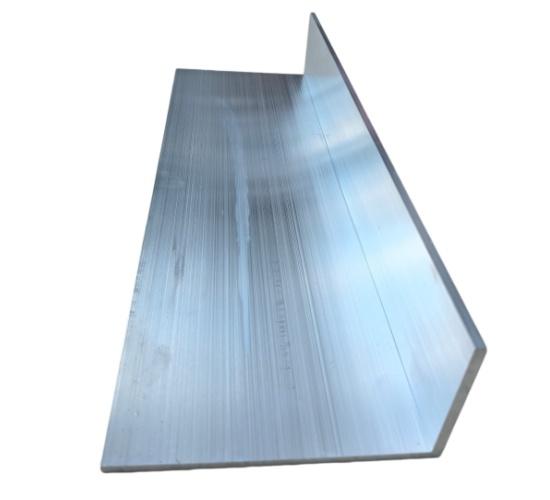
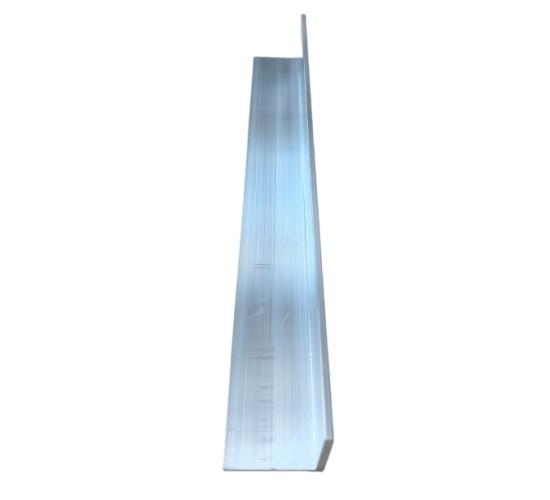
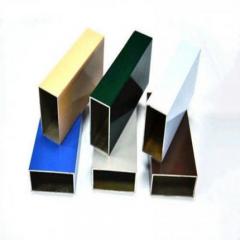
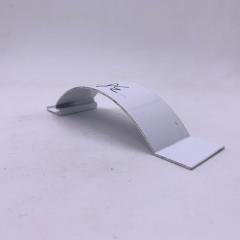
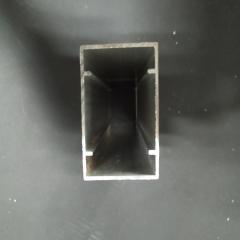
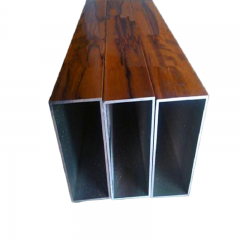
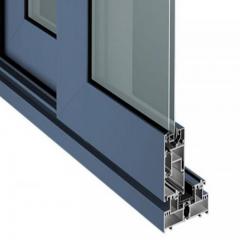
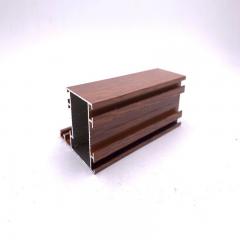
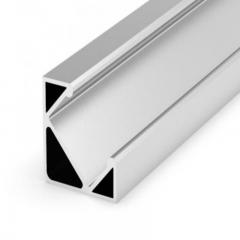
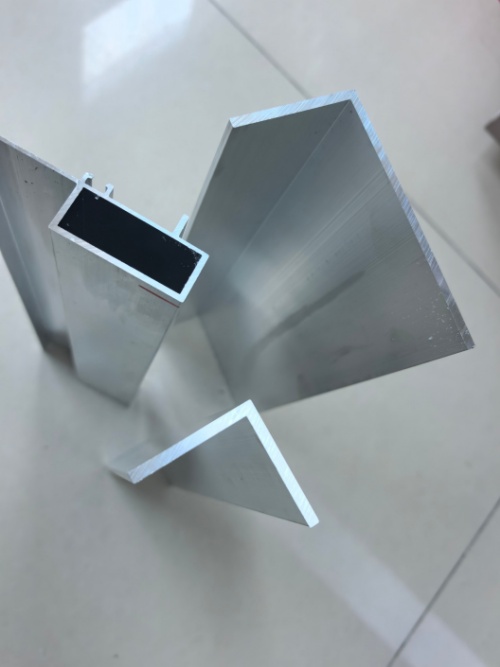
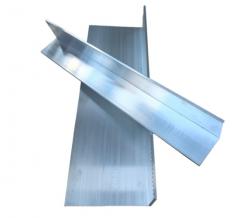
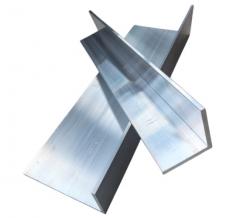
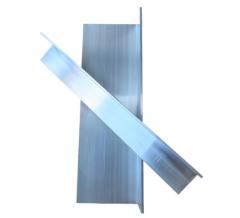
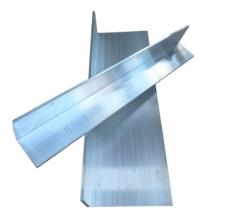
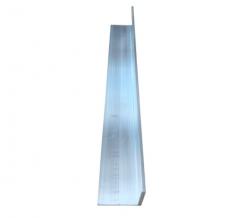
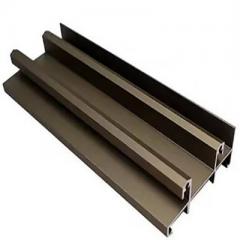
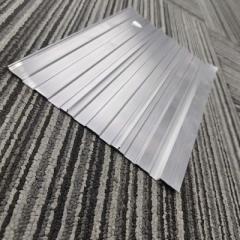
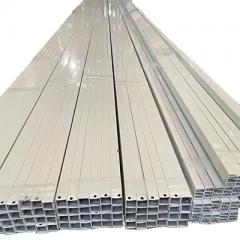
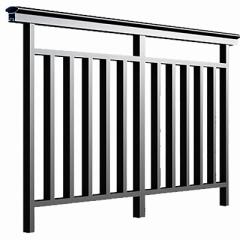
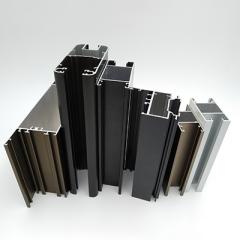
The 6063 T5 Anodized Aluminium Angle Profile is the preferred choice when both material formability and a high-quality surface finish are required. The 6063 aluminium alloy, known for its excellent extrudability, allows complex angle profiles to be produced with smooth surfaces and sharp definition — the ideal starting point for a flawless anodized finish. After extrusion, a controlled anodizing process grows a protective aluminium oxide layer on all exposed surfaces, dramatically improving corrosion resistance, surface hardness, and aesthetic longevity.

This angle is widely specified across architectural, decorative, and light structural applications. It provides the clean, uniform appearance that architects and designers expect, while retaining enough mechanical strength for brackets, frames, trims, and edge protection. The anodized layer is integral to the metal — it will not peel, chalk, or flake like a paint film — and can be supplied in a range of standard colours including clear (natural silver), black, and bronze. Custom colour anodizing is also available for volume projects.
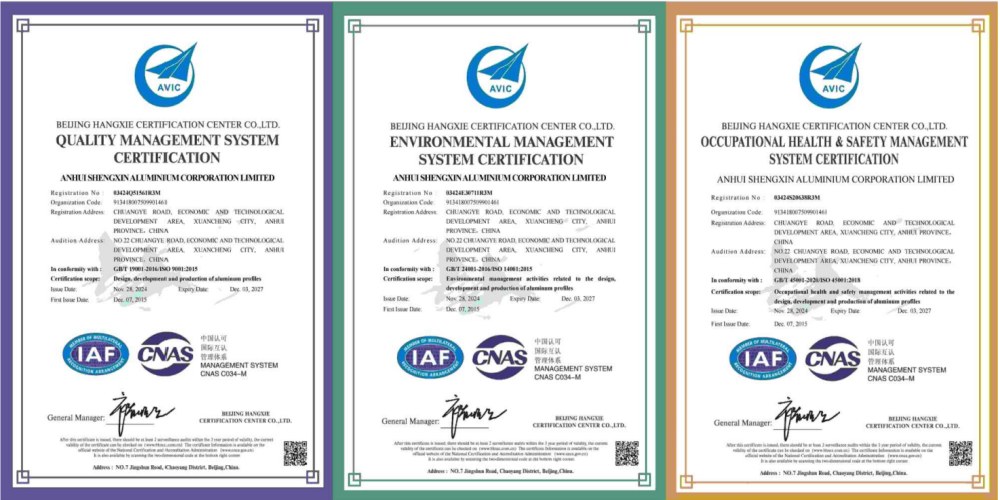
Shengxin operates three dedicated anodizing lines in-house, with full compliance to Qualanod, BS 3987, and JIS H8601 standards. Every batch of anodized aluminium angle profiles is checked for coating thickness, sealing quality, and colour consistency. The result is a building- and fabrication-grade product that performs reliably in interior and exterior environments, from drywall corner beads to exposed façade substructures. For applications requiring alternative finishes, our powder coated aluminium extrusions and mill-finish angles are also available.
Features & Benefits
-
6063-T5 alloy optimized for finish quality: Excellent extrudability produces smooth, defect-free surfaces that anodize to a uniform, attractive appearance — superior to 6061 for decorative and architectural applications.
-
Durable anodized protection: A clear or coloured anodic layer (typically 10–25 microns thick) provides corrosion resistance exceeding 336 hours in salt spray testing (ASTM B117, sealed), with zero organic emissions or VOC concerns.
-
Integral finish that won't peel: Unlike paint or powder coating, the anodized layer is grown from the aluminium itself. It bonds at the molecular level, eliminating delamination risk at edges and corners over decades of service.
-
Good mechanical properties for general fabrication: With tensile strength ≥160 MPa and yield strength ≥110 MPa, 6063-T5 provides adequate structural capacity for most non-critical brackets, frames, and architectural supports.
-
Excellent colour consistency batch to batch: Computer-controlled anodizing parameters and spectrophotometer verification ensure that angle profiles delivered months apart match in tone and sheen.
-
100% recyclable with no coating removal required: Anodized aluminium can be recycled directly without stripping, contributing to closed-loop sustainability and LEED building credits.
Standard Sizes & Material Properties
The table below shows commonly stocked 6063-T5 anodized equal leg angles. Other sizes, unequal legs, and custom alloys are produced on demand.
|
Leg Length (A x B)
|
Thickness (t)
|
Alloy & Temper
|
Typical Anodizing Thickness
|
|
15 x 15 mm
|
1.5 – 3.0 mm
|
6063-T5
|
AA15 (15 µm)
|
|
25 x 25 mm
|
2.0 – 4.0 mm
|
6063-T5
|
AA15 – AA20
|
|
30 x 30 mm
|
2.0 – 5.0 mm
|
6063-T5
|
AA15 – AA20
|
|
40 x 40 mm
|
3.0 – 6.0 mm
|
6063-T5
|
AA20 (20 µm)
|
|
50 x 50 mm
|
4.0 – 8.0 mm
|
6063-T5
|
AA20 – AA25
|
6063-T5 Mechanical Properties
|
Property
|
Value
|
Standard Reference
|
|
Tensile Strength (Rm)
|
≥160 MPa
|
EN 755-2
|
|
Yield Strength (Rp0.2)
|
≥110 MPa
|
EN 755-2
|
|
Elongation (A50)
|
≥8%
|
EN 755-2
|
|
Hardness (Brinell)
|
~60 HBW
|
Typical value
|
|
Density
|
2.69 g/cm³
|
—
|
Mechanical properties are typical minimum values for profiles with wall thickness ≤25 mm. Actual values are confirmed on mill certificates supplied with each order.
Anodizing Specifications
|
Anodizing Type
|
Sulphuric acid anodizing to Qualanod / BS 3987 / JIS H8601
|
|
Coating Grade
|
AA10, AA15, AA20, AA25 (per BS 3987 / EN 12373)
|
|
Standard Colours
|
Clear (natural matte silver), black, dark bronze, light bronze
|
|
Sealing Quality
|
Hot sealed; tested per ISO 3210 (acid dissolution test) or ISO 2143 (dye spot test)
|
|
Corrosion Resistance
|
≥336 hours salt spray (ASTM B117, sealed) without pitting
|
|
Coating Hardness
|
Typically 250–350 HV (microhardness of anodic film)
|
Applications for 6063 T5 Anodized Angles
-
Architectural edge protection & trim: Anodized angles serve as corner beads, wall edge protectors, and skirting board trims in commercial and residential buildings where a clean, durable finish is required.
-
Window & door framing components: Used as sub-frames, glazing bead supports, and coupling angles within aluminium fenestration systems — the anodized finish matches other architectural aluminium elements perfectly.
-
Display and retail fixtures: Anodized angles form the structural framework for shelving, display cases, and point-of-sale units in retail environments where appearance and hygiene are important.
-
Furniture and interior design: Legs, brackets, and decorative trims in desks, cabinets, and modular furniture systems — the anodized surface resists fingerprints and is easy to clean.
-
Signage and exhibition stands: Lightweight anodized angles provide a professional-looking frame for signs, pop-up displays, and exhibition booths, with a finish that photographs well under lighting.
-
General workshop and DIY fabrication: Aluminium extrusions like anodized angles are popular with fabricators and hobbyists for building jigs, workbench frames, and enclosures — the anodized surface eliminates the need for painting.
Customisation & Value-Added Services
|
Service
|
Capability
|
|
Custom Length Cutting
|
Precision saw cutting to specified lengths (±0.5 mm standard)
|
|
Drilling & Tapping
|
CNC drilled holes, countersinks, and tapped threads up to M10
|
|
Mitre Cutting
|
45° and custom angle cuts for frame assembly
|
|
Custom Anodized Colours
|
Electrolytic colouring for bronze and black tones; organic dye options for special hues
|
|
Packaging
|
Protective interleaving to prevent abrasion during transit; custom pallets and labelling
|
Why Shengxin for Anodized Aluminium Angle Profiles?
Anodizing quality is determined by the chemistry, process control, and preparation that happens before the profile enters the bath. Shengxin’s 29-year integrated manufacturing approach — from billet to finished angle — ensures that every 6063-T5 profile is extruded with a surface quality worthy of a premium anodized finish.
3 In-House Anodizing Lines
Dedicated clear, black, and bronze anodizing lines with automated hoist systems ensure consistent immersion time, temperature, and current density for every batch.
Qualanod Certified Quality
Our anodizing facility operates under a Qualanod-compliant quality system. Regular audit testing for coating thickness, sealing quality, and UV resistance keeps every shipment within spec.
Vertical Integration = Traceability
Extrusion, ageing to T5 temper, and anodizing all happen within our campus. One batch number traces your angle from billet cast to finished profile.
Global Supply & Compliance
$120 million total assets. 100,000-ton annual capacity. Export to 97 countries with full compliance documentation including Qualanod certificates, mill certs, and packing lists.
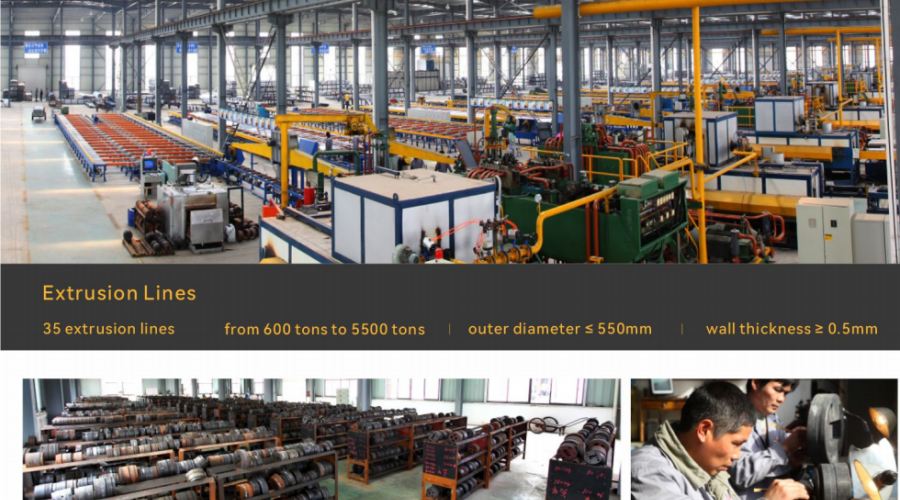
Seamless from Billet to Finished Angle: 35 extrusion lines (600–5500 tons), 500,000+ dies in stock, 5,000-ton warehouse, and 5 container loading platforms. We can provide mill finish, anodized, or powder coated aluminium extrusions from a single source — simplifying your supply chain and quality assurance.
6063 T5 Anodized Aluminium Angle FAQ
Q: Why choose 6063-T5 over 6061-T6 for an anodized angle?
A: 6063 provides a smoother extrusion surface and more uniform anodizing response, making it the preferred alloy for architectural and decorative applications. If higher strength is required, we offer 6061-T6 anodized angles — see our thick wall aluminium angle section for heavy-duty options.
Q: Will the anodized finish fade or turn chalky outdoors?
A: Our anodized finishes are sealed to Qualanod standards and resist UV degradation. For exterior architectural applications with intense sun exposure (e.g., curtain wall components), we recommend a minimum coating thickness of AA20 or AA25, and dark colours (bronze, black) offer the best long-term colour stability. For the highest exterior durability, consider our PVDF coated profiles.
Q: Can anodized angles be welded after finishing?
A: The anodized coating must be removed from the weld area before welding, as it is non-conductive and will contaminate the weld pool. We recommend welding first, then anodizing the completed assembly. Our team can manage the full process — extrusion, fabrication, welding, and final anodizing — under one roof.
Q: What is the minimum order quantity for 6063-T5 anodized angles?
A: For stocked standard sizes in clear anodized finish, small quantities (even single 6m bars) are available. Custom colours, non-standard sizes, or special anodizing thicknesses typically require a minimum production run of 300–500 kg. Contact us with your specification for an exact quotation.
Q: How should anodized aluminium angles be cleaned and maintained?
A: Clean anodized surfaces with mild soap and water using a soft cloth or sponge. Avoid abrasive cleaners, scouring pads, strong acids, or alkaline solutions, which can damage the anodic layer. For exterior applications, an annual wash with clean water is typically sufficient to maintain the finish's appearance.
← Back to Aluminium Angle Profiles product category
| See also: Equal Leg Aluminium Angle, Unequal Leg Aluminium Angle, Thick Wall Aluminium Angle