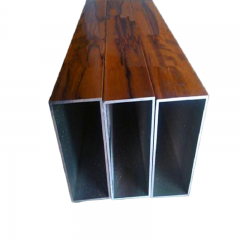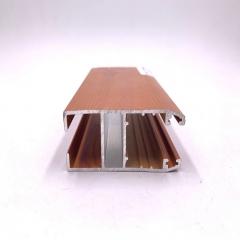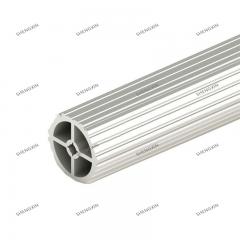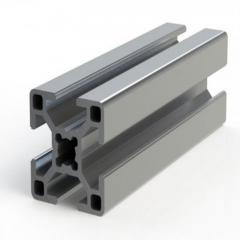
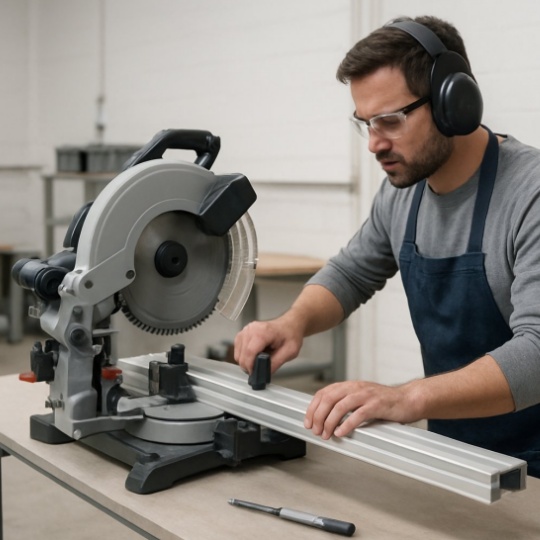
How To Cut Extruded Aluminum Without Chatter, Burrs, Or Drift Step 1 Choose the Best Way to Cut Aluminum Extrusion If you are learning how to cut extruded aluminum, choose the method before you touch the saw. The real question is not just how to cut aluminum, but which setup gives you the least movement, the cleanest edge, and the safest cut for your profile. Quick shop guidance from INT Machinery, SinoExtrud, and The Fabricator all point in the same direction: use a tool suited to nonferrous cutting, keep the work stable, and do not ignore chip control. Pick the Right Method for Your Extrusion If you are asking, "how can i cut aluminum" with the fewest surprises, start with the profile itself. For straight crosscuts on pieces that fit the saw, a properly equipped miter-style or cutoff setup is often the most practical starting point. SinoExtrud lists miter saws with non-ferrous blades among the most reliable general-use tools, while INT Machinery describes proper aluminum chop saws as common and economical for extrusion work. Band saws can also cut aluminum well, but The Fabricator notes that soft nonferrous materials can load gullets and that structural shapes create interrupted cuts, which raises the importance of blade pitch and cutting parameters. Straight crosscuts are usually easiest on a properly equipped miter-style setup when the profile fits the saw. Best Tool by Size Shape and Job Volume Method Cut quality Repeatability Beginner friendliness Setup effort When to avoid Miter saw Good to very good with a non-ferrous blade and rigid setup Good High Low to moderate When the profile exceeds capacity, support is poor, or the saw is a light-duty wood-first model Chop saw or dedicated cutoff saw Very good for straight profile work Very good Moderate Moderate When you need improvised clamping, have no infeed or outfeed support, or the machine is not intended for steady aluminum work Circular saw Variable Variable to good with a guide Low to moderate High When long stock cannot be fully supported and guided Table saw Variable to good in manual-approved nonferrous setups Good Low High When shapes are unstable against the fence or the saw and blade guidance do not support nonferrous cutting Band saw Fair to good, highly blade-dependent Moderate Moderate Moderate When you need assembly-ready faces without tuning blade pitch, speed, and feed Outsourced cutting Excellent Excellent Very high Low When you only need a quick one-off adjustment in the shop The best way to cut aluminum changes with size, wall thickness, shape, alloy, and quantity. Small to medium sections usually favor miter-style cutting. Thin-wall and hollow profiles need more support because they can vibrate or deform. Open sections such as channel, angle, and similar shapes create interrupted cuts, which are tougher on blades. Alloy matters too. Nonferrous grades do not all behave the same, and softer materials can gum up teeth if heat and chip evacuation are not controlled. Quantity ...
Read More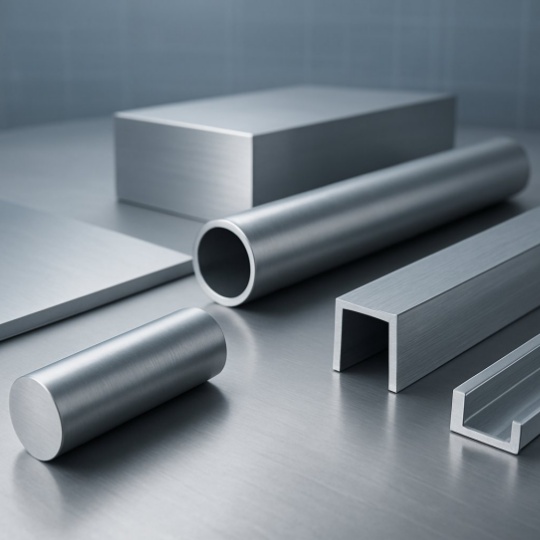
Aluminum Alloy Decoded: Stop Guessing Grades And Tempers What Is Aluminum Alloy Really? What Is an Aluminum Alloy Aluminum is a chemical element. An aluminum alloy is aluminum intentionally mixed with other elements to change performance. In practice, alloying lets engineers keep aluminum's low weight while adjusting strength, corrosion behavior, formability, weldability, or machinability for a specific job. If you have ever wondered what is aluminum alloy, the plain answer is simple: it is not a different metal from aluminum, but a tuned version of it. And if your question is is aluminum an alloy, the answer is no. Aluminum itself is an element. Many products people casually call aluminum are actually alloys made from that element. Aluminum Element Versus Alloyed Material The confusion usually comes from everyday wording. In real manufacturing, people may mean three different things when they say aluminum. One is the element itself. Another is commercially pure aluminum, often the 1xxx series, which contains at least 99.0% aluminum and is valued for conductivity, softness, and corrosion resistance. The third is alloyed material, where small additions of alloying elements such as magnesium, silicon, copper, zinc, or manganese create very different behavior. Composition: Pure or commercially pure grades are mostly aluminum. Alloyed grades include intentional additions. Strength: Pure aluminum is relatively soft. Alloys can be far stronger. Corrosion behavior: Many grades resist corrosion well, but performance varies by chemistry. Typical use: Pure grades fit conductivity and forming needs. Alloys fit structural, machined, welded, or high-load parts. Why the Distinction Matters in Real Projects A foil-like sheet, a marine panel, and an aircraft fitting may all be called aluminum, yet they should not be specified the same way. Picking the wrong family can mean a part bends too easily, corrodes too fast, or becomes hard to fabricate. The real differences start at the chemistry level, where each added element pushes the metal in a different direction. How Alloying Elements Change Performance The biggest differences in aluminum often start with a surprisingly small change in chemistry. That is why two parts that both look like aluminum can machine, weld, bend, or corrode very differently in service. In practical terms, the aluminum alloy composition tells you what the metal is being optimized to do. Which Elements Change Aluminum Performance Among the most important elements of aluminum alloy systems are magnesium, silicon, copper, zinc, and manganese. Metallurgy sources from Total Materia and fabrication guidance from Lincoln Electric show a clear pattern: each addition shifts the balance between strength, corrosion resistance, weldability, and formability. Element What it tends to improve Typical tradeoff Magnesium Higher strength, good corrosion resistance, good weldability More difficult fabrication as content rises Silicon Better fluidity, lower m...
Read More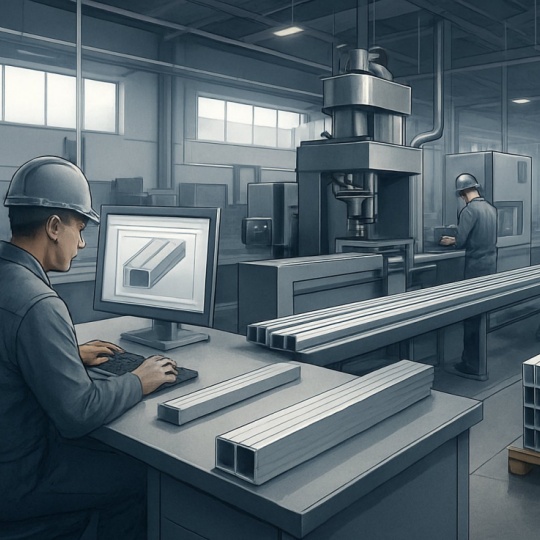
Behind Every Aluminium Profile Manufacturer Quote: Hidden Tradeoffs What an Aluminium Profile Manufacturer Really Does A quote can look simple on paper. The factory name, the profile drawing, the price per kilogram. Yet the role behind that quote is usually much broader than many buyers expect. For procurement teams and engineers, that distinction matters because cost, risk, and lead time are shaped long before the metal leaves the press. An aluminium profile manufacturer is a company that produces shaped aluminum sections, usually through extrusion, and often supports the full project path from design review and die development to fabrication, finishing, inspection, packing, and delivery. That definition lines up with how Flexi and Fortune describe profile production: extrusion creates precise cross-sectional shapes, but the usable part often depends on several downstream steps. What an Aluminium Profile Manufacturer Does An experienced aluminium profile manufacturer does more than push heated billet through a die. It helps translate application needs into a manufacturable section. That may include checking wall thickness, reviewing shape complexity, suggesting standard sections, or flagging features that could raise scrap or tooling risk. In practice, many aluminium profile manufacturers act as technical partners as much as production vendors. How Aluminium Profiles Fit Modern Manufacturing Profiles show up almost everywhere because they combine low weight, corrosion resistance, and design flexibility. Reference material highlights their use in construction, transportation, electronics, industrial equipment, and modular systems. That is why an aluminium extrusion profile manufacturer may be involved in anything from window frames and machine guards to heat sinks and conveyor structures. An aluminium profile section manufacturer is not just selling a shape. It is helping determine how that shape performs in assembly, appearance, and service life. Services Beyond Basic Extrusion Buyers often compare only the raw extrusion rate, even though the full service package can change the real landed cost. Design and drawing review Die design and tooling coordination Billet and alloy selection Extrusion, cooling, straightening, and cutting Machining, drilling, punching, or other fabrication Anodizing, powder coating, or other surface finishing Inspection and dimensional checks Protective packing, labeling, and shipment support Those hidden scope differences are exactly why two quotes for the same drawing can look similar at first glance and behave very differently once production begins. The process behind that gap is where supplier comparisons start to get real. Aluminium Profile Manufacturing Process from Design to Delivery Price gaps start to make more sense when the workflow is visible. In real aluminium profile manufacture, the quoted shape moves through a chain of design, tooling, heat control, finishing, inspection, and packing decisions. That is wh...
Read More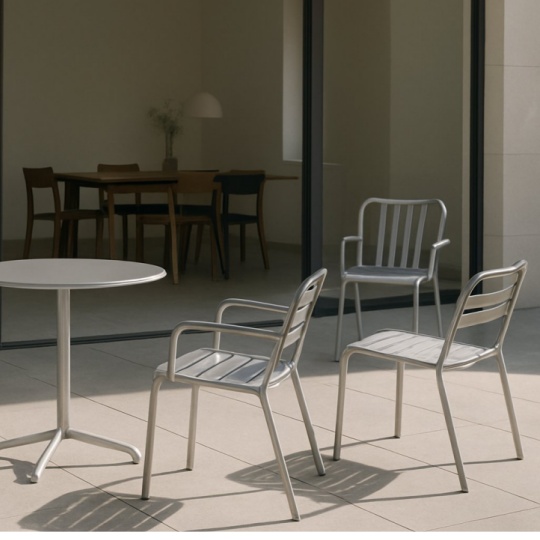
Aluminum Chairs Decoded: What Lasts, What Fails, What Fits What Aluminum Chairs Are Good At Aluminum chairs are everywhere, from dining rooms and balconies to patios and pool decks, but the label alone does not tell you whether a chair will actually last. This guide starts with the material itself, not a shopping list, so you can judge an aluminum chair on what really matters before comparing styles, prices, or features. What Counts as an Aluminum Chair An aluminum chair is a seat that uses aluminum as its main structural material, usually in the frame, for indoor or outdoor use. That sounds simple, but real-world products vary a lot. One model may be all metal, while another pairs the frame with sling fabric, woven panels, or cushions. Marketplace filters such as 'aluminum chairs outdoor' often group very different designs together. Even classic aluminum lawn chairs share the same base material but not the same construction quality. The takeaway is simple: material is only one part of performance. Core Benefits of Aluminum Seating Why do so many buyers choose aluminum outdoor chairs and other lightweight metal seating? First, aluminum is easier to move than steel. Remarkable notes it has roughly one-third the density of steel. It also resists rust well because it forms a protective oxide layer. On top of that, the metal is easy to shape into sleek, modern lines or more traditional forms, which helps explain the wide design range across aluminum patio furniture. Many frames also use powder coating for added surface protection and color options. Still, low maintenance is not the same as no maintenance. Dirt, moisture, salt, and neglected fasteners can shorten finish life, and softer metals can dent under hard impact. Situations Where Aluminum Makes Sense This material usually makes sense when you want seating that is easier to rearrange, less prone to rust problems, and available in many looks. That is true for patio dining, balcony seating, sunrooms, and many aluminum chairs outdoor collections. It also helps explain the enduring appeal of aluminum lawn chairs for casual, movable seating. Choose aluminum if: you want lighter weight, corrosion resistance, broad style flexibility, and simpler upkeep than many heavier metals. Consider another material if: you want maximum heft for windy spots, a warmer natural look, or a surface that may hide dents better. One last expectation check matters before you shop: aluminum tells you the base metal, not the whole durability story. Finish quality, frame shape, welds, joints, and hardware often decide whether two chairs that both say aluminum feel sturdy, stack well, or age gracefully. That gap between label and performance is where construction details start to matter. Cast vs Tubular Aluminum Chair Construction That gap between label and performance shows up fast in the frame. Two seats can both be sold as aluminum, yet one feels solid and traditional while another feels light, sleek, and easier to move. If...
Read More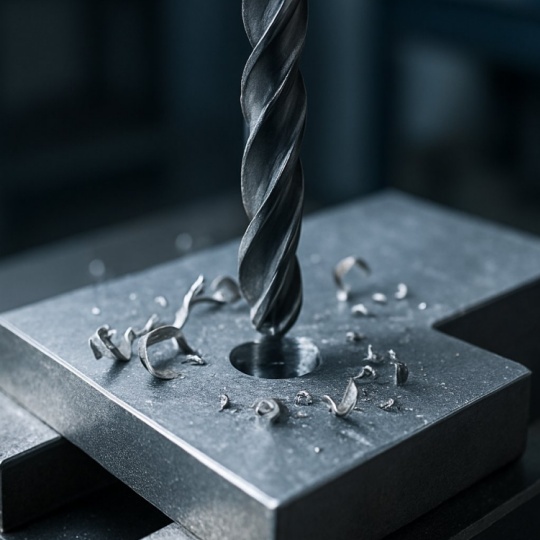
Aluminium Drilling: Match Alloy, Bit Shape, And Feed To Avoid Rework How to Drill Aluminum Without Smearing or Burrs Aluminum gets labeled as an easy material because it is softer than steel. That sounds helpful, but it often leads people straight into bad hole quality. In real aluminium drilling, softness is only part of the story. Aluminum is also ductile, which means it can stay in contact with the cutting edge, smear instead of fracture cleanly, and stick where chips should slide away. The result is a job that feels simple at first, then turns into wandering starts, grabbing at breakthrough, rough walls, and heavy burrs. That is why beginners searching how to drill aluminum and experienced operators chasing cleaner holes often run into the same physics. The material may not resist the tool like harder metals do, but it can still create heat, clog flutes, and build up on the cutting edge when chip formation and evacuation are not under control. What Aluminium Drilling Really Means Aluminium drilling is the process of making holes in aluminum while controlling chip formation, heat, and evacuation so the metal cuts cleanly instead of smearing onto the drill. This definition matters because drilling aluminum is not simply a lighter version of general metal drilling. Material behavior drives the outcome. Cutting Tool Engineering notes that aluminum's softness and ductility keep it in prolonged contact with the cutting edge, which raises the risk of built-up edge and chip packing. So even a basic hole can go off track if the setup lets the drill rub instead of shear. Why Aluminum Can Smear Instead of Cut Smearing usually starts when friction, heat, and poor chip flow outrun clean cutting. Instead of separating into manageable chips, the material can form long, stringy chips that wrap, pack, and drag across the hole surface. A practical drilling aluminum guide also emphasizes clamping, steady pressure, chip clearing, and lubrication because once chips stop leaving the hole efficiently, the drill starts rubbing harder and hole quality drops fast. That is the hidden trap in drilling through aluminum. A metal that looks soft can still punish a poor setup by overheating quickly, welding to the edge, and leaving a torn finish. Signs Your Setup Is Fighting the Material Before changing tooling or technique, watch the symptoms. Aluminum usually tells you what is wrong. The hole start wanders instead of tracking where you marked it. The drill grabs or pulls through at breakthrough. Long chips wrap around the tool or sticky chips fill the flutes. Exit burrs become larger than expected, especially in thin stock. Hole walls look smeared, torn, or unusually rough. The cut feels hot, noisy, or suddenly resistant. Hole size or roundness becomes inconsistent from one part to the next. Those clues point to the real variables behind hole quality: the alloy in front of you, the shape of the drill, and the way feed and heat are managed. Aluminum is not one single drill...
Read More


 online service
 0086 136 3563 2360
 sales@sxalu.com
 +86 136 3563 2360
 English
 français
 Deutsch
 русский
 español
 português
 العربية
 ไทย
ไทย Việt
Việt Українська