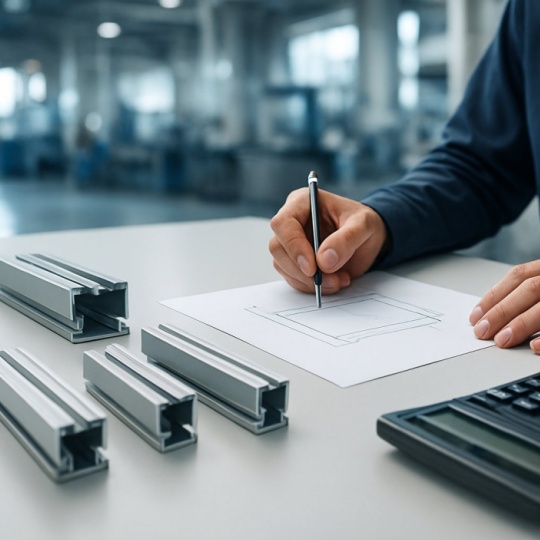
Aluminum Extrusion Cost Calculator: From Drawings To Quote What This Aluminum Extrusion Cost Calculator Really Estimates When you need a budget before a supplier has reviewed your drawing, a manual estimate helps. An aluminum extrusion cost calculator is best understood as a clear framework, not a magic price engine. If you are also asking, what is aluminum extrusion, it is the process of pushing heated aluminum through a die to create continuous shapes with a consistent cross-section. That matters because shape, weight, finish, and order size all change the final price. An aluminum extrusion cost calculator is a transparent method for estimating likely project cost before a formal quote exists. Used well, this approach can estimate total order cost, cost per kg, cost per meter, and cost per part for standard or custom aluminum extrusions. It cannot confirm exact die feasibility, real-time press availability, final scrap rate, minimum order quantity, or the true freight charge to your destination. In other words, it is the text version of a calculator page where every assumption stays visible, so buyers, engineers, and sourcing teams can test options instead of relying on a black-box guess. Profile drawing, sketch, or section dimensions Alloy and temper Weight per meter, or enough data to estimate it Cut length and order quantity Surface finish requirements Machining or other secondary operations Packaging needs and shipping destination Tooling assumption, such as standard shape or new die What an Aluminum Extrusion Cost Calculator Should Output A useful estimate should show more than one number. You will usually want startup cost, recurring cost, total order value, and converted unit views by kilogram, meter, and part. That makes it easier to compare different aluminum extrusion profiles, design options, and order volumes on the same basis. Where Manual Estimates Are Most Useful Manual estimates are most useful during early design review, internal budgeting, RFQ preparation, and quote checking. Imagine comparing two aluminum extrusion concepts, one lighter but more complex and one heavier but simpler. A clear estimate helps you see which driver is moving first. The math only becomes trustworthy when the terms do too, because words like die cost, yield, and finishing often mean different things to different teams. Know Aluminum Extrusion Profile Cost Inputs Sounds complex? It usually feels that way because two quotes can use the same word for very different cost buckets. Before any manual estimate works, you need shared definitions. That matters whether you are pricing a custom aluminum extrusion profile from a drawing or checking a standard option in an aluminum extrusion profiles catalog. Key Terms That Change the Quote For a typical aluminum profile extrusion project, some inputs mainly affect the first production run, while others repeat on every order. Cost ranges from Sino Extrud show why this distinction matters: a simple small aluminum ex...
Read More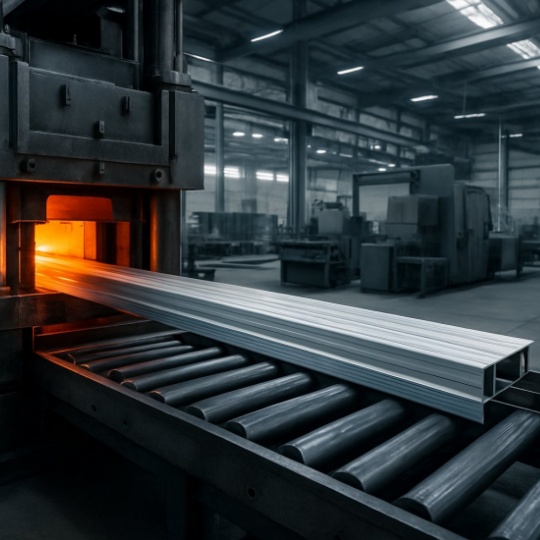
Aluminum Extruder Choices That Lock In Cost, Fit, And Finish What an Aluminum Extruder Really Means An aluminum extruder usually means the company or operation that produces aluminum shapes by pushing heated metal through a die. In strict shop-floor language, though, the extruder is not the same thing as the press, the process, or the finished part. That distinction matters when you are sourcing anything from channels and enclosures to structural profiles, extruded aluminum framing, extruded aluminum rails, or extruded aluminum tubing. What an Aluminum Extruder Is If you have searched what is extruded aluminum, the short answer is this: it is aluminum that has been forced through a shaped die opening so the emerging length matches that cross-section. Bonnell Aluminum describes extrusion as a shaping process in which material flows through a die, creating a long piece with the same profile as the opening. Extruder vs Press vs Profile The extruder is usually the producer, the press is the machine, and the profile is the finished shape. Aluminum extruder: the manufacturer or extrusion operation making the part. Extrusion press: the hydraulic machine with the ram, container, and tooling that applies force. Extrusion process: the full method of heating billet, pressing it through a die, cooling, straightening, cutting, and aging. Profile or section: the finished aluminum shape, such as a rail, channel, tube, or enclosure component. Custom Profiles terminology notes that profile and extrusion are commonly used to mean the same thing. Supplier: the business selling stock or custom aluminum extruded products, whether or not it owns the press line. Why Terminology Clarity Matters Buyers ask for an aluminum extruder when they may actually need a press size, a custom die, or a finished profile ready for anodizing. Engineers may specify extruded aluminum tubing or extruded aluminum rails, while procurement is comparing supplier capability. Clean terminology prevents quoting errors, mismatched expectations, and confusing conversations about lead time, tolerances, or finish. It also sets up the real question behind every project: how the line turns billet into usable extruded aluminum framing, rails, and other shapes step by step. How Is Extruded Aluminum Made? Terminology helps, but the real picture appears on the line itself. If you are asking how is extruded aluminum made, think of it as a controlled chain rather than one hard push through a die. Search phrases like extruding aluminum or aluminum extrude make the job sound simple. In practice, every stage affects straightness, surface quality, dimensional control, and how ready the profile is for machining or finishing. Billet Preparation and Die Setup Before the press starts, temperature and tooling set the baseline. Process overviews from RapidDirect and ADM describe preheating the die to about 450-500 C and the billet to roughly 400-500 C so the alloy stays solid but becomes workable enough to flow. Sele...
Read More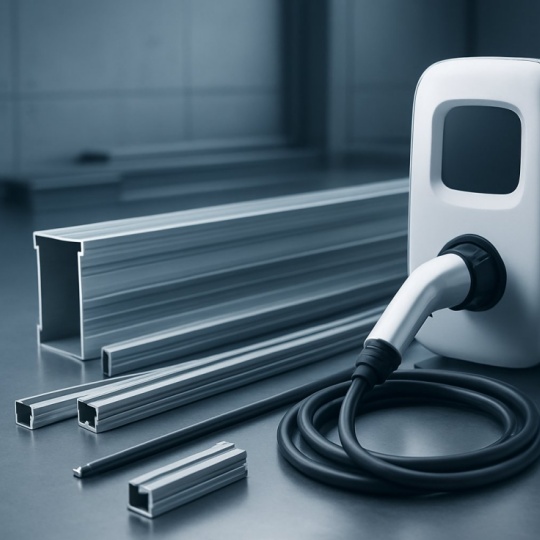
Aluminum Extrusions for Electric Vehicle Accessories: Cut Failure Risk What aluminum extrusions mean in EV accessories Sounds complex? For teams evaluating aluminum extrusions for electric vehicle accessories, the basic idea is simpler than it sounds. If you have ever wondered what is aluminum extrusion, it is a manufacturing process where aluminum alloy is pushed through a shaped die to create a long part with a constant cross-section. Industry guides from Gabrian and IQS Directory describe the result as a continuous profile that is then pulled out, cut to length, and often heat treated, finished, or machined for its final use. Aluminum extrusion creates a continuous aluminum profile by forcing alloy material through a die with a defined cross-section. In EV work, that profile might later become a support rail, enclosure wall, mounting member, trim element, or thermal support part. This article stays focused on accessory-oriented applications, not full vehicle body structures or major structural assemblies. That accessory lens matters because design priorities are different. Buyers may care about repeatability and finish. Engineers may care about strength, wiring paths, or tool access. Product teams may need one aluminum profile extrusion to handle several jobs at once. Why aluminum extrusion profiles fit accessory design Lightweight structures: aluminum has a density about one-third that of steel, which helps reduce mass without giving up useful strength for many support parts. Profile flexibility: aluminum extrusion profiles can be made as solid, hollow, or semi-hollow shapes, which supports channels, tubes, and more complex cross-sections from a single die concept. Corrosion resistance: aluminum naturally forms a protective oxide layer, and finishes such as anodizing or powder coating can improve appearance and environmental resistance. Feature integration: one aluminum profile extrusion can combine mounting faces, cable-routing space, fastener access, and visible surfaces that would otherwise require multiple parts. You will notice that this is why aluminum extrusions show up in far more than battery-related hardware. The real decision is not just whether extrusion is possible. It is whether the profile matches the accessory's function, alloy needs, fabrication plan, joining method, and service environment. Those choices start to make more sense when you look at where extruded forms actually appear across EV accessory categories. Where EV accessories use extruded aluminum When one profile has to protect electronics, route a cable, and still look clean, application context matters. In aluminum extrusions for electric vehicle accessories, the same extrusion idea can support very different jobs. A charger housing needs enclosure strength and service access. An aluminum extrusion rail may need straight mounting faces and repeatable hole locations. An aluminum extrusion frame may lean more toward appearance, cover fit, and easier assembly. A rece...
Read More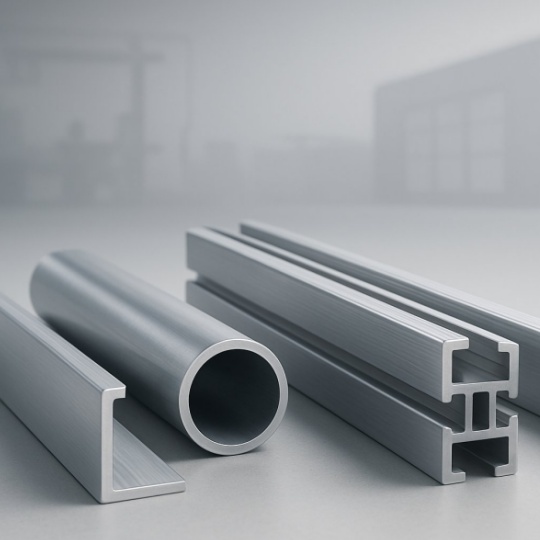
Aluminum Extrusions Decoded: Avoid Costly Profile Mistakes What Aluminum Extrusions Really Are Aluminum extrusions are aluminum shapes made by pushing heated material through a die so it comes out with the same cross-section from end to end. If you are new to the topic, that definition does most of the heavy lifting. An aluminum extrusion is not one specific part. It is a manufacturing method used to make long, consistent shapes. Those shapes can be simple, like an angle or channel, or more complex, like a framed profile with hollow spaces inside. What Aluminum Extrusions Are In plain English, the die is the pattern, and the metal follows it. A guide from Kloeckner Metals notes that these profiles may be solid, hollow, or semi-hollow. That is why aluminum extrusion profiles show up in such different products, from furniture and appliance parts to structural framing and transportation components. Many people think only of industrial rails, but extruded aluminum is much broader than that. How the Extrusion Process Shapes Metal The basic idea is surprisingly easy to picture. Heated aluminum is pushed through a steel die under pressure. As it exits, it takes on the die opening's shape and keeps that profile along its length. Gabrian compares the process to squeezing toothpaste through a tube, which is a helpful way to understand aluminum extrusion without getting lost in machine details. After the profile comes out, it can be cut, finished, heat treated, or machined depending on the final application. What matters most for beginners is this: the die controls the shape, so the process is built for consistency. If you need the same section repeated again and again, extrusion makes that possible. Why Extruded Profiles Are Used So Often People choose aluminum extrusions because they solve several design problems at once. The material is valued for being lightweight and corrosion-resistant, and the process allows repeatable forms that are useful in both architectural and industrial settings. Design flexibility: one process can create angles, channels, tubes, trims, frames, and custom sections. Repeatable geometry: long runs keep the same cross-section, which helps with fit and assembly. Lightweight structures: profiles can reduce bulk in products, enclosures, and support systems. Corrosion resistance: aluminum naturally resists rusting, which supports indoor and outdoor use. Finish options: profiles can later be anodized, painted, machined, or otherwise finished for appearance and performance. That wide range of uses is exactly why first-time buyers get tripped up. A part may be made from extruded aluminum, but the right form could be a tube, a bar, a channel, or a framing profile, and those labels do not mean the same thing. How Extrusions Differ From Other Metal Shapes Many aluminum extrusion shapes look similar in a catalog, which is where costly mix-ups start. A buyer may ask for a tube, receive a framing profile, or choose sheet when a repeated cross...
Read More
T6 Aluminum Decoded: Choose, Fabricate, And Weld It Right What T6 Aluminum Usually Refers To Search for t6 aluminum, and most readers are really looking for 6061-T6. That shortcut is common, but it mixes up two different ideas: alloy chemistry and temper condition. Getting that distinction right helps with search intent, prevents buying mistakes, and sets realistic expectations for machining, bending, and welding. What T6 Aluminum Actually Means T6 is a temper designation, not an aluminum alloy, and it describes material that has been solution heat treated and artificially aged. That definition matches technical explanations from Kloeckner and Xometry. In plain terms, T6 tells you the aluminum was processed to become stronger and harder. It does not tell you which alloy family you have. Alloy Versus Temper in Plain English Alloy: the material recipe. For 6061, the key alloying elements are magnesium and silicon. Temper: the material condition after processing. T6 describes a specific heat-treated state. Full designation: 6061-T6 combines both, which is why 6061 t6 aluminum is the more precise term. If you are asking what is 6061 aluminum, you are asking about the alloy itself. If you are asking what is 6061 t6 aluminum, you are asking about that alloy in a strengthened temper. That difference matters because two products can share the same alloy number but behave differently in the shop. Why Most Searches Point to 6061-T6 Most searches land on 6061-t6 because it is one of the most commonly requested versions of 6061 and is widely used in structural applications, welded assemblies, electronics, and general industrial parts, as described by Kloeckner. Buyers usually want its well-known balance of strength, corrosion resistance, machinability, and weldability. Still, asking for 6061 t6 or 6061-t6 is far safer than asking for T6 alone. One term points to a complete material designation. The other only names the temper. That small wording change shapes everything from quoting to fabrication planning, especially once the heat-treatment path behind T6 comes into focus. How the T6 Temper Changes 6061 What buyers and fabricators often miss is that the temper label points to a process, not just a performance claim. When a print calls for material 6061 t6, it is specifying 6061 after a controlled heat-treatment route that makes the alloy noticeably stronger and harder than softer 6061 tempers. How 6061 Reaches the T6 Temper For aa 6061 t6, the path is well established in technical references from Jeelix and fabrication guidance from The Fabricator. In simple terms, the alloy is first heated high enough to dissolve key alloying elements into a uniform solid solution, then rapidly cooled, and finally reheated at a lower temperature to develop its full temper. Solution heat treatment: 6061 is heated to an elevated temperature, around 530 C or 985 F in the Jeelix reference, so magnesium and silicon dissolve into the aluminum matrix. Quenching: Rapid cooling loc...
Read More


 online service
 0086 136 3563 2360
 sales@sxalu.com
 +86 136 3563 2360
 English
 français
 Deutsch
 русский
 español
 português
 العربية
 ไทย
ไทย Việt
Việt Українська