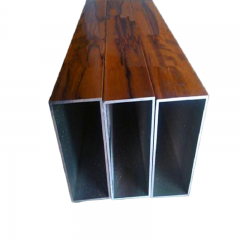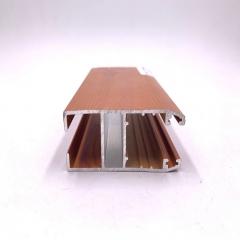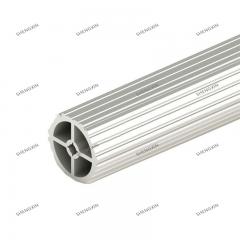
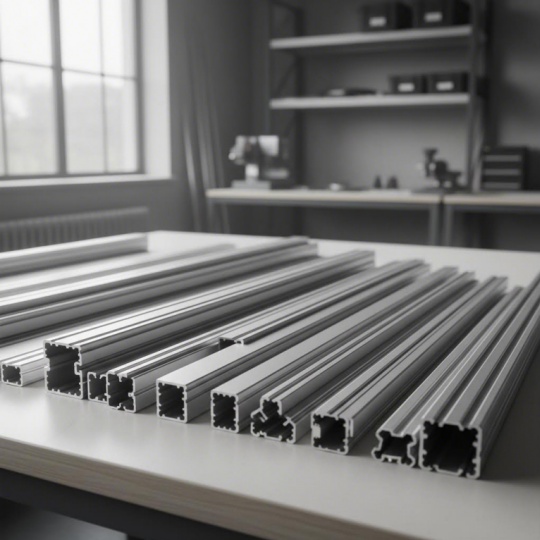
Buy Aluminum Extrusion Canada: T-Slot Vs Smooth Profiles Decoded Understanding Aluminum Extrusion for Canadian Buyers When you need versatile, lightweight structural components for industrial machinery, architectural frameworks, or DIY builds, aluminum extrusions offer an unmatched combination of strength and adaptability. But what exactly are they? Aluminum extrusion is a manufacturing process where heated aluminum alloy is forced through a shaped die to create profiles with consistent cross-sections. Think of it like squeezing toothpaste through a shaped nozzle - except the result is precision-engineered extruded aluminum that can form everything from simple channels to complex multi-chambered profiles. For Canadian buyers looking to purchase these materials, the landscape presents unique opportunities and challenges. Whether you source from Ontario extrusions specialists, explore options from established players like Can Art Aluminum Extrusion Canada Inc, or consider international suppliers, understanding the full picture helps you make smarter purchasing decisions. What Makes Aluminum Extrusion Essential for Canadian Projects Why do so many Canadian manufacturers, fabricators, and makers rely on aluminum extrusion profiles? The answer lies in their remarkable versatility. These profiles deliver excellent strength-to-weight ratios, natural corrosion resistance, and the ability to be customized into virtually any shape your project demands. From machine frames in automotive plants to modular workstations in tech startups, aluminum extrusions serve as the backbone of countless applications across alu Canada industries. Their recyclability also aligns with growing sustainability requirements that many Canadian businesses now prioritize. Understanding the Canadian Aluminum Supply Landscape Purchasing aluminum extrusions in Canada involves navigating a supply chain that spans domestic manufacturers, North American distributors, and international exporters. Each option carries distinct implications for your project timeline, budget, and quality requirements. Here are the key factors you should evaluate when sourcing aluminum extrusions: Domestic availability: Canadian suppliers often stock common profile series and can offer faster turnaround for standard shapes. Regional proximity reduces shipping complexity and enables easier communication for custom requirements. Shipping costs: Geographic distance significantly impacts landed costs. Cross-country shipments within Canada, cross-border orders from the US, or overseas imports each carry different freight considerations that affect your total investment. Lead times: Stock profiles from domestic distributors may ship within days, while custom extrusions requiring new dies can take weeks or months depending on supplier capacity and location. Custom fabrication options: Many suppliers offer value-added services including precision cutting, CNC machining, drilling, and surface finishing. Evaluating thes...
Read More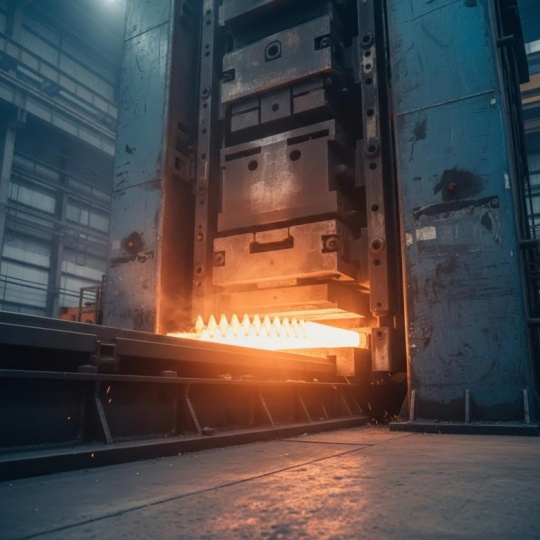
Cnc Aluminum Extrusion Machining: From Alloy Selection To Perfect Finish What CNC Aluminum Extrusion Machining Really Means Ever wondered how manufacturers transform simple aluminum shapes into the precision components found in everything from smartphones to spacecraft? The answer lies in a powerful manufacturing combination that merges two distinct processes into one streamlined workflow. CNC aluminum extrusion machining is a manufacturing process where Computer Numerical Control machines perform precision cutting, drilling, milling, and shaping operations on aluminum extrusion profiles to create finished components with tight tolerances and complex features. This hybrid approach leverages the best of both worlds. You start with an extruded aluminum profile - a near-net-shape piece already formed close to your final dimensions - then refine it through automated CNC operations to achieve exact specifications. From Raw Profile to Precision Part The journey begins with aluminum extrusion, a hot-forming process where a heated aluminum billet gets pushed through a custom-shaped steel die. Imagine squeezing toothpaste through a shaped nozzle - the aluminum emerges with a consistent cross-sectional shape, whether that's a simple tube, an intricate heat sink fin pattern, or a complex architectural profile. But here's the limitation: extrusion can only produce parts with uniform cross-sections along their length. It cannot create holes, threads, angled cuts, or varying features along the profile. That's where CNC machining enters the picture. CNC machines use programmed computer software to control cutting tools that remove material with exceptional precision. When applied to aluminum extrusions, these machines can add: Precision-drilled holes and counterbores for fastener integration Threaded holes for assembly purposes Complex internal structures and cavities Mitered ends, notches, and cope cuts High-precision flatness and surface finishes The Marriage of Extrusion and CNC Technology So what is CNC aluminium processing actually accomplishing? It bridges the gap between basic extruded shapes and fully functional components ready for assembly. According to industry standards, tolerances as tight as ±0.08 mm are achievable through this combined approach - precision that extrusion alone simply cannot deliver. The value proposition becomes clear when you compare alternatives. Machining a complex part entirely from solid aluminum billet wastes significant material and requires extensive cutting time. Aluminium extrusion machining, however, starts with a profile already shaped close to the final form. The CNC operations only remove material where additional precision or features are necessary. This near-net-shape starting point delivers three key advantages: Reduced material waste: Extrusion is a forming process with minimal scrap, and subsequent machining removes only what's essential Shorter cycle times: Less material removal means faster production per par...
Read More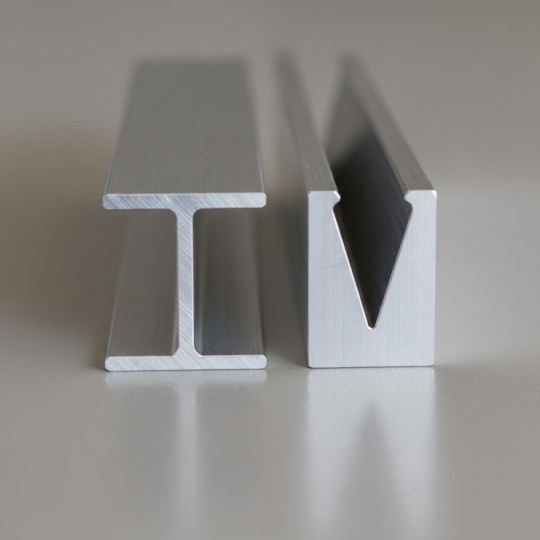
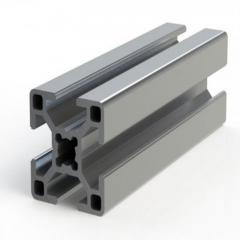
Aluminum Extrusion T Slot Vs V Slot: Which Profile Fits Your Build? T Slot vs V Slot Aluminum Extrusion Explained Picture this: you're designing a custom CNC machine, a 3D printer frame, or an industrial workstation. You've settled on aluminum extrusion as your building material. But then comes the question that stops countless builders in their tracks - should you choose T slot or V slot profiles? This decision might seem minor at first glance. After all, both profile types look similar and serve as modular building systems. However, selecting the wrong slot type can derail your entire project, leading to incompatible hardware, wasted materials, and frustrating redesigns. Why Your Profile Choice Matters More Than You Think When comparing v slot vs t slot options, you're not just picking between two groove shapes. You're choosing between two fundamentally different design philosophies. T-slot profiles feature rectangular or trapezoidal grooves shaped like a "T," primarily designed for building static structural frames, jigs, and machine enclosures. V slot profiles, on the other hand, incorporate angled 90-degree grooves specifically engineered to accommodate wheels for smooth linear motion. The distinction extends far beyond aesthetics. Your choice determines which fasteners you can use, whether your structure can support integrated motion systems, and how easily you can modify your build in the future. Engineers and DIY builders who overlook these differences often discover problems only after components arrive - and don't fit together as expected. The Hidden Costs of Choosing the Wrong Slot Type Selecting an inappropriate profile creates ripple effects throughout your project: Hardware incompatibility: Standard T-nuts may not seat securely in V-slot grooves due to their angled walls Motion system limitations: T-slot profiles require separate linear rail systems for any moving components Budget overruns: Purchasing the wrong profiles means buying replacements or expensive adapters Timeline delays: Waiting for correct parts can push project completion back by weeks Whether you're a beginner confused by unfamiliar terminology or an experienced builder seeking detailed specifications, this guide delivers what you need. You'll discover the technical differences between these profile types, learn which applications suit each design, and gain a clear decision framework for your specific project requirements. Ready to make an informed choice? Let's examine exactly what sets these two profile systems apart - and how to match the right one to your build. Our Evaluation Methodology and Selection Criteria How do you objectively compare two profile systems that serve overlapping yet distinct purposes? Simply stating preferences won't help you make the right choice. Instead, you need a structured framework grounded in measurable performance factors. Our approach eliminates guesswork by focusing on technical specifications, dimensional standards, and practica...
Read More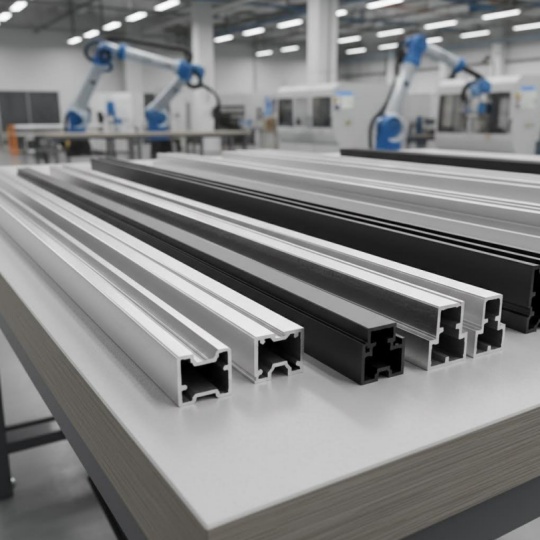
Aluminum Extrusion Cut To Length: Several Specs That Make Or Break Your Build Understanding Aluminum Extrusion Cut to Length Services Ever ordered aluminum profiles for a project, only to spend hours cutting them down to size on-site? You're not alone. That's exactly why aluminum extrusion cut to length services exist—to deliver profiles that arrive ready to use, eliminating guesswork and saving valuable production time. Aluminum extrusion cut to length is a manufacturing service where aluminum profiles are precision-cut to exact customer specifications before shipment, ensuring components arrive ready for immediate assembly without requiring secondary cutting operations. Think of it this way: aluminum extrusion starts with heated aluminum billet forced through a shaped die—similar to squeezing dough through a cookie press. This creates long, uniform profiles that can stretch up to 288 inches or more. But most projects don't need profiles that long. That's where cut-to-length services bridge the gap between raw extrusion and your specific application needs. What Does Cut to Length Mean for Aluminum Extrusions When you order custom aluminum extrusions with cut-to-length specifications, the supplier uses precision equipment to cut profiles to your exact measurements. According to Profile Precision Extrusions, manufacturers can cut parts as short as 0.219 inches and as long as 288 inches, accommodating virtually any project requirement. The process typically involves multiple stages. First, a press saw cuts freshly extruded aluminum at the cooling table, usually producing pieces between 60 and 288 inches. For shorter lengths, these preliminary cuts move to precision saws capable of holding tolerances as tight as ±0.005 inches. This staged approach ensures both efficiency and accuracy across different length requirements. Custom extruded aluminum ordered with cut-to-length specifications arrives packaged and protected, ready for your production line. There's no need for additional equipment, dust collection systems, or skilled cutting operators at your facility. Why Precision Cutting Transforms Your Project Workflow Precision matters more than you might realize. When profiles arrive at inconsistent lengths, you'll notice problems immediately during assembly. Frames won't square up properly. Connections become misaligned. What should take minutes stretches into hours of adjustment and rework. Here's what precision cut-to-length services deliver for your workflow: Elimination of on-site cutting: Orders arrive ready-to-use, removing the need for cutting equipment and dedicated workspace Reduced material waste: Professional cutting maximizes yield from each extrusion, minimizing scrap compared to field cutting Consistent dimensions: Every piece matches specifications, ensuring reliable assembly across multiple components Lower shipping costs: Properly sized pieces often ship more economically than full-length stock, with shorter parts qualifying for expe...
Read More
Aluminum Extrusion Pipe Vs Standard Tubing: Why Engineers Are Switching What Makes Aluminum Extrusion Pipe Different From Standard Tubing When you're sourcing hollow aluminum profiles for your next project, you'll quickly encounter two terms that seem interchangeable but carry distinct meanings. Understanding the difference between aluminum extrusion pipe and standard tubing can save you significant time, money, and engineering headaches down the road. Aluminum extrusion pipe is a seamless hollow profile created by forcing heated aluminum through a precision-engineered die, resulting in uniform wall thickness, superior structural integrity, and exact dimensional consistency throughout its entire length. Here's the key distinction: while an aluminum tube is typically measured by its outer diameter and wall thickness for structural applications, pipe is designated by nominal pipe size (NPS) and is engineered primarily for fluid or gas transport. However, extruded aluminum pipe bridges both worlds—offering the structural benefits of tube extrusion with the seamless construction essential for pressure applications. How Aluminum Extrusion Creates Seamless Pipe Profiles Imagine squeezing toothpaste through a shaped nozzle—that's essentially how aluminum extrusion works, just with considerably more force and precision. The process begins with a solid aluminum billet, a cylindrical log typically preheated to 800-925°F. At this temperature, the metal becomes malleable without turning molten, making it perfect for shaping. What makes extruded aluminum fundamentally superior to welded alternatives? The answer lies in continuous material flow. When a powerful hydraulic ram applies up to 15,000 tons of pressure, the aluminum flows seamlessly through the die opening. There are no joints, no weak points, and no variations in wall thickness—just uniform material throughout the entire profile length. For creating hollow profiles like an extruded tube, manufacturers use specialized dies with internal mandrels. As the aluminum extrude pushes through, it flows around supporting ribs and rejoins on the other side, creating a truly seamless cylinder. This differs dramatically from welded seam tubing, where metal strips are rolled and joined along a longitudinal weld—a potential weak point under stress or pressure. The Die-Forming Process Explained The precision of an aluminum extrusion tube starts with its custom steel die, preheated to approximately 750-900°F to ensure optimal metal flow. According to Bonnell Aluminum's manufacturing guide, this preheating process prolongs die life while maintaining dimensional accuracy. After the extruded aluminum pipe emerges from the press, it undergoes rapid cooling using water or air quenching. This controlled cooling stabilizes mechanical properties before the profile is stretched to correct any minor deformations. Final cuts produce lengths typically ranging from 8 to 24.99 feet, with additional heat treatment (aging) applied ...
Read More


 online service
 0086 136 3563 2360
 sales@sxalu.com
 +86 136 3563 2360
 English
 français
 Deutsch
 русский
 español
 português
 العربية
 ไทย
ไทย Việt
Việt Українська