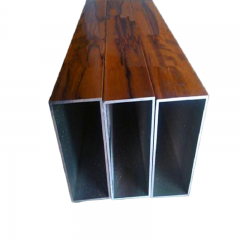
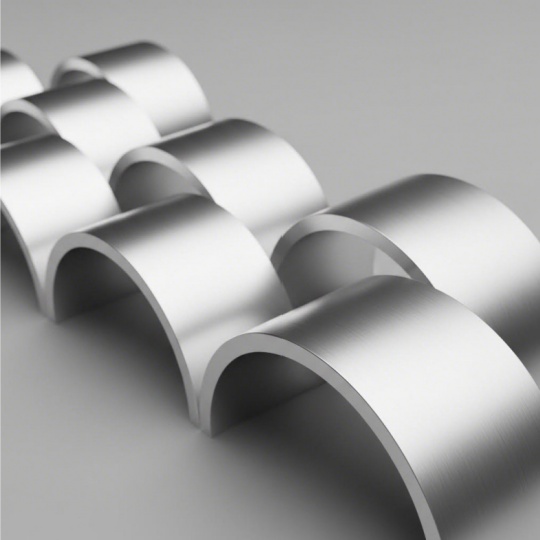
Half Round Aluminum Extrusions: Pick The Wrong Alloy And Your Project Fails Understanding Half Round Aluminum Extrusions and Profile Terminology When you're sourcing aluminum profiles for your next project, the terminology can get confusing fast. Half round, half oval, half pipe—they sound similar, but choosing the wrong one could mean costly rework or structural failure. Let's cut through the confusion and establish exactly what makes half round aluminum extrusions distinct from other curved profiles. A half round aluminum extrusion features a precise semi-circular cross-section—imagine slicing a full round bar exactly in half along its length. This creates a profile with one perfectly curved surface and one flat surface, forming a true 180-degree arc. The flat side provides a stable mounting surface, while the curved exterior delivers both aesthetic appeal and functional performance. What Makes Half Round Profiles Unique The semi-circular geometry of aluminum half round profiles isn't just about looks. This shape distributes stress evenly across the curved surface, enhancing resistance to deformation under load. You'll notice this matters significantly in applications like handrails, architectural trims, and edge protection where the profile must handle both visual expectations and structural demands. What sets these profiles apart is their versatility in connection methods. The flat surface allows for straightforward mounting using adhesives, mechanical fasteners, or welding. Meanwhile, the curved face creates a soft visual effect that's ideal for decorative applications—from furniture design to building facades. Round aluminum extrusion in half-round form also simplifies integration with other structural components. Whether you're embedding the profile into a channel or bending it for curved installations, the geometry accommodates both requirements efficiently. Half Round vs Half Oval vs Half Pipe Explained Here's where most buyers stumble. These three profile types look similar at first glance, but their cross-sectional differences determine their performance characteristics and ideal applications. Understanding these distinctions prevents ordering errors and ensures your project specifications align with actual material capabilities. Profile Type Shape Description Cross-Section Characteristics Typical Applications Half Round True semi-circle with flat base 180-degree arc; equal radius throughout; solid or hollow options available Handrails, architectural trim, edge protection, decorative molding Half Oval Elongated semi-ellipse with flat base Elliptical curve; wider than tall; varying radii across the arc Grab handles, ergonomic grips, low-profile trim applications Half Pipe Semi-circular tube with hollow interior 180-degree arc; consistent wall thickness; open channel design Cable protection, drainage channels, industrial chutes, gutter systems D-Shaped Semi-circle with extended flat section Curved face with proportionally larger flat mou...
Read More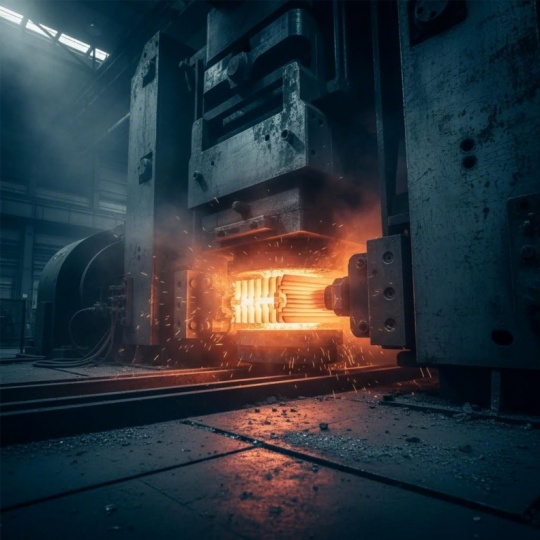
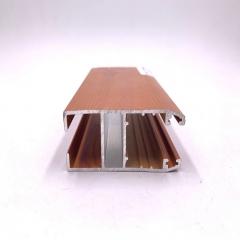
Heat Sink Aluminum Extrusion: 6061 Vs 6063 Alloys Compared Understanding Heat Sink Aluminum Extrusion Fundamentals Ever wondered how the cooling fins inside your laptop or LED light fixture get their precise, intricate shapes? The answer lies in a manufacturing process called heat sink aluminum extrusion—a method that has quietly revolutionized thermal management across nearly every industry you can imagine. At its core, this process involves forcing heated aluminum billets through precision-engineered dies under immense pressure. Think of it like squeezing toothpaste through a shaped nozzle, except the "toothpaste" is softened aluminum heated to approximately 900°F (482°C), and the "nozzle" is a custom-designed steel die. The result? Long, continuous profiles featuring complex fin geometries that would be nearly impossible to achieve through other manufacturing methods. This extruded heat sink technology has become the dominant choice for thermal management components in electronics, LED lighting, power electronics, electric vehicles, and industrial applications. But why has aluminum extrusion specifically claimed this position over alternatives like die casting or CNC machining? What Makes Aluminum Extrusion Ideal for Heat Sinks The popularity of aluminum heat sink manufacturing through extrusion comes down to a perfect storm of material properties and process advantages. Consider what makes this combination so compelling: Exceptional thermal conductivity: Aluminum offers thermal conductivity of approximately 200-240 W/(m·K), efficiently moving heat away from sensitive components Lightweight construction: With a density of just 2.7 g/cm³—roughly one-third that of copper—aluminum keeps overall system weight manageable Complex geometry capability: The extrusion process creates intricate fin patterns in a single pass, maximizing surface area for heat dissipation Cost-effective production: Once tooling is developed, continuous high-volume manufacturing keeps per-unit costs remarkably low Natural corrosion resistance: Aluminum forms a protective oxide layer that shields against environmental degradation According to the Aluminum Extruders Council, aluminum's thermal conductivity makes it ideal for dissipating heat from electric motors, electronic devices, LED lights, and even battery packs for electric vehicles. The Science Behind Extruded Thermal Solutions Understanding why heatsink aluminium profiles work so effectively requires a quick look at heat transfer principles. When electronic components generate heat, that thermal energy needs somewhere to go. An extruded heat sink accomplishes this through three mechanisms: conduction (moving heat through the aluminum base), convection (transferring heat to surrounding air via the fins), and radiation (emitting thermal energy from surfaces). While aluminum's thermal conductivity is lower than copper's 400 W/(m·K), its superior extrudability, lighter weight, and significantly lower cost make it the optim...
Read More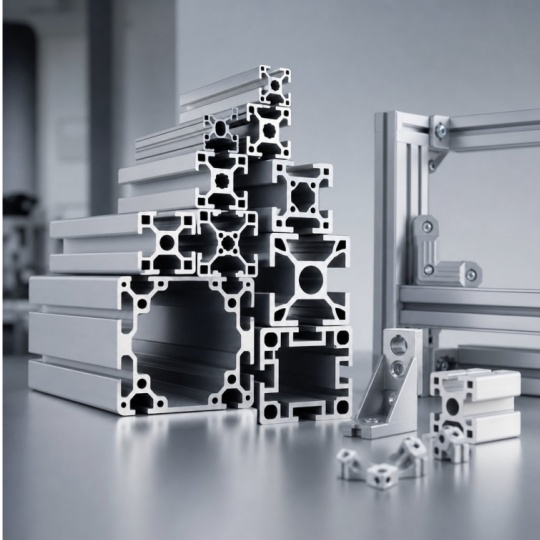
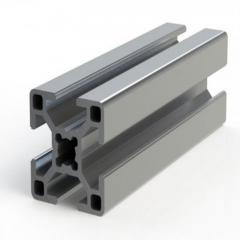
Industrial Aluminum Extrusion Profiles: Alloys, T-Slots & Assembly Decoded What Are Industrial Aluminum Extrusion Profiles Ever wondered how manufacturers create those precisely shaped aluminum components you see in machine frames, workstations, and automation systems? The answer lies in a fascinating process called aluminum extrusion. Industrial aluminum extrusion profiles are structural components created by forcing heated aluminum through specially designed dies to produce continuous shapes with consistent cross-sections. Aluminum extrusion is a fabrication process that forces a heated aluminum billet through a custom-shaped steel die to produce a continuous profile with a consistent cross-section, enabling the creation of complex shapes impossible to achieve through other manufacturing methods. Think of it like squeezing toothpaste from a tube. The toothpaste takes the shape of the opening, and similarly, aluminum takes the shape of the die. The difference? Industrial presses can exert up to 15,000 tons of pressure, allowing extrusion aluminum to form into remarkably intricate designs. The Extrusion Process Explained Simply Understanding what is aluminum extrusion starts with grasping its core mechanics. The process begins with a cylindrical aluminum billet, essentially a solid log of aluminum alloy. This billet gets heated in a furnace to temperatures between 750 and 925°F, making it soft and malleable without actually melting it. Once heated, the billet enters a powerful hydraulic press. A ram then pushes this softened aluminum through a steel die, which acts as a precision template. The aluminum extruded through this opening emerges in the exact shape of the die's cross-section, whether that's a simple tube, an L-shaped angle, or a complex T-slot profile with internal channels. Here's what makes this method remarkable: you can create virtually any cross-sectional shape imaginable. Simple profiles might exit the press at speeds up to 200 feet per minute, while more complex designs move through at approximately one foot per minute. From Raw Billet to Finished Profile The journey from raw material to finished aluminum extrusion profiles involves several critical stages: Die preparation: Custom steel dies are preheated to 450-500°C to ensure even metal flow and maximize die longevity Billet heating: Aluminum billets reach 400-500°C, becoming malleable but remaining solid Extrusion: Hydraulic pressure forces the softened aluminum through the die opening Quenching: The emerging profile undergoes rapid cooling using water baths, air, or mist to control mechanical properties Stretching: Profiles are straightened to correct any twisting while simultaneously work-hardening the material Cutting and aging: Final cuts are made to desired lengths (typically 8 to 24 feet), followed by heat treatment to achieve specific temper grades After the al extrusion process completes, profiles can receive additional treatments like anodizing or powder coating t...
Read More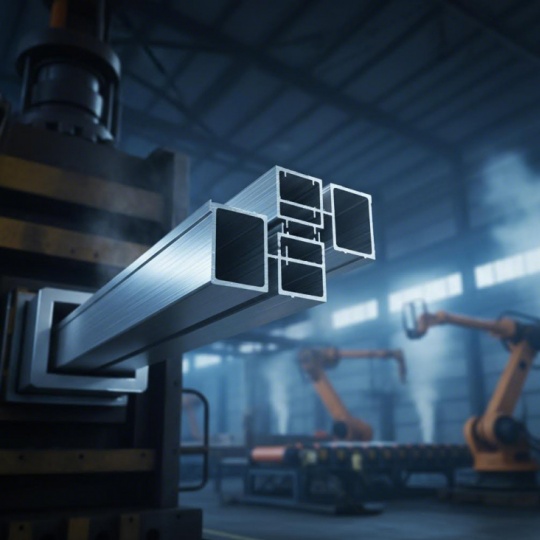
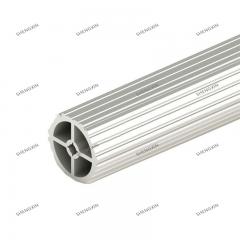
Precision Aluminum Extrusions Decoded: From Alloy Selection To Tight Tolerances What Are Precision Aluminum Extrusions and Why They Matter When you need aluminum profiles that fit together perfectly without gaps, wobbles, or assembly headaches, standard extrusions often fall short. That is where precision aluminum extrusions enter the picture. But what exactly makes an extrusion "precision-grade"? Surprisingly, many manufacturers use this term without clearly defining it. Precision aluminum extrusions are profiles manufactured to tighter dimensional tolerances than standard industry specifications, typically achieving tolerances 30-35% stricter than conventional extrusions, with enhanced surface finish requirements and rigorous quality control at every production stage. What Sets Precision Extrusions Apart from Standard Profiles The difference between standard and precision extrusion comes down to three critical factors: dimensional accuracy, surface quality, and process control. Consider dimensional tolerances first. According to The Aluminum Association's tolerance tables, both "standard" and "precision" tolerance categories exist for extruded profiles. For a dimension between 0.250 and 0.499 inches, a standard tolerance allows plus or minus 0.008 inches of deviation. The precision tolerance for that same dimension? Just plus or minus 0.005 inches. That 37.5% reduction in allowable variation makes all the difference when components must mate precisely or operate within tight assemblies. Surface finish requirements also separate these categories. Precision aluminum profiles demand smoother surfaces with minimal die lines, handling marks, and other imperfections. For thinner sections under 0.063 inches, allowable surface condition depths max out at 0.0015 inches for precision work. Finally, enhanced quality control processes ensure consistency. While standard extrusions undergo routine inspections, precision extrusion manufacturing implements additional checkpoints throughout production. This means tighter monitoring of temperature, pressure, and cooling rates. The Technical Definition of Precision-Grade Aluminum So when does an extrusion qualify as precision-grade? The answer lies in measurable specifications across multiple dimensions: Cross-sectional tolerances: Precision profiles maintain deviations roughly two-thirds of standard tolerances across wall thickness, angles, and space dimensions Straightness: Tighter control over bowing or curvature along the profile's length, critical for mechanical assemblies Twist: Reduced rotational deviation prevents misalignment in interlocking or moving parts Flatness: Stricter limits on surface waviness, essential for heat sinks and mating surfaces Angular accuracy: Enhanced control of angles in cross-sectional features Why does profile precision matter so much in modern manufacturing? Imagine assembling electronic enclosures where heat sinks must contact circuit boards uniformly. A standard extrusion wit...
Read More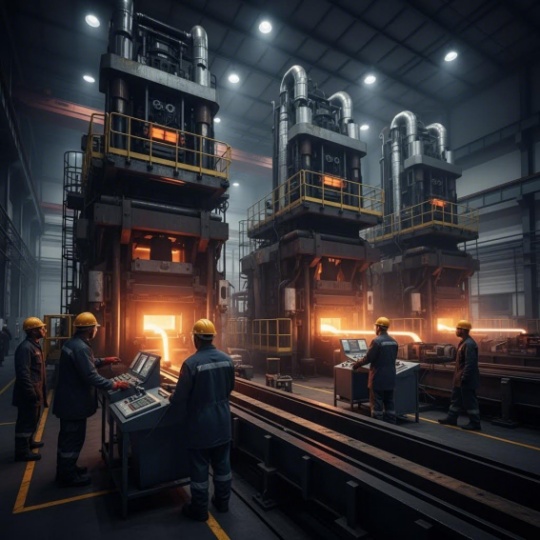
Nearshoring Aluminum Extrusion To Mexico: Cut Lead Times And Slash Logistics Costs Understanding Nearshoring Aluminum Extrusion as a Strategic Shift Imagine this scenario: your production line grinds to a halt because a critical custom aluminum profile is stuck on a container ship halfway across the Pacific. Sound familiar? If you've been sourcing in Mexico or considering nearshoring to Mexico, you're already ahead of the curve. But what does it actually mean to nearshore your aluminum extrusion supply chain? Nearshoring aluminum extrusion is a strategic manufacturing approach that relocates production of custom aluminum profiles from distant overseas suppliers—typically in Asia—to geographically closer regions like Mexico. It combines the cost benefits of outsourcing with the agility and control of regional manufacturing. While plenty of content discusses general nearshoring strategies or aluminum extrusion processes in isolation, few resources address the unique intersection of these two concepts. That's a problem, because buyers of custom aluminum components face distinct challenges that generic advice simply doesn't solve. What Nearshoring Means for Aluminum Extrusion Buyers For aluminum extrusion buyers, nearshoring isn't just about moving production closer to home. It's about fundamentally rethinking how you source custom profiles in an era of supply chain volatility. Unlike commodity products that can be stockpiled, aluminum extrusions are often project-specific. They require custom dies, precise tolerances, and frequent design iterations. When your supplier is 12 time zones away, even a simple specification change can add weeks to your timeline. The Mexico automotive industry has driven much of this strategic shift. As industry experts note, Mexico has emerged as a favored hub for nearshoring—close enough to the US to keep costs low and mitigate risk, yet competitive enough to offer significant labor and trade advantages. This same logic applies directly to aluminum extrusion sourcing. Why Geographic Proximity Matters for Custom Profiles Here's where aluminum extrusion differs from other manufactured goods. Custom profiles demand close collaboration between buyer and supplier—from initial die design through production validation. Geographic proximity enables real-time communication, feasible quality control visits, and rapid problem-solving that offshore relationships simply cannot match. The shift from Asian sourcing to regional manufacturing represents more than a logistics decision—it's a strategic repositioning that prioritizes supply chain resilience, quality control, and speed-to-market over the illusion of lowest unit cost. Consider the current landscape: expanded Section 301 tariffs continue creating cost volatility for Asian aluminum imports. Meanwhile, global supply chain disruptions have exposed the fragility of extended overseas sourcing. For automotive buyers specifically, the growing demand for lightweight aluminum component...
Read More


 online service
 0086 136 3563 2360
 sales@sxalu.com
 +86 136 3563 2360
 English
 français
 Deutsch
 русский
 español
 português
 العربية
 ไทย
ไทย Việt
Việt Українська