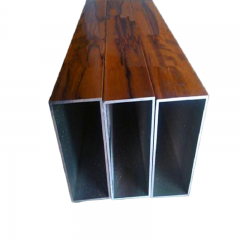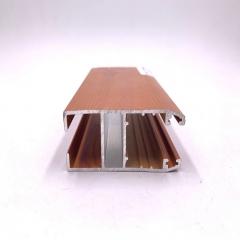
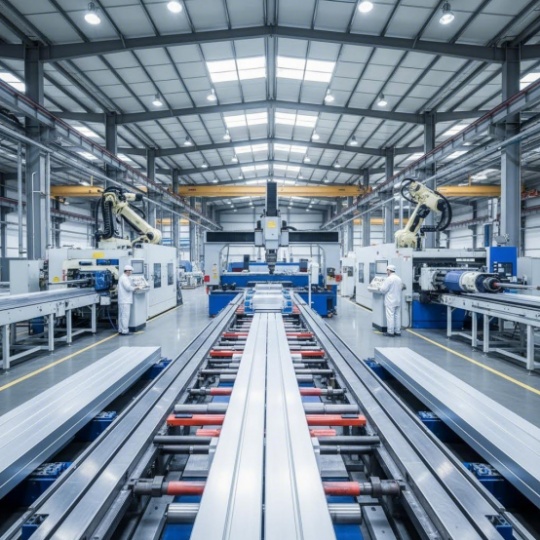
Aluminum Extrusion CNC Suppliers: The Vetting Framework Buyers Miss Understanding Aluminum Extrusion CNC Suppliers and Their Core Services When you're sourcing precision aluminium extrusion parts for your next project, understanding exactly what type of supplier you're dealing with can save you months of frustration. Not all aluminum extrusion CNC suppliers offer the same capabilities, and confusing one type for another is a costly mistake buyers make far too often. What Defines an Aluminum Extrusion CNC Supplier Think of these suppliers as specialists who transform raw aluminum into finished, precision-machined components. They combine two distinct manufacturing processes: extrusion (forcing heated aluminum through a shaped die to create consistent profiles) and CNC machining (using computer-controlled tools to cut, drill, and mill those profiles into final parts). According to Mechanical Power Inc., aluminum extrusion fabrication includes precision cutting, CNC machining, mitering, punching, notching, drilling, and high-speed cutting. These secondary operations transform basic extruded shapes into functional components ready for assembly. Here are the core services you'll typically find these suppliers offering: Aluminum extrusion - Creating custom cross-sectional profiles through heated die pressing CNC cutting - Precision sawing to exact lengths and angles CNC drilling - Adding holes for fasteners, wiring, or assembly CNC milling - Removing material to create pockets, slots, and complex geometries Surface finishing - Anodizing, powder coating, or chemical treatments for protection and aesthetics Integrated vs. Secondary Processing Providers Here's where things get interesting. You'll encounter two fundamentally different business models when searching for aluminum extrusion machining partners. Integrated providers handle everything under one roof. They extrude the aluminum profiles, perform all CNC machining operations, and apply surface treatments. This means your project flows seamlessly from raw billet to finished part without changing hands. Secondary processing providers focus exclusively on aluminium extrusion machining. They purchase pre-made extrusions from separate suppliers and add value through CNC operations. While they may excel at precision machining, they don't control the initial extrusion quality. Why does this distinction matter? Imagine discovering that your machined parts don't meet tolerance specs. With an integrated supplier, there's one point of accountability. With a fragmented supply chain, you might find yourself caught between finger-pointing vendors. Before you begin comparing quotes or evaluating lead times, take a step back. Understanding whether a potential partner offers true end-to-end aluminum extrusion machining capabilities—or simply one piece of the puzzle—fundamentally shapes your project outcomes, timeline predictability, and total cost of ownership. The Complete Aluminum Extrusion CNC Workflow Explained...
Read More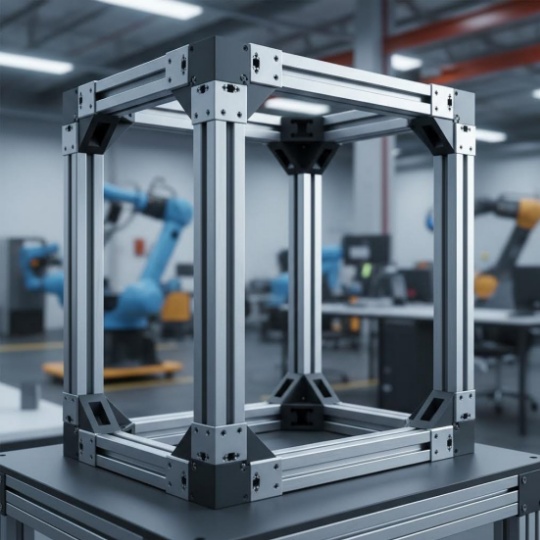
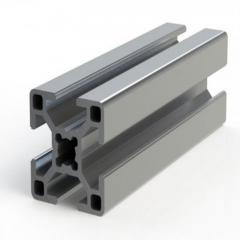
Aluminum T-Slot Extrusion: From Raw Billet To Your Build What Is Aluminum T-Slot Extrusion and Why It Matters Imagine building a sturdy machine frame, workstation, or enclosure without welding, drilling, or permanent modifications. That's exactly what aluminum t-slot extrusion makes possible. These specially designed extruded aluminum profiles feature T-shaped channels running along their lengths, accepting specialized hardware that allows you to assemble, disassemble, and reconfigure structures with remarkable ease. At its core, aluminum extrusion is the process of forcing heated aluminum through a shaped die to create profiles with consistent cross-sections. When those profiles incorporate T-shaped grooves—the signature slots that give this system its name—you get a building system that has fundamentally transformed industrial design and DIY projects alike. The Building Blocks of Modular Construction Before diving deeper, let's establish the essential terminology you'll encounter throughout your t-slotted framing journey: T-Slot: The T-shaped channel running along the extrusion's surface that accepts fasteners and accessories T-Nut: A specially shaped nut that slides into the T-slot and rotates to lock in place, creating secure attachment points anywhere along the profile Profile Series: A classification system (like 20-series, 40-series) indicating the extrusion's base dimensions in millimeters T Slot Rail: Another common term for the extruded aluminum profiles themselves These aluminum extrusion profiles work together as an integrated system. The t slot rail provides the structural backbone, while T-nuts, brackets, and connectors transform individual pieces into complete frameworks. This modular approach means you're never locked into a single configuration. Why T-Slot Profiles Changed Industrial Design The aluminum t system emerged from industrial automation needs in the 1970s and 1980s, when manufacturers required flexible framing solutions that could adapt to rapidly changing production requirements. Traditional steel fabrication demanded skilled welders, long lead times, and permanent commitments to specific designs. The revolutionary insight behind T-slot systems is simple yet profound: by standardizing the connection interface rather than the final structure, engineers gained unlimited design flexibility while maintaining predictable strength and precision. This philosophy explains why extruded aluminum framing now appears everywhere—from CNC machine enclosures and robotic cells to 3D printer frames and trade show displays. When you choose aluminum t-slotted framing, you're selecting a system that prioritizes adaptability without sacrificing structural integrity. For beginners, this means you can start building with confidence, knowing that mistakes are easily corrected and designs can evolve. For experienced engineers, it offers rapid prototyping capabilities and the freedom to optimize structures through iterative refinement rather th...
Read More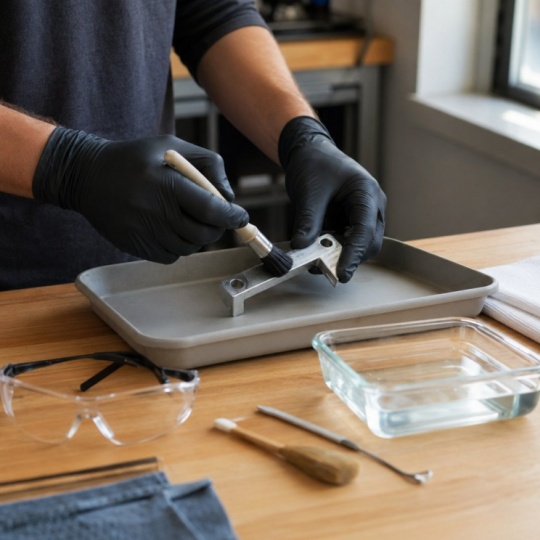
How To Remove Anodizing From Aluminum Without Ruining The Surface Step 1 Decide Whether Stripping Is the Right Move If you are researching how to remove anodizing from aluminum, stop before you reach for chemicals. The first decision is not which stripper to use. It is whether stripping makes sense for the part in front of you. In some cases, removing the finish is useful. In others, it creates new problems that are harder to fix than the original cosmetic issue. What Anodizing Does to Aluminum Anodizing is an electrochemical treatment that turns the aluminum surface into a tougher oxide layer bonded to the metal itself, not a paint film sitting on top. That layer improves corrosion resistance, wear resistance, and appearance, and it can hold dye before sealing, as outlined by Protolabs. In real life, anodized aluminum often looks even and satin-like rather than glossy and flaky. Clear anodizing may look nearly transparent or light gray. Dyed surfaces usually carry color into recesses and edges instead of peeling like paint. One more clue from Fictiv: anodized surfaces are typically electrically insulating, so a simple continuity test may help distinguish them from bare metal. When Removing the Coating Makes Sense Stripping is usually reasonable when the part needs bare aluminum for refinishing, repair, welding prep, or a complete cosmetic reset. It can also help when an old dyed finish is badly faded, blotchy, or mismatched. The tradeoff is the part you cannot ignore. Once the oxide layer is removed, the aluminum loses that built-in protection and may come out dull, matte, or lightly etched underneath. For readers asking how to remove anodization from aluminum, that means the process restores access to the base metal, not the original factory look. Stripping anodizing is permanent. You are removing a protective finish, not just cleaning it. Best for Avoid for Why Simple aluminum brackets, trim, and solid parts Mixed-material assemblies Fewer hidden areas, seals, and chemical traps Cosmetic parts headed for repainting or rework Precision bores, threads, and sliding fits Surface changes can complicate tolerance-sensitive features Known aluminum pieces with no rubber, glue, or inserts Unknown alloys or sealed components Unpredictable reaction and higher risk of damage Parts You Should Not Strip at Home Skip the DIY route for parts with electronics, bonded pads, rubber seals, pressed-in steel hardware, crimped seams, or obvious sealant lines. Precision components deserve special caution too. Anodizing affects part dimensions during finishing, and tight-tolerance features may be harder to restore cleanly after stripping and refinishing, a design concern noted by Fictiv. For simple parts, learning how to remove anodize from aluminum can be practical. Still, one detail changes everything: the exact finish on the part. Clear, dyed, and hardcoat anodizing do not behave the same way once removal begins. Step 2 Identify the Finish and Choose the Method The...
Read More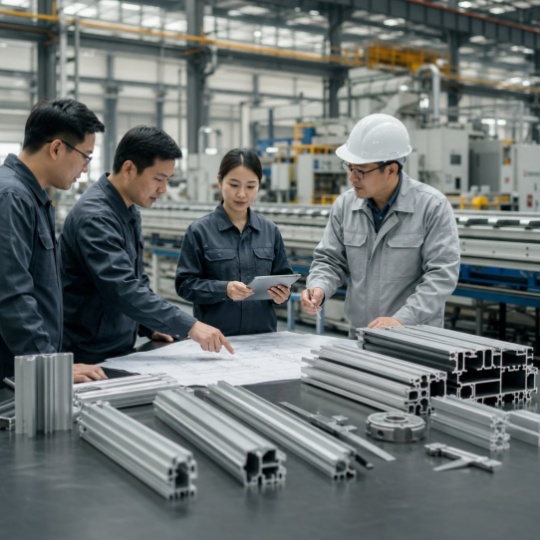
Aluminum Extrusion Manufacturer: Avoid Rework, Delays, And Bad Quotes What an Aluminum Extrusion Manufacturer Really Does Search results often group producers, resellers, and listing sites under the same label. For engineering and procurement teams, that is where confusion starts. An aluminum extrusion manufacturer is not simply a company that sells profiles. It is the source that participates in making them and managing the production decisions behind them. What Counts as an Aluminum Extrusion Manufacturer A true producer turns a profile drawing into finished extruded parts. As Gabrian explains, extrusion itself is the step where heated aluminum alloy is pushed through a die. In practice, the manufacturer of aluminum extrusions usually handles much more than that single press operation. The role commonly includes design review, die planning or creation, extrusion, heat treatment where applicable, surface finishing, fabrication, inspection, packaging, and shipment. An aluminum extrusion manufacturer directly manages the tooling and production process that turns a profile design into shipped parts. Manufacturer vs Distributor vs Directory This distinction matters because many aluminum extrusion manufacturers appear in the same buying path as distributors and sourcing directories, even though their responsibilities are different. Entity type Typical responsibilities Buyer advantages Common limitations Manufacturer Reviews drawings, develops or coordinates dies, runs extrusion, manages finishing, fabrication, inspection, packaging, and shipment Direct technical feedback, fewer handoffs, clearer visibility into sampling and production changes Capability still depends on press range, alloy experience, and in-house process scope Distributor Sells produced profiles, may stock standard shapes, may coordinate supply from producing mills or plants Can simplify purchasing for common catalog items and consolidated orders Usually has limited direct control over die development, production scheduling, and process adjustments Directory Lists suppliers and routes inquiries or RFQs Useful for early market research and supplier discovery Does not produce parts or control quality systems, tooling, or lead-time execution Why the Distinction Matters for Buyers RPM notes that buyers may evaluate both manufacturers and distributors, but the right choice depends on what must be controlled. If your project needs die feedback, finish guidance, fabrication planning, or revision control, direct access to the producer changes the conversation. Fewer communication layers usually mean clearer answers on tolerances, sampling, inspections, and schedule impact. It also helps buyers ask practical questions early: Who manages die trials? Who stores the die? Who approves changes when drawings shift? Those answers become a lot more important once a profile starts moving from concept into plant workflow. How Aluminum Extrusion Manufacturing Flows Direct access to the producer becomes ...
Read More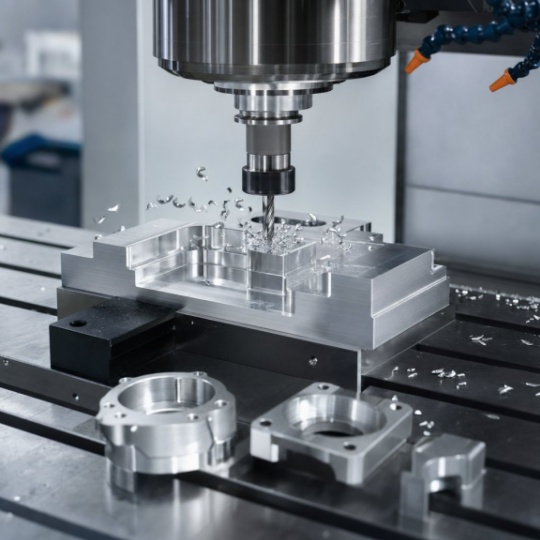
Aluminium Machining That Cuts Cost, Chatter, And Rework Understanding Aluminium Machining Basics Aluminium machining is the process of cutting solid aluminum stock into finished parts by removing material in a controlled way. In both British and American usage, aluminium machining and aluminum machining describe the same family of subtractive methods, including CNC milling, drilling, turning, and routing. Manufacturers use it when parts need low weight, good corrosion behavior, and broad design flexibility without giving up precision. Many teams machine aluminium for brackets, housings, frames, and fixtures because it cuts cleanly and supports attractive post-finishing. A dense, self-protecting oxide layer, noted by Protolabs, is one reason aluminum performs well in environments where corrosion resistance matters. What Aluminium Machining Means in Practice Aluminium machining is the subtractive shaping of aluminum plate, bar, billet, or extrusion into precise parts through CNC milling, drilling, turning, routing, and related cutting operations. In day-to-day cnc aluminum work, the goal is not just to remove metal. It is to control chip flow, heat, and tool pressure so surfaces stay clean and features stay accurate. Shop guidance from JLC CNC also highlights why cnc machining aluminum is common in aerospace, robotics, automotive, and consumer electronics. Main advantages: low weight, good strength-to-weight balance, natural corrosion resistance, clean machinability, and strong finishing options such as bead blasting or anodizing. Common limitations: some grades are more prone to smearing or built-up edge, thin parts can shift if poorly clamped, and alloy choice strongly affects results. Common industrial uses: enclosures, brackets, heat sinks, machine components, round turned parts, and structural parts where weight matters. How CNC Aluminum Differs From Other Metals Compared with steel, aluminum usually places less strain on tools and is easier to cut quickly, while steel is often chosen when higher absolute strength or heat resistance is more important. Compared with plastics, it offers greater rigidity, better heat handling, and cleaner threaded or structural features, while plastics can suit lighter-duty parts but are more sensitive to heat and deformation during cutting. That is why the phrase cnc aluminum covers a wide range of part types, but not a single material behavior. The exact alloy still changes how the job runs. Choosing the Right Aluminum for Machining Material selection changes far more than part strength. It affects chip formation, surface finish, burr behavior, corrosion performance, finishing options, and even whether a plate stays flat after stock removal. That is why the best aluminum for machining depends on what the part must do after it leaves the machine, not just how easily it cuts. For many general-purpose parts, 6061 sits in the middle of the decision map. Protolabs describes it as a well-rounded choice with good corr...
Read More


 online service
 0086 136 3563 2360
 sales@sxalu.com
 +86 136 3563 2360
 English
 français
 Deutsch
 русский
 español
 português
 العربية
 ไทย
ไทย Việt
Việt Українська