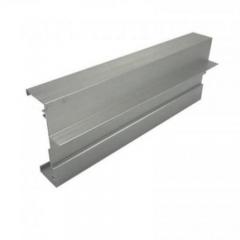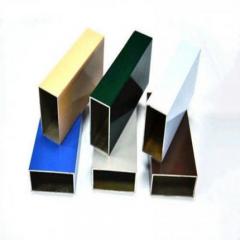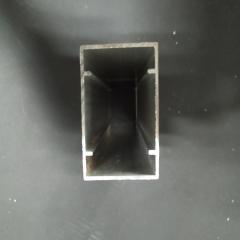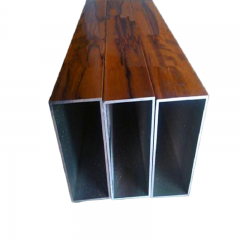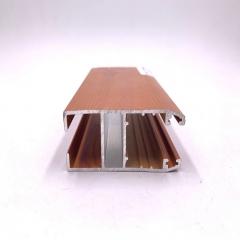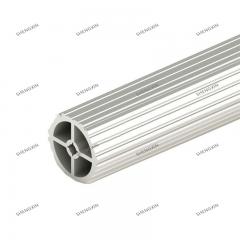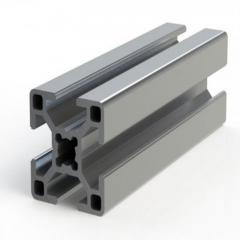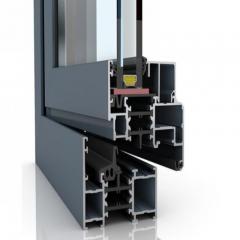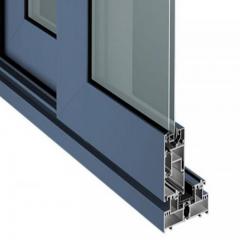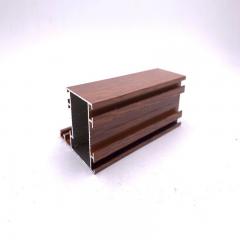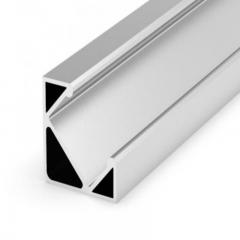
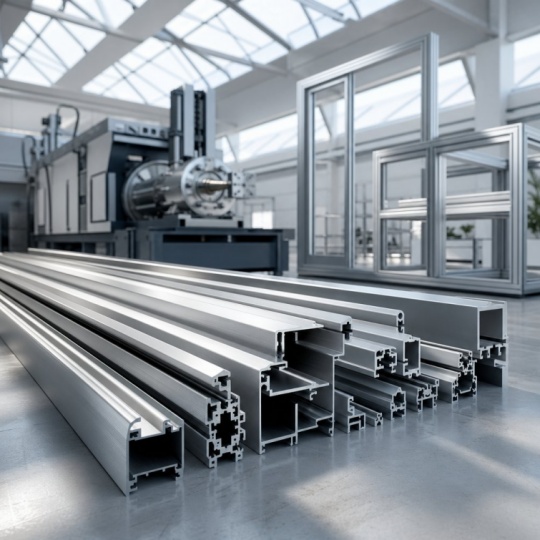
Extruded Aluminium Decoded: Specify Smarter, Source Faster What Extruded Aluminium Really Means Extruded aluminium is one of those terms people see in drawings, supplier catalogs, and product pages, then quietly group together with any aluminum bar, angle, or tube. That shortcut can lead to poor material choices. In simple terms, extruded aluminium is aluminum alloy that has been pushed through a shaped die so it comes out as a long part with the same cross-section from end to end. In American usage, you will also see extruded aluminum, aluminum extrusion, and aluminum extrusions used for the same general idea. Extruded aluminium is aluminum alloy formed by forcing heated metal through a die to create a continuous profile with a specific cross-section. What extruded aluminium is The big idea is consistency along the length. If a project needs a channel, trim, frame member, guard, enclosure edge, or shelving component that keeps the same profile for a long distance, extrusion is often the right manufacturing method. That is why it appears in building facades, machine frames, enclosures, guards, shelving, transport structures, and DIY builds. This article goes beyond catalog listings by unpacking process, terminology, alloy choice, framing options, manufacturability, and application selection. How extrusion differs from cast and rolled aluminum Extrusion is not the same as casting, rolling, or machining solid stock. Casting pours molten metal into a mold, which makes sense for more three-dimensional forms or very large parts. Rolled aluminum becomes sheet, plate, or coil, so it is better suited to flat products than custom profiles. Machining starts with a solid piece and removes material, which can work well for localized features or lower-volume parts, but it is often less efficient for long, repeatable sections. Aluminum extrusion sits in a useful middle ground by creating near-net shapes with a defined profile. Why architects and engineers choose extrusion Design flexibility for simple and complex profiles Low weight for easier handling and lighter assemblies Repeatable shapes that support cleaner fit-up Natural corrosion resistance for many indoor and outdoor uses Still, extrusion is not automatically the best answer. If a part changes shape along its length, needs a bulky one-piece geometry, or depends on highly localized features, another method may be better. The real value is not that extrusion makes generic shapes. It makes purpose-built profiles efficiently and consistently. That is where the manufacturing details start to matter, because the way the billet, die, cooling, and cutting interact has a direct effect on finish, straightness, and usable results. How the Extrusion Process Shapes a Profile That repeatable cross-section does not appear by accident. Every aluminum extrusion profile starts as a heated billet and moves through a controlled sequence on an aluminum extruder line. Industry process overviews from Pennex, JM Aluminium, a...
Read More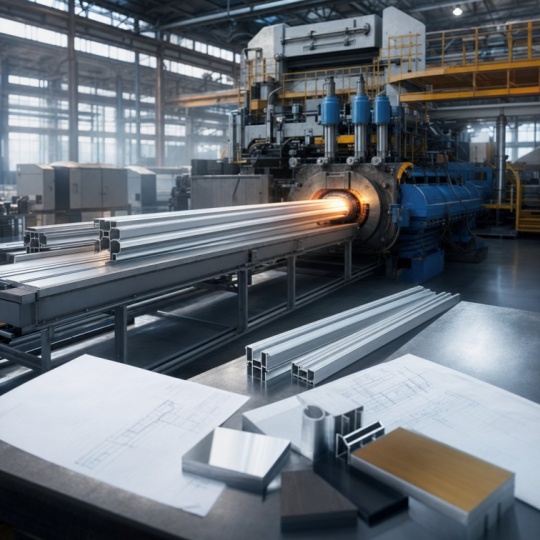
Aluminium Extrusion Manufacturer: Why Cheap Quotes Cost More What an Aluminium Extrusion Manufacturer Really Does If you are buying parts for a frame, rail, housing, or machine assembly, the term can sound more technical than it needs to be. In plain language, an aluminium extrusion manufacturer takes aluminium alloy, shapes it into a specific cross-section, and turns that shape into a usable part for a real application. What an Aluminium Extrusion Manufacturer Does An aluminium extrusion manufacturer produces aluminium profiles by pushing heated alloy through a shaped die, then manages the steps needed to deliver consistent finished parts. That job often includes far more than simply running an extrusion press. A true production partner may handle: Die development for custom cross-sections and repeatable output Extrusion of the profile from aluminium billet through the die Finishing such as anodizing or powder coating for appearance and corrosion resistance Fabrication like cutting, drilling, punching, or machining to final dimensions Quality control through inspection, dimensional checks, and process oversight Manufacturer Versus Distributor and Fabricator Not every company selling profiles actually makes them. A distributor or trader usually buys finished shapes and resells them, which can be useful for common stock items or smaller quantities. A fabrication-only shop may cut or machine extrusions but still relies on another factory to make the base profile. By contrast, true aluminium extrusions manufacturers control production closer to the source, which usually gives buyers better visibility into tooling, tolerances, and batch consistency. If your part is custom, an aluminium extrusion profile manufacturer is often the better place to start. Why Capability Matters More Than Catalog Size When buyers compare aluminium extrusion manufacturers, catalog size can look impressive. Still, inventory matters less than capability when the part must be light, strong, finished correctly, and ready to assemble. The real value of an aluminium extrusion manufacturer lies in whether it can support custom geometry, finishing, fabrication, and quality assurance as one controlled workflow. Those capabilities shape cost, lead time, and defect risk long before the quote turns into a shipment. That is where sourcing gets more interesting, because the factory's process decisions are often what separate a low quote from a reliable part. How the Aluminium Extrusion Manufacturing Process Affects Cost A low quote can hide a much longer factory story. In real aluminium extrusion manufacturing, cost, consistency, and delay risk are shaped by a chain of connected decisions, not just one press run. The JM Aluminium process overview and technical guidance from the Aluminum Extruders Council both show the same pattern: a profile moves through tooling, heating, extrusion, cooling, strengthening, finishing, and inspection before it is truly ready for use. That is why the alum...
Read More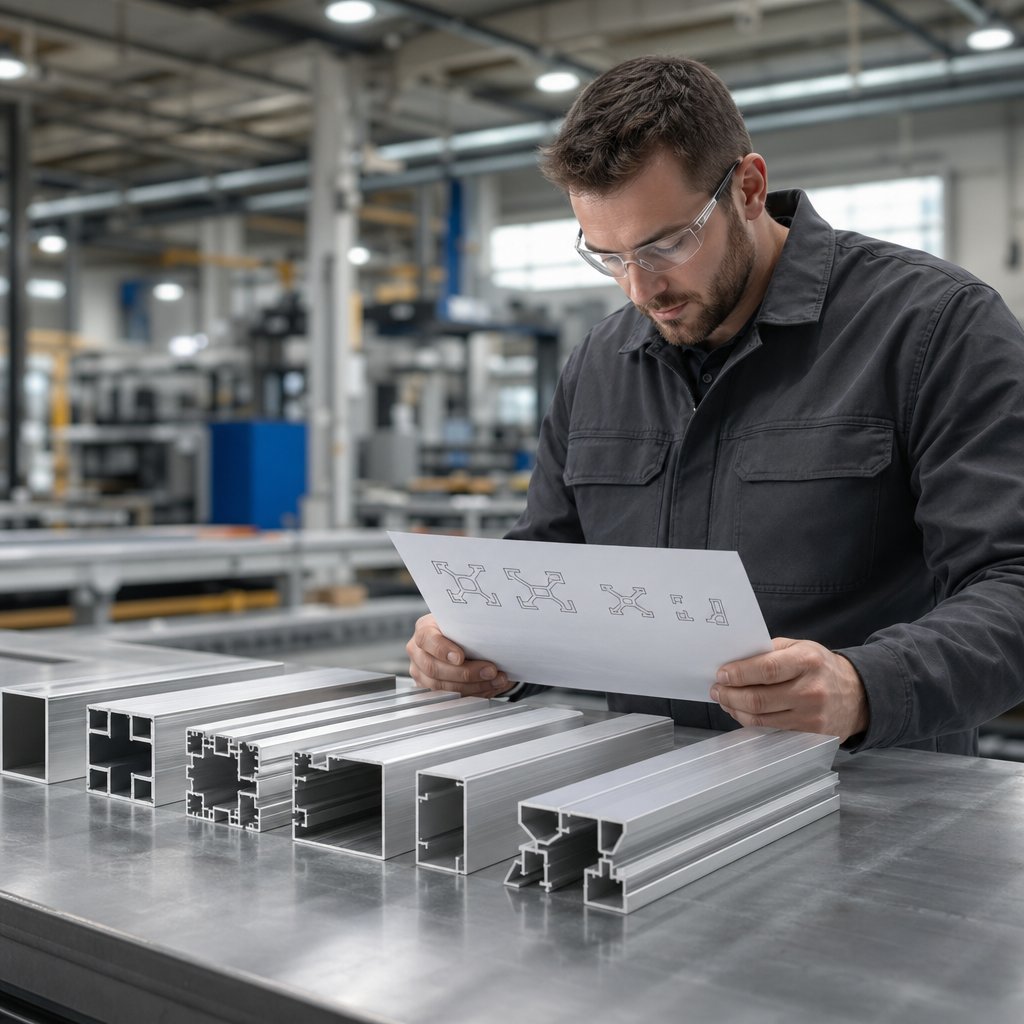
6082 Aluminum Extrusion Traps That Trigger Costly Rework What Is 6082 Aluminum Extrusion? If you are asking what is aluminum extrusion in the context of 6082, start with two ideas at once: the shaping method and the alloy itself. This section is meant to work as a decision guide, not just a chemistry sheet, because buyers often cross-shop 6082 with 6061 and 6063 before locking a drawing. What 6082 Aluminum Extrusion Means 6082 aluminum extrusion is a heat-treatable 6xxx alloy formed by pushing heated aluminum through a die to create a continuous cross-section, usually for strong, lightweight structural shapes. Clinton Aluminum describes aluminum extrusion as forcing a heated billet through a die, then cooling, stress relieving, and cutting the lineal shape to length. That is the key difference from machining plate or bar. Extrusion creates the cross-section first. Machining starts with stock and removes material to reach the final geometry. In practice, a well-matched aluminum extrusion profile can reduce wasted material and limit how much secondary cutting is needed. Where 6082 Fits Among Aluminum Extrusions Within common aluminum extrusion alloys, 6082 sits near the higher-strength end of the 6xxx family. Protolabs notes that 6082 is very similar to 6061, but with slightly higher tensile strength. Its chemistry helps explain that behavior. Hugh Aluminum lists roughly 0.7% to 1.3% silicon and 0.6% to 1.2% magnesium, the combination that allows heat treatment to build strength. That makes 6082 a frequent choice for bridges, cranes, vehicle structures, and other load-bearing aluminum extrusion profiles. Why Engineers Choose 6082 Profiles It offers a strong strength-to-weight balance for structural parts. It has good corrosion resistance for outdoor and industrial environments. It can be machined and welded, which helps during downstream fabrication. It fits applications where stiffness and load capacity matter more than purely decorative appearance. It gives designers a practical aluminum extrusion profile option when plate or bar would mean heavier machining. That shortlist explains why 6082 often gets serious attention early. The harder question is what those properties actually mean once surface finish, fabrication plans, and geometry enter the picture. 6082 Extrusion Properties in Real Design Strength usually gets the first look. Rework often starts somewhere else. With 6082, the important question is not just how strong the alloy looks on a datasheet, but how that strength behaves once the part must be extruded, machined, welded, finished, and installed. Key Properties of 6082 Aluminum Extrusion Guidance from Righton Blackburns describes 6082 as the highest-strength alloy in the common 6000 series, with good corrosion resistance, weldability, machinability, and a solid anodizing response. A comparison summary from MachineMFG places 6082 around 295 to 310 MPa tensile strength and about 260 MPa yield strength in typical T6 comparisons, which he...
Read More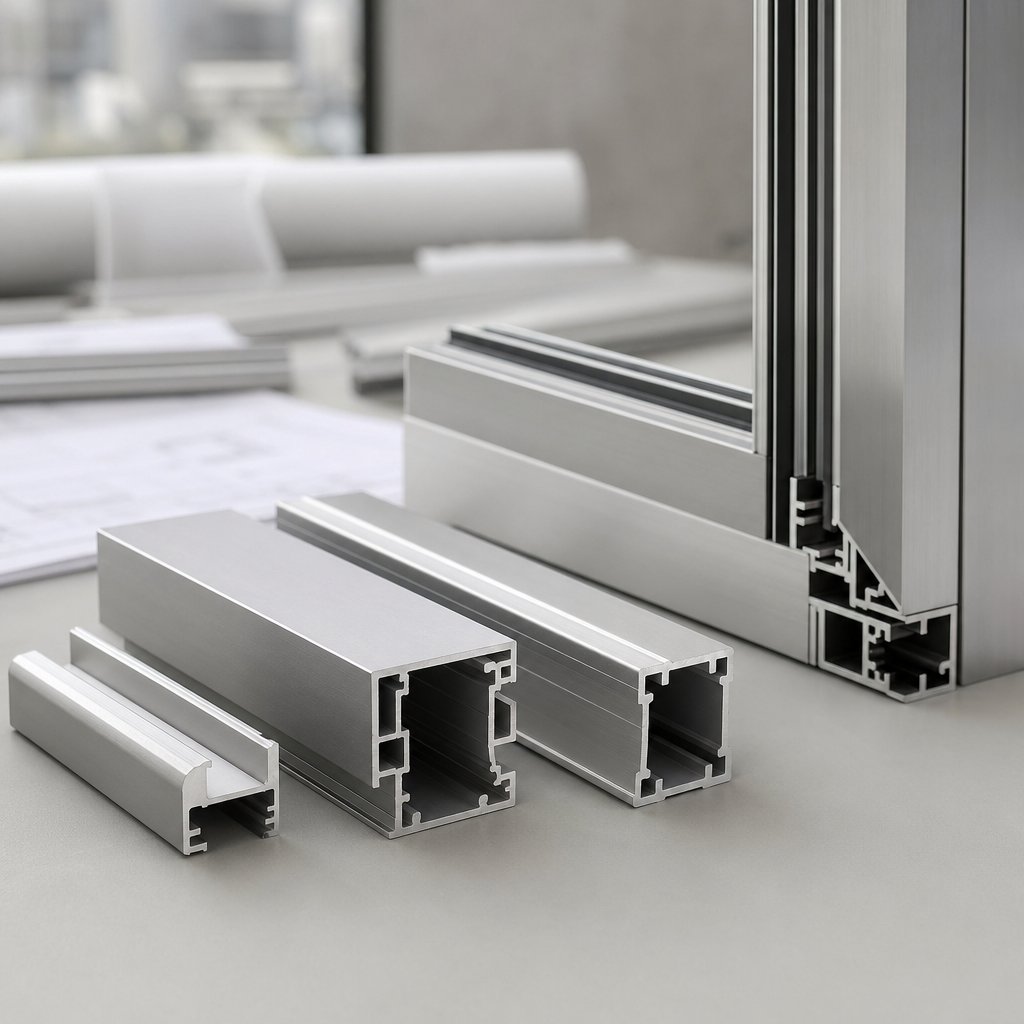
Aluminum Frame Profile Mistakes That Trigger Costly Rework What an Aluminum Frame Profile Really Means If you search for an aluminum frame profile, you can end up in three very different product categories. That confusion causes a lot of bad quotes and wrong-part orders. In simple terms, a frame profile is a shaped aluminum extrusion intended to become one member of a frame. It is narrower than the general term "aluminum profile," which can also mean angles, tubes, channels, trims, or other extrusions that are not frame members. It is also different from a finished frame system, which includes the profile plus the hardware, seals, panels, glazing parts, and fasteners needed for assembly. An aluminum frame profile is an extruded aluminum section designed to form part of a frame. By itself, it is a component, not a complete assembled system, and it is not a catch-all name for every aluminum extrusion shape. What an Aluminum Frame Profile Is Think of the profile as the shaped building block. In a modular aluminum profile frame, the extrusion provides the structural edges and connection surfaces. In architectural work, the profile may include pockets for glass, seals, and hardware. Window framing basics also make an important distinction: the fixed frame and the moving sash are different parts. So aluminum door frame profiles usually refer to the extruded sections that form those perimeter members, not the full installed door set. Three Common Uses of Aluminum Profile Frame Systems Modular industrial framing: used for machine bases, guards, carts, benches, and enclosures. Slot or groove framing systems: reconfigurable members with continuous grooves that accept nuts, brackets, and panel accessories. item's modular systems are a clear example of groove-based construction. Architectural door and window framing: visible sections used in facades, storefronts, windows, and aluminum door frame profiles where finish quality and weather exposure matter. How Architectural and Industrial Profiles Differ The split is not just cosmetic. Industrial vs architectural guidance shows that industrial profiles prioritize strength, rigidity, machining compatibility, and tight assembly tolerances. Architectural sections put more emphasis on appearance, outdoor durability, and stable installation. That is why their hardware differs too: industrial members often use brackets, slot nuts, and joining plates, while architectural aluminum frame profiles work with hinges, locks, anchors, gaskets, and glazing beads. Context Typical geometry Hardware compatibility Common end uses Modular industrial framing Square or rectangular structural sections, often with side grooves and center bores Brackets, end fasteners, plates, feet, panel retainers Machine frames, workstations, guards, carts Slot or groove systems Profiles with open or closed grooves for accessories and infill T-nuts, groove nuts, slot covers, panel inserts Reconfigurable assemblies, lean lines, light enclosures Archit...
Read More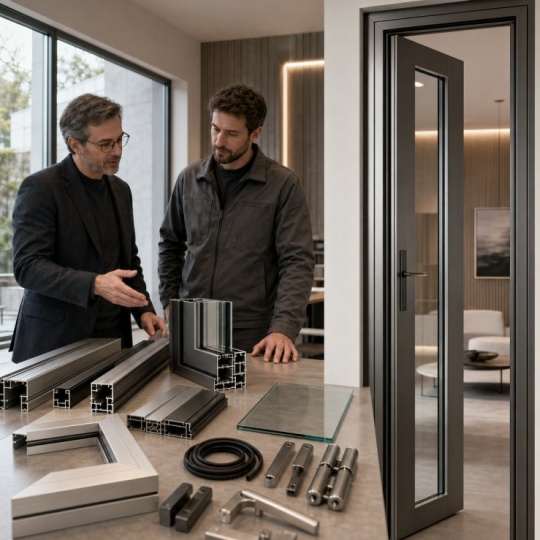
Aluminum Door Profile Pitfalls That Trigger Rework And Delays What an Aluminum Door Profile Really Means If you are comparing products, one small term can cause a lot of confusion. People often use profile, frame, sash, and even full door interchangeably, but they are not the same thing. An aluminum door profile is a shaped aluminum section, usually made by extrusion, that becomes one part of a door assembly such as the frame or the moving sash. Aluminum Door Profile Definition and Core Terms In search results, terms like profile aluminum, aluminum profiles, and door profile are often used loosely. The clearest way to separate them is by job. An extrusion process pushes heated aluminum through a die to create a consistent cross-section. That cross-section is the profile. It is the building block, not the finished door. Industry terminology also distinguishes between the frame, which is fixed to the wall, and the sash, which is the movable part. Both can be made from profiles. In glazed systems, separate glazing beads or similar retaining pieces may also be profiles. Profile Versus Frame Versus Door System A frame is the fixed perimeter. A sash is the part that opens. A complete door system includes those pieces plus infill or glass, seals, hardware, and fabrication details that allow everything to work together. That matters because a well-designed section can still underperform if the wrong hardware is used or the opening is installed poorly. For example, an interior partition may favor slim sections and clean lines, while a residential entry door may need more support for weathering and locking hardware. A commercial entrance may face heavier traffic and more frequent cycles. Why Aluminum Profiles Affect Performance The profile geometry drives more than appearance. Depth, wall layout, and internal chambers influence stiffness, visible sightlines, glazing capacity, drainage paths, and hardware mounting. Sources on architectural aluminum also note that aluminum allows relatively thin, strong sections that are valued for durability, corrosion resistance, and low maintenance when properly specified and installed. Profiles shape strength and visual bulk at the same time. They influence what glass, panels, and hardware a system can accept. Maintenance and service life depend on finish, fabrication, and exposure, not shape alone. Real-world performance comes from the whole assembly, the installation, and the wall around it. That is why one aluminum section can make sense in a cabinet-style application yet be completely wrong for a storefront or exterior entry. The useful comparison starts with application, not just material. Aluminum Door Profile Types by Application Application is where classification gets practical. A slim section that works beautifully on a wardrobe shutter may struggle at a busy entrance, while a robust commercial stile can feel oversized indoors. Looking at aluminum door profile types through actual use helps filter options much ...
Read More


 online service
 0086 136 3563 2360
 sales@sxalu.com
 +86 136 3563 2360
 English
 français
 Deutsch
 русский
 español
 português
 العربية
 ไทย
ไทย Việt
Việt Українська