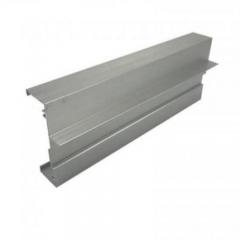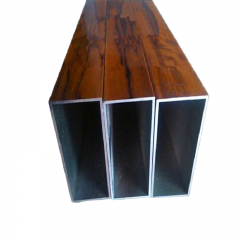

How to Cut Aluminum Extrusions Without Chatter, Burrs, or Waste How to Cut Aluminum Extrusions If you are searching for how to cut aluminum extrusions, you are usually trying to solve one of three problems: get a safe cut at home, get a clean end that is ready to assemble, or make repeat parts without wasting stock. When people ask how to cut aluminum or wonder, how can i cut aluminum in a home shop, that is the real decision underneath the tool question. The answer is not the same for every project. What Counts as an Aluminum Extrusion In this guide, an aluminum extrusion is an aluminum shape formed through a die. These profiles can be solid, semi-hollow, or hollow. Common examples include angles, channels, tubing, trim, frames, and T-slot profiles. They are often sold in long lengths and then cut down for enclosures, framing, guards, and other assemblies. When DIY Cutting Is Good Enough DIY cutting makes sense for one-off jobs, prototypes, rough framing, and many garage-shop builds. If the part only needs to be cut to length, lightly deburred, and fitted by hand during assembly, home cutting is often practical. This is where many beginners start, and it is also where experienced makers save time on simple work. A clean-looking cut and a precision-controlled cut are not the same thing. Rough framing or hidden structural pieces usually point toward DIY. High cosmetic importance raises the bar for cut finish. Repeat cuts for multiple identical parts demand better control. Assembly-sensitive joints leave less room for hand cleanup or adjustment. When Pre Cut Service or Machining Makes More Sense If the part must arrive ready to bolt together, slide into a frame, or match across a batch, supplier cutting or machining is often the best way to cut aluminum for that job. Industrial precision cutting is judged by length, angle, squareness, and cut-surface condition, not just whether the piece looks close. That matters more as finish sensitivity, repeatability, and fit-up demands increase. In other words, learning how to cut aluminum extrusions starts with honest expectations. The saw matters, but support, clamping, and control matter just as much. Safe Setup for Saw Cutting Aluminum A good DIY plan can still fail at the bench. For saw cutting aluminum, safety and cut quality are tied together. If the profile shifts, chatters, or drops at the end of the pass, the result is not just ugly. It can also pinch the blade, throw the cutoff, or pull the cut off square. Personal Protective Equipment That Supports Clean Safe Cuts Put protection on before the saw starts. Even the right saw blade cutting aluminum cleanly will throw sharp chips. Wear ANSI Z87.1 glasses, hearing protection, and a N95 mask if fine particles may hang in the air. Gloves are useful when handling sharp offcuts after the blade stops, but loose gloves and rotating tools do not mix well during aluminum sawing. Safety glasses or a face shield Hearing protection Close-fitting clothing and tied-...
Read More
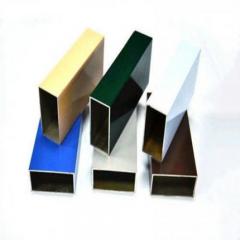
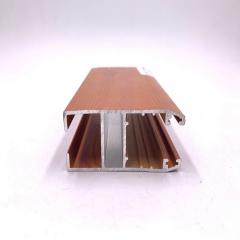
Powder Coated Aluminum: Smarter Specs, Fewer Defects, Longer Life What Powder Coated Aluminum Really Means What Powder Coated Aluminum Means Powder coated aluminum is aluminum finished with a dry powder that is electrostatically sprayed onto the metal and then cured with heat. As the coating melts and flows, it forms a hard, continuous layer that is widely used on exterior and industrial products for added color, durability, and surface protection. In plain language, powder coating aluminum is different from wet paint because it does not start as a liquid. Paint is sprayed on wet and hardens as solvents evaporate. Powder coating uses dry particles that cling to a grounded part through electrical charge, then bond into a finish during oven curing. That usually means a more durable surface with less risk of drips or sags than conventional paint, though it also requires dedicated equipment and controlled heat. Why Aluminum Is Commonly Powder Coated Aluminum is a popular substrate because it is naturally corrosion resistant and already has a clean, modern appearance. In many applications, it is also chosen where a lighter metal part is useful. A powder finish adds another layer of protection while giving designers more freedom with color and texture. That is why this finish is common on architectural parts, enclosures, signage, and everyday products such as a powder coated aluminum fence, a powder coated aluminum ladder, or powder coated aluminum furniture. Where Powder Coated Aluminum Works Best Ideal uses: outdoor railings, fencing, signage, cabinets, appliances, trim, and powder coated aluminum furniture that needs a durable colored finish. Often a smart fit: a powder coated aluminum fence or powder coated aluminum ladder, where appearance and added weather resistance both matter. Less ideal: parts with very tight coating tolerances, assemblies that include heat-sensitive components, or projects that need simple field touch-ups with an exact invisible color match. That balance is what makes aluminum powder coating worth understanding before you specify it. Process control, long-term performance, part design, finish comparisons, and defect diagnosis all shape the result, and the surface only performs as well as the steps used to create it. How to Powder Coat Aluminum Step by Step Can aluminum be powder coated? Yes, but aluminum usually rewards disciplined preparation and exposes shortcuts fast. If you need to powder coat aluminum, think of the process as surface cleaning first and color second. People searching for how to powder coat aluminum often focus on the spray gun and oven, yet the finish usually succeeds or fails before the powder is ever applied. Cleaning and Preparing Aluminum for Powder Coating Initial cleaning: Remove dirt, loose debris, old finishes if present, and fabrication residue. Aluminum can look clean while still carrying oxidation, shop dust, or cutting byproducts that interfere with adhesion. Degreasing: Strip away oils, cool...
Read More
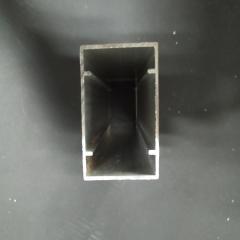
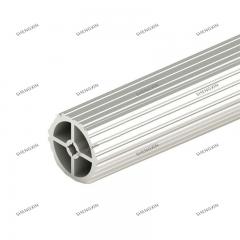
What Is Extrusion Aluminum? From Billet To Spec, Avoid Costly Misses What Is Aluminum Extrusion and Extruded Aluminum? When people search for what is extrusion aluminum, they are usually pointing to two related ideas: the manufacturing process and the shape that process creates. Those ideas are connected, but they are not the same thing. Common manufacturer references from Bonnell Aluminum and Gabrian describe the same core principle: a heated aluminum alloy billet is pushed through a die by a ram, and the metal exits as a long shape with a consistent cross-section. Plain Language Definition of Extrusion Aluminum Aluminum extrusion is the process of pushing heated aluminum alloy through a shaped die, while extruded aluminum is the finished profile that comes out. That plain answer covers both what is aluminum extrusion and what is extruded aluminum. At its simplest, what is extrusion? It is a shaping method that forces material through an opening so the material takes that opening's form. In aluminum extrusion, the result might be a channel, tube, angle, or custom frame section that keeps the same shape along its length. Technical Definition of Aluminum Extrusion A more technical aluminum extrusion definition is this: a solid but heated aluminum alloy billet is loaded into an extrusion press, where a hydraulic ram applies pressure and forces the billet through a die. As the metal flows through the die opening, it forms a continuous profile. That profile is then cooled, or quenched, handled along the runout system, and later brought to a target temper through controlled thermal treatment. Depending on the application, it may also move into fabrication steps such as cutting, drilling, punching, or machining. Billet: A cut length of aluminum alloy used as the raw material for extrusion. Ram: The press component that applies force to push the billet through the die. Die: The tool opening that creates the profile's cross-section. Profile: The continuous extruded shape produced at the press exit. Quench: Rapid cooling after die exit to help control final properties. Temper: The hardness and strength condition produced by thermal or mechanical treatment. Fabrication: Secondary operations used to bring the profile to final size or features. Aluminum Extrusion vs Extruded Aluminum This distinction matters in specifications, drawings, and quote requests. Aluminum extrusion names the process. Extruded aluminum names the product. A simple extruded aluminum definition is the long, uniform profile created by extrusion, whether it is solid, hollow, or semi-hollow. In practice, people often blur the two terms, but the difference becomes important when discussing alloys, tolerances, finishes, and downstream fabrication. That is why a clear aluminum extrusion definition helps early in a project: it separates how the part is made from what the part actually is. The terms sound straightforward on paper, yet each one marks a control point inside the press line, where...
Read More
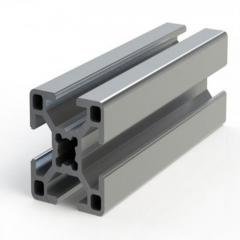
Industrial Aluminum Profile: Buy The Wrong Series, Pay Twice What Industrial Aluminum Profiles Really Are If you search what is aluminum profile, many pages mix up three different ideas: the shape of the part, the way it is made, and the job it does in a factory. Separating those ideas makes selection much easier. What Is an Industrial Aluminum Profile An industrial aluminum profile is a long aluminum part with a consistent cross-section, supplied for structural, support, enclosure, or assembly use in manufacturing. In simple terms, the word profile refers to the shape you would see if you looked at the cut end of the part. Industry primers from Escal and Sinoextrud both describe these products as shaped aluminum sections used across machinery, construction, and modular systems. Profile: the cross-sectional shape, such as a tube, angle, channel, or slotted member. Extrusion: the manufacturing process used to create that shape. Framing system: a group of profiles and hardware designed to build structures. Modular assembly: a setup that can be adjusted, expanded, or reconfigured with standard parts. How Aluminum Extrusion Creates the Profile Shape What does extruded aluminum mean? It means heated aluminum alloy is forced through a die to produce a long piece with the same shape from end to end. That process is called aluminum extrusion. After the metal leaves the press, it may still be cooled, stretched, cut, finished, or machined before it becomes a ready-to-use aluminum profile. Where T Slot Framing Fits in the Bigger Picture T-slot framing is one subset of this broader category, not the category itself. It is popular because its slots let bolts, nuts, and accessories attach easily, but many industrial applications use other shapes such as square tubes, angles, channels, and custom sections. That is why the question what is aluminum profile has more than one practical answer. The shape matters, the process matters, and the end use matters. On the factory floor, the real difference often appears in how those slots and connection points turn a simple shape into a working frame. How T Slot Framing Works on the Factory Floor Slots are where a profile stops being just a shape and starts behaving like a system. In a practical build sequence outlined by AngleLock, T-slot framing is assembled by organizing parts, preparing any tapped ends, loosely joining the structure, aligning it, and only then tightening everything down. That sequence explains why an extruded aluminum t slot frame is so flexible in real factory work. How T Slot Channels Create Modular Frames Each slot acts like a continuous mounting channel. A T-nut sits inside that channel and gives a bolt or bracket something to clamp against. Because the channel runs along the profile, connections can often be moved to different positions without drilling new holes. Many systems also allow drop-in T-nuts to be inserted at the needed location, which helps when a guard, shelf, or sensor mount gets ad...
Read More
Aluminium CNC Machining: Smarter Alloys, Cleaner Parts, Fewer Delays Aluminium CNC Machining Basics for Better Part Planning When a part needs tight dimensions, repeatable results, and a clean machined surface, aluminium cnc machining is often one of the first processes engineers consider. It shapes parts by removing material from solid aluminum stock with computer-controlled tools, making it a precise and flexible option for brackets, housings, plates, and other aluminum parts. What Is Aluminium CNC Machining Aluminium CNC machining is a subtractive process that uses CNC mills, lathes, drills, and similar equipment to cut aluminum bar, billet, or plate into finished parts based on digital design data. That simple definition matters because cnc machining aluminum is not just about making shapes. It is about making those shapes consistently, with predictable dimensions, from prototype runs to production batches. In everyday shop language, this is also part of broader aluminium machining, but with the added control and repeatability that CNC systems bring. Why Aluminum Works So Well for CNC Production For planning purposes, aluminum stands out for a practical mix of properties. meviy notes that aluminum is about one-third the weight of steel, while MakerVerse highlights its natural oxide layer, which supports corrosion resistance. It also machines more easily than harder metals and accepts finishes such as anodizing, powder coating, and bead blasting. Benefits: low weight, good corrosion behavior, strong machinability, useful thermal and electrical conductivity, and broad finishing options. Tradeoffs: it is softer than steel, can deform under poor clamping, and some high-wear or very high-temperature jobs may need another material. Where CNC Machined Aluminum Parts Are Commonly Used Because of that balance, aluminum CNC machining appears across aerospace, automotive, electronics, robotics, medical devices, and industrial equipment. Common examples include heat sinks, enclosures, structural brackets, fixtures, and lightweight moving components. The catch is that not all aluminum behaves the same way, which is why alloy selection quickly becomes the real decision point. Best Aluminum for Machining The real material choice in aluminium cnc machining is rarely a simple strength contest. It is a tradeoff between load, corrosion exposure, weldability, finish expectations, flatness, and cost. For many shops, 6061 stays the baseline because it reduces risk while machining aluminum efficiently across prototypes and production. The matrix below combines property data from Rapidaccu with application guidance from Firstmold. How 6061 Compares With 7075 and 2024 For general-purpose parts, 6061-T6 is often the best aluminum for machining because it balances strength, corrosion resistance, weldability, and finishing consistency. Rapidaccu lists 6061-T6 at 310 MPa tensile strength and 275 MPa yield strength, while 7075-T6 reaches 570 MPa and 505 MPa. That gap matt...
Read More


 online service
 0086 136 3563 2360
 sales@sxalu.com
 +86 136 3563 2360
 English
 français
 Deutsch
 русский
 español
 português
 العربية
 ไทย
 Việt
 Українська