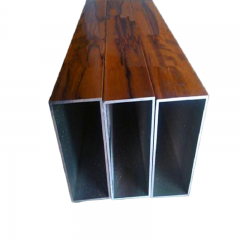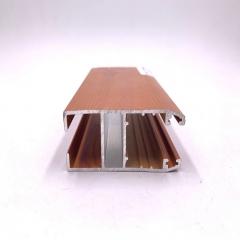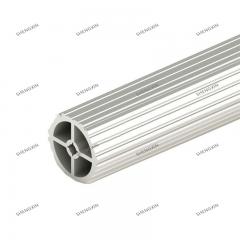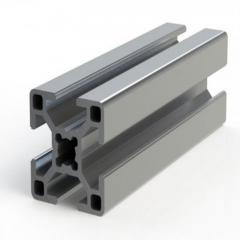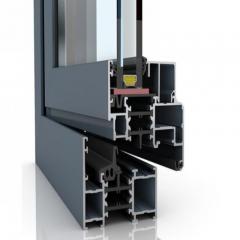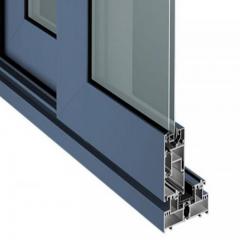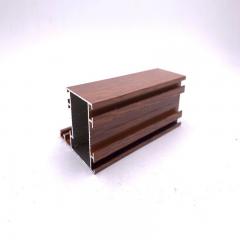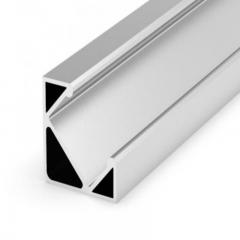
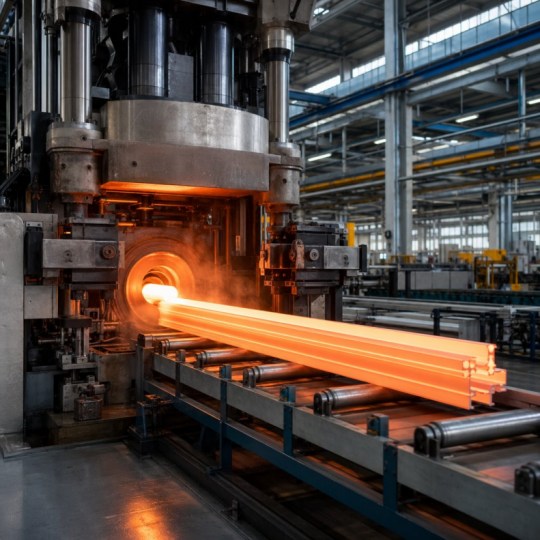
How Is Extruded Aluminum Made? The Hidden Process Behind Every Profile What Is Aluminum Extrusion? If you are asking what is aluminum extrusion, or more specifically how is extruded aluminum made, start with the shaping step itself. Aluminum extrusion is the process of forcing a heated aluminum alloy billet through a die so it exits as a long part with a fixed cross-section, called a profile. Aluminum extrusion is a manufacturing process in which a ram pushes a heated billet through a die to form a continuous profile with a specific shape. What Aluminum Extrusion Really Means That definition explains the core action, but not the full industrial story. A simple way to picture it is toothpaste being squeezed through a shaped opening. In a real extrusion press, the terms matter: the billet is the raw aluminum, the die contains the profile shape, the ram applies pressure, and the press manages the operation. If you hear the phrase extrusion aluminum, it usually refers to aluminum that has already been formed by this method. How Extruded Aluminum Is Made at a High Level Many people imagine only the moment the metal comes out of the die. In practice, finished aluminum extrusion profiles come from a longer workflow: Select the billet and alloy. Design and prepare the die. Heat the billet and ready the press. Use the ram to push the metal through the die. Cool the emerging profile. Cut, straighten, and handle the length. Add finishing or fabrication if required. Inspect, package, and prepare for shipment. Why Aluminum Extrusions Are Used So Widely Aluminum extrusions are popular because they can produce long, consistent shapes efficiently, from basic channels and angles to more specialized sections. They are also valued for being lightweight, durable, and naturally corrosion resistant, which makes aluminum extrusions useful in construction, transportation, electronics, and consumer products. Still, the shape coming out of the die is only part of the answer. Surface quality, strength, and how smoothly the metal flows are influenced earlier than most people expect, starting with the alloy inside the billet. How Alloy and Billet Prep Shape Aluminum Extrusions Before a billet ever meets the ram, much of the result is already taking shape. The alloy selected influences how easily the metal flows, how strong the finished profile can become, and how smooth the surface looks after extrusion and finishing. That is true for both standard aluminum extrusions and custom aluminum extrusions. Press force matters, but it cannot fully compensate for the wrong material choice. How Alloy Choice Affects Extrudability and Strength Most extrusion work centers on 6000 series alloys because the aluminum-magnesium-silicon system offers a useful balance of extrudability, corrosion resistance, and heat-treatable strength. A practical alloy comparison shows why common grades are chosen for different jobs. 6063 is widely preferred when a profile needs to extrude cleanly and leave t...
Read More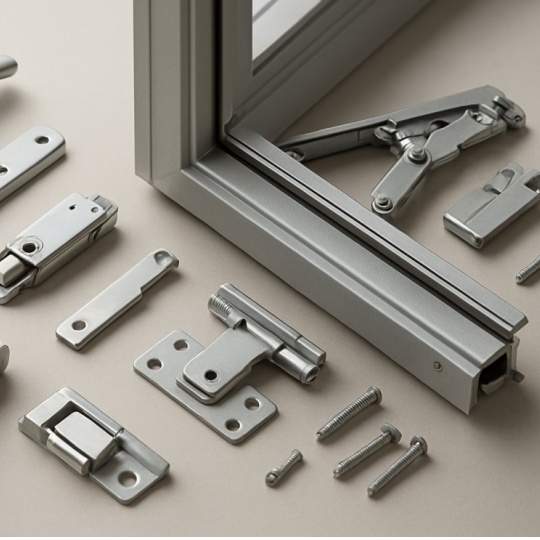
Aluminum Window Hardware Decoded: Fix Failures, Buy Right What Aluminum Window Hardware Really Includes When a window sticks, drifts, or refuses to lock, the problem is often not the frame or the glass. It is usually one of the working parts that makes the sash move and seal. Many homeowners search for aluminum window parts, parts of a home window, or general window repair parts without knowing the catalog name for the item they need. A clear definition helps close that gap before measurements and replacement choices start to matter. Aluminum window hardware is the operating system of a window, including rollers, handles, locks, hinges, guides, stays, restrictors, balances, and fasteners that help the sash open, close, stay in position, lock, and seal properly. What Counts as Aluminum Window Hardware Think of a window in two layers. The frame and sash hold the glass in place. The hardware makes the unit function. Reference glossaries place locks, handles, hinges, guides, and balances in that working category, while supplier classifications also sort these items by job, such as transmission parts, load-bearing parts, and locking parts. In simple terms, if a part helps the sash move, support weight, or secure shut, it belongs in the hardware group. Common Terms Users and Suppliers Use The language changes depending on who is talking. A homeowner may say slider part, while a catalog may list pulley, guide, or hinge set. That mismatch is why definition-style searches are so common. Operator: the mechanism, often crank-driven, that opens casement or awning windows. Friction stay: a hinge with built-in resistance that can hold a sash at different angles. Window stay: a support arm that helps hold an opening sash in set positions. Guide: a part that helps keep the sash aligned as it moves. Balance: a spring-loaded device that counterbalances sash weight. User search terms: shoppers may also search for crescent locks, glides, or sliders even when the supplier uses a different label. How the Hardware System Works Together No component works alone. A handle or operator starts the motion. Hinges, rollers, stays, or balances support and control that movement. Locks secure the sash, and guides help it travel in the right path. That is why a window that seems to have a lock issue can actually trace back to a worn support part. The picture gets sharper when you match the hardware family to the window style, because a sliding unit and a hinged unit may use parts that look similar but work in completely different ways. Choosing Hardware by Window Type A part only makes sense when it matches the way the sash moves. Two pieces may look nearly identical in a product photo, yet one belongs on a slider and the other on a hinged unit. That is why window style is the quickest way to narrow the field before you buy. Hardware Needs by Window Style Basic anatomy helps. Brennan's window parts guide separates the sash, which holds the glass, from the frame, which includes th...
Read More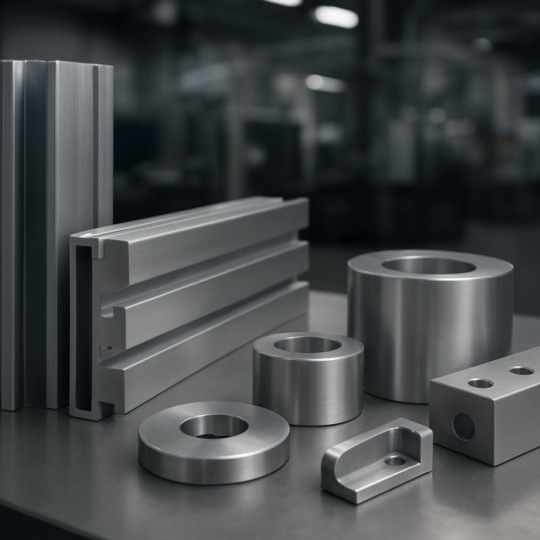
Aluminum Anodizing Decoded: Avoid The Wrong Alloy And Finish What Is Aluminum Anodizing? If you are asking what is anodizing, start with this key idea: it changes the aluminum surface itself. Aluminum anodizing is not paint, and it is not plating. It is an electrochemical process that deliberately thickens and controls the oxide layer that naturally forms on aluminum. Industry references from Protolabs and Valence describe it as a bonded oxide growth that improves corrosion resistance, wear behavior, and finish options. What Aluminum Anodizing Is Aluminum anodizing is an electrochemical conversion process that grows a controlled aluminum oxide layer on the metal surface, rather than covering it with a separate coating. So, what is anodized aluminum in plain language? It is aluminum that has been processed to build a harder, more protective surface layer. Because that layer is part of the metal, an anodized surface does not peel or chip the way a top-applied coating can. That is the big difference from painted aluminum, where an organic coating sits on top of the substrate. Think of it this way. Bare aluminum already has a thin natural oxide film. Painted aluminum adds a film over the metal. Anodized aluminum strengthens the oxide layer itself. In British usage, you may also see this written as anodising. Why Anodized Aluminum Performs Differently Buyers, engineers, and fabricators specify anodized parts because the finish can balance protection and appearance at the same time. The porous oxide formed before sealing can also accept color, which is one reason decorative and architectural parts are often anodized. Better corrosion resistance for outdoor and wet environments Improved wear and abrasion performance versus bare aluminum Colorability for clear, black, and other dyed finishes Appearance retention without the typical chipping seen in paint films Low-maintenance surfaces for industrial and architectural use That performance, however, is only as good as the way the part is prepared, processed, colored, and sealed on the line. How the Anodizing Process Works That line sequence is where good results are made or lost. If you are wondering how does anodizing work, the short answer is controlled chemistry in a fixed order. Guidance from AluConsult describes three broad phases: pretreatment, anodizing, and post-treatment, with water rinsing used between steps so each surface is ready for the next bath. People searching how to anodize aluminum or how do you anodize aluminum often picture only the acid tank, but the finish is shaped just as much by preparation and sealing. Step by Step Anodizing Process for Aluminum In practice, anodizing aluminum is a linked workflow. Each stage affects appearance, dye uptake, corrosion performance, and consistency. When someone asks, "how do i anodize aluminum," this is the industrial answer. Cleaning. A mild, non-corrosive cleaner removes machining residue, grease, and fingerprints. Rinsing. Clear-water rinses se...
Read More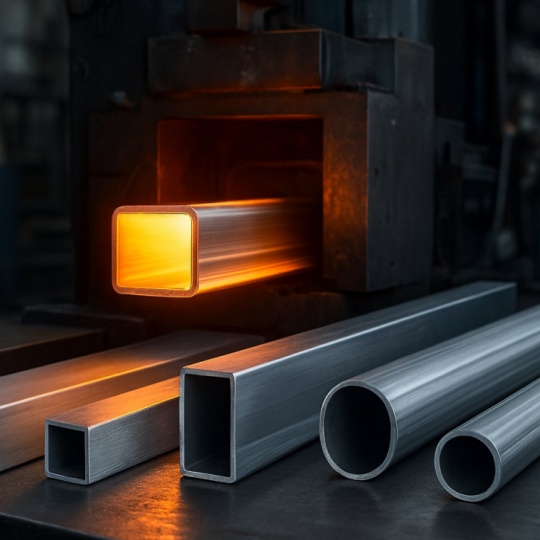
Aluminium Extrusion Decoded: Stop Costly Spec And Alloy Mistakes What Aluminium Extrusion Really Means If you are scanning catalogs or RFQs for the first time, the term can sound more technical than it is. In plain language, aluminium extrusion is a way of shaping aluminum alloy by pushing a heated billet through a die so the metal comes out as one long part with a consistent cross-section. Aluminium extrusion, often listed in U.S. sourcing as aluminum extrusion, makes long solid, hollow, or semi-hollow profiles by forcing heated alloy through a shaped die. What Aluminium Extrusion Is in Plain Language A simple mental picture helps. One reference compares it to squeezing toothpaste from a tube: the opening controls the shape that comes out. That is why aluminum extrusions are defined by their cross-section. A channel, angle, tube, or custom frame keeps the same profile along its length. This is not the same as casting, where molten metal is poured into a mold and solidifies into shape. It is also different from machining, which removes material by drilling, cutting, or milling after a part already exists. Rolling belongs to flat-rolled product categories, while extrusion is used to create long profiles rather than sheet-like forms. Key Terms That Make Catalogs Easier to Read Billet: the starting aluminum alloy stock used in the press. Die: the tooling opening that gives the part its cross-sectional shape. Profile: the finished cross-section of the part. Temper: the condition reached after cooling and heat treatment, such as T5 or T6. Finish: the surface condition, such as mill finish, anodized, or coated. Tolerance: the allowed variation from the specified dimension. Quench: controlled cooling after the profile leaves the die. Common Misunderstandings About Extruded Aluminum Myth: All extruded aluminum uses the same alloy logic. Reality: alloy choice changes strength, corrosion behavior, and finishing response. Myth: Profile shape alone tells you performance. Reality: temper, wall thickness, and tolerances matter too. Myth: Any extruded aluminium profile can be treated like a machined bar. Reality: geometry and process history affect how it should be cut, finished, and specified. That is where many buying mistakes begin. The shape may look simple, but the route from billet to finished extruded aluminium profile decides far more than appearance. How the Aluminium Extrusion Process Works The idea is easy to picture. A heated billet is pushed through a shaped die, and a long profile comes out the other side. The part that gets missed in many explainers is everything wrapped around that moment. Different aluminum extrusion shapes may look unrelated in a catalog, but the manufacturing sequence behind them follows the same core logic, and each stage affects quality. From Billet Preparation to Die Loading An aluminum extruder starts with a billet, usually a solid alloy log cut to length for the press. That billet is heated until it becomes soft enough t...
Read More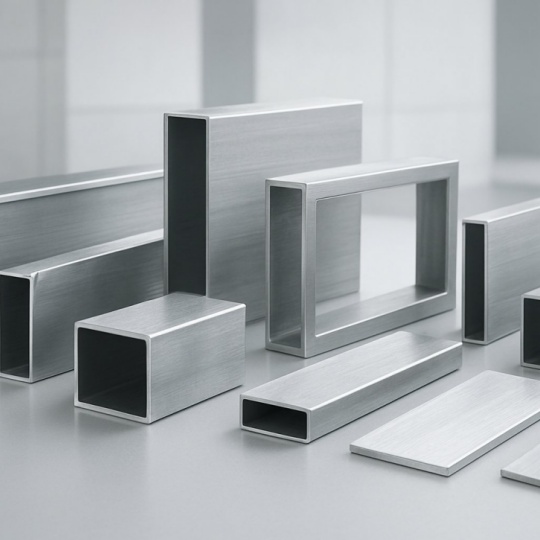
Aluminium Section Decoded: Stop Guessing Shapes And Specs What an Aluminium Section Really Means Search results often mix section, profile, and extrusion as if they mean the same thing. They overlap, but they are not identical. Getting the wording right makes it much easier to read catalogs, compare drawings, and ask better questions when reviewing an aluminium profile section. What an Aluminium Section Is In plain language, an aluminium section is the shape you would see if you cut the part and looked straight at the end. That end-view, or cross-sectional shape, includes both the outer contour and any inner voids or walls. This is why U, T, angle, tube, and box forms are treated as different aluminium sections. In production, a heated billet is pushed through a shaped die to create a continuous length, then the part is cut and finished. That is the basic idea behind an aluminium extruded section. Section vs Profile vs Extrusion Quick definition: Section means the end-view shape. Profile refers to the overall form of the part. Extrusion describes the manufacturing process used to make that shape. One product can accurately be called all three. Mastar Metal defines section as the cross-sectional shape, profile as the broader form, and extrusion as the shaping process. In real buying language, suppliers may list aluminium extrusion sections in one catalog while drawings describe the same item by its section shape. If you search for an aluminium section name pdf, you are usually looking for a chart that matches those shapes to common names and uses. Key Terms Buyers Should Know Die making: preparing the shaped tool that forms the cross-section during extrusion. Profile: the overall form of the part, not just the end shape. Extrusion: the process of forcing heated material through a die to create a continuous shape. Anodized: finished with anodizing, one of the surface treatments used to improve corrosion resistance, wear resistance, and appearance. Non-anodized: supplied without anodizing, often for a basic surface or for another finish later. Thermal break: a profile term commonly used in framed building assemblies where limiting heat transfer matters. Those terms sound simple, yet they influence how products are grouped, quoted, and specified. Shape is only the starting point. The real differences show up when open channels, hollow forms, and custom geometries enter the picture. Main aluminium section shapes and uses That shape-first definition becomes far more useful when profiles are sorted by whether their cross-section is open or closed. In practical terms, shape affects stiffness, fastening access, appearance, and the kind of job a profile can do, from a simple trim edge to a framed enclosure. Flat bar: a simple solid strip used for bracing, mounting, or spacers. Angle or L: two legs at 90 degrees for corners, brackets, and edge reinforcement. U channel: an open channel used for guides, trims, borders, and light enclosures. C channel: an open...
Read More


 online service
 0086 136 3563 2360
 sales@sxalu.com
 +86 136 3563 2360
 English
 français
 Deutsch
 русский
 español
 português
 العربية
 ไทย
ไทย Việt
Việt Українська