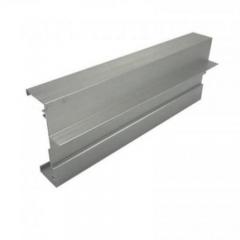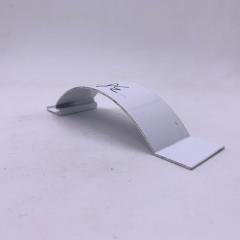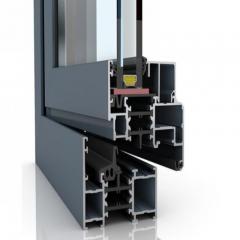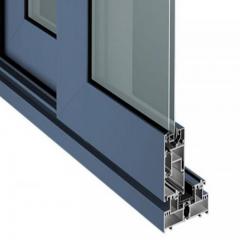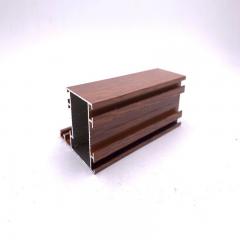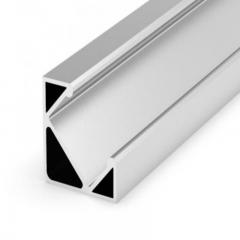
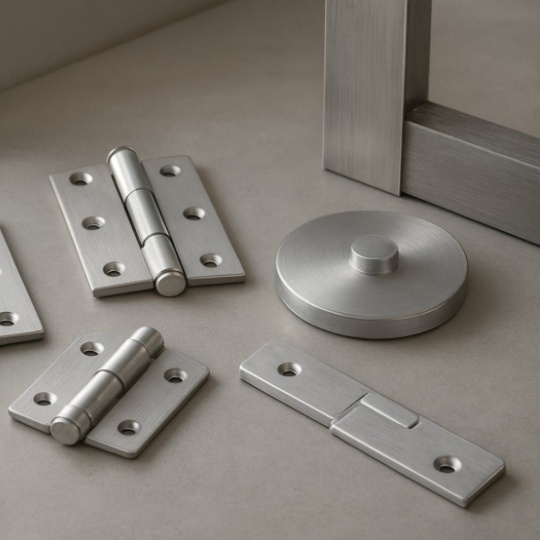
Aluminum Hinge Buying Mistakes Most Suppliers Won't Explain Aluminum Hinge Basics for Buyers Small hardware can decide whether a door feels smooth, drags, or wears out sooner than expected. That is why the basics matter before you compare product pages. What an Aluminum Hinge Is An aluminum hinge is a pivoting connector made primarily from aluminum that joins a moving panel to a fixed frame, letting doors, gates, lids, windows, and enclosures open and close in a controlled way. In plain language, it is the part that allows movement where two solid pieces meet. Many aluminum hinges are used in door and window systems, but the same idea applies to equipment covers, access panels, storage lids, and lightweight gates. An industry overview notes their common use in residential and commercial door and window hardware because aluminum is lightweight and corrosion-resistant. How an Aluminum Hinge Works A typical hinge has two flat sides. One mounts to the moving panel, and the other mounts to the frame. Those sides meet at a central pivot, so the panel swings instead of scraping against the frame edge. That simple motion is what makes aluminum door hinges useful on everything from cabinet-like enclosures to entry doors. The exact shape may change by application, but the working principle stays familiar. Basic Parts Buyers Should Know The basic anatomy is fairly consistent across many hinge styles, and Essentra's hinge guide is a solid reference for the standard terms buyers see in drawings and specs. Leaf: the flat section fastened to the door, lid, gate, or frame. Knuckle: the curled joint sections that line up at the center. Pin: the rod running through the knuckles to create the pivot. Mounting holes: the holes or slots used for screws, bolts, or other fasteners. Swing path: the clearance the panel needs as it opens and closes. This article is an educational decision guide, not a catalog page. The goal is to help you read supplier filters and product sheets with more confidence. Once the anatomy makes sense, the real buying choices start to come into focus: whether aluminum is the right material, which hinge type fits the job, what dimensions to confirm, which finish makes sense, and how the hinge will be installed. When Aluminum Hinges Are the Right Fit Material choice changes the buying decision more than many product listings suggest. Two hinges can look similar on a screen, yet behave very differently once installed on a door, lid, frame, or enclosure. For many buyers, aluminum stands out for one simple reason first: it reduces weight without giving up everyday usability. Why Buyers Choose Aluminum Hinges An aluminum hinge is often a practical fit when corrosion exposure matters, appearance counts, and the moving panel should stay as light as possible. Guidance from Essentra and Weber Knapp highlights several consistent advantages. Lower weight: Essentra notes steel hinges are around 40 percent heavier than aluminum. That matters on frequently ope...
Read More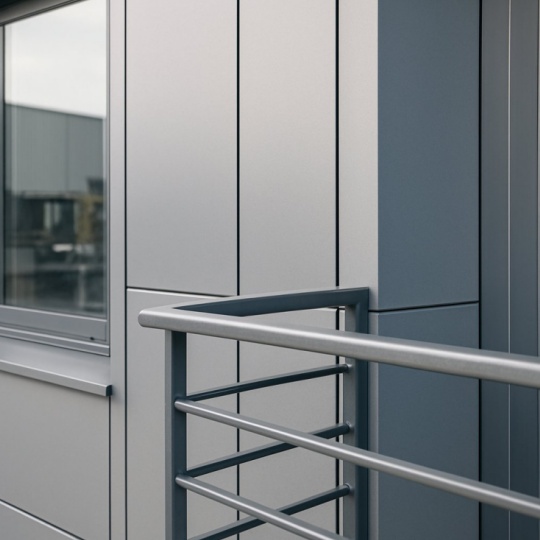
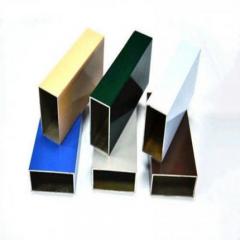
Powder Coated Aluminium: Avoid Costly Finish Mistakes What Powder Coated Aluminium Means Powder coated aluminium is aluminium finished with a dry powder that is sprayed on electrostatically and then cured with heat to create a continuous decorative and protective surface. That simple definition explains why this finish shows up so often in buildings, products, and industrial components. In plain terms, powder coating aluminium gives the metal color, texture, and an added barrier against wear and weather. Sources from Hydro and Crest both describe the process as a dry-applied finish that is cured into a solid film. What Powder Coated Aluminium Actually Is In an aluminium powder coating system, the coating starts as a fine dry powder rather than a liquid. It is sprayed onto the metal surface, held in place by electrostatic charge, and then heated so it melts, flows, and cures into a uniform layer. The result is a finish chosen as much for appearance as for protection. Why Aluminium Is Commonly Powder Coated Aluminium is a popular substrate because it is lightweight, easy to form into profiles and panels, and naturally corrosion resistant. It is also widely used in architectural and industrial products, from window systems to extrusions and cladding. That makes powder coated aluminium a practical finish option when buyers want durable color and a consistent look on shaped parts. In many cases, people choose to powder coat aluminium not because bare aluminium is unusable, but because the application needs a specific visual finish, added surface protection, or easier cleaning. How Powder Coating Differs From Liquid Paint The clearest difference is the material form. Liquid paint uses wet coating chemistry and dries as solvents evaporate. Powder coating uses dry particles and heat curing. In buyer-friendly terms, that often means a tougher, thicker finish than conventional wet paint, though the outcome still depends heavily on how the metal is prepared before coating. Powder coated finishes are dry-applied, then heat-cured. Aluminium is widely used because it is light, formable, and naturally corrosion resistant. Powder and liquid paint are different finish systems, not just different colors. Surface preparation has a major effect on long-term performance. How the Aluminium Powder Coating Process Works The finish may look simple from the outside, but the visible color is only the last step in a much longer aluminium powder coating process. For buyers comparing powder coating for aluminium, the smartest question is rarely about shade alone. It is how the metal is cleaned, prepared, and checked before approval. How the Aluminium Powder Coating Process Works Cleaning. Oils, dirt, oxides, and any old finish need to be removed. Keystone Koating describes blasting and multi-stage cleaning as the base for good adhesion. Surface preparation. The aluminium may be blasted or otherwise conditioned so the coating can grip evenly, especially on reused parts or surf...
Read More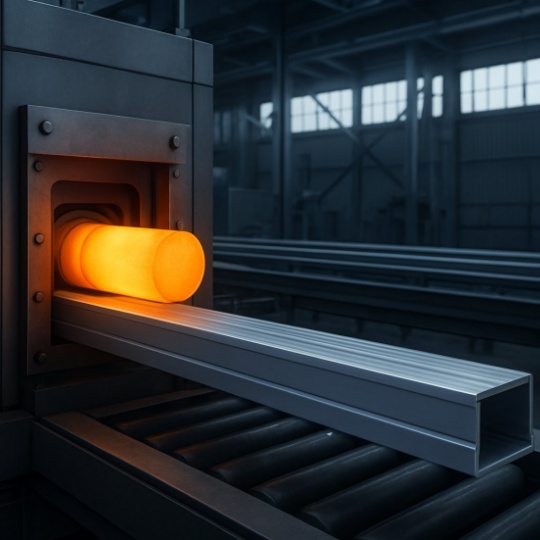
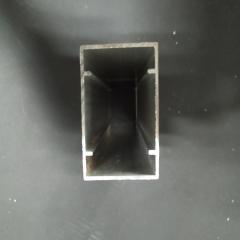
What Is Aluminum Extrusion: Decode The Press, Profile, And Price What Is Aluminum Extrusion in Plain Language What is aluminum extrusion? It is a manufacturing process that pushes a heated aluminum billet through a shaped die to create a long part with one continuous cross-section. In plain language, the metal is softened by heat, forced through a tool opening by a press, and comes out as a profile that keeps the same shape along its length. Aluminum extrusion forms a continuous shape by forcing heated aluminum alloy through a die. A simple way to picture it is toothpaste or modeling dough being squeezed through a nozzle. The comparison is helpful, but the real process uses a powerful hydraulic press and precision tooling. If you are asking what is an aluminum extrusion, it is the finished length that exits the die, such as a tube, channel, angle, or custom structural shape. What Makes an Aluminum Extrusion Different From Casting and Machining Extrusion is often confused with other metalworking methods, so the distinction matters. Casting pours molten aluminum into a mold and lets it solidify into shape. Machining starts with solid stock and removes material by cutting, drilling, or milling. Extrusion works differently. The billet is heated and softened, but it is not melted into a liquid. Instead, it stays solid enough to be pushed through the die, which is why the process is ideal for parts with a constant cross-section rather than a fully different shape from one end to the other. Core Terms Like Billet, Die, Profile, and Press Billet: the aluminum log used as the starting material. Die: the hardened tool opening that gives the extrusion its cross-sectional shape. Profile: the shape of the extruded part when viewed from the end. Press: the hydraulic machine that applies force to move the billet through the die. You may also see the phrase what is extrusion aluminum. In practice, it simply means aluminum that has been shaped by this press-and-die method. Those basic terms are more than shop-floor jargon. They define each stage of the process, and that is where shape quality, straightness, and surface condition begin to take form. How the Aluminum Extrusion Process Works The shape does not begin at the die alone. The answer to what is aluminum extrusion process lies in how the billet is prepared, how pressure is applied, and how the fresh profile is handled before it ever reaches finishing. Every stage affects dimensional consistency, straightness, and how clean the surface looks for later machining, anodizing, or coating. From Billet Heating to the Aluminum Extrusion Press If you are wondering what is an aluminum extrusion press, it is the machine that uses a ram to force preheated aluminum through a shaped opening. Process guides from Pennex and RapidDirect note that billets and dies are commonly preheated in roughly the 400 to 500 C range so the alloy can flow without melting. Billet preparation: A cylindrical billet is cut from a longer log....
Read More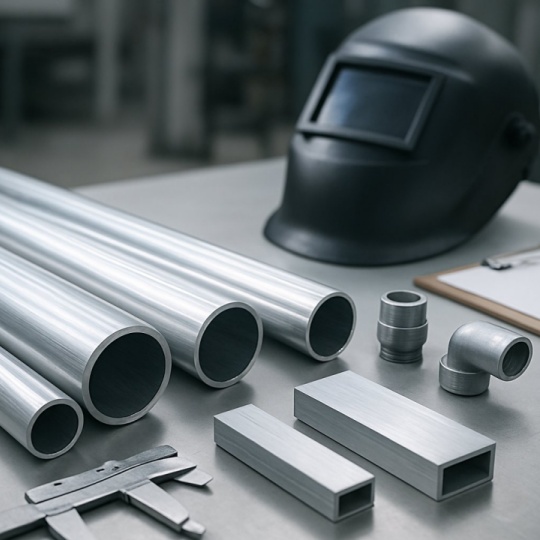
Aluminum Pipe Red Flags To Catch Before You Buy Or Weld What Aluminum Pipe Really Means Searches for aluminum pipe often begin with a simple assumption: if it is hollow and made from aluminum, it must be pipe. In practice, that shortcut causes a lot of ordering mistakes. Pipe and tube can look similar, but suppliers do not always size or describe them the same way, and that difference affects fit, fabrication, and replacement. What Is Aluminum Pipe Aluminum pipe is a round hollow aluminum product usually identified by nominal pipe size and wall schedule rather than only by its exact measured dimensions. That definition follows common industry usage. A sizing guide from Wagner explains that pipe is commonly organized by Nominal Pipe Size, or NPS, and by schedule, which refers to wall thickness. Pipe is also always round. In everyday sourcing, though, the term aluminium pipe is sometimes used loosely for round hollow stock in general, which is where confusion starts. Aluminum Pipe vs Aluminum Tube An aluminum tube can also be round, but tube is more often specified by its actual outside diameter and wall thickness. It may also be square or rectangular, while pipe remains round. Guidance from TACO Marine reflects the real-world overlap: both products show up in fabricated frames, rails, and other structural assemblies. Visually, they may seem interchangeable. On paper, they are not. Category Pipe Tube Naming convention Nominal pipe size Actual outside dimensions Dimensional language Size plus schedule OD plus wall thickness Common buying situation Replacing pipe-based parts or fittings Fabrication where exact outside size matters Why Buyers Confuse the Terms Catalog labels, shop talk, and search behavior often blur aluminum tube, aluminum pipe, and even aluminium tube into the same category: hollow aluminum material. That shortcut feels harmless until a part must match a flange, slide into a connector, or replace an existing component. This guide stays focused on those decisions, with the sections ahead unpacking size terms, alloy choices, fabrication limits, and the details worth confirming before you place an order. How Aluminum Pipe Sizes and Schedule Work The label matters, but the numbers decide whether a replacement actually fits. Many ordering mistakes happen because pipe naming does not follow the same logic people use for aluminum tube sizes or aluminum tubing sizes. With pipe, the first size you see is often a naming system, not the exact measurement you would get with a caliper. Nominal Pipe Size Explained Nominal Pipe Size, or NPS, is a guideline number used to identify pipe. It is not the outside diameter, inside diameter, or wall thickness. Both Merit Brass and Enerpac describe NPS this way. That is why a product sold as 1 in. pipe does not measure 1 in. across the outside. In standard charts, NPS 1 pipe has a 1.315 in. OD, and NPS 2 has a 2.375 in. OD. Up through NPS 12, the OD is larger than the nominal name. At NPS 14 and above, the...
Read More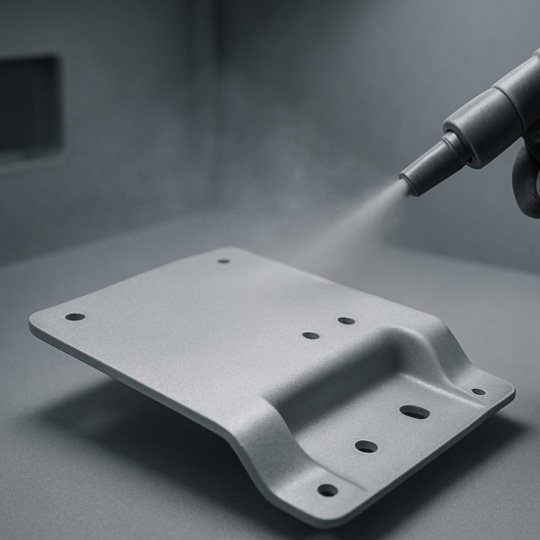
Sandblasted Aluminum Without Guesswork Or Costly Mistakes What Sandblasted Aluminum Actually Means Aluminum looks simple, but blasting it is not one-size-fits-all. People often ask two versions of the same question: can aluminum be sandblasted, and can you sandblast aluminum without damaging it? Yes, but only when the process matches the part, the surface condition, and the finish goal. Sandblasted aluminum is aluminum whose surface has been cleaned, stripped, or textured by abrasive media propelled at high speed. What Sandblasted Aluminum Means That definition is broader than it first sounds. In practice, abrasive particles strike the metal and change the outer layer, sometimes just enough to remove oxidation or residue, and sometimes enough to strip coatings or build a profile for finishing. A sandblasted aluminum finish can be matte, satin, or visibly textured depending on the media and technique. The aluminum sandblasting guide describes abrasive blasting as a method for cleaning, preparation, and controlled texturing before later steps such as painting or anodizing. Why Aluminum Requires a Lighter Touch Sandblasting aluminum is more sensitive than blasting harder metals. Aluminum is softer and more malleable, so aggressive media, excessive pressure, or poor technique can cause pitting, warping, embedded particles, or rounded edges. Even a shift in sheen can matter on visible parts. A sandblasted aluminum texture that looks refined on one piece may count as damage on another. Practical blasting tips reinforce the same theme: start gently, test first, and treat damage prevention as part of the process, not as cleanup after a mistake. Finish Goals Before You Choose a Process Before choosing equipment or media, decide what you want the surface to do: Clean dirt, oxidation, or residue Remove paint, primer, or old coatings Create cosmetic uniformity Improve adhesion for paint, powder coat, or anodizing Produce a specific sandblasted aluminum texture for decorative use Those goals sound similar, but they do not always lead to the same method. A cosmetic sandblasted aluminum finish may call for a very different approach than rougher adhesion prep. The same goes for a decorative sandblasted aluminum texture versus simple coating removal. At that point, blast media becomes the factor that shapes cutting speed, appearance, and risk. Best Media for Sandblasting Aluminum Media choice is where aluminum blasting results are usually won or lost. The same cabinet can produce a smooth cosmetic surface or a rough coating profile simply because the abrasive changed. Choosing sandblasting media for aluminum means matching particle hardness, shape, and cutting action to the finish you want to keep or create. How Blast Media Changes the Surface Hard, angular abrasives cut faster. Rounded media clean and peen more gently. Softer media remove contamination with less surface profile. The comparison guide lists aluminum oxide at 9.0 Mohs, glass bead at 5.5 to 6.0, wal...
Read More


 online service
 0086 136 3563 2360
 sales@sxalu.com
 +86 136 3563 2360
 English
 français
 Deutsch
 русский
 español
 português
 العربية
 ไทย
ไทย Việt
Việt Українська