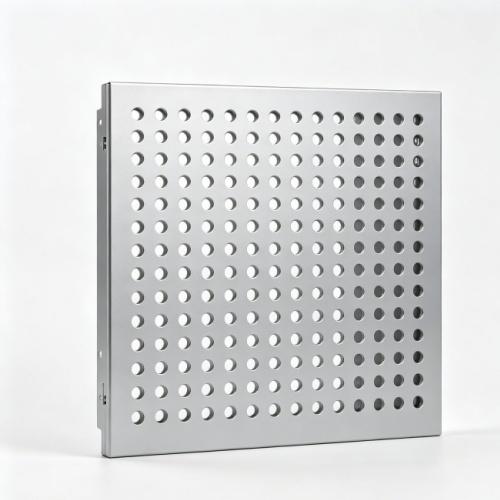
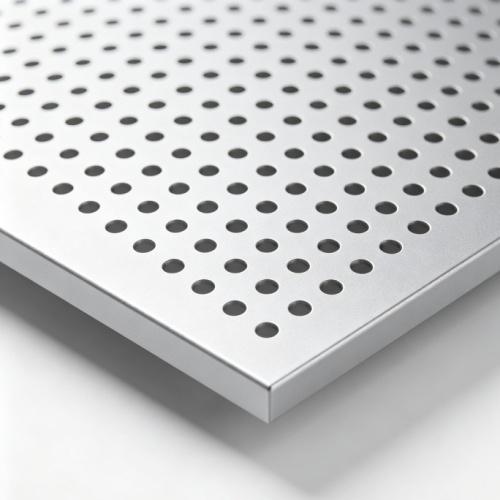
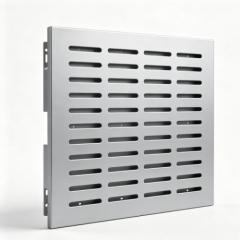
Punched Aluminium Panels are produced on CNC turret punch presses, a manufacturing method that offers distinct advantages over laser cutting for certain applications. Where a pattern consists of regular, repeating holes — circular, square, slotted, or hexagonal — punching is faster, more cost-effective, and produces a cleaner edge than laser cutting. This makes punched panels the preferred choice for ventilation screens, sunshades, and facade cladding where the pattern is geometric and the volume is high. The process also work-hardens the hole edges slightly, which can improve durability in high-wear applications.
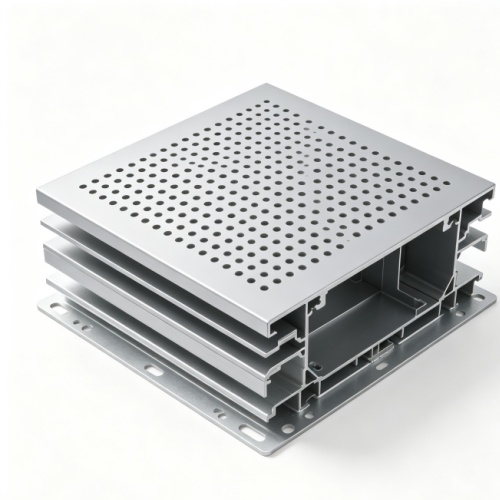
The tooling used in punching determines the hole geometry, and we maintain a wide range of standard punch tools to cover common patterns. For custom patterns, we can manufacture dedicated tooling to your specification. Hole sizes typically range from 2 mm to 50 mm, with open areas from 15% to 70% depending on the pattern and panel strength requirements. The panels are fabricated from 6063-T5 aluminium sheet, then finished in-house with powder coating, PVDF, or anodizing. The result is a durable, low-maintenance panel suitable for both interior and exterior applications.
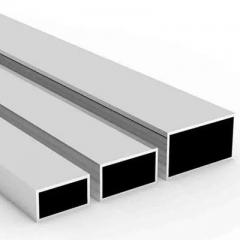
Shengxin has over 30 years of aluminium extrusion expertise and operates CNC punching equipment alongside our extrusion, laser cutting, and coating facilities. This means we can produce punched panels, supply matching frame extrusions, and apply the finish — all under one roof, with one quality system and one point of accountability. For more intricate patterns that require laser cutting rather than punching, see our custom perforated panel service, which handles finer geometries and one-off designs.
Features & Benefits
-
Cost-effective for regular patterns: For repeating hole patterns, punching is significantly faster and cheaper than laser cutting, especially at production volumes.
-
Clean, consistent holes: CNC punching produces clean edges with minimal burr, and the tooling ensures every hole is identical — critical for visual consistency across a facade.
-
Work-hardened hole edges: The punching process slightly work-hardens the aluminium around each hole, improving resistance to wear and deformation in high-use applications.
-
Wide pattern range: Standard punch tools cover circular, square, slotted, and hexagonal holes. Custom tooling is available for bespoke patterns.
-
Complete finish flexibility: Powder coating in any RAL colour, PVDF for exterior durability, or anodizing for a metallic look — all applied in-house with documented quality.
-
Lightweight and non-combustible: Aluminium achieves Class A1/A2 fire classification while keeping panel weight low for easy handling and reduced structural load.
Punching vs. Laser Cutting: When to Choose Each
Both methods produce perforated aluminium panels, but they suit different pattern types and production volumes.
|
Factor
|
CNC Punching
|
Laser Cutting
|
|
Best Pattern Type
|
Regular, repeating holes
|
Complex, irregular, or fine patterns
|
|
Minimum Hole Size
|
2 mm (tool dependent)
|
0.5 mm
|
|
Production Speed
|
Very fast for regular patterns
|
Slower; speed independent of pattern
|
|
Cost at Volume
|
Lower for repetitive patterns
|
Higher, but no tooling cost
|
|
Edge Quality
|
Clean, slightly rounded
|
Very clean, sharp
|
We operate both punching and laser cutting equipment in-house, so we can recommend the most cost-effective method for your specific pattern and volume.
Technical Specifications
|
Base Material
|
6063-T5 aluminium sheet and extrusions
|
|
Panel Thickness
|
1.5 mm – 4.0 mm (selected per span and pattern)
|
|
Hole Size Range
|
2 mm – 50 mm (tool dependent)
|
|
Open Area Range
|
15% – 70%
|
|
Fabrication Method
|
CNC turret punching; custom tooling available
|
|
Surface Finish
|
Powder coating (AAMA 2604), PVDF (AAMA 2605), anodizing (Qualanod)
|
|
Fire Classification
|
Class A1/A2 per EN 13501-1 (non-combustible)
|
|
Applicable Standards
|
AAMA 2605, AAMA 2604, Qualanod, EN 13501-1, EN 755
|
These punched panels sit alongside our broader aluminum wall panels range, which includes solid, perforated, and bespoke formats. Where a project requires a fluorocarbon finish for maximum exterior durability, the same panels can be supplied with PVDF coating to AAMA 2605.
Applications of Punched Aluminium Panels
-
Ventilation screens and louvres: The open-area pattern allows air to pass while concealing mechanical equipment, car parks, and plant rooms behind an attractive architectural screen.
-
Solar shading and brise-soleil: Punched panels reduce direct solar gain while maintaining daylight transmission and outward views, lowering cooling loads in glazed facades.
-
Balustrade and staircase infill: Decorative punched panels provide safety and visual interest on balconies, staircases, and walkways without the weight of glass or solid metal.
-
Acoustic ceiling and wall panels: The hole pattern helps diffuse sound and reduce reverberation in offices, restaurants, and public spaces, especially when combined with acoustic backing.
-
Industrial and equipment enclosures: Durable punched panels protect machinery and electrical equipment while allowing essential airflow for cooling.
Customisation & Supply Options
|
Service
|
Capability
|
|
Pattern Design
|
Standard or custom hole patterns; custom tooling manufactured in-house
|
|
Panel Dimensions
|
Custom sizes to suit design module and installation sequence
|
|
Finish Options
|
In-house powder coating, PVDF, anodizing; full RAL and custom colours
|
|
Framing & Fixing
|
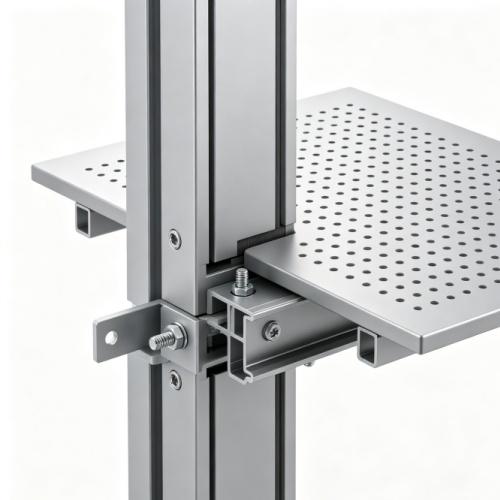
Matching frames, standoffs, and concealed fixing systems
|
|
Bespoke Die Design
|
When standard tooling does not match your pattern, our extrusion design service develops custom tooling and produces sample panels for approval
|
|
Packaging & Delivery
|
Protective interleaving, custom pallets, labelled per design zone
|
Why Choose Shengxin for Punched Aluminium Panels?
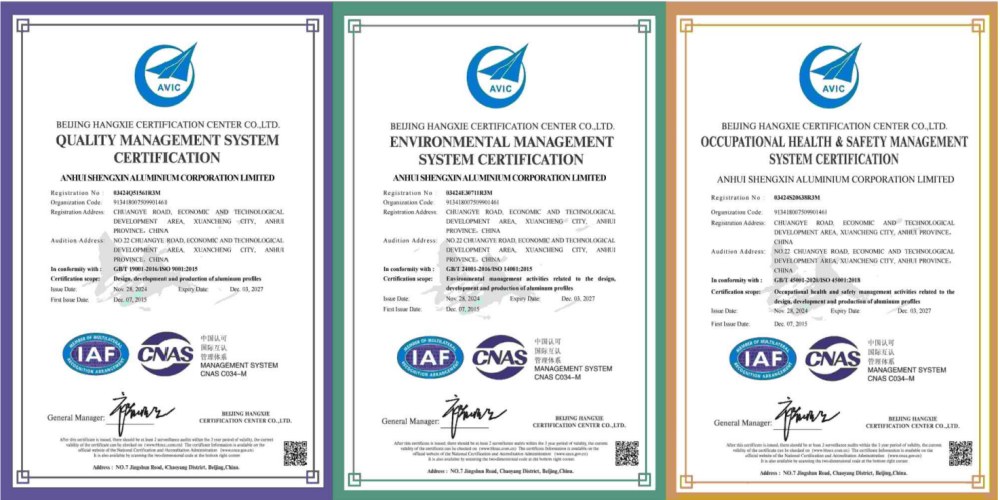
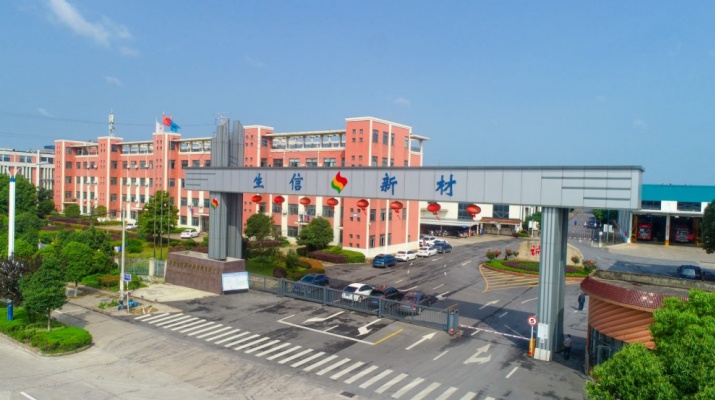
Punched panels are a volume product: the economics depend on fast, accurate tooling and efficient production. Shengxin has over 30 years of aluminium manufacturing experience and operates CNC punching equipment alongside our extrusion and coating lines. This means we can produce panels, supply matching frame extrusions, and apply the finish — all under one roof, with one quality system and one point of accountability. For large facade projects where the pattern repeats across hundreds of panels, the same profiles and panels can be supplied with the structural capacity required for a high-rise facade. With $120 million in assets and exports to 97 countries, we have the capacity and experience to deliver punched panel projects of any scale.
CNC Punching Precision
Turret punch presses deliver identical hole geometry on every panel, ensuring visual consistency across the entire facade installation.
Custom Tooling Capability
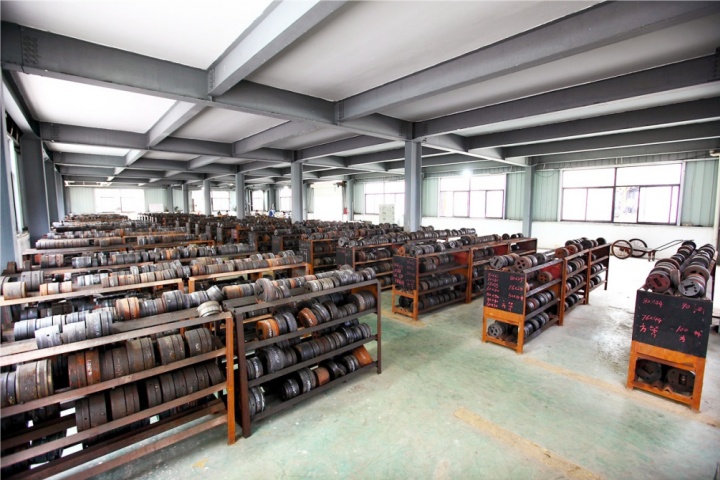
Our in-house tool shop manufactures custom punch tooling for bespoke patterns, with sample panels for approval before full production.
Complete Finishing Capability
Powder coating, PVDF, and anodizing lines are all on-site, with AAMA and Qualanod certification for documented quality.
Global Manufacturing Scale
100,000-ton annual capacity, 5,000-ton warehouse, 5 container loading platforms. We deliver punched panel projects worldwide.
Punched Aluminium Panel FAQ
Q: How do punched panels differ from standard aluminum wall panels?
A: Standard aluminum wall panels are solid sheets used for cladding and weather protection. Punched panels have a regular pattern of holes that allows airflow, light transmission, and solar shading. They are typically used for ventilation screens, sunshades, and decorative facades rather than as a primary weather barrier.
Q: Can you produce a large-format aluminum great wall panel with a punched pattern?
A: Yes. We manufacture large-format punched panels up to 1500 mm × 4000 mm, and can create continuous designs that produce an aluminum great wall panel effect across a feature elevation. The pattern repeat and panel joints are coordinated to maintain visual continuity.
Q: How do I choose between punched and laser-cut panels?
A: If your pattern is regular and repeating — round, square, or slotted holes — punching is usually more cost-effective, especially at volume. If your pattern is complex, irregular, or requires very fine detail, laser cutting is the better choice. We operate both methods in-house and can advise on the most economical option for your project.
Q: What is the smallest hole you can punch?
A: Our standard punch tooling covers holes from 2 mm upward, depending on sheet thickness. Smaller holes may be possible with custom tooling, but laser cutting is generally more suitable for very fine patterns.
Q: Can punched panels be used in coastal environments?
A: Yes. With PVDF coating to AAMA 2605 or a minimum 20-micron anodized finish, punched aluminium panels provide excellent resistance to salt spray and UV exposure, making them suitable for coastal facades and marine environments.
Custom Punched Aluminium Panel Solutions
If your project requires a custom hole pattern, a specific open-area percentage, or a bespoke panel size, Shengxin's custom punching service can manufacture tooling and produce panels to your exact requirements.
How It Works:
-
Send your design — a sketch, CAD file, or reference image showing the pattern you want.
-
Our engineers review — we assess feasibility, tooling requirements, and open-area implications.
-
Receive a quotation — including tooling cost, panel fabrication, finish cost, and lead time.
-
Approve a sample — we produce a sample panel with your pattern and finish for approval.
-
Full production — consistent pattern and finish across every panel, delivered on schedule.
⚠️ Important Note: All panel images and dimensional drawings on this page are for reference only. Final dimensions, hole patterns, open-area percentages, and surface finishes will be confirmed based on your approved production drawings and sample panels. Please contact our engineering team to discuss your specific requirements before placing an order.
Please note: The production timelines discussed are typical estimates based on smooth design approvals and current scheduling. Actual lead times may be longer if design changes are required, multiple sample iterations are needed, or production capacity is temporarily at high demand. Your dedicated project engineer will provide updated timelines at each stage, and final delivery dates will be confirmed in your order confirmation.
← Back to Architectural Aluminium Profiles category


 English
 français
 Deutsch
 русский
 español
 português
 العربية
 ไทย
ไทย Việt
Việt Українська


 online service

